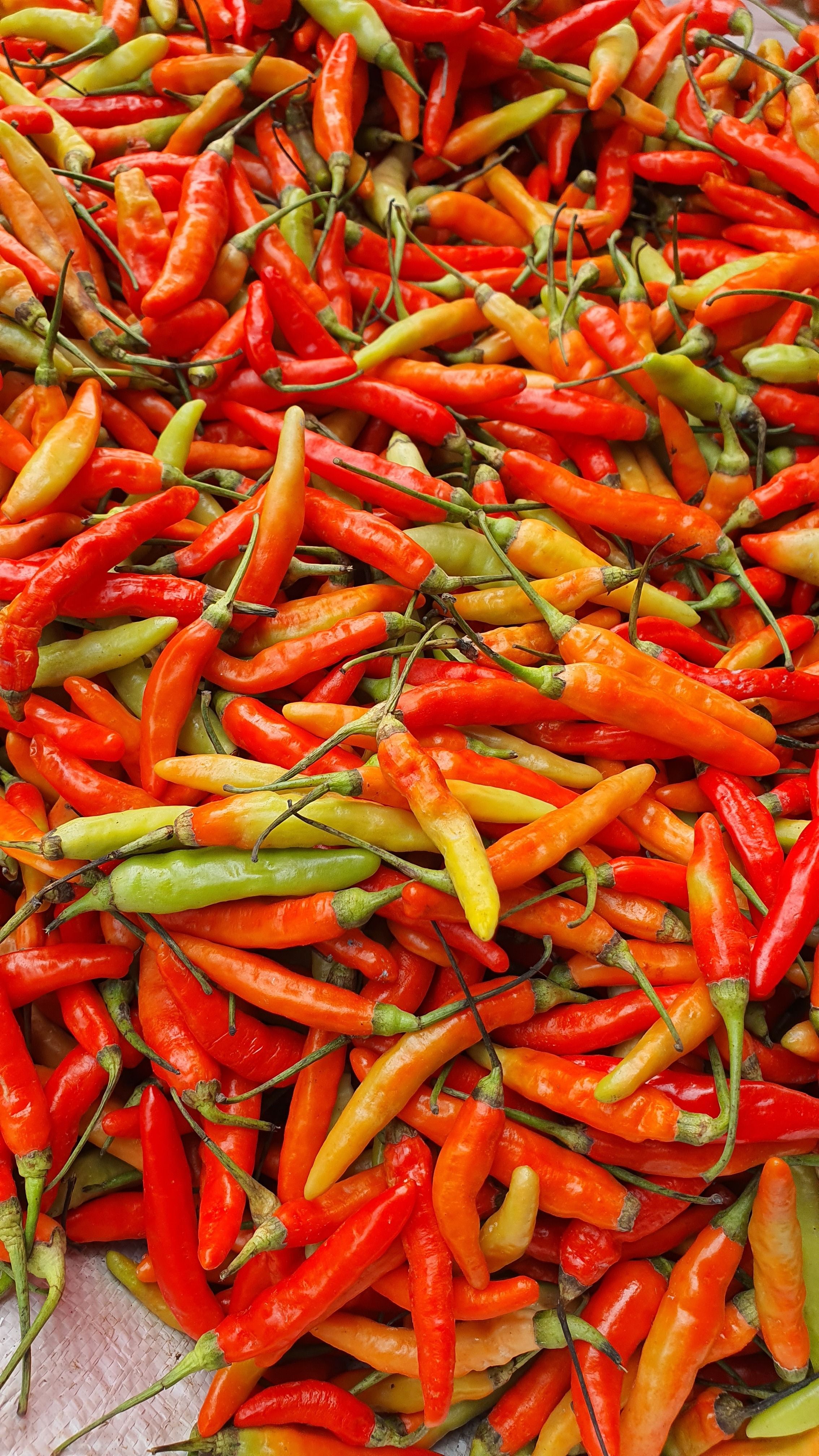
The diets react (see scores below)
Diet Ratings
Siling labuyo (small hot chili peppers) contain approximately 1-2g net carbs per pepper. Used in small quantities for heat and flavor, they are negligible in carb contribution and fit keto perfectly.
Siling labuyo is a Philippine chili pepper variety. Plant-based, no animal products or derivatives. Whole food with no processing concerns.
Siling labuyo is a small chili pepper native to the Philippines. Peppers are vegetables available to Paleolithic humans and contain no problematic ingredients. Fresh or dried chili peppers are paleo-approved.
Siling labuyo (Philippine chili pepper) is a whole plant food, nutrient-dense, and calorie-minimal. While not traditionally Mediterranean, it aligns with Mediterranean principles of whole, plant-based foods and can be used as a seasoning to enhance flavor without added salt or sugar.
Philippine chili pepper (plant-derived). Carnivore diet excludes all vegetables, fruits, and plant foods.
Siling labuyo is a type of chili pepper. All vegetables and fruits, including peppers, are explicitly allowed on Whole30 with no restrictions.
Siling labuyo (Philippine bird's eye chili) is a fresh chili pepper. Fresh chili peppers are low-FODMAP at typical serving sizes. Monash has tested chili peppers and confirmed low-FODMAP status. No fructans, GOS, lactose, excess fructose, or polyols in significant amounts.
Siling labuyo (Philippine bird's eye chili) is a fresh chili pepper with minimal calories, zero sodium, and rich in vitamin C and capsaicin. Supports DASH flavor enhancement without salt. Whole food, unprocessed.
Siling labuyo (small hot chili pepper) is negligible in calories and carbohydrates when used in typical portions. It provides capsaicin and polyphenols. Can be used freely as a flavoring and seasoning agent in Zone meals without macronutrient impact.
Siling labuyo (Philippine bird's eye chili) is a small hot pepper rich in capsaicin and carotenoids. Capsaicin has well-documented anti-inflammatory effects, reducing TNF-α and NF-κB signaling. High in vitamin C and antioxidants. Aligns with anti-inflammatory emphasis on chili peppers and spices.
Small hot chili pepper with minimal calories and some vitamin C. However, very spicy foods can worsen reflux and nausea in GLP-1 patients, especially on empty stomach or with reduced gastric motility. Use sparingly.
Some GLP-1 nutrition experts tolerate small amounts of spicy foods without issue; others recommend strict avoidance due to reflux risk. Individual tolerance varies significantly based on baseline GI sensitivity and medication dose.
Nutritional profile
Six traits that cut across every diet.
Fiber & Plants
How much whole-plant food and fiber it delivers.
Healthy Fats
The quality of its fats (unsaturated, omega-3).
Whole / Unprocessed
How close it is to its natural, unprocessed form.
Gut Gentle
How easy it is on digestion (low FODMAP, few irritants).
Low Glycemic
How little it spikes your blood sugar.
Protein Density
How much protein it packs per calorie.
Controversy Index
Score range: 1–9/10. Higher controversy = more disagreement between diets.
Diet-Specific Tips for Siling labuyo
 Keto — 9/10
- Very low net carbs per serving
- Minimal calories
- Whole, unprocessed food
- Typically used in small amounts
 Vegan — 9/10
- Plant-derived vegetable
- No animal ingredients
- Whole food
 Paleo — 9/10
- whole vegetable
- no additives
- nutrient-dense
- spice/flavoring
 Mediterranean — 8/10
- whole plant food
- minimal calories
- nutrient-dense
- enhances flavor naturally
 Whole30 — 9/10
- Whole vegetable
- No excluded ingredients
- Approved produce
 Low-FODMAP — 9/10
- Fresh chili pepper with minimal fermentable carbohydrates
- Monash-tested category (peppers)
- Safe at typical culinary portions
 DASH — 8/10
- Fresh vegetable
- Zero sodium
- Vitamin C rich
- Supports salt reduction
 Zone — 9/10
- Negligible calories per typical serving
- Minimal carbohydrates
- Capsaicin (anti-inflammatory)
- Polyphenol-rich
- Flavor enhancer
 Anti-Inflammatory — 8/10
- capsaicin (anti-inflammatory alkaloid)
- carotenoids (lutein, zeaxanthin)
- vitamin C and antioxidants
- reduces inflammatory cytokines
- minimal caloric impact in typical use
 GLP-1 Friendly — 5/10
- very spicy
- minimal calories
- reflux/nausea risk
- vitamin C content