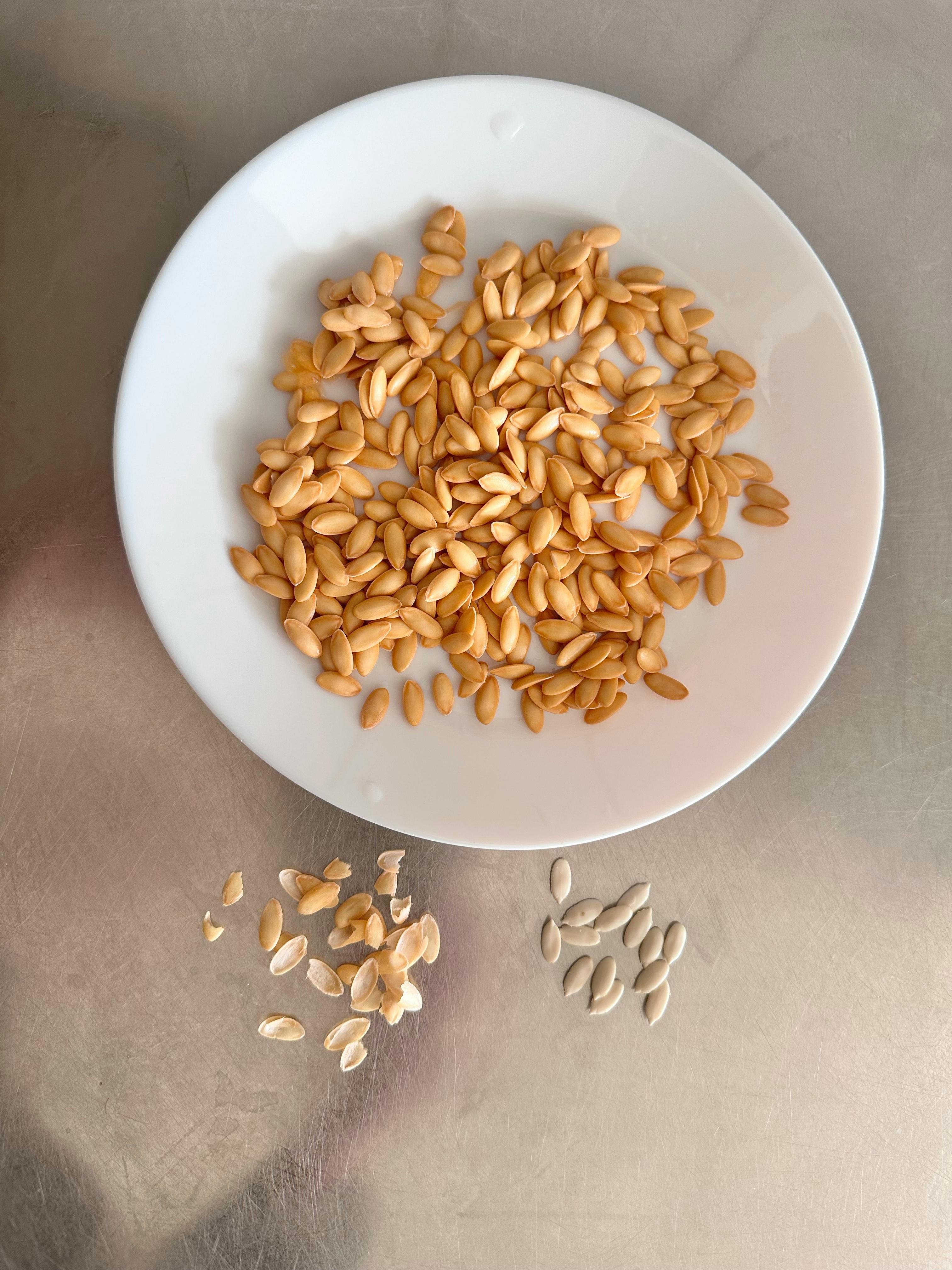
The diets react (see scores below)
Diet Ratings
Watermelon seeds contain approximately 4g net carbs per 28g serving. Acceptable in small portions but carb-dense. Portion control essential.
Strict keto practitioners avoid watermelon seeds due to carb density relative to portion size. Lazy keto practitioners accept them in measured amounts.
Watermelon seeds are whole plant foods with no animal products or derivatives. Nutrient-dense and fully vegan-compliant.
Watermelon seeds are seeds from a fruit available to hunter-gatherers. They are nutrient-dense, unprocessed, and contain no anti-nutrients. Fully compliant with paleo principles.
Watermelon seeds are nutrient-dense with healthy fats, protein, and minerals. They align with Mediterranean emphasis on seeds and nuts as healthy snacks. Less commonly emphasized than other seeds but nutritionally sound and whole food.
Some Mediterranean diet sources focus more on traditional seeds like sunflower and pumpkin seeds, which are more commonly consumed in Mediterranean regions. Watermelon seeds are less emphasized but nutritionally equivalent.
Watermelon seeds are plant-derived. Seeds are explicitly excluded from carnivore diet. No processing or preparation changes their plant origin.
Watermelon seeds are whole seeds from a fruit. Seeds are allowed on Whole30. No processing or added ingredients that would exclude them.
Watermelon seeds are not extensively tested by Monash University, but available data suggests they are low-FODMAP. Seeds are generally low in fermentable carbohydrates. Standard serving (1 ounce/28g) should be safe, though individual tolerance may vary.
Monash University has limited specific testing on watermelon seeds. Clinical FODMAP practitioners generally consider seeds low-FODMAP based on carbohydrate composition, but recommend starting with small portions (1 ounce) to assess individual tolerance.
Excellent DASH food. Rich in magnesium, potassium, zinc, and unsaturated fats. Low sodium. High in fiber and protein. Supports cardiovascular health.
~10g protein and ~15g fat per 1 oz, with ~3g net carbs. Fat profile is mixed: ~5g polyunsaturated (omega-6 heavy), ~4g monounsaturated, ~2g saturated. Polyunsaturated content is higher than Zone prefers. Usable in moderation as a protein/fat source but not ideal compared to almonds or olive oil.
Excellent source of magnesium, zinc, and omega-3 fatty acids. Contains polyphenols and antioxidants. Often overlooked but nutrient-dense. Supports anti-inflammatory status through multiple mechanisms. Can be eaten raw or lightly roasted.
Watermelon seeds are excellent for GLP-1 patients: high protein (8g per 100g), good fiber (1.5g per 100g), healthy unsaturated fats (15g per 100g), and nutrient-dense (magnesium, zinc, iron). Calorie-dense (557 cal per 100g) but portion-friendly—a small handful (1 oz) provides substantial nutrition. Easy to digest and work well as a snack or salad topper.
Nutritional profile
Six traits that cut across every diet.
Fiber & Plants
How much whole-plant food and fiber it delivers.
Healthy Fats
The quality of its fats (unsaturated, omega-3).
Whole / Unprocessed
How close it is to its natural, unprocessed form.
Gut Gentle
How easy it is on digestion (low FODMAP, few irritants).
Low Glycemic
How little it spikes your blood sugar.
Protein Density
How much protein it packs per calorie.
Controversy Index
Score range: 1–9/10. Higher controversy = more disagreement between diets.
Diet-Specific Tips for Watermelon seeds
 Keto — 6/10
- 4g net carbs per 28g serving
- Moderate fat and protein
- Whole food
- Portion-sensitive
 Vegan — 9/10
- Whole plant food
- No animal products
- Nutrient-dense
- Minimally processed
 Paleo — 8/10
- Seed from paleo fruit
- Unprocessed
- Nutrient-dense
- No anti-nutrients
 Mediterranean — 7/10
- Nutrient-dense whole food
- Healthy fats and protein
- Minimal processing
- Less traditional than other seeds
 Whole30 — 9/10
- Whole food
- Seeds allowed
- No added ingredients
- Unprocessed
 Low-FODMAP — 7/10
- Limited Monash testing available
- Low fermentable carbohydrate content expected
- Individual tolerance testing recommended
 DASH — 8/10
- Rich in magnesium
- Good potassium source
- Unsaturated fats
- High protein
- Low sodium
 Zone — 6/10
- Good protein content
- Omega-6 polyunsaturated fat-heavy
- Moderate monounsaturated fat
- Low net carbs
- Suboptimal fat composition vs. alternatives
 Anti-Inflammatory — 7/10
- High omega-3 content
- Magnesium and zinc
- Polyphenol-rich
- Antioxidant compounds
- Often underutilized
 GLP-1 Friendly — 7/10
- good protein density
- good fiber content
- unsaturated fats
- nutrient-dense (minerals)
- portion-friendly
- easy to digest