The diets react (see scores below)
Diet Ratings
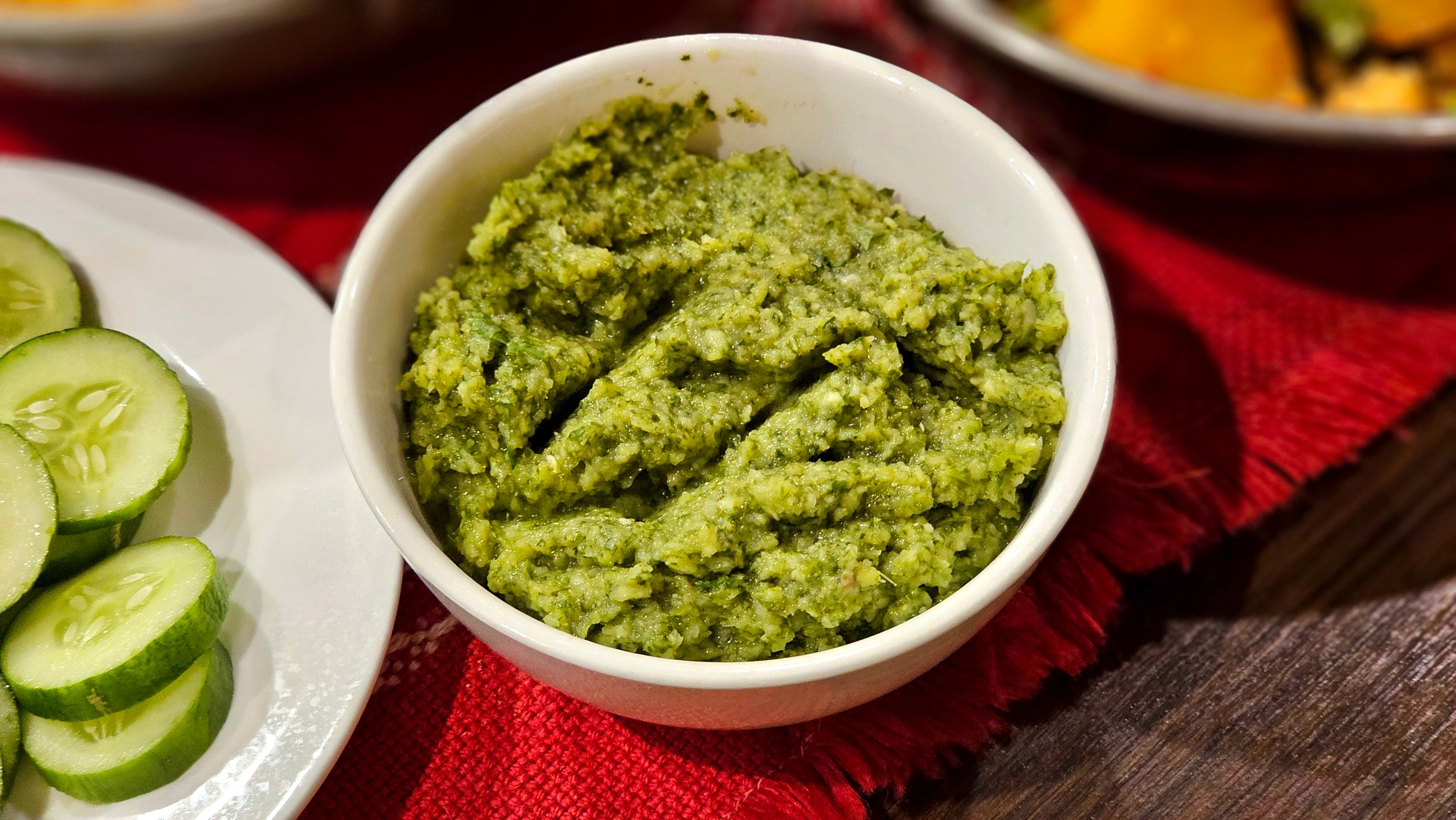
Zhug is a Middle Eastern herb sauce (parsley, cilantro, garlic, lemon, olive oil). Primarily herbs and oil with minimal net carbs (~2-3g per 2-3 tablespoon serving). Fits keto as a condiment.
Some keto practitioners avoid lemon juice in zhug due to citric acid concerns or prefer to count all carbs strictly, though the amount per serving is negligible for most.
Zhug is a Middle Eastern herb sauce made primarily from fresh herbs (parsley, cilantro), garlic, lemon juice, and olive oil. The base ingredients are plant-based. However, some commercial versions may contain dairy or be processed with animal-derived ingredients, so whole-food preparation is recommended.
Some commercial zhug products may include dairy-based thickeners or be processed in facilities handling animal products, though traditional recipes are entirely plant-based. Homemade versions are unambiguously vegan.
Zhug is a Middle Eastern herb sauce typically made from parsley, cilantro, garlic, lemon juice, and olive oil. Core ingredients are paleo-compliant, but commercial versions may contain added salt, seed oils, or preservatives. Homemade versions with olive oil are acceptable.
Strict paleo practitioners may avoid any processed condiments, even herb-based ones, preferring whole herbs and fresh ingredients. However, most modern paleo practitioners accept homemade zhug as a compliant sauce.
Zhug is a Middle Eastern herb sauce made primarily from fresh herbs (parsley, cilantro), garlic, lemon, and olive oil. It embodies Mediterranean principles: whole plant foods, extra virgin olive oil as primary fat, minimal processing, and fresh herbs. Aligns with Levantine Mediterranean traditions.
Zhug is a plant-based sauce made primarily from herbs (cilantro, parsley), garlic, and spices. All plant-derived foods and plant-based seasonings are excluded from the carnivore diet. This directly violates core carnivore principles.
Zhug is a Middle Eastern herb sauce typically made from cilantro, parsley, garlic, lemon juice, and olive oil. The base ingredients are compliant, but commercial versions may contain added sugars, vinegars with sulfites, or other additives. Homemade versions with compliant ingredients would be approved; store-bought requires careful label review.
Official Whole30 guidelines allow herb-based sauces made from compliant ingredients, but the program discourages relying on processed condiments. Homemade zhug with fresh herbs, lemon juice, and olive oil is fully compliant; commercial versions require scrutiny for added sugars or non-compliant additives.
Zhug is a Middle Eastern herb sauce typically made with fresh cilantro, parsley, garlic, and onion. Garlic and onion are high-FODMAP ingredients due to fructans. Even small amounts of these aromatics in zhug make it unsuitable for the elimination phase.
Some commercial zhug products may use garlic-infused oil instead of fresh garlic cloves, which would be low-FODMAP. However, traditional zhug recipes contain fresh garlic and onion, making them high-FODMAP. Verification of specific product ingredients is essential before consumption.
Zhug is a Middle Eastern herb sauce made primarily from parsley, cilantro, garlic, and olive oil. Rich in antioxidants, minerals, and heart-healthy monounsaturated fat from olive oil. Low sodium when prepared fresh without added salt. Aligns with DASH emphasis on herbs/spices for flavor instead of sodium.
Zhug is a Middle Eastern herb sauce primarily composed of parsley, cilantro, garlic, and olive oil. The herb base is negligible in carbohydrates and provides polyphenols and micronutrients. Olive oil content (monounsaturated fat) aligns perfectly with Zone fat guidelines. Minimal protein and carbohydrate impact allows use as a flavor enhancer without disrupting macronutrient ratios. Supports anti-inflammatory protocol.
Zhug is a Middle Eastern herb sauce made primarily from fresh herbs (parsley, cilantro, dill), garlic, lemon juice, and olive oil. It is rich in polyphenols, antioxidants, and anti-inflammatory compounds from herbs and spices. Garlic contains allicin (anti-inflammatory), and extra virgin olive oil provides oleocanthal (a natural anti-inflammatory). Lemon juice adds vitamin C and citric acid. The sauce is minimally processed and free of refined sugars or additives. Zhug exemplifies anti-inflammatory eating principles and can enhance the anti-inflammatory profile of other foods.
Zhug is a herb-based sauce (typically parsley, cilantro, garlic, lemon, olive oil). As a condiment, it adds flavor and micronutrients with minimal calories. The herbs provide antioxidants and fiber; olive oil provides unsaturated fat in moderation. Used as a sauce (not a primary food), it enhances protein-rich dishes without triggering GI distress. Portion-controlled by nature.
Nutritional profile
Six traits that cut across every diet.
Fiber & Plants
How much whole-plant food and fiber it delivers.
Healthy Fats
The quality of its fats (unsaturated, omega-3).
Whole / Unprocessed
How close it is to its natural, unprocessed form.
Gut Gentle
How easy it is on digestion (low FODMAP, few irritants).
Low Glycemic
How little it spikes your blood sugar.
Protein Density
How much protein it packs per calorie.
Controversy Index
Score range: 1–9/10. Higher controversy = more disagreement between diets.
Diet-Specific Tips for Zhug
 Keto — 8/10
- Herb-based (low carb)
- High-fat olive oil base
- Minimal net carbs per serving
- Works as keto-friendly condiment
 Vegan — 8/10
- Herb-based sauce with plant ingredients
- Traditional recipe is fully plant-based
- Commercial versions may vary in ingredients
- Check labels for dairy or animal-derived additives
 Paleo — 6/10
- Herb-based
- Often contains added salt
- May use seed oils commercially
- Homemade version is compliant
 Mediterranean — 9/10
- Fresh herbs
- Extra virgin olive oil base
- Minimal processing
- No added sugars
- Traditional Mediterranean/Levantine
 Whole30 — 5/10
- Herb-based sauce
- Compliant base ingredients possible
- Commercial versions may contain additives
- Homemade version is fully compliant
 DASH — 9/10
- Fresh herbs provide antioxidants
- Olive oil source of healthy fat
- Low sodium when prepared fresh
- Flavor enhancement without salt
- Minimal processing
 Zone — 8/10
- Monounsaturated fat source (olive oil)
- Negligible carbohydrate
- Minimal protein impact
- High polyphenol content
- Flavor enhancer without macro disruption
 Anti-Inflammatory — 8/10
- Fresh herbs (parsley, cilantro, dill) — high in polyphenols
- Garlic (allicin)
- Extra virgin olive oil (oleocanthal)
- Lemon juice (vitamin C)
- No refined sugars or additives
- Enhances anti-inflammatory profile of other foods
 GLP-1 Friendly — 7/10
- herb-based condiment
- minimal calories
- unsaturated fat source
- enhances nutrient-dense foods
- low portion size by design