FoodRef · Recipe for Shrimp Pad Thai
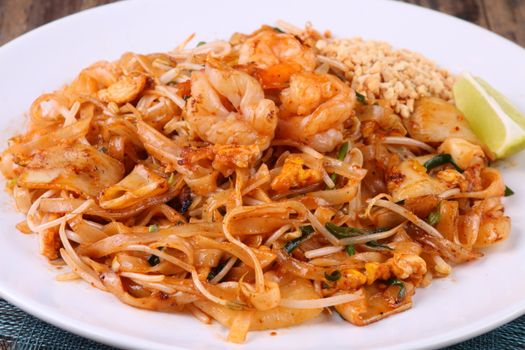
Pad Thai with Shrimp and Tofu
0 approve · 5 caution · 6 avoid
Standard deviation of the 11 scores. Higher = the diets disagree more.
The diets react (see scores below)
Ingredients
- 8 ounces sen lek (dried ⅛-inch-wide flat rice noodles) or other pad Thai noodles
- ¼ cup minced garlic
- 2 tablespoons minced shallot
- ¼ cup minced Thai sweet preserved radish (optional; see Tip)
- 10 to 12 peeled and deveined medium shrimp
- 8 ounces superfirm (pressed) tofu, cut into bite-size cubes or rectangles (1 cup)
- 4 large eggs, lightly beaten
- 2 cups bean sprouts
- 1 small bunch garlic chives or scallion greens, cut into 1-inch lengths (½ cup)
- 3 tablespoons vegetable oil, plus more for cooking eggs
- Chopped peanuts, chile powder and lime wedges, for serving
- ⅓ cup fish sauce
- ⅓ cup tamarind liquid or concentrate
- ⅓ cup coconut or other palm sugar or dark brown sugar
Instructions
- Prepare the noodles: Place dried noodles in a large bowl and cover with hot tap water. Let soak for 20 to 30 minutes while you prepare the remaining ingredients, allowing the water to cool, and stirring and separating the noodles occasionally with your hands. When ready, noodles will be white, limp and almost soft to the bite. (They will cook a little more later on.) Pour off all the water, fluff noodles with your hands, and set aside.
- Meanwhile, make the sauce: Combine the fish sauce, tamarind and coconut palm sugar in a small saucepan. Bring to a simmer over medium heat, stirring often, just until sugar has dissolved, 3 to 4 minutes. Set aside to cool.
- Line up the ingredients in the order they'll be cooked: Place the garlic, shallot, radish and shrimp in a bowl, then line up the tofu, noodles, sauce, eggs, bean sprouts and chives. When ready to cook, place 1 cup of hot tap water near the stove.
- Heat 3 tablespoons of oil in a 14-inch wok, a heavy 12-inch skillet or a large Dutch oven medium-high heat until shimmering. (If using a smaller pan, cook in 2 batches.) Add the contents of the garlic bowl and stir-fry over medium heat, adjusting the flame so the ingredients are sizzling but not popping or scorching, until the shrimp are nearly pink, 2 to 3 minutes. Add the tofu and stir-fry to heat through, about 2 minutes.
- Add noodles and raise the heat as high as it goes, tossing and separating them with a wok turner, tongs or both. When noodles are sizzling, add about half the sauce and 1 tablespoon water, and stir-fry, tossing to coat and cook through.
- Taste a noodle for doneness and seasoning. If needed, add more sauce and water, and keep cooking, turning often, until noodles are softened and savory.
- Push noodles to one side of the pan, add enough oil to lightly coat the other side, and add the eggs. Use the spatula to scramble the eggs, stirring and scraping until cooked through and just dry, 1 to 2 minutes, then stir them into the noodles.
- Add the bean sprouts and chives, and stir to combine. Serve immediately, passing the peanuts, chile powder and lime wedges to adjust seasoning to taste.
Diet-by-diet
High sodium from fish sauce and preserved radish, plus added sugar, pushes this away from DASH targets, though shrimp, tofu, eggs, and vegetables add some merit.
Includes seafood and vegetables but relies on rice noodles, fish sauce, palm sugar, and vegetable oil rather than olive oil and whole grains.
Contains shrimp, eggs, and fish sauce, all non-vegan, despite the tofu and vegetable components.
Predominantly noodles, tofu, and vegetables with only a small amount of shrimp and eggs — opposite of a carnivore approach.
Rice noodles, tofu (legume), sugar, and vegetable oil are all non-paleo, though shrimp and eggs are compliant.
Rice noodles and ⅓ cup palm sugar make this a high-carb dish unsuitable for keto.
¼ cup garlic, shallot, and garlic chives are major high-FODMAP offenders, making this poorly tolerated.
Rice noodles, tofu, soy-adjacent ingredients, sugar, and vegetable oil all violate Whole30 rules.
Balanced protein from shrimp, tofu, and eggs with carbs and some fat — roughly in Zone proportions, though sugar load is high.
Shrimp, tofu, eggs, and bean sprouts offer benefits, but vegetable oil, added sugar, and refined rice noodles add inflammatory load.
Moderate protein from shrimp, tofu, and eggs supports satiety, but refined noodles and added sugar lower the GLP-1 friendliness.