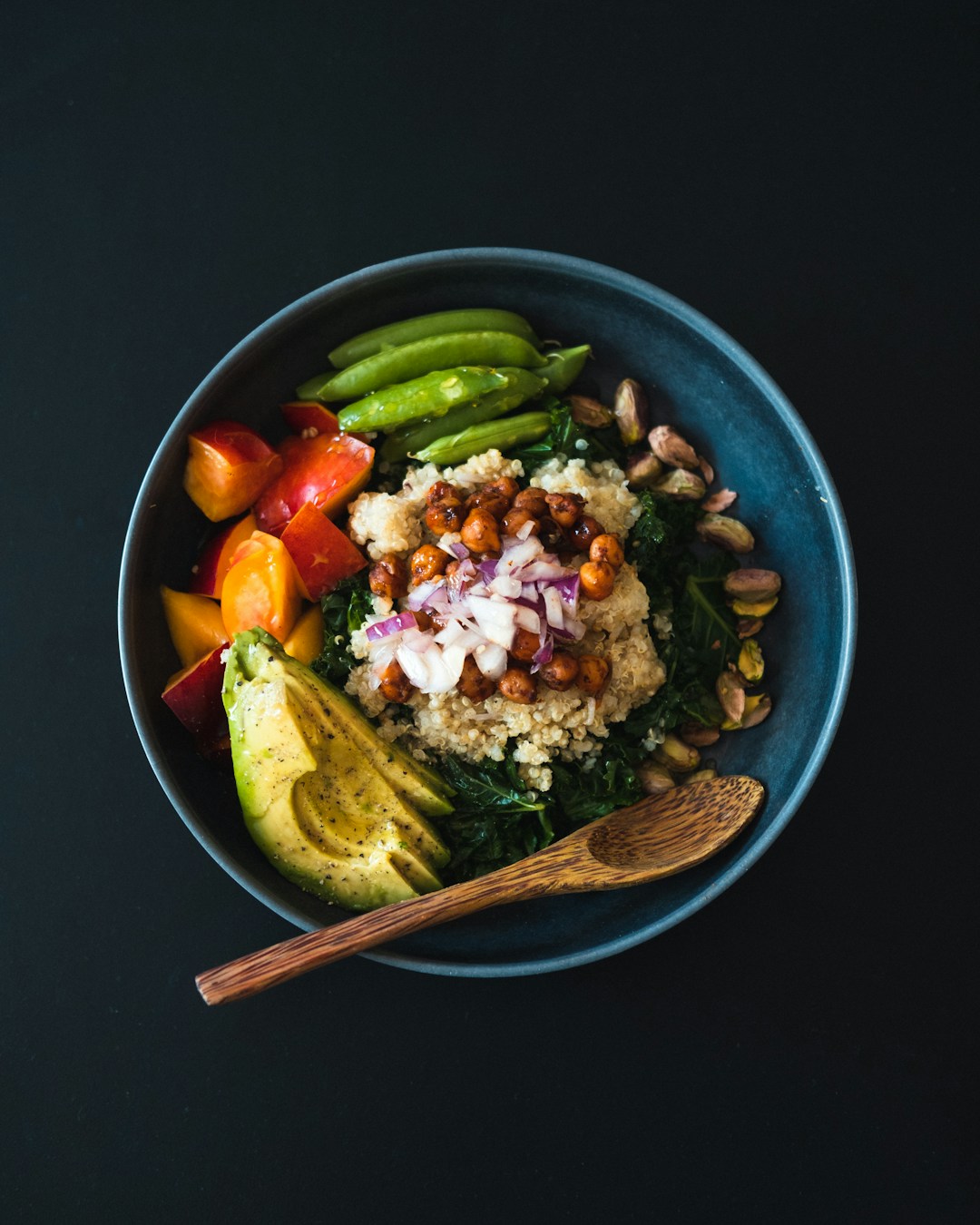
Photo: Sonny Mauricio / Unsplash
American
Quinoa Buddha Bowl
The diets react (see scores below)
Common Ingredients
- quinoa
- kale
- roasted sweet potato
- chickpea
- avocado
- tahini
- lemon
Specific recipes may vary.
Incompatible with 5 of 11 diets
Diet Ratings
This bowl stacks three high-carb foods together: quinoa is a grain-like seed with roughly 17g net carbs per half-cup cooked, sweet potato adds another 17-20g net carbs per cup, and chickpeas contribute around 13g net carbs per half-cup. A single serving easily exceeds 45-60g net carbs before counting the kale, which will blow through an entire day's keto carb allowance. The avocado and tahini are the only keto-friendly elements.
Every ingredient in this Buddha bowl is a whole plant food: quinoa (complete plant protein), kale (leafy green), sweet potato, chickpeas (legume), avocado (healthy fats), tahini (sesame seed paste), and lemon. There are no animal products or animal-derived ingredients, and the dish exemplifies the whole-food plant-based ideal that vegan nutrition advocates promote.
This bowl is built around quinoa (a pseudo-grain) and chickpeas (a legume), both of which are explicitly excluded from the paleo diet due to their anti-nutrient content (phytates, lectins, saponins) and lack of availability to Paleolithic humans. While kale, sweet potato, avocado, and lemon are paleo-approved, and tahini (sesame seeds) is acceptable, the two primary components disqualify the dish entirely.
This bowl is plant-forward and aligns strongly with Mediterranean principles: legumes (chickpeas), leafy greens (kale), a whole grain, healthy fats from avocado and tahini, and a citrus accent. While quinoa is a South American grain rather than a traditional Mediterranean staple, it functions identically to whole grains like farro or bulgur and is widely embraced in modern Mediterranean-style eating. The only minor gap is the absence of extra virgin olive oil as the primary fat, though tahini and avocado provide comparable healthy fats.
Strict traditionalists may downgrade this slightly because quinoa is not native to the Mediterranean basin and the dish lacks the canonical extra virgin olive oil; some would prefer a farro or barley base with an olive oil-lemon dressing to be fully authentic.
This dish is entirely plant-based with zero animal products. Every single ingredient — quinoa (pseudo-grain), kale (cruciferous vegetable), sweet potato (starchy tuber), chickpea (legume), avocado (fruit), tahini (sesame seed paste), and lemon (citrus fruit) — is excluded on the carnivore diet. There is no debate across any carnivore protocol about this.
This dish contains two explicitly excluded ingredients: quinoa (a pseudo-grain excluded under the Whole30 grains rule) and chickpeas (a legume). Both are categorically off-limits for the 30-day program, regardless of preparation.
While quinoa, kale, and tahini (in small amounts) are low-FODMAP, this bowl combines multiple high-FODMAP ingredients in a single serving. Chickpeas are high in GOS (Monash rates them low-FODMAP only at 1/4 cup canned and well-rinsed). Sweet potato becomes high-FODMAP (mannitol) above 1/2 cup. Avocado is high in sorbitol above 1/8 fruit. Stacking these three FODMAP sources in one meal creates significant cumulative FODMAP load that would not be tolerated during elimination phase.
This bowl is a textbook DASH-aligned meal: whole grain (quinoa), leafy green vegetable (kale), potassium-rich vegetable (sweet potato), plant-based legume protein (chickpea), heart-healthy monounsaturated fat (avocado), and a sesame-based dressing (tahini) with lemon instead of high-sodium condiments. It delivers abundant fiber, potassium, magnesium, calcium, and plant protein with no added sodium or saturated fat of concern, assuming minimal salt is added in preparation.
This bowl is carb-heavy and protein-light, which makes hitting the Zone's 40/30/30 ratio difficult. Quinoa, sweet potato, and chickpeas are all carbohydrate sources — quinoa and chickpeas do provide some protein, but not enough to balance the carb load without significant portion control. Sweet potato is higher glycemic than ideal, though better than white potato. Kale is an excellent favorable vegetable, and avocado/tahini provide good monounsaturated fats (though fat blocks would need to be modest given the dish already overshoots carbs). To make this Zone-compliant, carb portions would need to be cut substantially and a leaner, more concentrated protein (or extra tofu/egg whites) added. As served, it's usable but unbalanced.
Some Zone practitioners following Sears' later anti-inflammatory writings are more lenient with plant-based bowls, viewing quinoa and chickpeas as acceptable 'unfavorable' carbs when paired with anti-inflammatory fats like avocado and tahini. From that view, the bowl could score closer to 6-7 if portioned carefully.
This bowl is a textbook anti-inflammatory meal. Quinoa is a whole grain providing fiber and plant protein; kale delivers antioxidants, vitamin K, and carotenoids; sweet potato contributes beta-carotene and polyphenols; chickpeas add fiber and legume-based protein; avocado provides monounsaturated fats and anti-inflammatory phytosterols; tahini (sesame) offers lignans and healthy fats; and lemon adds vitamin C and polyphenols. Every component aligns with Dr. Weil's Anti-Inflammatory Pyramid, and the combination is rich in fiber, polyphenols, and healthy fats with no refined carbs, added sugar, or pro-inflammatory oils.
This bowl is high in fiber (kale, sweet potato, chickpeas, quinoa) and nutrient-dense, which supports digestion and satiety—both important for GLP-1 patients. However, it falls short on the #1 priority: protein. Chickpeas and quinoa provide only modest protein (likely 12-18g total), well below the 15-30g per meal target. Additionally, avocado and tahini add significant fat per serving, which can worsen GLP-1 side effects like nausea and delayed gastric emptying. The volume of the bowl may also be challenging given reduced appetite. Adding a lean animal protein (grilled chicken, salmon) or extra legumes, and reducing tahini/avocado portions, would shift this to an approve.
Some GLP-1 RDs would rate this higher, emphasizing that plant-based bowls with legumes and whole grains provide excellent fiber and micronutrients that help manage constipation—a common side effect—and that the unsaturated fats from avocado and tahini are heart-healthy. Others weigh the protein shortfall more heavily and the fat content as a GI tolerance risk, especially on or shortly after injection day.
*See how scores were generated at our methodology page.
Nutritional profile
Six traits that cut across every diet.
Fiber & Plants
How much whole-plant food and fiber it delivers.
Healthy Fats
The quality of its fats (unsaturated, omega-3).
Whole / Unprocessed
How close it is to its natural, unprocessed form.
Gut Gentle
How easy it is on digestion (low FODMAP, few irritants).
Low Glycemic
How little it spikes your blood sugar.
Protein Density
How much protein it packs per calorie.
Controversy Index
Higher controversy = more disagreement between diets.
Diet-Specific Tips
 Vegan — 10/10
View tips
- All ingredients are whole plant foods
- No animal products or derivatives
- Provides complete protein via quinoa and chickpeas
- Nutrient-dense and minimally processed
- Aligns with both ethical vegan and whole-food plant-based standards
 Mediterranean — 9/10
View tips
- Whole grain base (quinoa)
- Legume inclusion (chickpeas)
- Abundant vegetables (kale, sweet potato)
- Healthy plant fats (avocado, tahini)
- No red meat, processed ingredients, or added sugar
- Lacks olive oil, the canonical Mediterranean fat
 DASH — 10/10
View tips
- Whole grain base (quinoa) provides fiber and magnesium
- Kale and sweet potato are potassium- and nutrient-dense vegetables emphasized by DASH
- Chickpeas supply plant protein and fiber from the legumes group
- Avocado and tahini provide unsaturated fats aligned with DASH fat guidance
- Lemon-tahini dressing avoids the high sodium typical of bottled dressings
- Watch portion of tahini and ensure quinoa/chickpeas are cooked without added salt to stay within sodium targets
 Zone — 5/10
View tips
- Multiple carb sources (quinoa, sweet potato, chickpeas) make 40% carb ratio hard to hit
- Insufficient concentrated lean protein — chickpeas/quinoa protein is incomplete and carb-bound
- Sweet potato is moderate-to-high glycemic (unfavorable Zone carb)
- Kale is an ideal favorable Zone vegetable
- Avocado and tahini provide favorable monounsaturated fats
- Requires significant portion adjustment to fit Zone blocks
 Anti-Inflammatory — 9/10
View tips
- Whole grain (quinoa) with complete plant protein
- Cruciferous leafy green (kale) high in antioxidants
- Beta-carotene-rich sweet potato
- Legume (chickpeas) for fiber and polyphenols
- Monounsaturated fats from avocado and tahini
- Vitamin C from lemon enhances iron absorption
- No added sugar, refined carbs, or seed oils
 GLP-1 Friendly — 6/10
View tips
- Inadequate protein per serving for GLP-1 targets
- High fiber content supports digestion and satiety
- Moderate-to-high fat from avocado and tahini may worsen nausea
- Nutrient-dense whole foods with no ultra-processed ingredients
- Large bowl volume may be difficult with reduced appetite
- Unsaturated fats are the preferred fat type if tolerated
Community
Healthiest Quinoa Buddha Bowl recipes
Community-scanned recipes for Quinoa Buddha Bowl, ranked by their median score across all 11 diets.
Scan your Quinoa Buddha Bowl recipe →