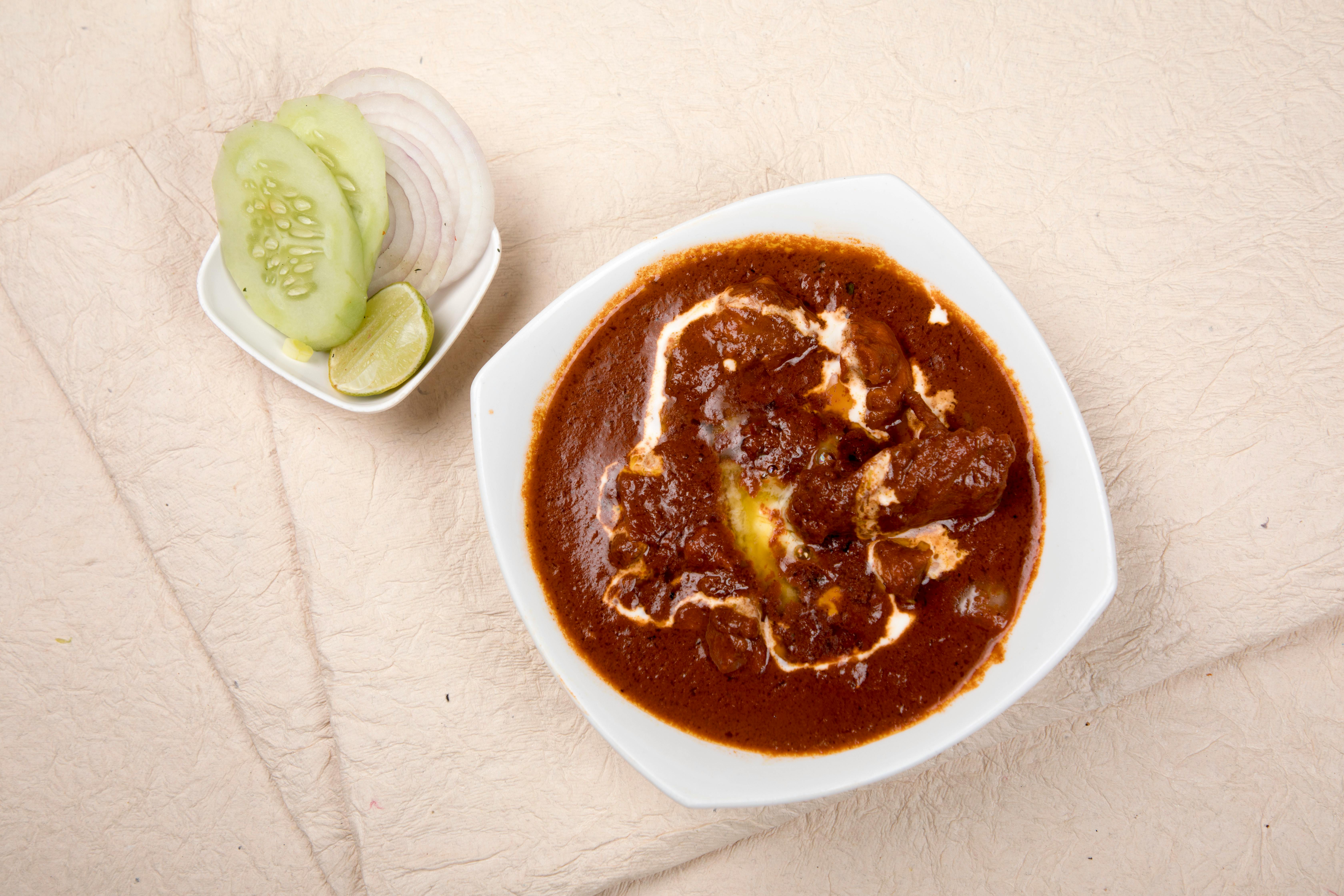
Photo: Milton Das / Pexels
The diets react (see scores below)
Common Ingredients
- lamb
- yogurt
- Kashmiri chili
- fennel seeds
- ginger
- cardamom
- cinnamon
- ghee
Specific recipes may vary.
Incompatible with 6 of 11 diets
Diet Ratings
Rogan Josh as prepared here is largely keto-compatible. Lamb is an excellent high-fat, moderate-protein keto protein source. Ghee is a preferred keto fat. The spices (Kashmiri chili, fennel seeds, ginger, cardamom, cinnamon) contribute negligible net carbs in typical culinary quantities. Yogurt is the main variable — a moderate amount of full-fat yogurt adds only a few grams of net carbs and is generally acceptable. The dish contains no grains, starchy vegetables, or added sugars. Estimated net carbs per serving are roughly 4-7g, well within daily keto limits.
Strict and carnivore-adjacent keto practitioners may flag the yogurt due to its lactose content and potential mild insulin response, and some warn that fennel seeds and certain spices can accumulate carbs if used heavily. These practitioners would recommend substituting yogurt with heavy cream or simply omitting it.
Rogan Josh contains multiple animal products that are strictly excluded from a vegan diet. Lamb is a direct animal flesh product, yogurt is a dairy derivative, and ghee is clarified butter — also a dairy product. These three ingredients alone make this dish fundamentally incompatible with veganism at every level of the vegan community. There is no ambiguity here.
Rogan Josh contains two problematic ingredients that prevent a paleo approval. Yogurt is dairy and explicitly excluded under paleo rules — unlike ghee, yogurt retains both casein and lactose, making it a clear avoid. Ghee itself is debated: The Paleo Diet (Cordain) discourages it, while many modern paleo practitioners accept it since the milk solids are removed. The remaining ingredients — lamb, Kashmiri chili, fennel seeds, ginger, cardamom, cinnamon — are all paleo-compliant spices and protein sources. However, yogurt is a foundational ingredient in authentic Rogan Josh (used as the braising liquid and tenderizer), not an optional garnish, so the dish as described cannot be approved or treated as merely cautionary. The ghee adds a second point of debate but is secondary to the yogurt issue.
Some paleo practitioners following a more permissive approach (e.g., Primal Blueprint by Mark Sisson) allow full-fat fermented dairy like yogurt in moderation, arguing that fermentation reduces lactose and improves digestibility. Under that framework, a grass-fed lamb Rogan Josh made with full-fat yogurt and ghee could be considered a caution-level dish rather than an avoid.
Rogan Josh is fundamentally incompatible with Mediterranean diet principles. Lamb is a red meat, which the Mediterranean diet restricts to a few times per month at most. The dish is cooked in ghee (clarified butter), a saturated animal fat that directly contradicts the Mediterranean emphasis on extra virgin olive oil as the primary fat source. While the aromatic spices (ginger, cardamom, cinnamon, fennel) and yogurt have some merit, the combination of red meat and ghee as the two dominant components places this dish firmly in the 'avoid' category. The dish also has no plant-forward base — no legumes, whole grains, or significant vegetables to offset the red meat load.
Rogan Josh is fundamentally incompatible with the carnivore diet despite its lamb base. The dish contains multiple plant-derived ingredients that are excluded on carnivore: Kashmiri chili, fennel seeds, ginger, cardamom, and cinnamon are all plant spices/seeds. These aren't trace seasonings — they are core to the dish's identity and flavor profile. The yogurt and ghee are debated dairy items, but the plant ingredients alone disqualify this dish. Even the most permissive carnivore practitioners (Saladino's animal-based approach) do not endorse consuming multiple spices and plant compounds in this quantity. The lamb itself is excellent, but as a prepared dish, Rogan Josh cannot be considered carnivore-compatible.
Rogan Josh as listed contains yogurt, which is a dairy product explicitly excluded on the Whole30 program. All other ingredients — lamb, Kashmiri chili, fennel seeds, ginger, cardamom, cinnamon, and ghee — are fully Whole30 compliant. Ghee is the one dairy exception explicitly allowed by the program. However, yogurt (a fermented dairy product) remains firmly on the excluded list with no exception. To make this dish Whole30-compliant, the yogurt would need to be omitted entirely or substituted with a compliant alternative such as coconut cream or coconut milk.
Rogan Josh contains several low-FODMAP-friendly ingredients — lamb (protein, no FODMAPs), ghee (fat, no lactose), ginger, Kashmiri chili, fennel seeds, cardamom, and cinnamon are all low-FODMAP at typical culinary amounts. However, yogurt is the primary concern: it contains lactose and is high-FODMAP at standard serving sizes (Monash rates regular yogurt as high-FODMAP; lactose-free yogurt would be safe). Traditional Rogan Josh recipes also frequently include onion and garlic, which are high-FODMAP fructan sources — while not listed here, their omission in a restaurant or home-cooked version cannot always be guaranteed. The listed ingredients suggest a simplified or adapted recipe. If yogurt is replaced with lactose-free yogurt and no onion/garlic is used, the dish would likely be approvable. As listed with standard yogurt, caution is warranted.
Monash University rates regular yogurt as high-FODMAP even at moderate portions due to lactose content, but some clinical FODMAP practitioners permit small amounts of full-fat yogurt (2–3 tablespoons) as a marinade or sauce base since cooking and dilution may reduce effective lactose per serving. Many FODMAP-adapted Rogan Josh recipes swap in lactose-free yogurt, which resolves this concern entirely.
Rogan Josh presents multiple concerns for the DASH diet. The primary protein is lamb, which is red meat high in saturated fat — a food category DASH explicitly limits. The dish is cooked in ghee, a clarified butter that is very high in saturated fat and cholesterol, directly conflicting with DASH's emphasis on vegetable oils and low-fat cooking. While the spices (fennel, ginger, cardamom, cinnamon, Kashmiri chili) are DASH-neutral or even beneficial, and yogurt aligns with low-fat dairy principles (if low-fat), the combination of red meat plus ghee makes this dish difficult to reconcile with DASH guidelines. The saturated fat load from both lamb and ghee together likely exceeds what DASH allows in a single meal. This is not a borderline case of one problematic ingredient — it has two significant DASH-conflict ingredients as core components.
NIH DASH guidelines explicitly limit both red meat and saturated fat sources like ghee; however, some updated DASH-oriented clinicians note that lean cuts of lamb (e.g., leg of lamb, trimmed) in small portions may be acceptable occasionally, and if ghee is replaced with olive or canola oil and yogurt is low-fat, a modified version of this dish could move into 'caution' territory.
Rogan Josh presents a mixed Zone Diet profile. The primary protein, lamb, is a higher-fat red meat compared to Zone-preferred lean proteins like skinless chicken or fish. However, it does provide complete protein and can be portioned to achieve the ~25g protein target per meal. The cooking fat, ghee (clarified butter), is a saturated fat — Zone methodology, particularly in Sears' earlier writings, limits saturated fat in favor of monounsaturated fats like olive oil. The spices (fennel, ginger, cardamom, cinnamon, Kashmiri chili) are actually Zone-favorable due to their polyphenol and anti-inflammatory properties, which aligns with Sears' later anti-inflammatory focus. Yogurt contributes a small amount of protein and carbs and is generally acceptable in Zone. The dish lacks a carbohydrate component, meaning it would need to be paired with low-glycemic vegetables (e.g., cauliflower, spinach, roasted peppers) to achieve the 40/30/30 ratio. The main concerns are the fatty cuts of lamb typically used and the ghee, both of which raise the saturated fat content above Zone ideals. With lean lamb cuts, controlled portion sizes, ghee minimized, and served alongside colorful low-GI vegetables, this dish can be incorporated into a Zone meal.
Sears' later anti-inflammatory work (e.g., 'The Zone Diet' updates and 'Toxic Fat') softened the strict anti-saturated fat stance somewhat, acknowledging that not all saturated fats are equally harmful. Additionally, lamb is a source of omega-3 fatty acids (especially grass-fed), conjugated linoleic acid (CLA), and zinc, which some Zone practitioners view more favorably. The rich spice blend provides significant polyphenol content, which Sears increasingly emphasized. Some Zone practitioners would rate this higher if prepared with lean lamb leg, minimal ghee, and paired with vegetables.
Rogan Josh presents a genuinely mixed anti-inflammatory profile. On the positive side, the spice blend is exceptional — ginger, cardamom, cinnamon, and fennel seeds all have documented anti-inflammatory properties, and Kashmiri chili contains capsaicin and carotenoids with antioxidant activity. Yogurt provides probiotics which support gut health and may modulate inflammation. However, two ingredients pull in the opposite direction: lamb is red meat, which anti-inflammatory guidelines recommend limiting due to its saturated fat and arachidonic acid content; and ghee is clarified butter — a saturated fat that anti-inflammatory frameworks (including Dr. Weil's pyramid) advise limiting. The combination of red meat cooked in ghee places this dish in the 'limit' category, even though the spice profile would otherwise be strongly anti-inflammatory. Occasional consumption is acceptable, especially if portion sizes are modest and the dish is part of an otherwise anti-inflammatory diet, but it cannot be approved as a regular staple.
Some integrative nutrition practitioners, particularly those drawing on Ayurvedic principles, consider ghee a functional fat with anti-inflammatory properties (rich in butyrate, CLA, and fat-soluble vitamins), distinguishing it favorably from industrial butter — a view reflected in some functional medicine protocols. Similarly, grass-fed lamb has a more favorable omega-3 to omega-6 ratio than grain-fed red meat, leading certain practitioners to rate it less harshly than conventional red meat. Dr. Weil's framework, by contrast, groups ghee with saturated fats to limit, and places red meat firmly in the 'limit' category regardless of sourcing.
Rogan Josh is a slow-cooked lamb curry that presents a mixed nutritional profile for GLP-1 patients. On the positive side, lamb is a complete protein source delivering roughly 25-28g protein per 150g serving, and the aromatic spices (ginger, cardamom, fennel, cinnamon) are generally gentle on digestion and may even support GI comfort. Yogurt adds a small protein and probiotic contribution. However, the dish has meaningful drawbacks: lamb is a fatty red meat with significant saturated fat content, and ghee (clarified butter) is pure saturated fat, together pushing total fat per serving high enough to risk worsening GLP-1 side effects such as nausea, bloating, and reflux. Slowed gastric emptying means high-fat meals sit in the stomach longer, amplifying discomfort. Kashmiri chili is milder than most chilies and less likely to trigger reflux than sriracha or habanero, but it is still a spice consideration. Fiber content is negligible. Nutrient density per calorie is moderate — the protein is real and valuable, but the saturated fat load and absence of fiber make this a portion-sensitive choice rather than an ideal GLP-1 meal. A small serving (100-120g) alongside a fiber-rich side such as lentils or roasted vegetables could make this workable.
Some GLP-1-focused dietitians consider lamb an acceptable protein source given its complete amino acid profile and high satiety per gram of protein, and may permit Rogan Josh in small portions, particularly if ghee is reduced or substituted with a smaller amount of olive oil. Others flag all fatty red meat preparations cooked with saturated fats as consistently problematic for GLP-1 patients due to the compounding effect of slowed gastric emptying and high fat content, and would recommend switching to a leaner protein base such as chicken or chickpeas in the same curry preparation.
*See how scores were generated at our methodology page.
Nutritional profile
Six traits that cut across every diet.
Fiber & Plants
How much whole-plant food and fiber it delivers.
Healthy Fats
The quality of its fats (unsaturated, omega-3).
Whole / Unprocessed
How close it is to its natural, unprocessed form.
Gut Gentle
How easy it is on digestion (low FODMAP, few irritants).
Low Glycemic
How little it spikes your blood sugar.
Protein Density
How much protein it packs per calorie.
Controversy Index
Higher controversy = more disagreement between diets.
Diet-Specific Tips
 Keto — 8/10
View tips
- Lamb is a high-fat, zero-carb protein ideal for keto
- Ghee is a preferred keto cooking fat
- Full-fat yogurt adds minimal net carbs in typical serving amounts but is debated by strict keto followers
- Spices used in standard culinary amounts contribute negligible net carbs
- No grains, starches, or added sugars in this preparation
- Estimated 4-7g net carbs per serving — well within daily limits
 Low-FODMAP — 5/10
View tips
- Yogurt contains lactose — high-FODMAP at standard servings; lactose-free substitution required for safe elimination phase use
- Lamb is a pure protein source with zero FODMAPs — fully safe
- Ghee is clarified butter with negligible lactose — low-FODMAP approved
- Spices (Kashmiri chili, fennel seeds, ginger, cardamom, cinnamon) are all low-FODMAP at culinary quantities
- Traditional Rogan Josh almost always includes onion and garlic (high-FODMAP fructans) — their absence from the listed ingredients raises uncertainty about the actual recipe preparation
- Fennel seeds are low-FODMAP up to 1 teaspoon per serving — typical spice amounts are safe
 Zone — 5/10
View tips
- Lamb is a higher-fat red meat — Zone prefers lean proteins like chicken or fish
- Ghee is a saturated fat, not the preferred monounsaturated fat (olive oil, avocado)
- Spice blend (ginger, cardamom, cinnamon, fennel, chili) is rich in polyphenols — Zone-favorable
- Yogurt is an acceptable Zone dairy component in moderate amounts
- Dish is carbohydrate-deficient and must be paired with low-GI vegetables to achieve 40/30/30
- Lean cuts of lamb (leg vs. shoulder) would significantly improve Zone compatibility
- Grass-fed lamb provides omega-3s and CLA, which align with Sears' anti-inflammatory principles
 Anti-Inflammatory — 4/10
View tips
- Lamb (red meat): pro-inflammatory — high in saturated fat and arachidonic acid; anti-inflammatory guidelines recommend limiting red meat
- Ghee: saturated fat classified as 'limit' in anti-inflammatory frameworks including Dr. Weil's pyramid
- Ginger: well-established anti-inflammatory (inhibits COX-2 and prostaglandin synthesis)
- Cinnamon: anti-inflammatory polyphenols, supports blood sugar regulation
- Cardamom: antioxidant and anti-inflammatory flavonoids
- Kashmiri chili: capsaicin with anti-inflammatory and antioxidant properties; rich in carotenoids
- Fennel seeds: anti-inflammatory flavonoids including quercetin and kaempferol
- Yogurt: probiotic benefits; supports gut microbiome and may reduce systemic inflammation
 GLP-1 Friendly — 4/10
View tips
- Lamb is a high-protein but high-saturated-fat red meat — not ideal for GLP-1 patients
- Ghee adds additional saturated fat load, increasing nausea and reflux risk
- Slowed gastric emptying amplifies discomfort from high-fat meals
- Kashmiri chili is relatively mild and less likely to trigger reflux than hot chilies
- Spice blend (ginger, cardamom, fennel, cinnamon) is generally digestion-friendly
- Negligible fiber content — needs a fiber-rich side to meet daily targets
- Protein yield is meaningful (~25-28g per 150g serving) but comes with a significant fat cost
- Portion-sensitive: a small serving reduces fat exposure while preserving protein benefit