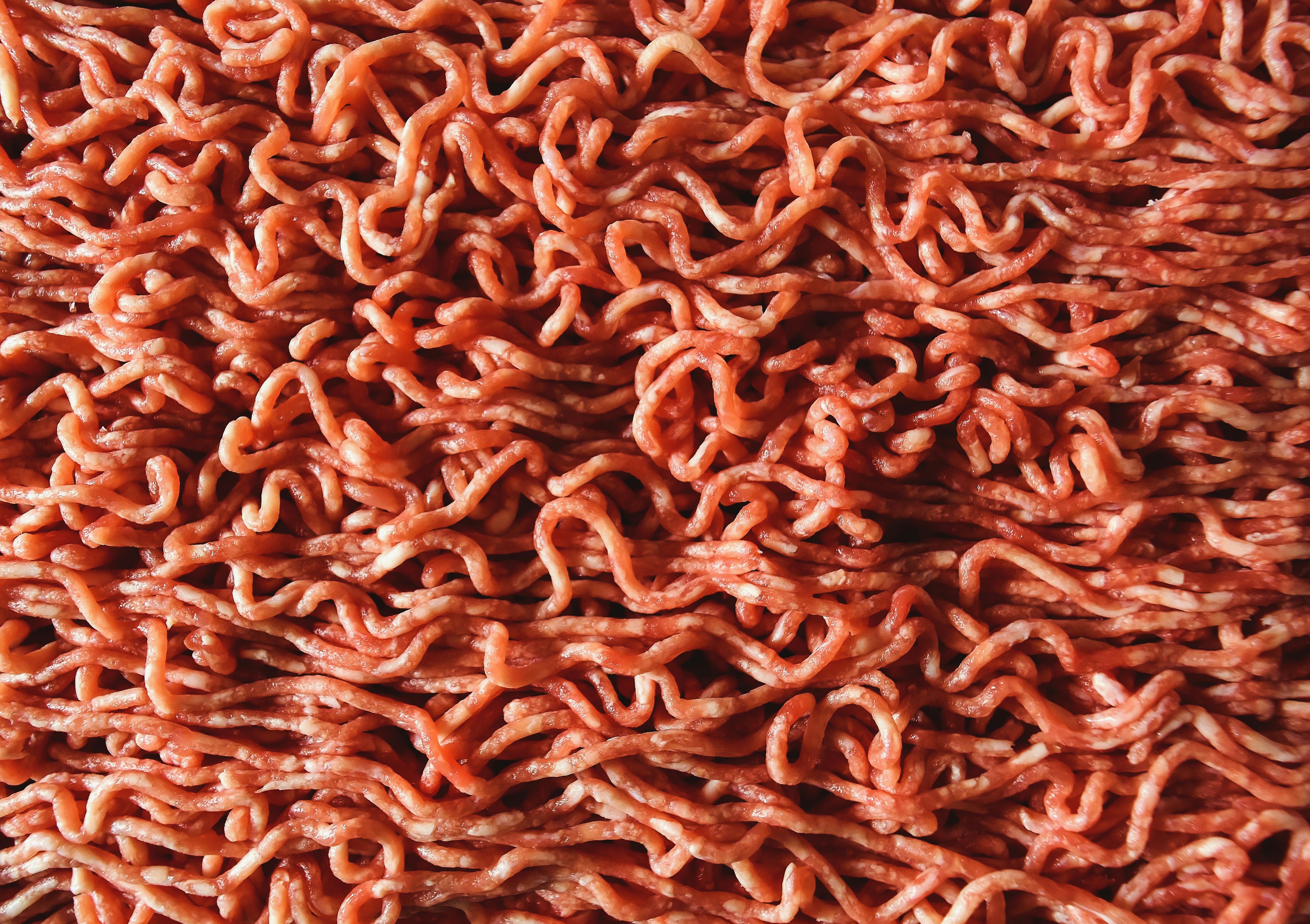
Extra-lean ground beef (95% lean)
Rated by 11 diets
The diets react (see scores below)
Diet Ratings
95% lean beef is very low in fat (~5g per 100g), which conflicts with keto's 70-80% fat requirement. Usable in keto but requires added fat sources to meet macros. Standard keto prefers 80/20 or 85/15 ground beef.
Some keto practitioners accept extra-lean meats as long as total daily fat intake meets targets through other sources (oils, butter, fatty cuts elsewhere), viewing it as macro-flexible rather than food-restricted.
Ground beef is meat from a slaughtered animal. Leanness does not change its fundamental status as an animal product prohibited by vegan diet rules.
Unprocessed meat from grass-fed or pasture-raised cattle is a paleo staple. Extra-lean designation reduces saturated fat but maintains protein and micronutrients. Minimal processing.
Red meat is limited to a few times per month in Mediterranean diet. Even extra-lean beef should be consumed sparingly. While the lean cut reduces saturated fat, beef remains a red meat that should not be a dietary staple.
While beef is approved, extra-lean cuts remove beneficial fat that carnivore practitioners prioritize for satiety, hormone production, and nutrient absorption. Most carnivore practitioners prefer fattier cuts (80/20 or 85/15 ground beef). However, it remains animal-derived meat without additives.
Some practitioners, particularly those focused on protein intake or managing caloric density, accept extra-lean beef as a valid option. The core issue is preference for fat content rather than food type incompatibility.
Unprocessed meat is explicitly allowed on Whole30. Extra-lean ground beef is a whole, unprocessed protein with no excluded ingredients. The leanness does not affect compliance.
Plain meat with minimal fat content contains no FODMAPs. Beef is a protein-based food free from fermentable carbohydrates, oligosaccharides, disaccharides, monosaccharides, and polyols. Safe at any reasonable serving size during elimination phase.
Lean beef is acceptable in DASH but red meat should be limited. 95% lean minimizes saturated fat compared to regular ground beef. DASH recommends lean meats in moderation (≤2 servings/week red meat). Portion control essential.
Extra-lean ground beef (95% lean) is an excellent Zone protein source. ~3.5 oz provides ~25g protein with minimal saturated fat (~2-3g per serving). Fits cleanly into a protein block with minimal fat block contribution, allowing flexibility for monounsaturated fat sources. Sears favors lean red meat as a favorable protein option.
Extra-lean ground beef is significantly lower in saturated fat than conventional beef, bringing it closer to anti-inflammatory guidelines. However, red meat is still a source of arachidonic acid (an omega-6 polyunsaturated fat that can promote inflammation) and heme iron, which may increase oxidative stress in excess. The anti-inflammatory framework recommends limiting red meat in favor of fatty fish and poultry. 95% lean is acceptable occasionally but should not be a staple.
Excellent protein source (22g per 3 oz) with relatively low fat (5g per 3 oz), but saturated fat content (~2g per 3 oz) is moderate. Red meat is nutrient-dense (iron, B12) but slower to digest than poultry or fish. Clinical opinion splits on whether the saturated fat burden justifies inclusion given abundant leaner alternatives.
Some obesity medicine physicians view extra-lean ground beef as acceptable protein; others recommend prioritizing poultry and fish due to lower saturated fat and easier digestibility in the context of slowed gastric emptying.
Controversy Index
Score range: 1–9/10. Higher controversy = more disagreement between diets.
Diet-Specific Tips for Extra-lean ground beef (95% lean)
 Keto — 5/10
- Only ~5g fat per 100g serving
- Requires supplemental fat pairing
- Zero carbs
- High protein density
 Paleo — 8/10
- Unprocessed meat
- High protein
- Bioavailable nutrients
- No additives if sourced cleanly
 Mediterranean — 6/10
- red meat category
- limited frequency recommended
- reduced saturated fat content
- occasional use only
 Carnivore — 5/10
- minimal fat content
- high protein-to-fat ratio
- pure beef with no additives
- suboptimal for satiety and micronutrient absorption
 Whole30 — 9/10
- Whole meat product
- No added ingredients or excluded substances
- Compliant protein source
 Low-FODMAP — 9/10
- No carbohydrates or FODMAPs in plain meat
- Minimal processing
- Safe at any portion
 DASH — 5/10
- Red meat (limit frequency)
- Very low saturated fat for beef
- Good protein
- Requires portion control
- Limit to 2 servings/week
 Zone — 8/10
- Lean protein density (~25g per 3.5 oz)
- Low saturated fat content for red meat
- Minimal fat block requirement
- Favorable Zone protein classification
 Anti-Inflammatory — 6/10
- red meat
- arachidonic acid
- lower saturated fat than conventional beef
- heme iron
 GLP-1 Friendly — 7/10
- High protein (22g per 3 oz)
- Moderate fat (5g per 3 oz), mostly saturated
- Slower gastric emptying than poultry/fish
- Rich in iron and B12
- May trigger mild bloating in sensitive patients