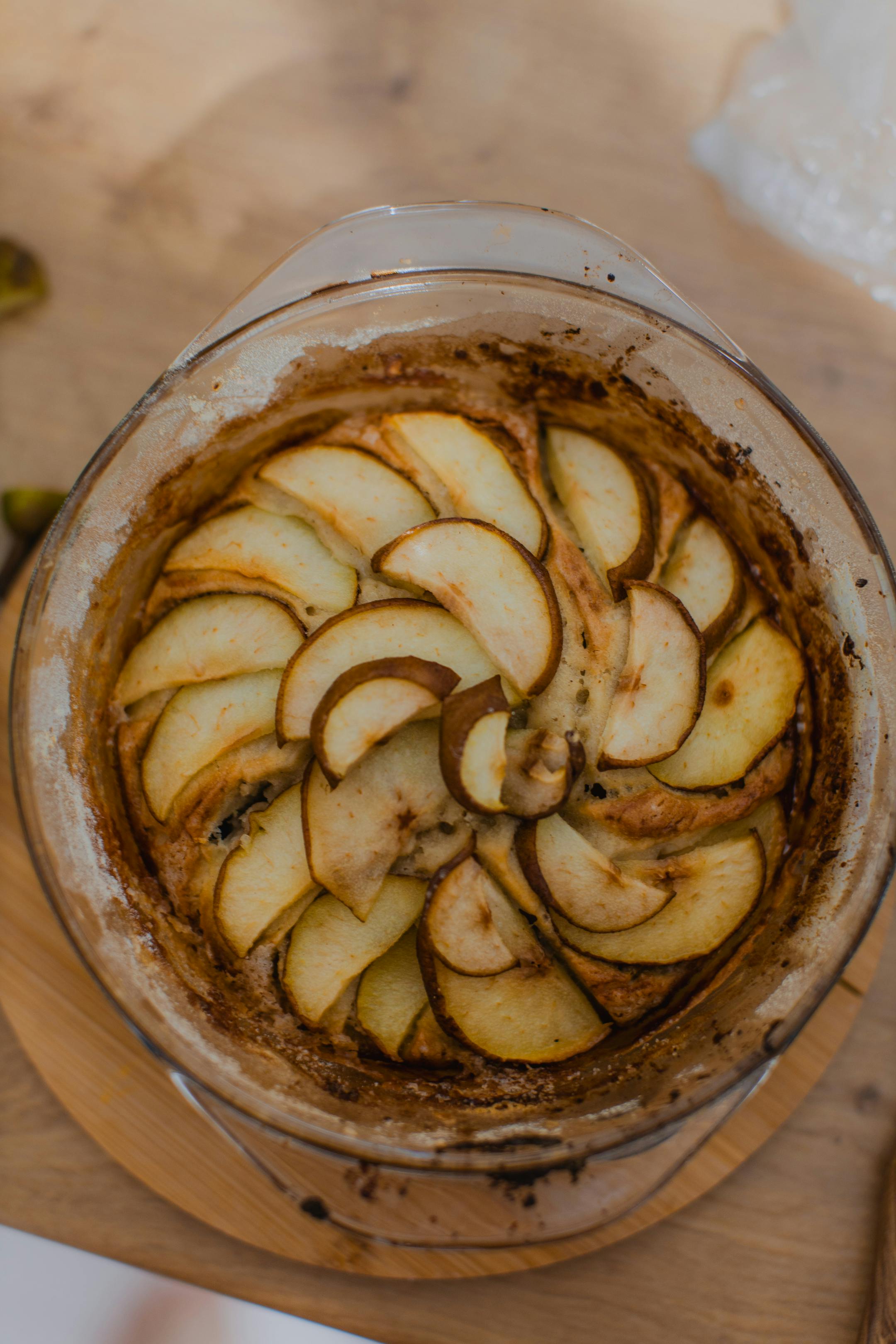
Photo: Kenzhar Sharap / Pexels
The diets react (see scores below)
Common Ingredients
- apples
- flour
- butter
- sugar
- salt
- water
- cinnamon
- nutmeg
Specific recipes may vary.
Incompatible with 10 of 11 diets
Diet Ratings
Apple pie is fundamentally incompatible with a ketogenic diet. It contains three major keto-busting ingredients: wheat flour (a grain with high net carbs), sugar (added sugar with zero tolerance on keto), and apples (a high-sugar fruit). A single slice of apple pie contains roughly 40-55g of net carbs, which meets or exceeds the entire daily net carb allowance for ketosis. The crust alone from wheat flour would be disqualifying, and the apple-sugar filling compounds the problem severely. While butter is keto-friendly, it cannot redeem this dish. There is no realistic portion size that makes apple pie compatible with maintaining ketosis.
This apple pie recipe contains butter, which is a dairy product derived from cow's milk and is unequivocally excluded from a vegan diet. All other ingredients — apples, flour, sugar, salt, water, cinnamon, and nutmeg — are plant-based. The dish could be made vegan by substituting butter with a plant-based alternative such as coconut oil, vegan margarine, or vegetable shortening, but as listed, the butter disqualifies it.
Apple Pie contains multiple non-paleo ingredients that disqualify it outright. Flour (wheat) is a grain and one of the most clearly excluded foods in the paleo diet. Butter is a dairy product excluded by strict paleo guidelines. Refined sugar is explicitly prohibited. Added salt is also discouraged. While apples, cinnamon, and nutmeg are paleo-approved, the majority of this dish's structure depends on ingredients that are fundamentally incompatible with the paleo framework. This is a classic processed, baked good with no meaningful paleo adaptation.
Apple pie as prepared here contradicts core Mediterranean diet principles on multiple fronts. While apples themselves are a Mediterranean-friendly fruit, the dish is built around refined white flour (a refined grain), butter (saturated fat, not olive oil), and added sugar — three ingredients the Mediterranean diet explicitly minimizes. The pastry crust combines refined flour with butter to create a high-saturated-fat, low-fiber base, and the filling adds significant refined sugar. This is a classic Western dessert with negligible nutritional alignment to the Mediterranean pattern. The spices (cinnamon, nutmeg) are positive, and the apple content provides some fiber and phytonutrients, but these benefits are overwhelmed by the problematic ingredients.
Apple pie is entirely incompatible with the carnivore diet. Every single ingredient is plant-derived or plant-processed: apples (fruit), flour (grain), sugar (processed plant), cinnamon and nutmeg (plant spices), and water are all excluded. Even butter, the one animal-derived ingredient, is overwhelmed by the surrounding plant foods. There is no animal protein, no animal fat as a primary component, and the dish is loaded with sugar and refined carbohydrates — the exact opposite of what the carnivore diet promotes. This is a quintessential plant-based, high-carbohydrate dessert with zero standing in any tier of carnivore eating.
Apple Pie contains multiple excluded ingredients and also falls into the explicitly banned 'baked goods' category. Flour is a grain product (wheat), butter is excluded dairy, and sugar is an excluded added sweetener. Even if these ingredients were substituted with compliant alternatives, the Whole30 program explicitly prohibits recreating baked goods like pies regardless of ingredient compliance — apple pie is precisely the type of comfort food/baked good the program forbids recreating.
Apple pie contains two major high-FODMAP ingredients that make it unsuitable during the elimination phase. Apples are high in both excess fructose and sorbitol (a polyol), making them a significant FODMAP trigger — Monash rates apples as high-FODMAP at any standard serving size. The wheat flour used in the pie crust is high in fructans, another major FODMAP category. Even a single standard slice of apple pie would deliver a substantial FODMAP load from both the filling and the crust simultaneously. Sugar, butter, salt, water, cinnamon (in small amounts), and nutmeg are low-FODMAP, but they cannot offset the two primary high-FODMAP components. There is no realistic portion of apple pie that would be considered safe during the elimination phase.
Apple pie is not compatible with the DASH diet despite containing apples, which are DASH-approved. The traditional preparation uses butter (high in saturated fat), substantial added sugar, and refined white flour — all of which conflict directly with DASH principles. The crust is made with large amounts of butter and refined flour, driving up saturated fat and providing little fiber. The filling contains significant added sugar, placing this firmly in the 'sweets' category that DASH explicitly limits. While DASH does not prohibit sweets entirely, it recommends limiting them to 5 or fewer servings per week of small portions, and a slice of apple pie would constitute a major indulgence well beyond a modest occasional treat. The NIH NHLBI DASH guidelines explicitly call for limiting saturated fats, added sugars, and refined grains — apple pie in its standard form violates all three simultaneously.
Apple pie is one of the most Zone-unfavorable desserts in American cuisine. While apples themselves are a favorable Zone carbohydrate source, the pie format strips away most of their redeeming qualities. The crust is made from refined white flour — a high-glycemic carbohydrate Dr. Sears explicitly categorizes as unfavorable — combined with butter, a saturated fat source. The filling is loaded with added sugar, spiking the glycemic load dramatically. The dish contains virtually no protein (listed as 'none'), making it impossible to construct a 40/30/30 ratio without substantial external additions. The fat profile is dominated by saturated fat from butter rather than the monounsaturated fats Sears favors. Even a small slice would consume the majority of a meal's carbohydrate blocks almost entirely in high-glycemic, insulin-spiking forms (sugar + refined flour), with nothing left for vegetables or other favorable carbs. As a snack, it fails even more completely — a Zone snack should be a mini-meal with balanced macros, and apple pie cannot approximate this without radical deconstruction. The cinnamon and nutmeg are anti-inflammatory positives, and the apple provides some polyphenols, but these minor benefits are overwhelmed by the overall nutritional profile.
Apple pie presents a mixed but mostly unfavorable anti-inflammatory profile. On the positive side, apples provide quercetin, fiber, and polyphenols with documented anti-inflammatory properties, while cinnamon and nutmeg are anti-inflammatory spices. However, the dish is dominated by pro-inflammatory elements: refined white flour (a refined carbohydrate that spikes blood glucose and promotes inflammatory signaling), substantial added sugar (a key driver of inflammatory markers like CRP and IL-6), and butter (saturated fat, which the anti-inflammatory framework recommends limiting). The combination of refined carbs and added sugar in large amounts is one of the clearest pro-inflammatory dietary patterns across the research literature. As an occasional treat the apple and spice content offer some mitigation, but as a regular snack this dish would meaningfully contribute to systemic inflammation. Scored at the low end of 'caution' given the weight of pro-inflammatory ingredients versus beneficial ones.
Apple pie is a poor fit for GLP-1 patients across nearly every priority criterion. It provides virtually no protein, minimal fiber relative to its calorie load, and is high in refined carbohydrates and added sugar from the filling and crust. The butter-based pastry crust contributes significant saturated fat, which worsens GLP-1 side effects including nausea, bloating, and reflux. The sugar spike offers empty calories with no meaningful nutritional density — a critical problem when total calorie intake is already severely reduced. While apples and cinnamon have minor nutritional merit, they are overwhelmed by the surrounding dough, butter, and sugar. As a snack category item, it fails to deliver protein or lasting satiety in a small portion, making it a particularly poor choice for the 4-5 small meal pattern recommended on GLP-1 therapy.
*See how scores were generated at our methodology page.
Nutritional profile
Six traits that cut across every diet.
Fiber & Plants
How much whole-plant food and fiber it delivers.
Healthy Fats
The quality of its fats (unsaturated, omega-3).
Whole / Unprocessed
How close it is to its natural, unprocessed form.
Gut Gentle
How easy it is on digestion (low FODMAP, few irritants).
Low Glycemic
How little it spikes your blood sugar.
Protein Density
How much protein it packs per calorie.
Controversy Index
Higher controversy = more disagreement between diets.
Diet-Specific Tips
 Anti-Inflammatory — 5/10
View tips
- Refined white flour: high glycemic, pro-inflammatory refined carbohydrate
- Added sugar: major driver of elevated CRP and IL-6 inflammatory markers
- Butter: saturated fat, limited on anti-inflammatory frameworks
- Apples: provide quercetin, pectin fiber, and polyphenols with anti-inflammatory benefit
- Cinnamon and nutmeg: anti-inflammatory spices that partially offset other ingredients
- Overall ingredient balance tips toward pro-inflammatory despite some redeeming components