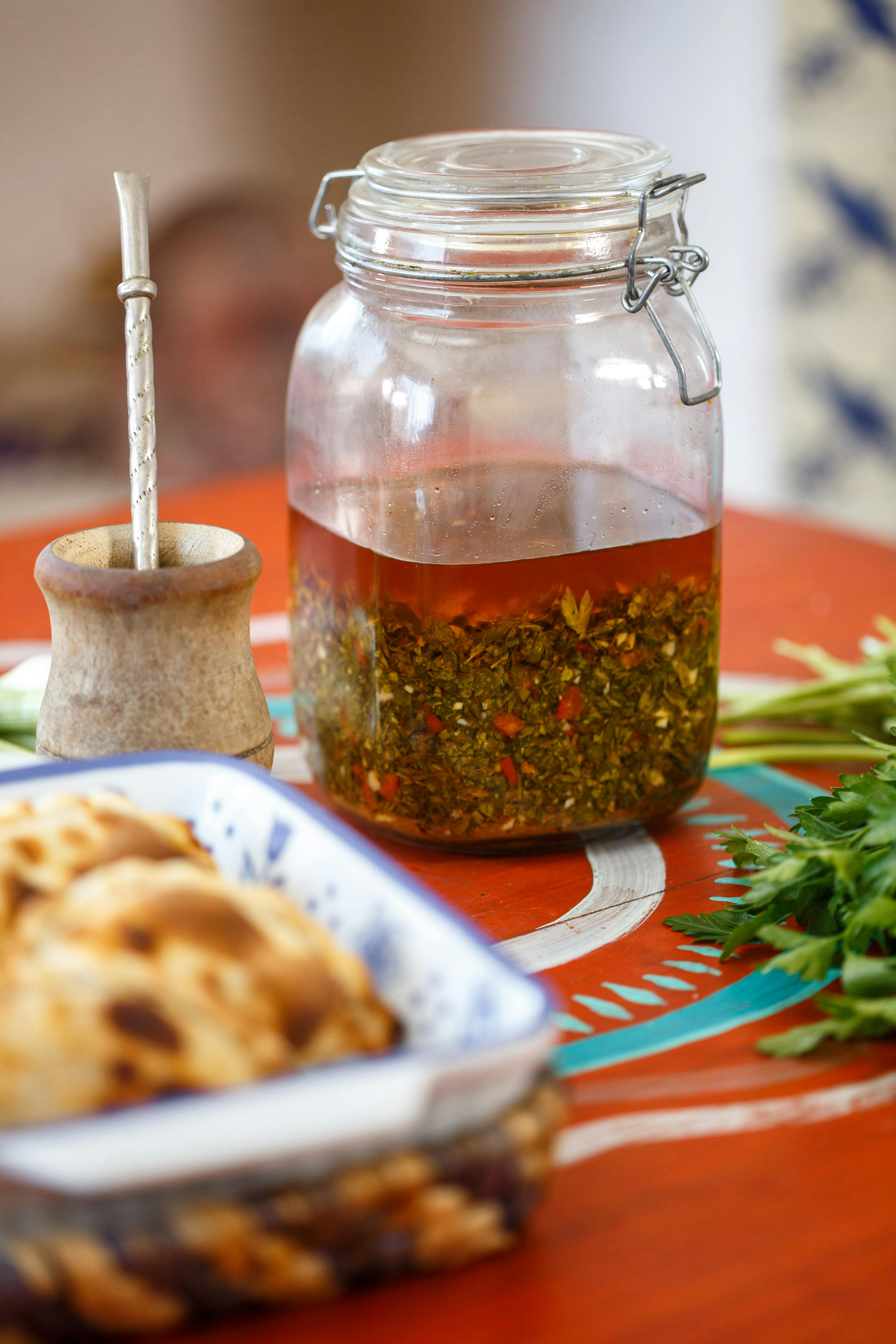
Photo: Los Muertos Crew / Pexels
Argentine
Chimichurri
The diets react (see scores below)
Common Ingredients
- parsley
- garlic
- oregano
- red wine vinegar
- olive oil
- chili flakes
Specific recipes may vary.
Incompatible with 2 of 11 diets
Diet Ratings
Chimichurri is an excellent keto condiment. Its base is olive oil (high healthy fat), combined with fresh herbs (parsley, oregano), garlic, chili flakes, and red wine vinegar. Net carbs per typical serving (1-2 tablespoons) are negligible — well under 1-2g. The olive oil content aligns perfectly with keto's high-fat macros. All ingredients are whole and unprocessed with no added sugars or grains. It enhances fatty meats and proteins, making it a staple-worthy keto sauce.
Chimichurri is composed entirely of whole plant-based ingredients: fresh parsley, garlic, oregano, red wine vinegar, olive oil, and chili flakes. Every component is unambiguously plant-derived with no animal products or animal-derived additives present. It is also minimally processed — essentially a fresh herb sauce — which aligns well with whole-food plant-based principles. The only minor consideration is that olive oil is a refined fat, preventing a perfect 10, but it is fully vegan and nutritionally recognized as a healthy fat source.
Chimichurri is composed entirely of paleo-approved whole foods. Parsley, garlic, oregano, and chili flakes are herbs and spices available to hunter-gatherers. Olive oil is a preferred paleo fat. Red wine vinegar, while fermented and processed, is widely accepted in the paleo community as a natural fermentation product with no problematic additives. There are no grains, legumes, dairy, seed oils, refined sugars, or artificial additives in this recipe. This is one of the most naturally paleo-compatible condiments in any cuisine.
Chimichurri is composed almost entirely of Mediterranean diet staples: fresh herbs (parsley, oregano), garlic, extra virgin olive oil, red wine vinegar, and chili flakes. Every single ingredient aligns perfectly with Mediterranean principles. Olive oil is the primary fat source, herbs and garlic are foundational aromatic vegetables, and red wine vinegar is a traditional acid used throughout Mediterranean cuisine. Although chimichurri originates in Argentina rather than the Mediterranean basin, its ingredient profile is indistinguishable from a classic Mediterranean herb sauce. There are no processed ingredients, added sugars, refined grains, or saturated fats. This condiment actively adds nutritional value through polyphenols from olive oil, antioxidants from herbs, and allicin from garlic.
Chimichurri is entirely plant-derived with zero animal products. Every single ingredient — parsley, garlic, oregano, red wine vinegar, olive oil, and chili flakes — is explicitly excluded from the carnivore diet. Plant herbs and vegetables violate the core rule, plant oils (olive oil) replace animal fats (tallow, lard), vinegar is a fermented plant product, and spices/chili flakes are plant compounds. There is no animal-derived component whatsoever. This condiment is fundamentally incompatible with the carnivore diet at any tier.
Chimichurri is made entirely from Whole30-compliant ingredients. Parsley, garlic, oregano, and chili flakes are all herbs and spices explicitly allowed on the program. Red wine vinegar is specifically listed as an accepted vinegar type. Olive oil is a compliant natural fat. There are no excluded ingredients of any kind in this recipe.
Traditional chimichurri contains garlic as a primary ingredient, which is high-FODMAP at any amount due to fructans. Garlic cloves cannot be made safe simply by using small amounts — even a fraction of a clove contains significant fructans. Parsley, red wine vinegar, olive oil, and chili flakes are all low-FODMAP. Oregano is also low-FODMAP in typical condiment amounts. However, garlic is a deal-breaker during the elimination phase and cannot be offset by the other safe ingredients. The dish as traditionally prepared must be avoided.
Chimichurri is made from DASH-friendly ingredients: fresh parsley (rich in potassium and vitamin K), garlic (linked to cardiovascular benefits), oregano, red wine vinegar (negligible sodium), olive oil (unsaturated fat, DASH-encouraged vegetable oil), and chili flakes. None of these ingredients are high in sodium, saturated fat, added sugar, or other DASH-restricted components. Olive oil is explicitly endorsed by DASH as a preferred vegetable oil. The herb and garlic base aligns well with DASH's emphasis on flavor through herbs and spices rather than salt. The main consideration is caloric density from olive oil, which warrants portion control (1-2 tablespoons per serving), but this does not disqualify it. As a condiment, it also supports DASH compliance by making vegetables and lean proteins more palatable, aiding adherence to the overall diet pattern.
NIH DASH guidelines do not explicitly address chimichurri or herb-based condiments, leaving its classification to clinical interpretation. Some DASH-oriented clinicians may flag the caloric density of olive oil in condiment form — where portion sizes are easily exceeded — and note that commercial or restaurant versions may add salt, which could push sodium higher than the home-prepared version assessed here.
Chimichurri is an excellent Zone-compatible condiment. Its primary fat source is olive oil, which is the gold standard monounsaturated fat in Zone methodology. The remaining ingredients — parsley, garlic, oregano, red wine vinegar, and chili flakes — are all low-glycemic, polyphenol-rich, and anti-inflammatory, aligning perfectly with Dr. Sears' emphasis on micronutrient density and eicosanoid balance. Parsley is notably rich in polyphenols and antioxidants. Garlic and oregano have well-documented anti-inflammatory properties. Red wine vinegar has a negligible glycemic impact and may even blunt blood sugar response. The absence of sugar, seed oils, or processed ingredients makes this a clean fat block source. As a condiment, chimichurri pairs naturally with lean grilled proteins (chicken, fish, lean beef) that form the protein block of a Zone meal, making it a practical and favorable meal component. Portion control is still relevant since olive oil is calorie-dense, but a typical 1–2 tablespoon serving fits neatly as a Zone fat block.
Chimichurri is an exceptionally anti-inflammatory condiment. Every ingredient aligns with core anti-inflammatory principles. Parsley is rich in flavonoids (apigenin, luteolin) and vitamin C, offering strong antioxidant and anti-inflammatory activity. Garlic contains allicin and organosulfur compounds that have been shown to suppress NF-κB signaling and reduce inflammatory cytokines including IL-6 and TNF-α. Oregano is one of the most antioxidant-dense herbs, with rosmarinic acid and carvacrol demonstrating anti-inflammatory effects in research. Chili flakes provide capsaicin, which inhibits substance P and has well-documented anti-inflammatory properties. Extra virgin olive oil is a cornerstone of the anti-inflammatory diet, supplying oleocanthal (a natural COX inhibitor structurally similar to ibuprofen), monounsaturated fats, and polyphenols. Red wine vinegar contains acetic acid and trace polyphenols; at culinary quantities it is neutral to mildly beneficial and does not raise concerns. The combination of multiple high-potency anti-inflammatory herbs, EVOO, and garlic in a single condiment makes chimichurri an ideal anti-inflammatory flavor vehicle.
Chimichurri is a herb-based condiment with no protein and negligible fiber per typical serving. Its primary nutritional concern for GLP-1 patients is the olive oil content, which is an unsaturated fat and preferable to saturated fat, but still calorie-dense and potentially problematic in larger amounts given slowed gastric emptying. In small amounts (1-2 teaspoons), it is a flavorful, nutrient-light addition that can make lean proteins more palatable — a real benefit when appetite is suppressed and food aversion is a risk. The chili flakes are a mild irritant and could contribute to reflux or nausea in sensitive patients, but at the concentrations typical in chimichurri they are unlikely to be a significant issue for most. Garlic and vinegar are generally well-tolerated digestively. The condiment scores in the caution range because it adds meaningful fat calories without protein or fiber payoff, but is far from the worst condiment choice and serves a legitimate role in making GLP-1-friendly proteins (grilled chicken, fish) more appealing and easier to eat.
Some GLP-1-focused dietitians are permissive with olive-oil-based condiments like chimichurri because the unsaturated fat profile is cardiovascular-friendly and the quantity per serving is small enough to be inconsequential; others flag any oil-heavy condiment as a nausea and reflux trigger due to fat's effect on gastric emptying rate, and would suggest herb-based salsas or vinaigrettes with reduced oil instead.
*See how scores were generated at our methodology page.
Nutritional profile
Six traits that cut across every diet.
Fiber & Plants
How much whole-plant food and fiber it delivers.
Healthy Fats
The quality of its fats (unsaturated, omega-3).
Whole / Unprocessed
How close it is to its natural, unprocessed form.
Gut Gentle
How easy it is on digestion (low FODMAP, few irritants).
Low Glycemic
How little it spikes your blood sugar.
Protein Density
How much protein it packs per calorie.
Controversy Index
Higher controversy = more disagreement between diets.
Diet-Specific Tips
 Keto — 9/10
View tips
- Olive oil base provides high healthy monounsaturated fats, ideal for keto macros
- Negligible net carbs per serving — herbs, garlic, and vinegar contribute minimal carbohydrates
- No added sugars, grains, or starchy ingredients
- Whole, unprocessed ingredients only
- Red wine vinegar adds minimal carbs (roughly 0.1-0.2g per tablespoon)
- Pairs naturally with fatty keto-friendly proteins like steak and lamb
 Vegan — 9/10
View tips
- All ingredients are 100% plant-derived
- No animal products or animal-derived additives
- Minimally processed whole-food herb sauce
- Olive oil is refined but universally accepted as vegan
- Naturally free of dairy, eggs, meat, and honey
 Paleo — 9/10
View tips
- Parsley, garlic, oregano, chili flakes — all whole herbs and spices, fully paleo-approved
- Olive oil — preferred paleo fat source
- Red wine vinegar — naturally fermented, widely accepted in paleo; no additives
- No grains, legumes, dairy, seed oils, or refined sugar
- No added salt listed — avoids a common paleo concern with condiments
- Unprocessed whole-food condiment consistent with paleo philosophy
 Mediterranean — 9/10
View tips
- Extra virgin olive oil as the primary and only fat source
- Parsley and oregano are nutrient-dense herbs rich in antioxidants
- Garlic is a Mediterranean cornerstone with well-documented health benefits
- Red wine vinegar is a traditional Mediterranean acid with no added sugar
- No processed ingredients, refined grains, or added sugars
- Chili flakes add anti-inflammatory capsaicin with negligible caloric impact
- Non-Mediterranean origin is irrelevant given the ingredient composition
 Whole30 — 10/10
View tips
- Parsley, garlic, oregano, and chili flakes are all compliant herbs and spices
- Red wine vinegar is explicitly listed as an accepted vinegar on Whole30
- Olive oil is a compliant natural fat
- No added sugars, grains, legumes, dairy, or other excluded ingredients
- Classic whole-food condiment fully aligned with Whole30 principles
 DASH — 8/10
View tips
- No added sodium in traditional recipe — very low sodium
- Olive oil is DASH-approved unsaturated vegetable fat
- Parsley and garlic provide potassium and phytonutrients
- Herbs and spices align with DASH flavor strategy to reduce salt reliance
- Caloric density from olive oil requires portion awareness
- Commercial versions may contain added salt — rate standard/home-prepared form here
- No saturated fat, added sugar, or processed ingredients
 Zone — 8/10
View tips
- Primary fat is olive oil — the ideal monounsaturated fat source in Zone methodology
- Polyphenol-rich herbs (parsley, oregano, garlic) support anti-inflammatory eicosanoid balance emphasized in Sears' later work
- No sugar, no high-glycemic carbohydrates, no seed oils or trans fats
- Red wine vinegar is essentially glycemic-neutral and may improve insulin sensitivity
- Natural pairing with lean grilled proteins completes a Zone-balanced plate
- Calorie density of olive oil requires portion awareness — 1–2 tbsp per serving is appropriate as a fat block
 Anti-Inflammatory — 9/10
View tips
- Extra virgin olive oil: oleocanthal, polyphenols, monounsaturated fats — a flagship anti-inflammatory fat
- Garlic: allicin and organosulfur compounds suppress inflammatory cytokines (IL-6, TNF-α)
- Parsley: high in apigenin and luteolin, potent flavonoid antioxidants
- Oregano: rosmarinic acid and carvacrol among the highest antioxidant density of any herb
- Chili flakes: capsaicin inhibits inflammatory neuropeptides and COX enzymes
- No refined oils, added sugars, processed ingredients, or pro-inflammatory components
- Whole-food herb and spice base with no additives or preservatives
 GLP-1 Friendly — 5/10
View tips
- No protein content — does not contribute to the 100-120g daily protein target
- Negligible fiber per typical serving
- Primary fat source is olive oil (unsaturated) — preferable fat type but still calorie-dense
- Chili flakes may trigger reflux or nausea in GLP-1-sensitive patients
- Small serving size limits fat load — portion control is key
- Enhances palatability of lean proteins, supporting adequate food intake during appetite suppression
- No sugar, no refined ingredients, no carbonation — no major red flags