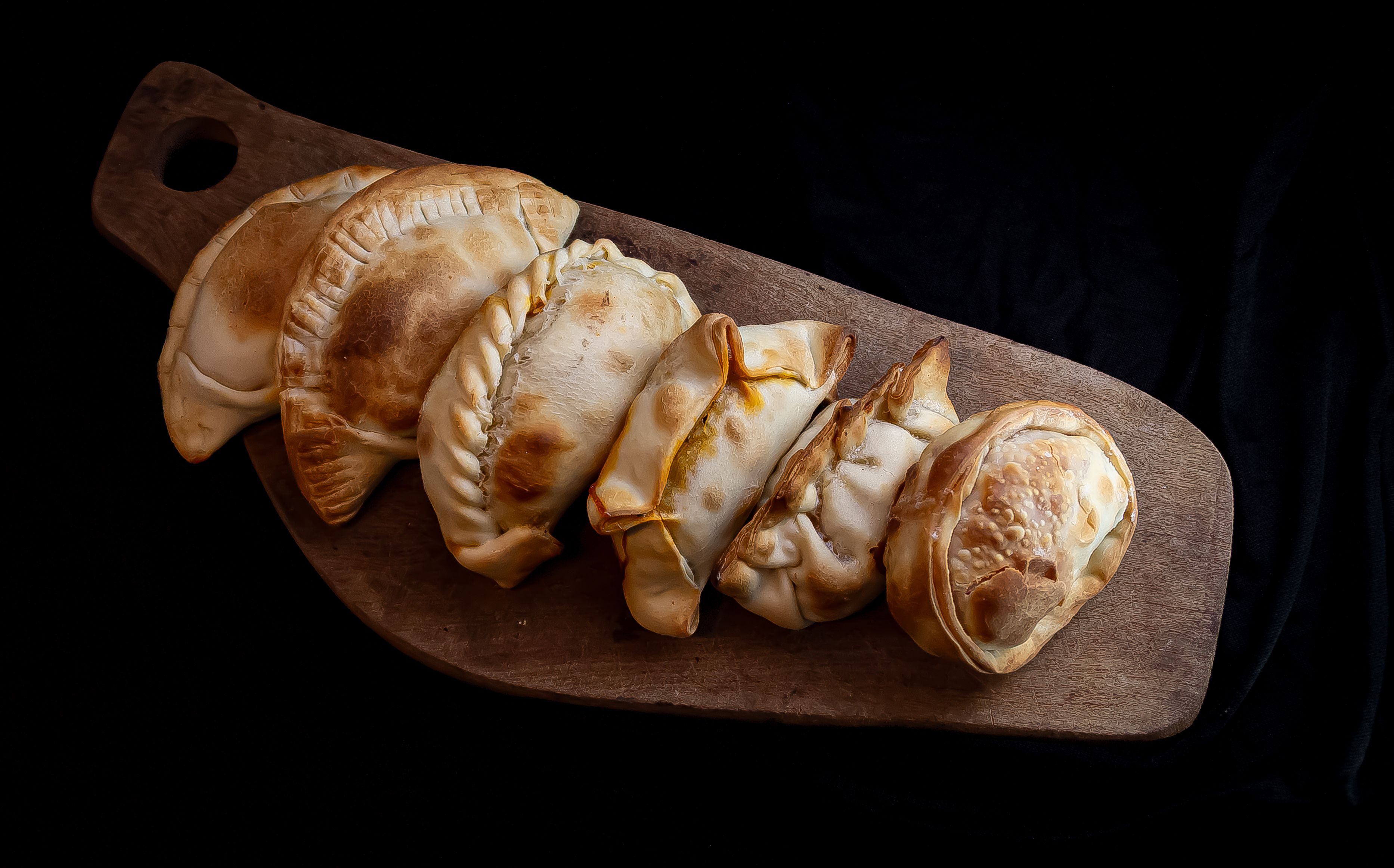
Photo: jessica olivella / Pexels
Argentine
Empanadas Salteñas
The diets react (see scores below)
Common Ingredients
- beef
- onion
- olives
- hard-boiled eggs
- cumin
- paprika
- scallions
- wheat flour
Specific recipes may vary.
Incompatible with 7 of 11 diets
Diet Ratings
Empanadas Salteñas are fundamentally incompatible with a ketogenic diet due to their wheat flour pastry shell. The dough is the defining structural component of any empanada and contributes a large quantity of high-glycemic net carbs — a single empanada can contain 20-30g of net carbs from the shell alone, easily exceeding or matching the entire daily keto carb budget. While the filling ingredients (beef, eggs, olives, onion, spices) are largely keto-friendly on their own, the wheat flour casing makes the dish as prepared a clear avoid. There is no meaningful portion adjustment that would make traditional empanadas compatible with ketosis.
Empanadas Salteñas contain multiple animal-derived ingredients that are strictly excluded from a vegan diet. Beef is a direct animal product (meat), and hard-boiled eggs are an animal product (from hens). Both are unambiguously non-vegan. The remaining ingredients — onion, olives, cumin, paprika, scallions, and wheat flour — are all plant-based, but the presence of beef and eggs makes this dish entirely incompatible with vegan eating. There is no debate within the vegan community about either of these ingredients.
Empanadas Salteñas are fundamentally built around wheat flour dough, which is a grain and explicitly excluded from the paleo diet. The filling itself — beef, onion, olives, hard-boiled eggs, cumin, paprika, and scallions — is largely paleo-compliant, but the wheat flour pastry shell is the defining element of this dish and cannot be separated from it. Wheat is one of the clearest exclusions in paleo, rejected across all major paleo frameworks due to its gluten content, anti-nutrients, and absence from the Paleolithic diet. The dish as traditionally prepared cannot be considered paleo-friendly.
Empanadas Salteñas are fundamentally at odds with Mediterranean diet principles on multiple fronts. The primary protein is beef, which is limited to a few times per month under Mediterranean guidelines. The pastry shell is made from refined wheat flour, a processed carbohydrate that Mediterranean principles discourage. Additionally, empanadas are typically deep-fried or baked in a high-fat dough, adding further concern. While a few ingredients — olives, onion, scallions, and spices like cumin and paprika — are Mediterranean-friendly, they are minor supporting players in a dish dominated by red meat and refined pastry. The overall nutritional profile (high saturated fat from beef, refined carbs from the dough, processed snack format) directly contradicts Mediterranean diet foundations.
Empanadas Salteñas are fundamentally incompatible with the carnivore diet. The dish is built around a wheat flour pastry shell, which is a grain-based plant food and an absolute exclusion on carnivore. Beyond the dough, the filling contains multiple plant-derived ingredients: onion, olives, cumin, paprika, and scallions. While the beef and hard-boiled eggs are carnivore-approved animal products, they are inseparable from the dish's plant-based components and cannot redeem it. This is a heavily plant-integrated dish with no meaningful adaptation possible while retaining its identity as Empanadas Salteñas.
Empanadas Salteñas are explicitly non-compliant on Whole30 for two independent reasons. First, the dough is made from wheat flour, which is a grain and categorically excluded from the Whole30 program. Second, even if a grain-free dough substitute were used, empanadas fall squarely into the 'No Recreating Baked Goods/Junk Food' rule — the Whole30 program explicitly prohibits recreating bread, wraps, crackers, and similar dough-based snack foods with compliant ingredients. The filling ingredients (beef, onion, olives, hard-boiled eggs, cumin, paprika, scallions) are themselves Whole30-compliant, but the wheat flour pastry shell disqualifies this dish entirely on its own, and the baked-good recreation rule would apply regardless.
Empanadas Salteñas contain multiple high-FODMAP ingredients that make them unsuitable during the elimination phase. Wheat flour (the pastry shell) is high in fructans and is a primary ingredient — there is no low-FODMAP workaround here without completely reformulating the dough. Onion is one of the highest-FODMAP foods tested by Monash, rich in fructans, and is a core filling ingredient. Scallions (green onions) add further fructan load, particularly if the white bulb portions are used (the green tops alone would be low-FODMAP, but traditional recipes use the whole scallion). These three problematic ingredients together make this dish clearly high-FODMAP at any standard serving. Beef, hard-boiled eggs, cumin, paprika, and olives (in small quantities) are generally low-FODMAP, but they cannot offset the fructan burden from the wheat pastry and allium vegetables.
Empanadas Salteñas present a mixed nutritional profile from a DASH perspective. The dish contains several DASH-friendly components — onions, scallions, eggs, cumin, and paprika — but the overall package raises concerns. Beef is a red meat that DASH limits due to saturated fat content. The wheat flour pastry dough is typically made with refined flour and significant added fat (often lard or shortening), neither of which aligns with DASH's emphasis on whole grains and limited saturated/trans fats. Olives, while a source of healthy monounsaturated fat, are high in sodium. The dish as commonly prepared and commercially sold is also typically high in sodium overall. Hard-boiled eggs are acceptable in moderation under most current DASH interpretations. The combination of red meat, refined flour pastry with added fat, and salty olives makes this a 'caution' rather than an outright avoid — the ingredients are not categorically banned, but the preparation style and ingredient profile push it away from DASH ideals. Homemade versions with lean ground beef, olive oil in the dough, reduced olives, and lower sodium could improve the score somewhat.
NIH DASH guidelines clearly limit red meat and refined grains, placing this dish in cautionary territory. However, some updated clinical interpretations note that lean beef in modest portions and eggs are permissible within DASH, and that the vegetable and spice components provide meaningful micronutrients — making this an occasional acceptable choice rather than a food to actively avoid, especially if portion size is limited to one empanada.
Empanadas Salteñas present a mixed Zone Diet profile. The filling contains several Zone-friendly elements: beef provides protein (though it's not the leanest cut, and ground beef used in salteñas often carries moderate fat), hard-boiled eggs add protein and fat, olives contribute monounsaturated fat (a Zone-favorable fat), and onions/scallions are low-glycemic vegetables. However, the wheat flour dough is the primary Zone concern — it's a refined carbohydrate with a moderately high glycemic load, classified as an 'unfavorable' carb in Zone terminology. The dough-to-filling ratio in traditional empanadas tends to be high, skewing macros toward carbohydrates without the fiber-density benefit of vegetables. The fat content from beef and dough may also push saturated fat higher than ideal. Traditional empanadas are not portion-controlled Zone blocks — a single empanada could represent 2+ carb blocks from the dough alone, with protein and fat blocks that don't proportionally balance. A Zone practitioner could theoretically eat a smaller portion or use a modified dough, but as traditionally prepared, the carb-heavy shell makes Zone balancing difficult. The anti-inflammatory profile is partially redeemed by olives and spices (cumin, paprika have polyphenol content), but the processed flour crust remains the dominant macro issue.
Empanadas Salteñas present a mixed anti-inflammatory profile. On the positive side, the dish includes several beneficial ingredients: cumin and paprika are anti-inflammatory spices with antioxidant properties, olives provide monounsaturated fats and polyphenols similar to olive oil, onions and scallions contain quercetin and other anti-inflammatory flavonoids, and eggs contribute choline and selenium. However, the dish is anchored by two ingredients that push it toward the 'caution' zone. Beef is classified as a food to limit in anti-inflammatory frameworks due to its saturated fat content and association with elevated inflammatory markers like CRP and IL-6 — particularly when consumed regularly. Refined wheat flour forms the pastry shell and represents a refined carbohydrate with a high glycemic load, which can promote insulin spikes and downstream inflammatory signaling. The preparation method (typically pan-fried or baked in a wheat dough shell) further concentrates the refined carb load. This is not a dish to avoid entirely — the spice profile and vegetable/olive content provide meaningful anti-inflammatory offset — but it's best treated as an occasional indulgence rather than a regular feature of an anti-inflammatory diet. Choosing a leaner beef cut, baking rather than frying, and using whole wheat flour would meaningfully improve the profile.
Empanadas Salteñas present a mixed nutritional profile for GLP-1 patients. On the positive side, they contain meaningful protein sources — ground beef, hard-boiled eggs, and olives — and the onion, scallions, and spices (cumin, paprika) are GLP-1-friendly. However, the wheat flour pastry shell is a refined carbohydrate with low fiber and nutrient density, adding empty calories that GLP-1 patients can ill afford. The beef filling, depending on the cut used (typically fatty ground beef in traditional preparations), introduces saturated fat that can worsen nausea and GI side effects. The pastry is also typically fried or baked with significant fat content, making digestion heavier. Portion size matters here — one empanada as an occasional snack is more manageable than two or three. The cumin and paprika are mild enough not to aggravate reflux. Olives contribute healthy unsaturated fats but also add fat volume. Overall, this dish is portion-sensitive, moderately high in refined carbs and saturated fat, and only moderate in protein density per calorie — placing it firmly in the caution zone.
Some GLP-1-focused dietitians may rate a baked (not fried) empanada with lean ground beef more favorably, arguing that the protein-fat combination supports satiety in small servings and that the cultural food context matters for adherence. Others would flag the refined flour shell and fatty beef as consistent GI risk factors that make this a poor snack choice regardless of preparation method.
*See how scores were generated at our methodology page.
Nutritional profile
Six traits that cut across every diet.
Fiber & Plants
How much whole-plant food and fiber it delivers.
Healthy Fats
The quality of its fats (unsaturated, omega-3).
Whole / Unprocessed
How close it is to its natural, unprocessed form.
Gut Gentle
How easy it is on digestion (low FODMAP, few irritants).
Low Glycemic
How little it spikes your blood sugar.
Protein Density
How much protein it packs per calorie.
Controversy Index
Higher controversy = more disagreement between diets.
Diet-Specific Tips
 DASH — 4/10
View tips
- Red meat (beef) as primary protein — DASH limits red meat intake
- Refined wheat flour pastry crust, likely made with saturated fat (lard/shortening)
- Olives are high in sodium, compounding overall sodium load
- Hard-boiled eggs acceptable in moderation under current DASH interpretations
- Onions, scallions, and spices are DASH-friendly ingredients
- Typically high in total and saturated fat as commercially prepared
- Portion control critical — a single empanada is more manageable than multiple
- Homemade preparation with leaner beef and reduced olives could improve DASH compatibility
 Zone — 4/10
View tips
- Wheat flour dough is a refined, 'unfavorable' carbohydrate in Zone terminology with moderate-to-high glycemic load
- Dough-to-filling ratio skews macros heavily toward carbohydrates, making 40/30/30 balance difficult
- Beef protein is acceptable but may be higher in saturated fat than lean Zone-preferred proteins
- Olives are a Zone-favorable monounsaturated fat source — a positive element
- Hard-boiled eggs add protein and healthy fat in Zone-compatible form
- Onions and scallions are low-glycemic, Zone-favorable carb contributors in the filling
- Spices (cumin, paprika) contribute anti-inflammatory polyphenols aligned with Zone's anti-inflammatory focus
- Single empanada likely represents 2+ carb blocks from dough, requiring careful portion control to stay in Zone
 Anti-Inflammatory — 4/10
View tips
- Beef is a red meat — limited in anti-inflammatory frameworks due to saturated fat and association with elevated CRP
- Refined wheat flour pastry shell is a high-glycemic refined carbohydrate
- Olives provide anti-inflammatory monounsaturated fats and polyphenols
- Cumin and paprika are anti-inflammatory spices with antioxidant properties
- Onions and scallions contribute quercetin and flavonoids
- Hard-boiled eggs are a moderate ingredient — mixed but not pro-inflammatory
- Baked preparation (typical) is preferable to fried, but pastry shell remains a refined carb concern
 GLP-1 Friendly — 4/10
View tips
- Refined wheat flour pastry shell adds low-nutrient, low-fiber carbohydrates
- Traditional ground beef filling is often high in saturated fat — worsens GLP-1 GI side effects
- Protein content from beef and egg is a positive but diluted by the pastry ratio
- Typically baked or fried — fried version would shift verdict toward avoid
- Olives add healthy unsaturated fat but increase overall fat load per serving
- Mild spices (cumin, paprika) are well-tolerated and GLP-1 neutral
- Highly portion-sensitive — one small empanada is very different from two or three
- Low fiber overall — wheat flour pastry does not compensate for lack of vegetable or legume fiber