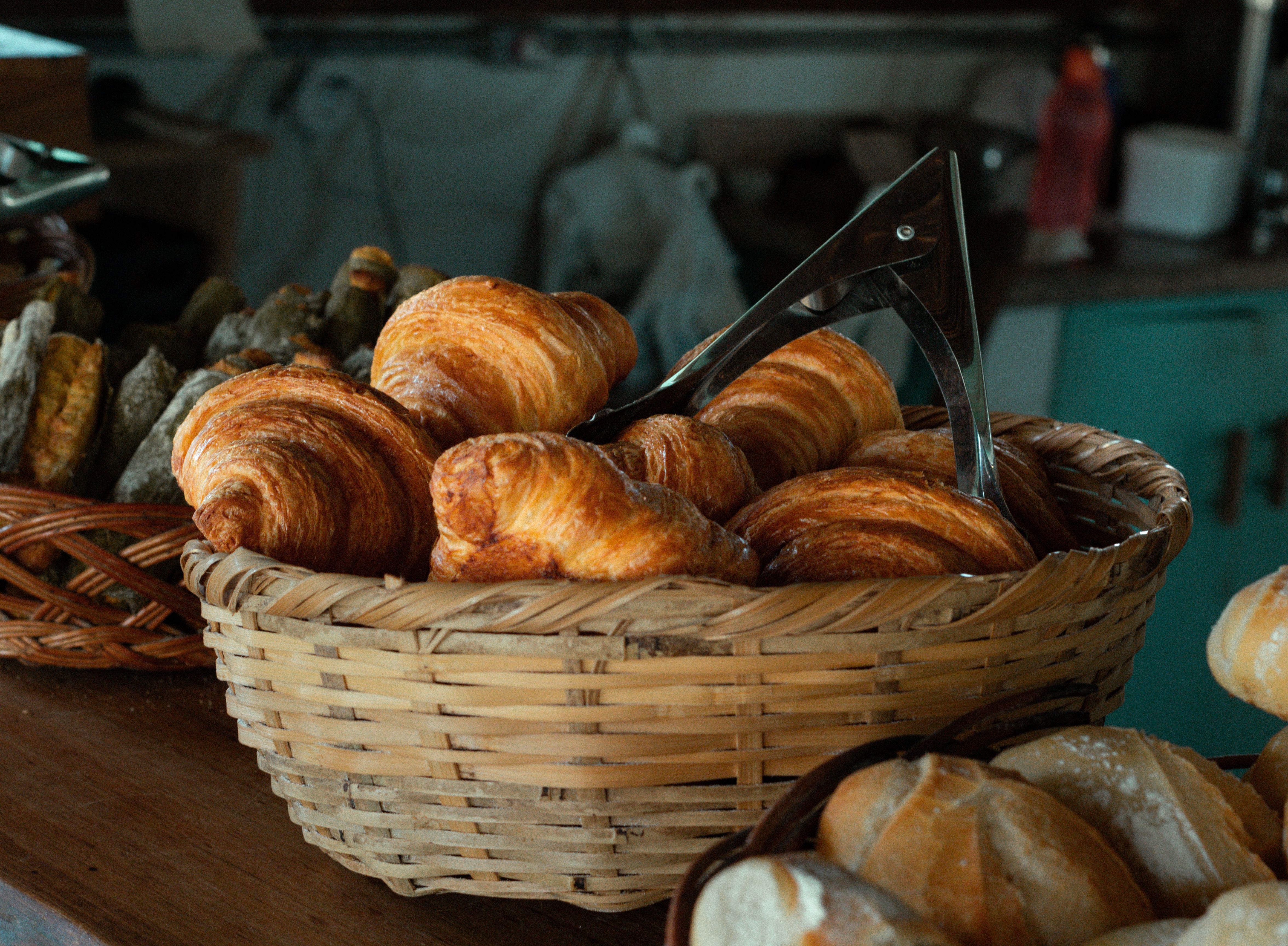
Photo: Giovanna Kamimura / Pexels
The diets react (see scores below)
Common Ingredients
- flour
- butter
- sugar
- eggs
- yeast
- milk
- dulce de leche
- quince paste
Specific recipes may vary.
Incompatible with 11 of 11 diets
Diet Ratings
Facturas are Argentine pastries that are fundamentally incompatible with a ketogenic diet. They are made with wheat flour and yeast as their base, making them high-carb grain-based products. They are sweetened with sugar and filled with dulce de leche (a caramel-like spread made from milk and sugar) and quince paste (membrillo, made from quince fruit and sugar). A single factura can easily contain 30-50g of net carbs, which alone can exceed or consume an entire day's keto carb allowance. Every primary ingredient — flour, sugar, dulce de leche, quince paste, and milk — is either a grain, added sugar, or high-carb ingredient that is strictly forbidden on keto. There is no meaningful way to consume this food within ketogenic guidelines.
Facturas are Argentine pastries that contain multiple animal-derived ingredients, making them clearly incompatible with a vegan diet. Butter and milk are dairy products, eggs are animal products, and dulce de leche is a milk-based caramel. These are core structural ingredients, not trace contaminants — the dough itself requires butter, eggs, and milk, and the filling is entirely dairy-based. Quince paste and flour are the only vegan-compliant ingredients in this recipe. A vegan version of facturas would require substituting all four animal ingredients, fundamentally changing the product.
Facturas are Argentine pastries that are fundamentally incompatible with the paleo diet. The base ingredient is wheat flour, a grain explicitly excluded from paleo. Milk is a dairy product, also excluded. Sugar is refined and prohibited. Yeast-leavened dough is a processed grain product. The fillings — dulce de leche (dairy + refined sugar) and quince paste (typically cooked with large amounts of refined sugar) — add further violations. Butter is the only ingredient that exists in a gray area (debated in paleo), but even that does not offset the multiple core violations. There is essentially no paleo-compatible pathway for this dish without a complete reconstruction using different ingredients.
Facturas are Argentine pastries made from refined white flour, butter, sugar, eggs, milk, dulce de leche, and quince paste. This combination directly contradicts Mediterranean diet principles on multiple fronts: refined grains instead of whole grains, butter as the primary fat instead of extra virgin olive oil, and significant added sugars from both dulce de leche and quince paste. There is no meaningful fiber, minimal micronutrient density, and the fat profile is dominated by saturated fats from butter and dairy. These are essentially ultra-processed confections by Mediterranean standards — high in refined carbohydrates and added sugars, the category most strongly discouraged.
Facturas are Argentine pastries that are fundamentally incompatible with the carnivore diet. The dish is built almost entirely on plant-derived ingredients: flour (grain), sugar (processed plant), yeast (fungal), and quince paste (fruit-based). The fillings — dulce de leche and quince paste — add concentrated sugar and plant matter. While eggs, butter, and milk are animal-derived, they are minor components in a product that is primarily a grain-based, sugar-laden pastry. No amount of animal-derived ingredients redeems a food whose base is wheat flour and refined sugar. This is a classic processed baked good that violates virtually every carnivore principle.
Facturas are Argentine pastries (croissants, medialunas, vigilantes, etc.) that are excluded on multiple grounds. They contain flour (a grain product), butter (dairy, not ghee), sugar (added sugar), and milk (dairy) — all of which are explicitly excluded on Whole30. Additionally, the fillings — dulce de leche (dairy + added sugar) and quince paste (added sugar) — are also excluded. Even if the individual ingredients could somehow be swapped for compliant versions, facturas are pastries/baked goods that fall squarely under the 'no recreating baked goods' rule (Rule 4), which explicitly prohibits items like croissants, pastries, and sweet baked goods.
Facturas are Argentine pastries (croissants, medialunas, vigilantes, etc.) made primarily from wheat flour, which is high in fructans — a major FODMAP trigger. A standard serving of facturas would involve one or more pastries, each containing a substantial amount of wheat flour. Beyond the wheat base, the fillings and components compound the FODMAP load significantly: dulce de leche typically contains lactose (from milk/cream) and often high-fructose corn syrup or large amounts of sucrose; quince paste (membrillo) is made from quince, a fruit high in excess fructose and polyols, and is consumed in meaningful quantities as a filling. Milk in the dough adds lactose. Multiple high-FODMAP ingredients stack together, making this dish inappropriate during the elimination phase at any realistic serving size.
Facturas are Argentine pastries (similar to croissants or Danish pastries) that are fundamentally incompatible with the DASH diet. They are made with refined white flour (lacking fiber and whole grain benefits), high amounts of butter (significant saturated fat), and sugar, then filled with dulce de leche (concentrated caramel made from milk and sugar, very high in added sugars) and/or quince paste (also high in added sugar). This combination delivers high saturated fat, high added sugars, refined carbohydrates, and minimal nutritional value in terms of potassium, magnesium, calcium, or fiber. The DASH diet explicitly limits saturated fat, added sugars, and sweets, and emphasizes whole grains over refined flour. Facturas represent exactly the type of food the DASH plan is designed to minimize.
Facturas are Argentine pastries (croissants, medialunas, vigilantes, etc.) made from refined white flour, butter, and sugar, then filled with dulce de leche (concentrated sweetened milk) or quince paste (membrillo), both of which are extremely high in sugar. This combination creates a near-perfect storm of Zone Diet violations: high-glycemic refined carbohydrates, significant saturated fat from butter, virtually zero lean protein, no fiber to blunt the glycemic response, and sugar-dense fillings that spike insulin dramatically. There is no meaningful lean protein block here, the fat is saturated rather than monounsaturated, and the carbohydrate load is both high-glycemic and calorie-dense with no vegetable or low-GI component to offset it. Even in a portion-controlled context, facturas cannot be meaningfully balanced into a Zone meal without stripping out their defining characteristics. The 40/30/30 ratio cannot be approximated with this food as a snack component without an unrealistic level of restructuring.
Facturas are Argentine pastries (medialunas, vigilantes, cañoncitos, etc.) made from refined white flour, butter, sugar, eggs, milk, and yeast, then filled with dulce de leche (a highly concentrated milk caramel) and/or quince paste (membrillo, which is essentially fruit cooked with large amounts of sugar). This combination hits nearly every category the anti-inflammatory framework identifies as problematic: refined carbohydrates (white flour) cause rapid glycemic spikes that upregulate inflammatory cytokines; added sugar is present in high quantities both in the dough and in both fillings; saturated fat from butter contributes to an unfavorable inflammatory lipid profile when consumed regularly; dulce de leche adds yet more sugar and full-fat dairy; and quince paste, while quince itself has polyphenols, in this processed jam-like form is predominantly sucrose. There are no meaningful anti-inflammatory components — no omega-3s, no significant fiber, no notable antioxidant-rich ingredients, no herbs or spices with anti-inflammatory properties. The glycemic load of this snack is very high. As an occasional treat it is unlikely to cause harm for a generally healthy individual, but it offers nothing to reduce inflammation and several mechanisms that promote it. This is a clear 'avoid' under anti-inflammatory principles.
Facturas are Argentine pastries (think croissants, medialunas, or filled rolls) made from refined flour, butter, sugar, milk, and eggs, typically filled with dulce de leche or quince paste. This combination produces a high-sugar, high-saturated-fat, low-protein, low-fiber food with nearly no nutritional density per calorie. The refined flour base digests rapidly, spiking blood sugar. Butter and dulce de leche add significant saturated fat and sugar. Fillings like dulce de leche are essentially concentrated sugar. For GLP-1 patients eating significantly fewer calories overall, this food offers almost nothing of nutritional value — no meaningful protein, negligible fiber, high empty calories, and a fat content likely to worsen nausea, reflux, and bloating due to slowed gastric emptying. It fails on virtually every GLP-1 dietary priority: protein (#1), fiber (#2), low fat (#3), nutrient density (#6), and easy digestibility (#5).
*See how scores were generated at our methodology page.
Nutritional profile
Six traits that cut across every diet.
Fiber & Plants
How much whole-plant food and fiber it delivers.
Healthy Fats
The quality of its fats (unsaturated, omega-3).
Whole / Unprocessed
How close it is to its natural, unprocessed form.
Gut Gentle
How easy it is on digestion (low FODMAP, few irritants).
Low Glycemic
How little it spikes your blood sugar.
Protein Density
How much protein it packs per calorie.
Controversy Index
Higher controversy = more disagreement between diets.