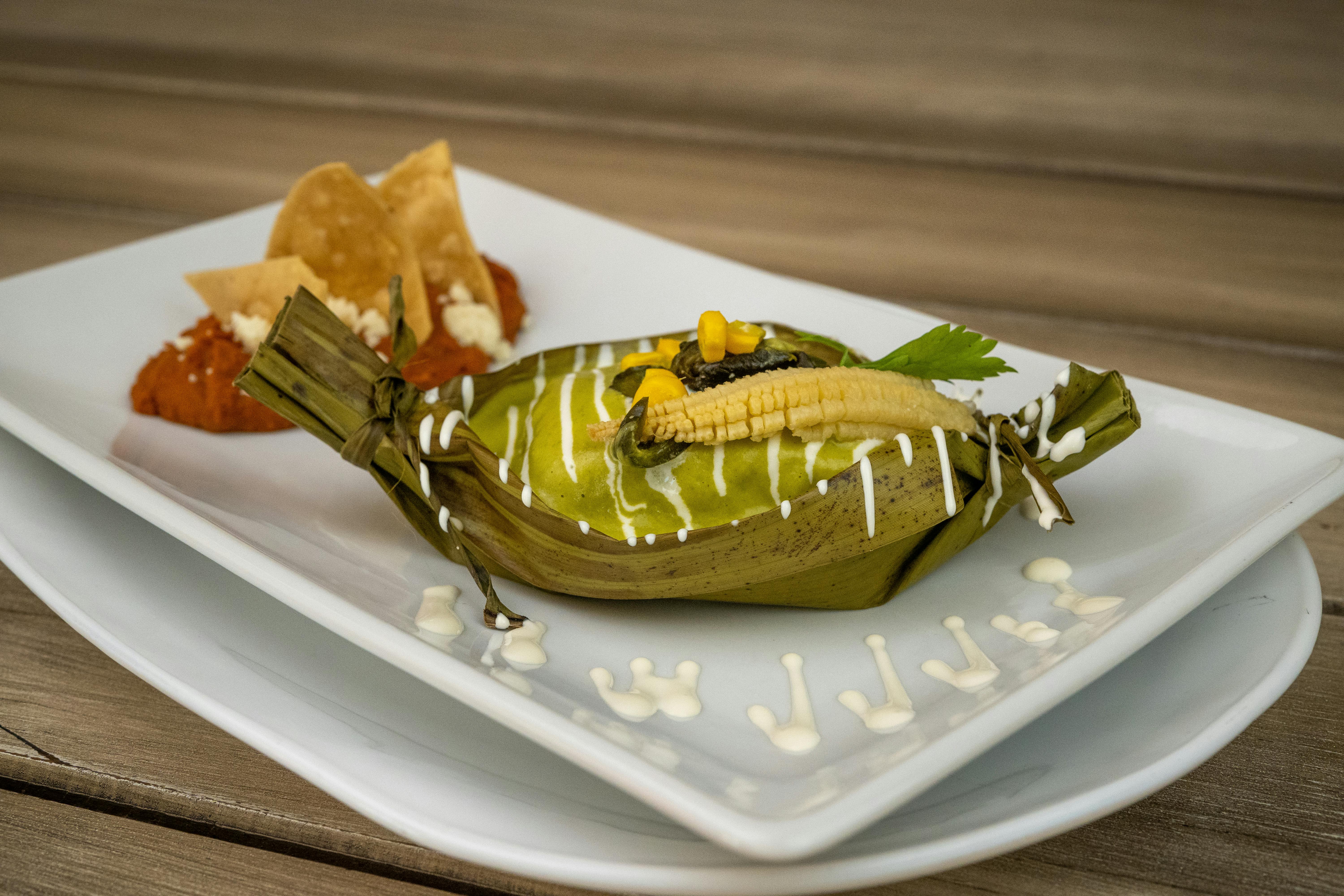
Photo: Allan González / Pexels
Argentine
Humita en Chala
The diets react (see scores below)
Common Ingredients
- fresh corn
- onion
- cheese
- milk
- paprika
- corn husks
- butter
Specific recipes may vary.
Incompatible with 6 of 11 diets
Diet Ratings
Humita en Chala is fundamentally built on fresh corn, which is a starchy, high-carbohydrate ingredient entirely incompatible with ketogenic eating. Fresh corn contains approximately 17-19g of net carbs per 100g, and this dish uses it as the primary — essentially the only — base ingredient. A typical serving would contain well over 30-40g of net carbs from the corn alone, easily exceeding or consuming the entire daily keto carb allowance. The remaining ingredients (butter, cheese, milk) are more keto-friendly, but they cannot offset the massive carbohydrate load from the corn. There is no meaningful portion size at which this dish becomes keto-compatible, as corn itself is the dish.
Humita en Chala as described contains multiple animal-derived ingredients that disqualify it from vegan compliance. Cheese, milk, and butter are all dairy products — direct animal derivatives excluded under every mainstream vegan standard. The corn, onion, paprika, and corn husks are plant-based, but the dairy components are central to the dish's texture and flavor, not incidental additives. A vegan version could theoretically be made by substituting plant-based milk, vegan butter, and vegan cheese, but the default traditional recipe as listed is not vegan.
Humita en Chala contains multiple non-paleo ingredients that disqualify it clearly. Cheese and milk are dairy products, explicitly excluded from the paleo diet. Butter is also dairy-derived and excluded (unlike ghee, butter retains casein and lactose). Fresh corn, while not a dry grain, is still corn — a grain excluded under paleo guidelines. The combination of corn, dairy (milk, cheese, butter) makes this dish incompatible with paleo principles on several fronts simultaneously. Corn husks used as wrapping are not consumed, but the corn itself is the base ingredient.
Humita en Chala is a traditional Argentine dish made primarily from fresh corn, onion, and paprika — plant-based ingredients that align well with Mediterranean principles. However, it also contains butter, cheese, and milk, which introduce saturated fat and dairy beyond what the Mediterranean diet emphasizes as staple fats. Butter in particular is not a core Mediterranean fat; extra virgin olive oil is the canonical primary fat. The cheese and milk are acceptable in moderation under the dairy allowance (a few servings per week), but combined with butter, the saturated fat profile pushes this dish toward the moderate/caution zone. The fresh corn base and vegetables are positive elements, and the dish is whole and minimally processed, which is a significant plus. Overall it fits as an occasional side rather than a regular staple.
Some Mediterranean diet practitioners would view this more favorably, noting that dairy (cheese, milk) consumed in moderate portions aligns with traditional Mediterranean eating patterns in regions like Greece and southern Italy, where cheese is a regular accompaniment. Substituting olive oil for butter would bring this dish closer to a clear approval.
Humita en Chala is fundamentally a plant-based dish. Its primary ingredient is fresh corn, a grain/starchy plant food that is completely excluded on the carnivore diet. The dish also contains onion (plant), paprika (plant spice), and corn husks (plant wrapping). While it does contain some animal-derived ingredients — cheese, milk, and butter — these are minor components in what is overwhelmingly a plant-based preparation. No amount of dairy can redeem a dish whose core is corn and onion. This is the opposite of a carnivore meal and would be avoided by virtually all carnivore practitioners regardless of how lenient or strict their approach.
Humita en Chala contains multiple excluded ingredients. Cheese is dairy and explicitly excluded on Whole30. Milk is also dairy and excluded. Butter (regular, not ghee or clarified butter) is excluded — the only dairy exception is ghee/clarified butter. Any one of these three ingredients alone would disqualify this dish, and all three are present. Fresh corn itself is also a grain excluded on Whole30, compounding the issue.
Humita en Chala contains multiple high-FODMAP ingredients that make it unsuitable during the elimination phase. Onion is one of the highest-FODMAP foods (fructans) and is a core ingredient — even small amounts cooked into the dish make it problematic. Milk contains lactose and is used in meaningful quantities. Cheese type is unspecified; if it is a soft or fresh cheese (like fresco or ricotta, common in Argentine humita), it adds lactose; hard aged cheeses would be safer but are less typical here. Fresh corn itself is low-FODMAP at approximately 1/2 cob (38g kernels) per Monash, but humita uses a generous quantity of corn and the combination of problematic ingredients is the bigger concern. Butter and paprika are low-FODMAP. Corn husks are not eaten. The cumulative FODMAP load from onion alone is enough to classify this dish as avoid, regardless of other ingredients.
Monash University rates corn as low-FODMAP at modest servings and butter/paprika as safe, so some practitioners might suggest a modified version with onion omitted and lactose-free milk substituted. However, traditional Humita en Chala as prepared almost universally includes onion and regular milk, making a standard serving clearly high-FODMAP during elimination without significant recipe modification.
Humita en Chala is a traditional Argentine dish built around fresh corn, onion, and aromatic spices — all DASH-friendly ingredients. However, the inclusion of cheese (typically a full-fat or semi-cured variety) and butter introduces saturated fat that DASH guidelines advise limiting. The milk component is neutral-to-positive if low-fat, but in traditional preparation it is often whole milk. Fresh corn provides fiber, potassium, and magnesium, supporting DASH goals. Paprika and the corn husk steaming method add no sodium concern. The dish is not heavily processed or high in sodium by nature, but the saturated fat load from butter and cheese prevents a full approval. With modest portions and substitutions (low-fat cheese, skim milk, reduced butter), it can fit more comfortably within DASH. As traditionally prepared, it sits in the 'caution' zone — acceptable occasionally and in controlled portions.
NIH DASH guidelines specify low-fat dairy and minimal saturated fat, which would flag the butter and full-fat cheese here. However, some updated DASH-aligned clinicians note that recent meta-analyses have weakened the link between dairy fat and cardiovascular risk, suggesting that a moderate serving of this dish — rich in vegetables, fiber, and potassium from corn and onion — could be incorporated without concern if overall saturated fat intake is managed across the day.
Humita en Chala is a traditional Argentine dish made primarily from fresh corn, which is classified as an 'unfavorable' carbohydrate in Zone terminology due to its moderate-to-high glycemic index and starchy nature. Fresh corn has meaningful net carbohydrates that spike blood sugar more than Zone-preferred low-glycemic vegetables. The dish also contains cheese and butter, which add saturated fat rather than the preferred monounsaturated fat. Milk contributes additional carbohydrates (lactose). On the positive side, the cheese provides some protein, and the onion and paprika are Zone-friendly additions. The dish lacks a lean protein source entirely, making it difficult to build a balanced 40/30/30 Zone meal around it without significant additions. As a side dish, it could theoretically be portioned carefully — a small serving alongside lean grilled protein and a large salad with olive oil — but the corn-heavy base, saturated fat from butter and cheese, and absence of lean protein mean it requires careful management. It is usable but not favorable in Zone terms.
Some Zone practitioners following Dr. Sears' later anti-inflammatory framework (Toxic Fat, The Zone Diet) note that whole food sources of saturated fat like cheese and butter are less problematic than processed seed oils, and that fresh corn — unlike corn syrup or processed corn products — still contains fiber that modestly reduces glycemic impact. A small portion of Humita alongside substantial lean protein and non-starchy vegetables could be workable within Zone block math, making this closer to a 5 for flexible Zone practitioners.
Humita en Chala is a traditional Argentine dish of fresh corn paste wrapped and steamed in corn husks. It has a mixed anti-inflammatory profile. On the positive side, fresh corn provides fiber, antioxidants (lutein, zeaxanthin), and B vitamins, though it is a starchy carbohydrate with a moderate glycemic load. Onion is a notable anti-inflammatory ingredient, rich in quercetin and other flavonoids. Paprika contributes carotenoids and mild anti-inflammatory benefit. The corn husks are simply the cooking vessel and nutritionally neutral. On the negative side, the dish contains butter (saturated fat, a limited/avoid item in anti-inflammatory eating) and cheese (full-fat dairy, which is also flagged as 'limit' due to saturated fat content). Milk adds further saturated fat depending on fat content. The combination of butter, cheese, and whole milk introduces meaningful saturated fat that can promote inflammatory signaling, partially offsetting the vegetable-based benefits. There are no omega-3 sources, no significant anti-inflammatory spices beyond paprika, and no legumes or leafy greens. This is a comfort food with some wholesome ingredients but too much saturated fat from dairy to earn approval. Substituting olive oil for butter and using reduced-fat dairy or a plant-based alternative would improve its profile considerably.
Some anti-inflammatory practitioners, particularly those influenced by traditional and whole-food frameworks (e.g., Weston A. Price Foundation), argue that full-fat dairy from quality sources is not inherently pro-inflammatory and may even support a healthy gut microbiome. However, mainstream anti-inflammatory authorities including Dr. Andrew Weil consistently recommend limiting full-fat dairy and butter, placing this dish solidly in caution territory under most protocols.
Humita en Chala is a traditional Argentine dish made from fresh corn paste steamed in corn husks with cheese, milk, butter, onion, and paprika. As a side dish, it offers modest fiber from corn and some micronutrients, but it is nutritionally problematic for GLP-1 patients in several ways. Protein content is very low — the primary ingredients are corn (a starchy carbohydrate), butter (fat), and milk, with cheese providing a small amount of protein. The dish is calorie-dense relative to its protein and fiber yield, meaning it occupies limited stomach capacity without delivering the nutritional priorities GLP-1 patients need most. Fat content is moderate to moderately high due to butter, cheese, and whole milk — all saturated fat sources that can worsen nausea, bloating, and reflux in GLP-1 users. Corn does contribute some fiber and is easier to digest than many high-fat foods, which is a mild positive. The dish is not fried, not spicy, and not carbonated, so it avoids the worst triggers. However, as a side with essentially no lean protein and meaningful saturated fat, it scores poorly against GLP-1 dietary priorities. It could be consumed in very small portions alongside a high-protein main, but it should not be a regular or substantial part of the plate.
Some GLP-1-focused dietitians may accept small portions of humita as a tolerable whole-food carbohydrate side given that fresh corn is less processed than refined grains and the dish is steamed rather than fried; however, others flag the saturated fat from butter and cheese as a meaningful concern for patients already prone to GI side effects, making individual tolerance the key variable here.
*See how scores were generated at our methodology page.
Nutritional profile
Six traits that cut across every diet.
Fiber & Plants
How much whole-plant food and fiber it delivers.
Healthy Fats
The quality of its fats (unsaturated, omega-3).
Whole / Unprocessed
How close it is to its natural, unprocessed form.
Gut Gentle
How easy it is on digestion (low FODMAP, few irritants).
Low Glycemic
How little it spikes your blood sugar.
Protein Density
How much protein it packs per calorie.
Controversy Index
Higher controversy = more disagreement between diets.
Diet-Specific Tips
 Mediterranean — 5/10
View tips
- Fresh corn and onion are plant-based positives aligned with Mediterranean principles
- Butter is not a Mediterranean staple fat — olive oil is preferred
- Cheese and milk are acceptable dairy in moderation but add saturated fat
- No red meat or highly processed ingredients — whole, minimally processed dish
- Paprika and corn husks (steaming vessel) are neutral to positive elements
- Overall saturated fat load from butter + cheese + milk warrants moderation
 DASH — 5/10
View tips
- Fresh corn is a DASH-friendly whole food providing fiber, potassium, and magnesium
- Onion and paprika are low-sodium, nutrient-supporting ingredients
- Butter contributes saturated fat, which DASH guidelines advise limiting
- Cheese (typically full-fat in traditional preparation) adds saturated fat and some sodium
- Whole milk common in traditional recipe; low-fat milk substitution would improve DASH compatibility
- No added sodium from processed ingredients — sodium risk is moderate
- Dish is portion-controllable and not heavily processed
- Steaming in corn husks is a health-neutral, low-fat cooking method
 Zone — 4/10
View tips
- Fresh corn is an 'unfavorable' Zone carbohydrate with moderate-to-high glycemic index
- No lean protein source present — cheese provides minimal protein relative to Zone targets (~7g per block)
- Butter contributes saturated fat, not the preferred monounsaturated fat (olive oil, avocado, almonds)
- Cheese adds both protein and saturated fat, requiring careful block accounting
- Milk adds additional lactose-based carbohydrates
- Onion and paprika are Zone-favorable ingredients
- As a side dish, must be paired with substantial lean protein and low-GI vegetables to achieve Zone ratios
- Portion control critical — a small serving is more manageable than a full portion
 Anti-Inflammatory — 5/10
View tips
- Fresh corn provides fiber, lutein, and zeaxanthin but is a moderate glycemic starch
- Onion is a strong anti-inflammatory ingredient (quercetin, flavonoids)
- Paprika adds beneficial carotenoids
- Butter is a saturated fat source flagged as 'limit' in anti-inflammatory guidelines
- Cheese (full-fat dairy) contributes additional saturated fat, a moderate concern
- Milk adds further saturated fat depending on variety used
- No omega-3 sources, leafy greens, or primary anti-inflammatory foods present
- Overall dish is whole-food based with no processed ingredients or additives
 GLP-1 Friendly — 4/10
View tips
- Very low protein — no lean protein source present
- Moderate to high saturated fat from butter, cheese, and whole milk — potential GI side effect trigger
- Corn is a starchy carbohydrate; moderate fiber benefit but high carbohydrate density relative to protein
- Steamed preparation is a positive — not fried or greasy
- Small portion tolerable alongside a high-protein main, but poor standalone nutritional value for GLP-1 patients
- Empty calorie risk relative to limited stomach capacity on GLP-1 medications