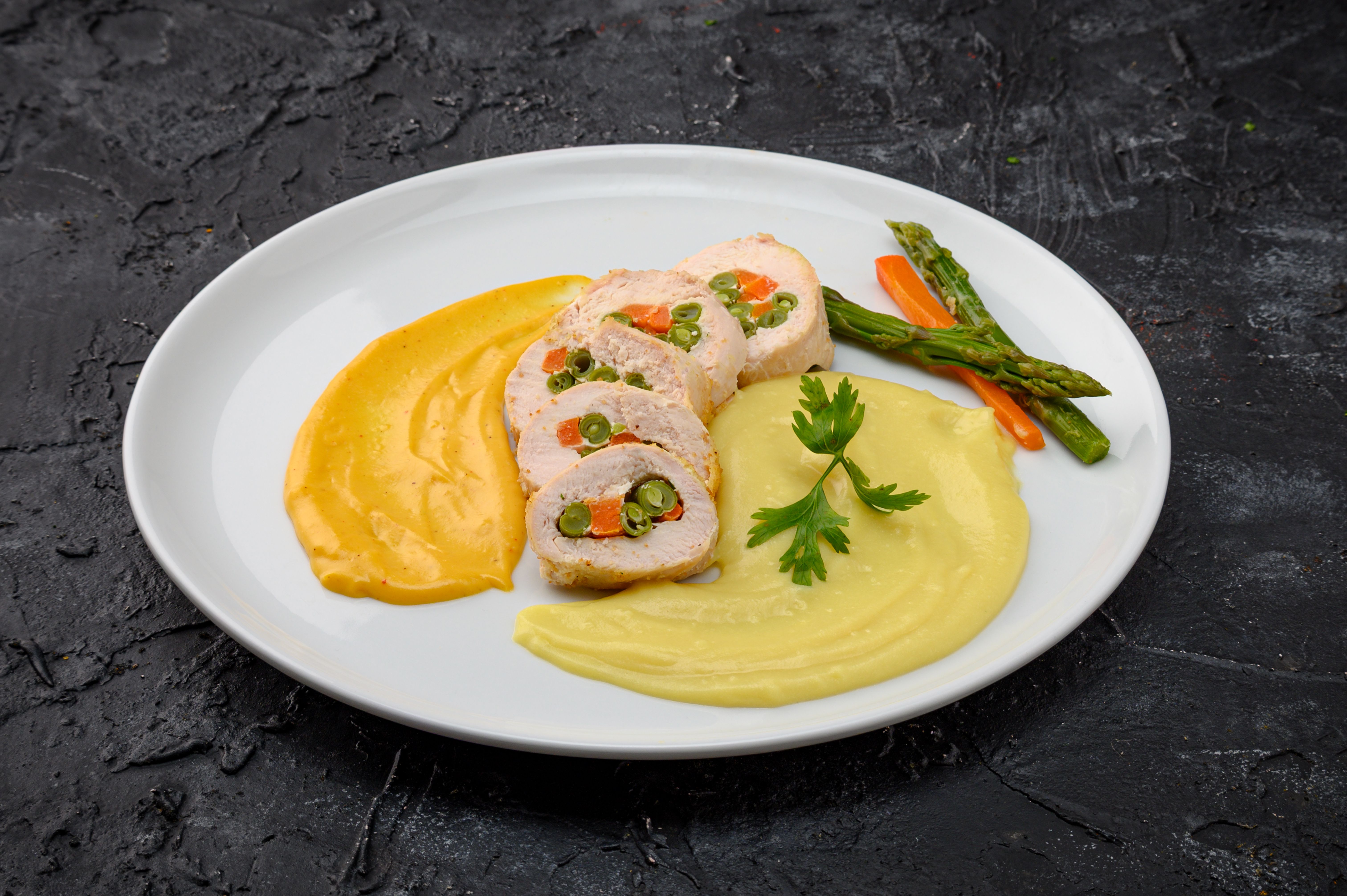
Photo: Christopher Welsch Leveroni / Pexels
Argentine
Matambre Arrollado
The diets react (see scores below)
Common Ingredients
- flank steak
- carrot
- eggs
- bell pepper
- spinach
- garlic
- parsley
Specific recipes may vary.
Incompatible with 4 of 11 diets
Diet Ratings
Matambre Arrollado is a rolled flank steak stuffed with vegetables, eggs, and herbs. The base protein — flank steak — is excellent for keto, as is the egg filling. Spinach, garlic, and parsley are low-carb and keto-friendly. The concern comes from carrots and bell peppers: carrots are a starchy root vegetable with moderate net carbs (~7g per 100g), and bell peppers add additional sugars (~4g net carbs per 100g). In a traditional preparation, these vegetables are used as accents rather than bulk fillers, so total net carbs per serving may remain manageable (estimated 5-10g net carbs depending on portion), but they introduce enough carbohydrate load to warrant caution. The dish is otherwise whole, unprocessed, and grain-free, making it fundamentally compatible with keto if portions of the filling vegetables are kept modest.
Strict keto practitioners would flag carrots as essentially off-limits regardless of quantity, arguing that including any starchy vegetables sets a bad precedent and that the dish should be reconstructed with purely low-carb vegetables like zucchini or leafy greens to be considered keto-appropriate.
Matambre Arrollado is a traditional Argentine rolled meat dish that is fundamentally incompatible with a vegan diet. The primary protein is flank steak (beef), which is a direct animal product, and the filling includes eggs, another excluded animal product. Both ingredients are unambiguously non-vegan with no debate within the vegan community. The plant-based components (carrot, bell pepper, spinach, garlic, parsley) are vegan, but they are incidental to a dish whose identity is defined by animal products.
Matambre Arrollado is a traditional Argentine rolled flank steak stuffed with vegetables and hard-boiled eggs. Every ingredient — flank steak, carrot, eggs, bell pepper, spinach, garlic, and parsley — is unprocessed and squarely within the core paleo framework. These are all foods available to Paleolithic hunter-gatherers: lean muscle meat, root vegetables, eggs, leafy greens, and fresh herbs and aromatics. There are no grains, legumes, dairy, seed oils, refined sugars, or processed additives present. In its traditional form, this dish is prepared by rolling and tying the steak, then poaching or slow-roasting it — minimal processing that aligns well with paleo philosophy. The only practical watch point is added salt during preparation, which strict paleo discourages, but the base ingredients themselves are entirely compliant.
Matambre Arrollado is centered on flank steak, a red meat that the Mediterranean diet restricts to only a few times per month. While the dish contains several Mediterranean-friendly vegetables (spinach, bell pepper, carrot, garlic, parsley) and eggs, the primary protein is beef, which directly contradicts the diet's core principle of minimizing red meat. The vegetable filling does not redeem a dish whose caloric and nutritional profile is dominated by red meat. This is an Argentine specialty with no meaningful place in Mediterranean dietary patterns.
Matambre Arrollado is a traditional Argentine rolled flank steak stuffed with multiple plant-based ingredients. While the flank steak and eggs are fully carnivore-approved, the dish contains several plant foods that are strictly excluded from the carnivore diet: carrot, bell pepper, spinach, garlic, and parsley. These vegetables and herbs are integral to the dish's structure and flavor — not incidental trace additives — making the dish fundamentally incompatible with carnivore principles. A carnivore-adapted version could theoretically use only the beef and eggs, but as prepared, this dish must be avoided.
Matambre Arrollado is an Argentine stuffed and rolled flank steak dish. Every ingredient listed — flank steak, carrot, eggs, bell pepper, spinach, garlic, and parsley — is explicitly Whole30-compliant. These are all whole, unprocessed animal proteins, vegetables, and herbs with no excluded ingredients. The dish is a legitimate whole-food preparation (rolled meat with vegetable stuffing), not a recreation of a banned food category like bread or pancakes. It aligns perfectly with the Whole30 philosophy of eating real, nutrient-dense foods.
Matambre Arrollado contains garlic as a listed ingredient, which is high-FODMAP at any meaningful quantity due to its high fructan content. Garlic is one of the highest-FODMAP foods in the Monash system and is explicitly avoided during the elimination phase. The remaining ingredients — flank steak, carrot, eggs, bell pepper, spinach, and parsley — are all individually low-FODMAP at standard servings. However, because garlic is structurally incorporated into this rolled and cooked dish (not used as an infused oil that can be removed), the fructans from garlic will have leached into the meat and filling throughout cooking, making the entire dish unsuitable during elimination phase. This is not a borderline case: garlic contamination through cooking is a well-established FODMAP concern, and the dish cannot be safely modified after preparation.
Matambre Arrollado is an Argentine rolled flank steak filled with vegetables and eggs. The dish has meaningful DASH-compatible elements: spinach, bell pepper, carrot, parsley, and garlic are excellent DASH vegetables rich in potassium, magnesium, and fiber. However, flank steak, while leaner than many cuts, is still red meat, which DASH limits. The eggs contribute dietary cholesterol and saturated fat in moderate amounts. Traditional preparation often involves salting the meat generously and may include curing or marinating steps that increase sodium. Additionally, DASH recommends limiting red meat consumption overall, making this a 'caution' rather than an 'avoid' — it contains genuinely beneficial vegetables and uses a relatively lean cut, but the red meat base and potential sodium from preparation prevent a full approval.
NIH DASH guidelines classify all red meat as a limited food, recommending it only sparingly. However, some updated clinical interpretations note that flank steak is among the leanest beef cuts (comparable in fat to skinless chicken thighs), and when home-prepared with minimal added salt and paired with abundant vegetables as in this dish, DASH-oriented dietitians may consider it acceptable in moderate portions (3–4 oz) 1–2 times per week rather than categorically restricting it.
Matambre Arrollado is a rolled flank steak stuffed with vegetables and hard-boiled eggs — a dish with genuine Zone-friendly elements but some notable concerns. The protein base (flank steak) is a relatively lean cut of beef, though it contains more saturated fat than skinless chicken or fish, which are Dr. Sears' preferred protein sources. The filling ingredients are largely Zone-favorable: spinach and bell pepper are low-glycemic colorful vegetables rich in polyphenols; carrot adds some natural sugars but is still a relatively low-glycemic vegetable in normal portions; garlic and parsley contribute polyphenols and micronutrients. Eggs add protein and fat, including some saturated fat. The dish lacks a dedicated fat block (no olive oil, avocado, or monounsaturated fat source), and the saturated fat from beef and egg yolks would need to be accounted for. The macro ratio of this dish skews protein-heavy and fat-moderate, with very low carbohydrate content from the vegetables alone — meaning it would need to be served alongside additional low-glycemic carbs (e.g., a side salad or additional vegetables) to approach the 40/30/30 Zone balance. Portion control on the beef is essential to stay near the 25g protein target per meal. Overall, this is a workable Zone meal component that requires thoughtful pairing.
Some Zone practitioners and later Sears writings (particularly Toxic Fat and The Mediterranean Zone) take a more relaxed view of red meat in moderation, especially lean cuts like flank steak, given its CLA content and amino acid profile. Additionally, the egg yolks, while adding saturated fat, also contribute choline and arachidonic acid considerations that Sears discusses — he generally recommends limiting egg yolk consumption to reduce arachidonic acid load, which would push the dish toward the lower end of the caution range.
Matambre Arrollado is a rolled flank steak dish stuffed with colorful vegetables — a profile that is genuinely mixed from an anti-inflammatory standpoint. On the positive side, the dish is loaded with anti-inflammatory ingredients: spinach (rich in vitamin K, folate, and antioxidants), bell pepper (vitamin C, carotenoids, quercetin), carrot (beta-carotene), garlic (allicin, a well-established anti-inflammatory compound), and parsley (flavonoids, vitamin C). These vegetables meaningfully offset the inflammatory potential of the protein base. Eggs contribute choline and selenium with a mixed but largely neutral inflammatory profile. Flank steak is the complicating factor: red meat is categorized in the 'limit' tier of anti-inflammatory guidelines due to saturated fat content, arachidonic acid, and associations with elevated CRP and IL-6 in research. However, flank steak is one of the leaner cuts of beef, which partially mitigates concern compared to fattier red meats. The dish is minimally processed, free of refined carbohydrates, added sugars, seed oils, or artificial additives, which is a meaningful positive. Preparation method matters: braised or baked versions are preferable to high-heat char-grilling (which can generate heterocyclic amines). Overall, this is a nutrient-dense, whole-food dish where the anti-inflammatory vegetable payload partially counterbalances the pro-inflammatory signal from red meat. Acceptable in moderation for the general population.
Some anti-inflammatory practitioners (aligned with Dr. Weil's broader Mediterranean-influenced framework) would argue this dish is reasonably acceptable given its abundance of colorful vegetables, lean cut of beef, and absence of processed ingredients — rating it closer to the neutral-to-positive range. Stricter anti-inflammatory and autoimmune protocol (AIP) advocates would flag red meat as a regular source of arachidonic acid and saturated fat, and would also potentially flag eggs, recommending this dish be limited to occasional consumption only.
Matambre Arrollado is a rolled flank steak stuffed with eggs, vegetables (carrot, bell pepper, spinach), garlic, and parsley. It offers meaningful nutritional strengths: flank steak is a relatively lean cut of beef compared to ribeye or brisket, the eggs add protein density, and the vegetable filling contributes fiber, micronutrients, and water content. However, flank steak still carries moderate saturated fat, and the dish is typically served in thick slices that can be calorie-dense per serving. The rolled preparation also creates a compact, rich bite that may sit heavily in a slowed GLP-1 stomach. On the positive side, there is no frying, no added sugar, no heavy sauce in the traditional preparation, and the vegetable stuffing improves nutrient density meaningfully. The protein yield per serving is solid. The primary concern for GLP-1 patients is the saturated fat content from beef and eggs combined, which can worsen nausea or reflux, and the density of the dish which may feel heavy given slowed gastric emptying. A small portion of 3-4 oz with emphasis on the vegetable filling is workable; a large serving is not ideal.
Some GLP-1-focused dietitians accept lean beef cuts like flank steak as a valid high-protein option when portions are controlled, arguing the protein-to-fat ratio is favorable enough to recommend it regularly. Others caution against any red meat for GLP-1 patients due to slower digestion compounding the gastric emptying delay already caused by the medication, increasing the risk of nausea and bloating even from moderate servings.
*See how scores were generated at our methodology page.
Nutritional profile
Six traits that cut across every diet.
Fiber & Plants
How much whole-plant food and fiber it delivers.
Healthy Fats
The quality of its fats (unsaturated, omega-3).
Whole / Unprocessed
How close it is to its natural, unprocessed form.
Gut Gentle
How easy it is on digestion (low FODMAP, few irritants).
Low Glycemic
How little it spikes your blood sugar.
Protein Density
How much protein it packs per calorie.
Controversy Index
Higher controversy = more disagreement between diets.
Diet-Specific Tips
 Keto — 6/10
View tips
- Flank steak is a high-protein, moderate-fat keto staple
- Eggs add healthy fat and protein — strongly keto-positive
- Carrots are the primary concern: starchy root vegetable with notable net carbs
- Bell peppers contribute moderate natural sugars
- Spinach, parsley, and garlic are low-carb and acceptable
- Portion size of vegetable filling is critical — small amounts may stay within daily carb limits
- No grains, added sugars, or processed ingredients
- Whole, traditional preparation with no hidden carb sources
 Paleo — 9/10
View tips
- Flank steak is a whole, unprocessed cut of beef — a paleo staple
- Eggs are fully approved under paleo guidelines
- Spinach, bell pepper, carrot, garlic, and parsley are all non-starchy vegetables and fresh herbs with no paleo objections
- No grains, legumes, dairy, seed oils, or refined sugars present
- Traditional preparation (rolling, tying, poaching or roasting) involves minimal processing
- Added salt during cooking is the only potential strict-paleo concern, but does not affect the ingredient verdict
 Whole30 — 9/10
View tips
- Flank steak is a whole, unprocessed cut of beef — fully compliant
- All stuffing ingredients (carrot, eggs, bell pepper, spinach) are vegetables and eggs — explicitly allowed
- Garlic and parsley are compliant herbs/aromatics
- No grains, legumes, dairy, added sugars, or other excluded ingredients
- This is a whole-food preparation, not a recreation of a banned food category
- Traditional recipe may include red wine or vinegar in the cooking liquid — those would need to be verified as compliant versions if used
 DASH — 5/10
View tips
- Flank steak is red meat, which DASH limits to small, infrequent portions
- Flank steak is a relatively lean beef cut, reducing saturated fat concerns compared to fattier cuts
- Spinach, bell pepper, carrot, garlic, and parsley are core DASH vegetables providing potassium, magnesium, and fiber
- Traditional preparation often includes heavy salting or curing, which can significantly raise sodium content
- Whole eggs contribute dietary cholesterol and some saturated fat; confidence in egg limits is medium due to evolving guidelines
- No added processed ingredients, sweets, or tropical oils — a relatively clean preparation
- Portion size is critical; a large serving increases red meat and sodium exposure
 Zone — 6/10
View tips
- Flank steak is a leaner red meat cut but still higher in saturated fat than Zone-preferred proteins like chicken or fish
- Spinach, bell pepper, garlic, and parsley are Zone-favorable low-glycemic, polyphenol-rich vegetables
- Carrot is an acceptable Zone vegetable in modest portions
- Eggs add protein but egg yolks increase arachidonic acid and saturated fat load — Sears recommends limiting yolks
- Dish is very low in carbohydrates as written — must be paired with additional low-GI carbs to achieve 40/30/30 ratio
- No monounsaturated fat source present — a Zone meal would benefit from adding olive oil or avocado
- Portion control on beef critical to hit ~25g protein target without overshooting
 Anti-Inflammatory — 5/10
View tips
- Flank steak is red meat — anti-inflammatory guidelines recommend limiting red meat due to saturated fat and arachidonic acid
- Flank steak is a lean cut, reducing but not eliminating the saturated fat concern
- Spinach, bell pepper, and carrot provide significant antioxidants, carotenoids, and vitamin C
- Garlic is a well-established anti-inflammatory ingredient (allicin)
- Parsley contributes flavonoids and vitamin C
- No refined carbohydrates, added sugars, seed oils, or artificial additives
- Eggs are a mixed but largely neutral factor in anti-inflammatory assessment
- Whole-food, minimally processed preparation is a positive attribute
- Cooking method (braised vs. char-grilled) can meaningfully affect the inflammatory profile
 GLP-1 Friendly — 5/10
View tips
- Flank steak is a leaner beef cut but still carries moderate saturated fat — not ideal for GLP-1 patients prone to nausea
- Egg and vegetable filling improves protein density and adds fiber and micronutrients
- No frying, no heavy sauce, no added sugar in traditional preparation — favorable preparation method
- Dense rolled structure may feel heavy given GLP-1-slowed gastric emptying
- Solid protein yield per serving supports the #1 GLP-1 dietary priority
- Portion sensitivity is high — a small 3 oz slice is workable, a large serving is not recommended
- Vegetable filling (spinach, bell pepper, carrot) contributes meaningful fiber and hydration support