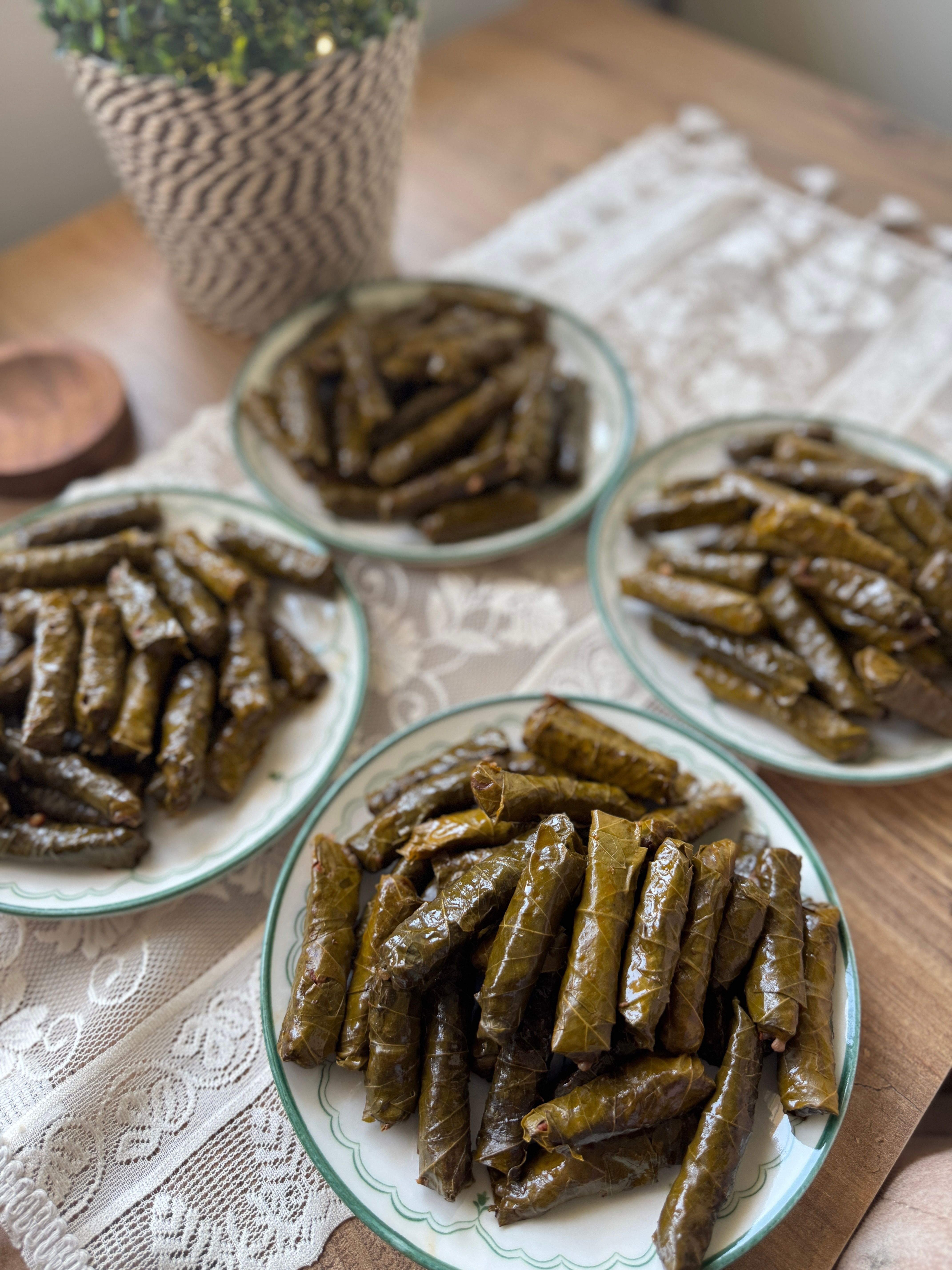
Photo: minik_tatli_sunumlarr / Pexels
The diets react (see scores below)
Common Ingredients
- grape leaves
- beef
- lamb
- rice
- onion
- parsley
- mint
- tomato paste
Specific recipes may vary.
Incompatible with 7 of 11 diets
Diet Ratings
Armenian Dolma is fundamentally incompatible with ketogenic eating due to the inclusion of rice as a core ingredient. Rice is a high-glycemic grain with virtually no fiber benefit relative to its carb load. A standard serving of several dolma pieces easily delivers 30-50g+ of net carbs from the rice alone, which can single-handedly exhaust or exceed the entire daily keto carb budget. The grape leaves themselves are low-carb and keto-friendly, and the beef/lamb filling is excellent keto protein and fat, but rice is non-negotiable in traditional dolma and cannot be reduced to a keto-safe quantity in a standard serving. Tomato paste also adds a small amount of sugar/carbs. The dish as traditionally prepared is a keto disqualifier.
Armenian Dolma as described contains beef and lamb — both are animal flesh and are strictly excluded from a vegan diet. There is no ambiguity here. The remaining ingredients (grape leaves, rice, onion, parsley, mint, tomato paste) are all plant-based, but the presence of two distinct animal meats makes this dish clearly non-vegan. A vegan version of dolma could be made by omitting the meat and using additional rice, herbs, lentils, or mushrooms as filling, but that would be a different dish from what is described.
Armenian Dolma is not paleo-compatible due to the inclusion of rice, which is a grain explicitly excluded from the paleo diet. Rice is a domesticated agricultural product unavailable to Paleolithic hunter-gatherers and contains anti-nutrients that the paleo framework discourages. The remaining ingredients — grape leaves, beef, lamb, onion, parsley, mint, and tomato paste — are largely paleo-friendly, but rice is a core structural component of this dish, not a minor additive. Its presence alone disqualifies the dish. Without rice, a modified version of dolma using cauliflower rice or no grain filler could be made paleo-compliant.
Armenian dolma contains a combination of beef and lamb as primary proteins, which places it firmly in the red meat category. Mediterranean diet guidelines restrict red meat to a few times per month, making this dish a poor fit for regular consumption. The grape leaves, fresh herbs (parsley, mint), onion, and tomato paste are genuinely Mediterranean-friendly ingredients, and the dish does reflect traditional Eastern Mediterranean culinary heritage. However, the dual red meat filling (beef and lamb) with white rice pushes this into 'avoid' territory for regular eating. The dish is not inherently incompatible with the diet if eaten very occasionally, but as a main course it contradicts core principles around red meat limitation.
Some Mediterranean diet authorities, particularly those focused on traditional Levantine and Eastern Mediterranean food cultures, recognize stuffed grape leaves as a culturally authentic dish and would permit it in small portions infrequently (a few times per month). A plant-based or seafood version of dolma (e.g., stuffed with rice, herbs, and lemon only) would easily earn an 'approve' rating.
Dolma is fundamentally incompatible with the carnivore diet. While it contains carnivore-approved animal proteins (beef and lamb), the dish is dominated by plant-based ingredients: grape leaves (plant wrapper), rice (grain), onion (vegetable), parsley (herb), mint (herb), and tomato paste (plant-based condiment). The core concept of dolma is stuffed plant matter, making it impossible to separate the animal components from the plant-based structure. Rice alone is a significant grain carbohydrate that is strictly excluded. This dish is essentially a vehicle for plant foods with meat as a secondary ingredient.
Dolma contains rice, which is a grain explicitly excluded from the Whole30 program. Rice is on the prohibited list regardless of preparation method or cultural context. All other ingredients in this dish — grape leaves, beef, lamb, onion, parsley, mint, and tomato paste — are individually Whole30-compatible, but the inclusion of rice makes the entire dish non-compliant. There is no compliant workaround that still qualifies as traditional dolma.
Dolma contains two significant high-FODMAP ingredients that make it unsuitable during the elimination phase. Onion is one of the highest-fructan foods tested by Monash University and is high-FODMAP at any cooking amount — even cooked onion retains its fructans and remains a major trigger. Grape leaves themselves have limited Monash testing, adding uncertainty. The rice, beef, lamb, parsley, mint, and tomato paste (in small quantities) are generally low-FODMAP, but the onion alone is sufficient to classify this dish as high-FODMAP. Traditional dolma recipes use onion as a core aromatic ingredient, typically in quantities far exceeding any safe threshold. There is no realistic way to serve this dish in its traditional form during the elimination phase.
Armenian Dolma contains a mixed nutritional profile from a DASH perspective. The grape leaves, onion, parsley, mint, and tomato paste are DASH-friendly ingredients rich in potassium, magnesium, and fiber. The rice adds whole-food carbohydrates. However, the combination of beef AND lamb as proteins raises concern: red meat — especially lamb — is higher in saturated fat, which DASH explicitly limits. DASH recommends lean meats and limits red meat to no more than 1-2 servings per week. Additionally, traditional preparations often include significant added salt in the stuffing and sometimes in the grape leaves (canned/brined grape leaves can be very high in sodium). The dish is not outright incompatible with DASH but requires modification: using fresh or rinsed grape leaves, reducing salt, and substituting lean ground turkey or chicken for the red meat blend would improve its score substantially.
NIH DASH guidelines explicitly limit red meat and saturated fat, making the beef-lamb combination problematic for regular consumption. However, some updated clinical interpretations note that when red meat is used in small quantities as a component within a vegetable-forward dish like dolma — where grape leaves, herbs, and vegetables dominate — the overall saturated fat load per serving may remain within acceptable limits, and some DASH-aligned dietitians permit occasional moderate red meat portions in this context.
Armenian Dolma presents a mixed Zone Diet profile. The grape leaves themselves are an excellent low-glycemic, polyphenol-rich wrapper that Zone would approve of. The herbs (parsley, mint), onion, and tomato paste are favorable Zone carbohydrate components. However, the dish has two significant Zone concerns: (1) Rice is a high-glycemic, unfavorable carbohydrate in Zone terminology — it's the primary carb filler in most dolma recipes and can spike the glycemic load substantially. (2) The protein blend of beef AND lamb skews toward higher saturated fat content. Zone strongly prefers lean proteins, and fatty ground lamb in particular pushes toward the 'unfavorable' category for protein quality. The fat-to-protein ratio in this dish will likely be skewed by the saturated fat in the meat rather than the preferred monounsaturated sources. The dish could theoretically be Zone-adjusted by significantly reducing rice, choosing leaner ground beef, and omitting lamb — but as traditionally prepared, it falls short. Portion control is essential: a small serving (2-3 pieces) might fit within a Zone block framework if paired with additional low-glycemic vegetables to rebalance the carb quality.
Some Zone practitioners in Sears' later anti-inflammatory framework (particularly in 'The Zone Diet' updated editions) are more permissive about small amounts of saturated fat in whole-food contexts, and a modest rice inclusion might be acceptable if the total carb blocks are managed. The grape leaves and herbs provide meaningful polyphenols and omega-3-adjacent micronutrients, and the overall meal structure (protein + carb + some fat) is inherently Zone-like in architecture — it just needs macro tuning.
Armenian dolma presents a mixed anti-inflammatory profile. On the positive side, grape leaves are rich in antioxidants, polyphenols, and anti-inflammatory compounds — they are genuinely beneficial and underappreciated in Western diets. Parsley and mint contribute additional polyphenols and flavonoids. Tomato paste is a concentrated source of lycopene, a potent carotenoid antioxidant. Onion provides quercetin. These ingredients collectively offer meaningful anti-inflammatory value. However, the primary protein base of beef and lamb is the central concern. Both are red meats high in saturated fat and arachidonic acid, which are flagged by anti-inflammatory frameworks as pro-inflammatory when consumed regularly. White rice is a refined carbohydrate that raises blood sugar and offers minimal anti-inflammatory value. The dish is not 'avoided' because the proportion of red meat per serving is moderate (it's mixed with rice and wrapped in leaves), and the herb and vegetable components partially offset concerns. This is a traditional dish where portion size and frequency matter greatly. Occasional consumption as part of an otherwise anti-inflammatory diet is acceptable, but it should not be a dietary staple. Substituting brown rice and leaning heavier on lamb (slightly higher in omega-3 than beef) would improve the profile.
Some anti-inflammatory practitioners, including those aligned with Mediterranean diet principles, would rate dolma more favorably — grape leaves, fresh herbs, tomato paste, and olive oil (often used in cooking) are all anti-inflammatory staples, and the red meat quantity per piece is modest. Conversely, strict AIP or carnivore-adjacent anti-inflammatory protocols would flag both the rice (glycemic load) and the red meat concentration more severely, potentially pushing this toward 'avoid.'
Armenian dolma (stuffed grape leaves) presents a mixed nutritional profile for GLP-1 patients. The beef-lamb combination provides meaningful protein, but the ratio of rice to meat in a typical dolma filling means protein density per serving is moderate rather than high — likely 10-15g protein per 3-4 pieces, with rice contributing a significant portion of calories. The grape leaves themselves offer some fiber and are easy to digest. Tomato paste, onion, and herbs (parsley, mint) add micronutrients with minimal caloric cost. The primary concern is the saturated fat from the beef-lamb blend — lamb in particular is a fattier meat that can worsen GLP-1 side effects like nausea and delayed gastric emptying. Rice is a refined carbohydrate with low fiber density. The dish is not fried and is generally mild in spice, which works in its favor. Portion size matters significantly: 2-3 pieces can be a reasonable small meal, but the fat content from the meat blend remains a limiting factor.
Some GLP-1-focused dietitians would rate this more favorably, noting that the small, pre-portioned format of dolma is naturally aligned with the small-meal recommendation, and that the dish is far preferable to fried or ultra-processed alternatives. Others would flag the lamb fat content more aggressively, particularly for patients in early medication stages when GI side effects are most pronounced, recommending a leaner all-beef or beef-turkey substitution.
*See how scores were generated at our methodology page.
Nutritional profile
Six traits that cut across every diet.
Fiber & Plants
How much whole-plant food and fiber it delivers.
Healthy Fats
The quality of its fats (unsaturated, omega-3).
Whole / Unprocessed
How close it is to its natural, unprocessed form.
Gut Gentle
How easy it is on digestion (low FODMAP, few irritants).
Low Glycemic
How little it spikes your blood sugar.
Protein Density
How much protein it packs per calorie.
Controversy Index
Higher controversy = more disagreement between diets.
Diet-Specific Tips
 DASH — 5/10
View tips
- Beef and lamb are red meats high in saturated fat, which DASH limits
- Grape leaves are often brined/canned and may be high in sodium — rinsing reduces this significantly
- Herbs (parsley, mint), onion, and tomato paste are DASH-approved ingredients with beneficial nutrients
- Rice adds carbohydrates but lacks fiber of whole grains
- Portion size is critical — small individual dolmas may keep saturated fat and sodium manageable
- Substituting lean ground turkey or chicken and using fresh/low-sodium grape leaves would make this DASH-compatible
 Zone — 4/10
View tips
- Rice is an unfavorable high-glycemic carbohydrate in Zone methodology
- Lamb adds significant saturated fat, pushing away from Zone's lean protein preference
- Grape leaves are an excellent low-glycemic, polyphenol-rich Zone food
- Herbs, onion, and tomato paste are favorable Zone carbohydrate components
- Protein blend (beef + lamb) complicates lean protein targeting (~25g/meal goal)
- Traditional portion sizes (multiple stuffed leaves) can easily exceed Zone carb block limits
- Dish architecture is Zone-compatible with modifications: reduce rice, use leaner meat
 Anti-Inflammatory — 5/10
View tips
- Grape leaves: antioxidant-rich, polyphenols, anti-inflammatory
- Beef and lamb: red meat high in saturated fat and arachidonic acid — pro-inflammatory per most anti-inflammatory guidelines
- Parsley and mint: flavonoids, rosmarinic acid, anti-inflammatory herbs
- Tomato paste: concentrated lycopene, a potent carotenoid antioxidant
- White rice: refined carbohydrate with high glycemic index, low anti-inflammatory value
- Onion: quercetin content provides anti-inflammatory benefit
- Moderate red meat per serving due to mixed composition with rice and leaves
- Frequency and portion size critical — occasional consumption more acceptable than regular
 GLP-1 Friendly — 5/10
View tips
- Beef-lamb blend introduces moderate-to-high saturated fat, which can worsen nausea and reflux on GLP-1 medications
- Protein per piece is moderate but not high-density — rice dilutes the protein-to-calorie ratio
- Rice contributes refined carbohydrates with minimal fiber
- Grape leaves add a small fiber and micronutrient benefit
- Not fried and mild in seasoning — GI-friendly preparation method
- Small, pre-portioned format aligns well with small-meal frequency recommendation
- Tomato paste, parsley, mint, and onion add nutrient density with minimal caloric cost