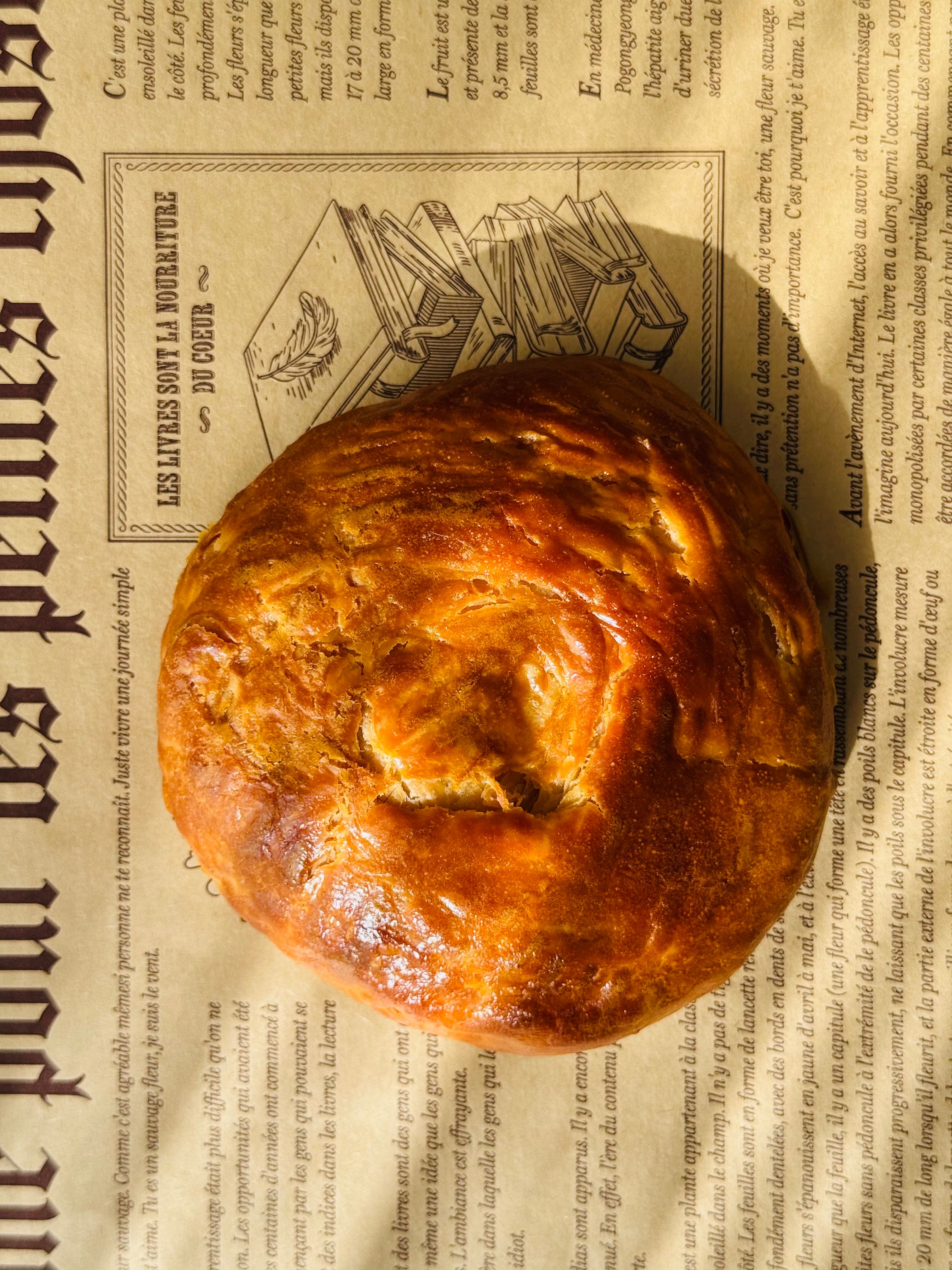
Photo: Ballı Zehra / Pexels
The diets react (see scores below)
Common Ingredients
- flour
- butter
- sugar
- egg
- milk
- yeast
- vanilla
Specific recipes may vary.
Incompatible with 10 of 11 diets
Diet Ratings
Gata is a traditional Armenian sweet pastry made primarily from flour, sugar, and milk — all of which are fundamentally incompatible with ketogenic eating. Flour (wheat) is a high-glycemic grain providing roughly 70-75g net carbs per 100g, and sugar adds direct glucose. Even a small serving would almost certainly exhaust an entire day's keto carb budget and spike blood sugar, immediately disrupting ketosis. While butter and egg are keto-friendly ingredients, they are vastly outnumbered by the anti-keto components in this recipe.
Gata is a traditional Armenian sweet pastry that contains multiple animal-derived ingredients: butter (dairy), egg, and milk. All three are direct animal products excluded under vegan dietary rules. While the flour, sugar, yeast, and vanilla are plant-based, the presence of butter, egg, and milk makes this dish clearly non-vegan. A vegan version could theoretically be made by substituting plant-based butter, a flax or chia egg replacer, and non-dairy milk, but the traditional recipe as listed is not vegan-compatible.
Gata is an Armenian pastry that contains multiple non-paleo ingredients. Flour (wheat grain) is explicitly excluded from the paleo diet as a grain product. Sugar is a refined sweetener, also excluded. Milk is dairy, excluded. Yeast-leavened baked goods represent processed, agricultural-era foods fundamentally incompatible with the paleo framework. Butter and eggs are the only ingredients with any paleo standing, but they are far outweighed by the core non-paleo components. This dish is essentially a grain-based, dairy-containing, sugar-laden pastry — failing on multiple foundational paleo criteria simultaneously.
Gata is a traditional Armenian sweet pastry made primarily from refined white flour, butter, and sugar — three ingredients that directly contradict Mediterranean diet principles. It relies on butter as the primary fat (not olive oil), uses refined grain flour, and contains significant added sugar. It is a highly processed baked good with no meaningful contribution of vegetables, legumes, whole grains, or plant-forward nutrition. While it contains eggs and milk (moderate-category ingredients), these are minor relative to the refined and saturated-fat-heavy base. This places Gata firmly in the 'avoid' category as an occasional cultural treat, not a Mediterranean diet-compatible food.
Gata is an Armenian sweet pastry made primarily from flour, sugar, and yeast — all plant-derived or refined carbohydrate ingredients that are strictly excluded from the carnivore diet. While it contains some animal-derived ingredients (butter, egg, milk), these are completely overshadowed by the plant-based foundation of flour and sugar, plus vanilla as a plant-derived flavoring. This is a grain-based baked good at its core, which is one of the most explicitly prohibited food categories on the carnivore diet. There is universal consensus across all carnivore practitioners and protocols that bread, pastries, and grain-based foods are off-limits.
Gata is an Armenian sweet pastry/bread that contains multiple excluded ingredients. Flour (wheat grain) is explicitly excluded on Whole30. Sugar is excluded as an added sweetener. Butter (regular dairy butter, not ghee) is excluded. Milk is excluded as a dairy product. Additionally, even if somehow compliant ingredients were substituted, Gata is a baked good — a sweet pastry/bread — which falls squarely into the 'no recreating baked goods' rule that prohibits bread, cookies, and similar items regardless of ingredient compliance.
Gata is a traditional Armenian sweet pastry made primarily with wheat flour, which is high in fructans — one of the most significant FODMAPs. A standard serving of Gata would contain a substantial amount of wheat flour, making it clearly high-FODMAP during the elimination phase. Additionally, milk contributes lactose (a disaccharide), and butter in larger quantities may also be a concern, though butter itself is generally low-FODMAP at small amounts. Yeast does not add FODMAPs. The combination of wheat flour as the primary ingredient and lactose from milk makes this pastry unsuitable during the FODMAP elimination phase at any realistic serving size.
Gata is a traditional Armenian sweet pastry made with refined white flour, butter, sugar, eggs, milk, and yeast. While it lacks processed additives or high sodium, it conflicts with several core DASH principles: it is made with refined (not whole grain) flour, contains butter (a source of saturated fat that DASH limits), and is high in added sugar. It provides little potassium, magnesium, calcium (in meaningful amounts), or fiber. The DASH diet explicitly limits sweets, refined grains, and saturated fats. As an occasional small portion it is not categorically off-limits, but as a snack category item it is poorly aligned with DASH snack recommendations (which emphasize nuts, seeds, fruits, vegetables, and low-fat dairy). The score of 3 reflects that it is not heavily processed or sodium-laden, but its combination of saturated fat, refined flour, and added sugar make it a poor DASH choice.
Gata is a traditional Armenian sweet pastry made from refined white flour, butter, and sugar — a combination that is essentially the opposite of Zone-friendly eating. The macronutrient profile is heavily skewed toward high-glycemic carbohydrates (white flour + sugar) and saturated fat (butter), with virtually no lean protein. It offers no fiber to moderate glycemic impact, no monounsaturated fats, and no polyphenols or omega-3s. There is no realistic way to portion this food to achieve a 40/30/30 ratio without also consuming large amounts of complementary lean protein and Zone-favorable carbs, making it essentially a 'empty calorie' item in Zone terms. White flour and sugar are among the most explicitly 'unfavorable' carb sources in Dr. Sears' published work, and butter as the primary fat source adds saturated fat with no monounsaturated benefit. As a snack with no protein component, it fails the Zone block system entirely — a Zone snack requires at least 1 protein block paired with 1 carb block and 1 fat block. This pastry provides only high-GI carbs and saturated fat.
Gata is a traditional Armenian sweet pastry made from refined white flour, butter, sugar, eggs, milk, yeast, and vanilla. From an anti-inflammatory perspective, this combination is largely problematic. Refined white flour is a refined carbohydrate with a high glycemic index, spiking blood sugar and promoting inflammatory signaling. Butter is a source of saturated fat, which is flagged as pro-inflammatory in anti-inflammatory frameworks when consumed regularly. Added sugar directly stimulates inflammatory pathways by elevating insulin and contributing to AGE (advanced glycation end-product) formation. The dish provides no anti-inflammatory redeeming qualities — no omega-3s, no polyphenols, no antioxidants, no fiber, no beneficial spices beyond vanilla (which has negligible anti-inflammatory effect at culinary doses). Eggs and milk are at most neutral. This is a refined, buttery, sugary baked good — a category consistently associated with elevated inflammatory markers such as CRP and IL-6 in epidemiological research. Occasional consumption is unlikely to cause harm, but it offers no anti-inflammatory benefit and fits squarely in the 'limit or avoid' category.
Gata is a traditional Armenian sweet pastry made primarily from refined flour, butter, and sugar — a combination that delivers high refined carbohydrates, significant saturated fat, and substantial added sugar with virtually no protein, minimal fiber, and low nutrient density per calorie. For GLP-1 patients, this is a poor fit on nearly every criterion: it offers empty calories at a time when caloric intake is already sharply reduced, contains no meaningful protein to support muscle preservation, and provides negligible fiber to counter GLP-1-associated constipation. The butter content raises saturated fat concerns, and the high sugar load conflicts with blood sugar stabilization goals. The refined flour base also slows digestion less efficiently than whole grains, potentially compounding gastric emptying issues. Small portion enjoyment is the only marginal concession, but even a small serving delivers poor nutritional return.
*See how scores were generated at our methodology page.
Nutritional profile
Six traits that cut across every diet.
Fiber & Plants
How much whole-plant food and fiber it delivers.
Healthy Fats
The quality of its fats (unsaturated, omega-3).
Whole / Unprocessed
How close it is to its natural, unprocessed form.
Gut Gentle
How easy it is on digestion (low FODMAP, few irritants).
Low Glycemic
How little it spikes your blood sugar.
Protein Density
How much protein it packs per calorie.
Controversy Index
Higher controversy = more disagreement between diets.
Diet-Specific Tips
 DASH — 5/10
View tips
- Refined white flour instead of whole grains — reduces fiber and nutrient density
- Butter contributes saturated fat, which DASH explicitly limits
- High added sugar content conflicts with DASH guidance to limit sweets
- Low in DASH-priority nutrients: potassium, magnesium, fiber
- No significant sodium concern — a minor positive
- Milk and egg provide small amounts of calcium and protein but insufficient to offset negatives
- Better DASH snack alternatives exist: fruits, nuts, low-fat dairy