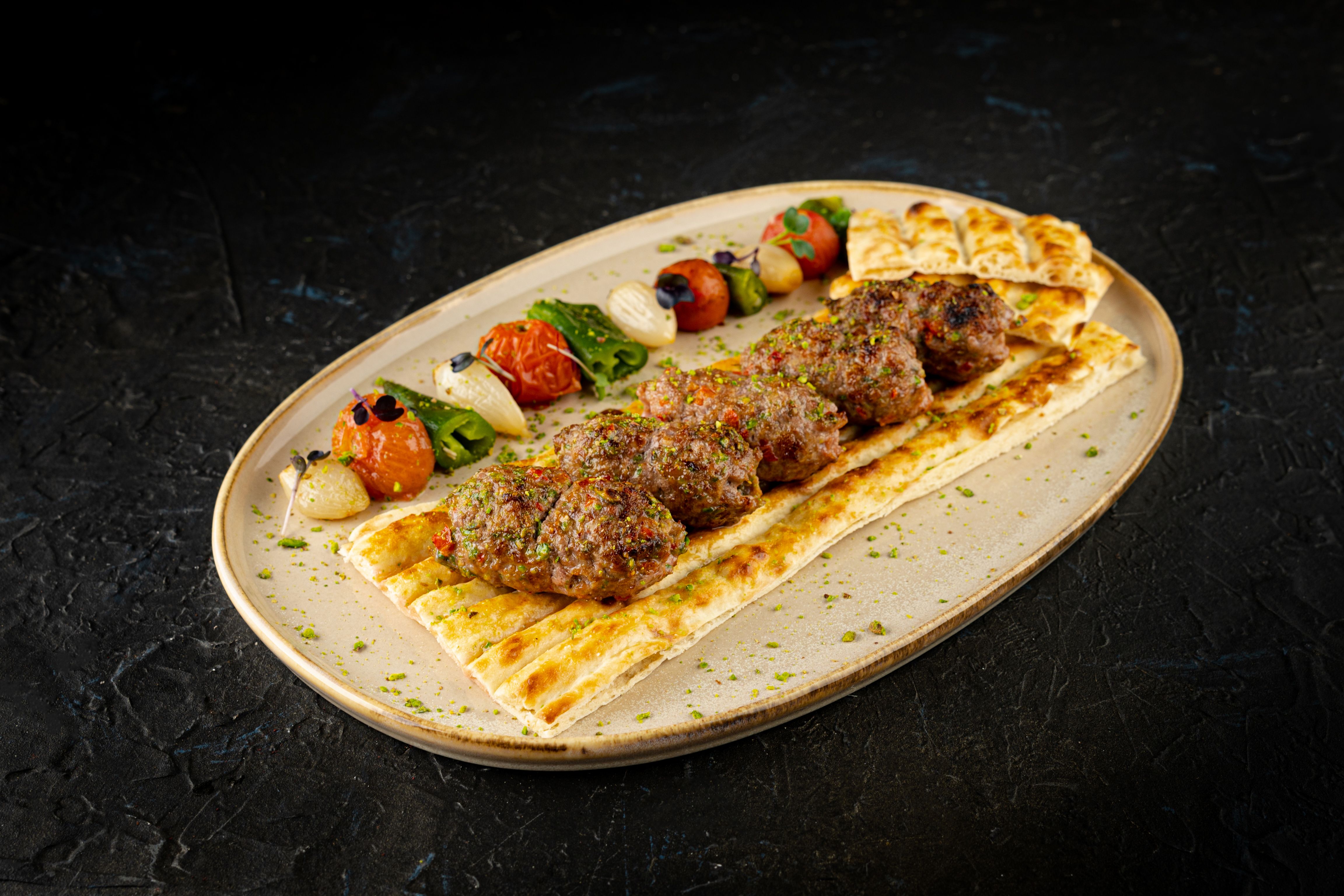
The diets react (see scores below)
Common Ingredients
- beef
- onion
- egg
- flour
- butter
- salt
- black pepper
Specific recipes may vary.
Incompatible with 7 of 11 diets
Diet Ratings
Armenian Kufta contains flour as a binding ingredient, which is a grain-based carbohydrate that is fundamentally incompatible with ketogenic eating. Traditional Kufta (a boiled meatball dish) relies on flour both as a binder within the meat mixture and sometimes as an outer shell or casing, contributing significant net carbs per serving. While the beef, egg, butter, onion, salt, and black pepper are all keto-friendly, the flour disqualifies this dish in its traditional preparation. A standard serving of Kufta could easily contain 15-30g of net carbs from flour alone, making it difficult to fit within the strict 20-50g daily net carb limit without sacrificing nearly the entire daily allowance on a single dish.
Armenian Kufta contains multiple animal-derived ingredients that are strictly excluded from a vegan diet. Beef is the primary protein and a clear animal product. Egg is an animal product. Butter is a dairy product derived from cow's milk. These three ingredients alone make this dish entirely incompatible with veganism, with no ambiguity whatsoever.
Armenian Kufta contains three non-paleo ingredients that disqualify it outright. Flour (wheat) is a grain — one of the clearest exclusions in all paleo frameworks. Butter is a dairy product excluded by strict paleo rules. Added salt is also discouraged under paleo guidelines. While the base ingredients — beef, onion, egg, and black pepper — are fully paleo-approved, the presence of wheat flour, butter, and salt make this dish incompatible with the paleo diet in its traditional form.
Armenian Kufta is centered on beef as its primary protein, which is classified as red meat and should be consumed only a few times per month in the Mediterranean diet. The dish also includes butter as a fat source rather than extra virgin olive oil, which directly contradicts one of the core tenets of the Mediterranean diet. Refined flour is used as a binder, adding another mildly unfavorable element. While the onion and eggs are acceptable, the combination of red meat plus butter makes this dish a poor fit for regular Mediterranean diet consumption.
Some interpretations of the broader Eastern Mediterranean diet tradition, which encompasses Armenian cuisine, acknowledge occasional red meat dishes as culturally embedded foods acceptable in strict moderation (once or twice a month). Additionally, eggs and minimal flour are not inherently problematic, and the dish could theoretically be adapted with olive oil in place of butter.
Armenian Kufta contains multiple non-carnivore ingredients that disqualify it from the diet. Flour is a grain-based plant product and is strictly excluded on any tier of carnivore eating. Onion is a plant vegetable, also excluded. Black pepper is a plant-derived spice, excluded on strict carnivore. While beef, egg, butter, and salt are carnivore-compatible, the flour and onion are hard violations of carnivore rules — not minor additives but structural ingredients of the dish. The dish cannot be considered carnivore-compatible in its traditional form.
This Armenian Kufta recipe contains two Whole30-excluded ingredients: flour (a grain product) and butter (dairy — only ghee/clarified butter is permitted as a dairy exception on Whole30). Both are explicitly excluded under the program's rules. The remaining ingredients — beef, onion, egg, salt, and black pepper — are fully compliant, but the presence of flour and regular butter disqualifies the dish as traditionally prepared.
Armenian Kufta contains two significant high-FODMAP ingredients that make it unsuitable during the elimination phase. Onion is one of the highest-FODMAP foods tested by Monash University, containing large amounts of fructans even in small quantities — there is no safe serving size of onion. Wheat flour is also high in fructans and is a key FODMAP trigger. While the remaining ingredients (beef, egg, butter, salt, black pepper) are all low-FODMAP, the combination of onion and wheat flour in a single dish makes this a clear avoid during the elimination phase of the low-FODMAP diet. Modifications such as replacing onion with the green tops of spring onions and using a gluten-free flour blend could make a lower-FODMAP version possible.
Armenian Kufta is a meatball or stuffed dumpling dish made primarily from beef, which DASH guidelines recommend limiting as red meat due to its saturated fat content. The addition of butter further increases saturated fat load, and salt adds significant sodium. However, the dish also contains onion (a DASH-friendly vegetable) and egg (acceptable in moderation under updated dietary guidance). The flour component is refined rather than whole grain, which is not emphasized in DASH. The overall profile — red meat as the primary protein combined with butter and added salt — places this dish in the caution category. It is not categorically excluded but should be consumed in small portions and infrequently. Using lean ground beef (93% lean or higher), reducing butter, using minimal salt, and pairing with vegetables could improve DASH compatibility.
NIH DASH guidelines explicitly limit red meat due to saturated fat and recommend lean poultry and fish as preferred proteins; however, updated clinical interpretations note that lean red meat in small portions (1-2 servings/week) can fit within a DASH-inspired eating pattern, and some registered dietitians allow occasional red meat if overall saturated fat intake remains within targets.
Armenian Kufta is a seasoned ground beef dumpling or meatball made with beef, egg, flour, butter, onion, and spices. From a Zone perspective, it presents a mixed profile. The beef provides protein but is not a lean Zone-ideal source — ground beef typically carries moderate-to-high saturated fat, depending on the fat percentage used. The egg contributes additional protein and fat. Butter adds saturated fat, which the Zone traditionally limits in favor of monounsaturated fats. Flour introduces a refined carbohydrate with a moderate-to-high glycemic impact, though the quantity per serving is likely modest. Onion is a favorable low-glycemic vegetable. The dish is not inherently impossible to fit into a Zone framework — if portioned carefully (using lean ground beef, limiting butter, keeping flour content low), it can approximate a Zone-balanced protein source. However, the combination of saturated fat from beef and butter, refined carbohydrate from flour, and the absence of low-glycemic vegetables or monounsaturated fats means it requires significant supplementation with Zone-favorable sides (e.g., a large vegetable salad with olive oil) to balance the meal. The dish is not 'avoid' territory because beef is a recognized Zone protein block and the flour content is limited, but it is solidly in 'caution' due to fat quality and carbohydrate type.
Sears' later writings (e.g., 'The Zone Diet' updates emphasizing anti-inflammatory eating) are more permissive about saturated fat from whole animal sources when overall inflammation markers are managed. Some Zone practitioners would argue that lean ground beef Kufta, made with minimal butter and served with vegetables, is a fully acceptable Zone meal — treating the flour as a minor carbohydrate block and the egg as a favorable protein co-source. In that reading, this dish could score a 6-7 with appropriate portioning.
Armenian Kufta is a seasoned ground beef dish that presents a mixed anti-inflammatory profile. Beef is classified as red meat, which anti-inflammatory guidelines recommend limiting due to its saturated fat content and association with elevated inflammatory markers (CRP, IL-6) when consumed regularly. Butter adds additional saturated fat, compounding the concern. Flour contributes refined carbohydrates, another category to limit. On the positive side, onion provides quercetin and other anti-inflammatory polyphenols, black pepper contains piperine with modest anti-inflammatory activity, and egg offers some beneficial nutrients (choline, selenium). However, the combination of red meat, butter, and refined flour places this dish firmly in the 'limit' category. It is not aggressively pro-inflammatory in the way that processed meats or trans-fat-laden foods are, but it lacks the omega-3s, antioxidant-rich vegetables, and anti-inflammatory fats that would elevate its profile. Occasional consumption as part of an otherwise anti-inflammatory diet is acceptable, but it should not be a dietary staple.
Armenian Kufta is a boiled or poached beef meatball dish, which gives it a meaningful advantage over fried preparations — the cooking method avoids added fats and is gentler on the GI tract, making it easier to digest than pan-fried or grilled versions. Beef provides a solid protein source, and the egg contributes additional protein. However, the primary protein is ground beef, which depending on the fat percentage (commonly 80/20 in traditional recipes) can be moderately to significantly high in saturated fat, raising concerns for GLP-1 patients prone to nausea, bloating, and reflux. The butter in the recipe adds saturated fat, further tipping the fat balance unfavorably. Flour adds refined carbohydrates with minimal fiber. The dish is not fried and is portion-friendly in small servings, which helps. If made with lean ground beef (90%+ lean) and butter minimized or substituted, this dish improves considerably. As traditionally prepared, it sits firmly in the caution range.
Some GLP-1-focused dietitians would rate this more favorably, noting that boiled/poached beef meatballs are one of the more GI-friendly preparations of red meat and that beef provides complete protein and iron important for patients in caloric restriction. Others would rate it lower, arguing that any recipe anchored in fatty ground beef and butter poses too consistent a saturated fat and nausea risk for GLP-1 patients to recommend without significant modification.
*See how scores were generated at our methodology page.
Nutritional profile
Six traits that cut across every diet.
Fiber & Plants
How much whole-plant food and fiber it delivers.
Healthy Fats
The quality of its fats (unsaturated, omega-3).
Whole / Unprocessed
How close it is to its natural, unprocessed form.
Gut Gentle
How easy it is on digestion (low FODMAP, few irritants).
Low Glycemic
How little it spikes your blood sugar.
Protein Density
How much protein it packs per calorie.
Controversy Index
Higher controversy = more disagreement between diets.
Diet-Specific Tips
 DASH — 4/10
View tips
- Red meat (beef) as primary protein — DASH recommends limiting red meat
- Butter adds saturated fat — DASH limits saturated fat intake
- Added salt increases sodium load — DASH targets <2,300mg/day (or <1,500mg/day)
- Refined flour used rather than DASH-preferred whole grain
- Onion is a DASH-friendly vegetable ingredient
- Egg is acceptable in moderation under current dietary guidance
- Portion size and preparation method significantly affect DASH compatibility
 Zone — 5/10
View tips
- Ground beef is a recognized Zone protein source but ideally should be lean (90%+ lean) to limit saturated fat
- Butter adds saturated fat, which Zone traditionally discourages in favor of monounsaturated fats like olive oil
- Flour introduces refined carbohydrates with moderate glycemic impact — an 'unfavorable' Zone carb source
- Egg contributes additional protein and some fat, broadly compatible with Zone blocks
- Onion is a Zone-favorable low-glycemic vegetable ingredient
- Dish lacks monounsaturated fat and low-glycemic vegetables needed to balance a full Zone meal
- Meal must be paired with Zone-favorable sides (vegetables, olive oil) to achieve 40/30/30 ratio
 Anti-Inflammatory — 4/10
View tips
- Red meat (beef) is a 'limit' category in anti-inflammatory guidelines due to saturated fat and association with elevated CRP
- Butter adds saturated fat, reinforcing the pro-inflammatory concern
- Refined flour contributes to the limited-carbohydrate concern
- Onion provides quercetin and polyphenols with anti-inflammatory properties
- Black pepper contains piperine, a mild anti-inflammatory compound
- Egg contributes some beneficial micronutrients but adds arachidonic acid
- No omega-3-rich fats, colorful vegetables, or key anti-inflammatory spices (turmeric, ginger) present
 GLP-1 Friendly — 4/10
View tips
- Boiled/poached cooking method avoids added fats and supports easier digestion — a significant positive for GLP-1 patients
- Beef fat percentage is critical: traditional recipes often use 80/20 ground beef, which is high in saturated fat and may worsen nausea and reflux
- Butter adds saturated fat; even modest amounts compound the fat load in a small-portion meal context
- Flour contributes refined carbohydrates with little fiber or nutritional density
- Protein content is meaningful — beef and egg together support the 15-30g per meal target depending on serving size
- No vegetables or fiber-rich ingredients present; nutrient density per calorie is limited
- Portion-friendly format (meatball shape) is a positive for GLP-1 patients eating small meals
- Upgrading to lean ground beef (93%+) and eliminating or substituting butter would significantly improve the rating