The diets react (see scores below)
Common Ingredients
- flour
- beef
- lamb
- onion
- garlic
- yogurt
- tomato paste
- sumac
Specific recipes may vary.
Incompatible with 7 of 11 diets
Diet Ratings
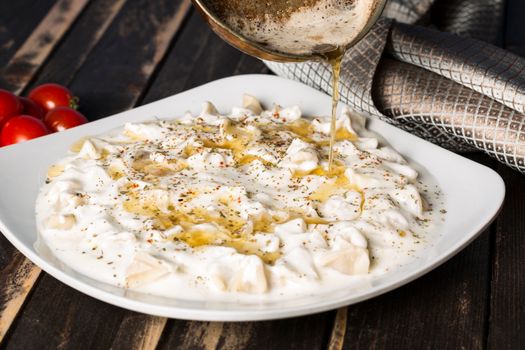
Manti are Armenian dumplings made with wheat flour dough, which is the primary structural component of this dish. Flour-based dough is a grain product with very high net carbs, making it fundamentally incompatible with ketosis regardless of portion size. A single serving of manti contains a substantial amount of wheat-based dough, easily pushing net carbs well above the daily keto limit on its own. While the beef and lamb filling is keto-friendly, and yogurt and tomato paste are manageable in small quantities, the flour wrapper is non-negotiable and cannot be worked around. This dish cannot be adapted to keto without completely eliminating the defining element that makes it manti.
Armenian Manti contains multiple animal products that are strictly excluded from a vegan diet. The filling is made with beef and lamb (both red meats), and the dish is traditionally served with yogurt (a dairy product). These are unambiguous animal-derived ingredients with no vegan equivalents present in this recipe. The plant-based components — flour, onion, garlic, tomato paste, and sumac — cannot offset the fundamental incompatibility of the meat and dairy ingredients.
Manti is an Armenian dumpling dish that is fundamentally incompatible with the paleo diet. The dough wrapper is made from wheat flour, a grain explicitly excluded from paleo. Yogurt (dairy) is also a clear paleo violation. Tomato paste may contain added salt or sugar in commercial forms. While the beef, lamb, onion, garlic, and sumac are paleo-approved ingredients, the foundational structure of the dish — flour-based dumplings served with a yogurt sauce — makes this an avoid. The protein filling alone cannot redeem the dish when its primary components are non-paleo.
Manti is a traditional Armenian dumpling dish that presents several challenges for Mediterranean diet alignment. The primary proteins are beef and lamb — both red meats that the Mediterranean diet limits to a few times per month. The dumpling wrapper is made from refined white flour, a refined grain discouraged by Mediterranean guidelines. The combination of two red meats in a refined-grain wrapper makes this dish a poor fit for regular consumption. Positive elements include onion, garlic, yogurt (a fermented dairy product that is acceptable in moderation), tomato paste (a concentrated vegetable), and sumac (a beneficial spice with antioxidant properties). However, these supportive ingredients are not enough to offset the core structural problems: dual red meat filling and refined grain shell.
Some Mediterranean diet interpreters, particularly those emphasizing traditional Eastern Mediterranean and Levantine culinary heritage, note that small portions of meat-filled dumplings alongside abundant plant-based accompaniments (like the yogurt-garlic sauce with sumac) reflect a culturally authentic pattern where meat plays a flavoring role rather than a bulk role. In this framing, occasional consumption of dishes like manti as part of an otherwise plant-forward diet could be tolerated.
Manti is an Armenian dumpling dish that is fundamentally incompatible with the carnivore diet. While it contains carnivore-approved ingredients (beef and lamb), the dish is built around flour-based dough wrappers — a grain product that is strictly excluded. Additionally, the dish includes multiple plant-based ingredients: onion, garlic, tomato paste, and sumac (a plant-derived spice). It is served with yogurt (debated in carnivore) but the dominant issue is the grain-based dough and the array of plant ingredients. No amount of good-quality ruminant meat can salvage a dish whose structure depends on wheat flour and is flavored with vegetables and plant condiments.
Manti is an Armenian dumpling dish made with a wheat flour dough wrapper, which is a grain and therefore excluded on Whole30. Beyond the flour itself being a disqualifying ingredient, manti as a dish falls squarely into the 'pasta or noodles / dumplings' category that the Whole30 program explicitly prohibits — even if compliant fillings were used. Additionally, yogurt (a dairy product) is used as a topping/sauce, which is also excluded. The beef and lamb filling, onion, garlic, tomato paste, and sumac would individually be compliant, but the dish as a whole cannot be made Whole30-compatible in its traditional form.
Armenian Manti contains multiple high-FODMAP ingredients that make it unsuitable during the elimination phase. Wheat flour (used for the dumpling dough) is high in fructans and is a primary FODMAP offender. Onion is one of the highest-FODMAP foods tested by Monash, containing significant fructans at any serving size. Garlic is similarly high-FODMAP due to fructans. Yogurt (used as a topping/sauce) contains lactose, which is a disaccharide FODMAP — standard cow's milk yogurt is high-FODMAP at the quantities typically served with Manti. Tomato paste can become high-FODMAP at amounts greater than 2 tablespoons due to excess fructose accumulation. The beef and lamb protein components are inherently low-FODMAP, and sumac is generally considered low-FODMAP as a spice. However, with four significant FODMAP triggers (wheat flour, onion, garlic, yogurt), this dish is not compatible with the elimination phase of the low-FODMAP diet in its traditional form.
Manti is Armenian baked/boiled dumplings filled with spiced ground beef and lamb, served with yogurt and tomato-based sauce. Several components align with DASH principles — onion, garlic, tomato paste, and yogurt are DASH-friendly, and the sumac adds flavor without sodium. However, the dish raises concerns: (1) the dual red meat filling (beef + lamb) contributes saturated fat, which DASH recommends limiting; DASH guidelines explicitly advise limiting red meat and favoring lean poultry or fish. (2) Refined white flour dumplings are not whole grain, missing DASH's emphasis on whole grains. (3) Manti is typically well-salted during preparation — both the dough and filling — increasing sodium load. (4) Portion size matters significantly, as multiple dumplings are standard serving. The yogurt topping is a positive DASH element if it is low-fat, but full-fat yogurt is traditional. Overall, this dish is not a DASH core food but is acceptable occasionally if prepared with leaner meats, reduced sodium, whole-grain dough where possible, and low-fat yogurt.
NIH DASH guidelines categorically limit red meat due to saturated fat content, which would push this dish toward 'avoid.' However, updated clinical interpretations note that lean cuts of beef and lamb in modest portions can fit within an overall DASH-compliant dietary pattern, and the yogurt and vegetable-based sauce components do contribute DASH-positive nutrients like calcium and potassium.
Armenian Manti is a baked dumpling dish with a flour-based dough wrapper filled with spiced beef and lamb, typically served with yogurt and tomato-based sauce. From a Zone perspective, this dish presents several challenges. The flour dough wrapper is a high-glycemic refined carbohydrate, making it an 'unfavorable' carb in Zone terminology — similar to pasta or white bread. The protein filling (beef and lamb) is fatty red meat rather than lean protein, adding saturated fat beyond the Zone's preferred monounsaturated fat profile. However, the dish does have Zone-friendly elements: yogurt provides protein and acts as a low-GI accompaniment, onion and garlic are favorable low-GI carbs, tomato paste offers polyphenols, and sumac is a polyphenol-rich spice that Sears would actually endorse for its anti-inflammatory properties. The core problem is the macro imbalance — the dough-heavy structure skews carbs high and GI high, while the lamb/beef filling skews fat toward saturated. A small, carefully portioned serving (2-3 dumplings) alongside extra vegetables and the yogurt sauce could be worked into a Zone meal, but the dish as typically served does not naturally hit the 40/30/30 ratio.
Later Sears writings (Toxic Fat, The Mediterranean Zone) place greater emphasis on polyphenols and anti-inflammatory foods overall rather than strict glycemic indexing alone. Sumac and garlic in manti are genuinely anti-inflammatory ingredients. Some Zone practitioners argue that a small portion of manti with generous yogurt (protein) and a large vegetable side salad can be Zone-balanced at the meal level, even if the dumpling itself is not individually favorable. The lamb fat concern is also moderated somewhat in Sears' later work, which acknowledged that grass-fed red meat fat is less inflammatory than previously characterized.
Armenian Manti is a baked or steamed dumpling dish with a mixed anti-inflammatory profile. On the positive side, garlic and onion provide meaningful anti-inflammatory polyphenols and organosulfur compounds, sumac is a potent antioxidant spice rich in gallic acid and anthocyanins that actively reduces inflammatory markers, yogurt contributes probiotics and is classified as acceptable low-fat dairy in anti-inflammatory frameworks, and tomato paste offers concentrated lycopene. However, the dish's primary proteins — beef and lamb — are red meats high in saturated fat and arachidonic acid, which are flagged as pro-inflammatory under anti-inflammatory diet principles and should be limited. The refined wheat flour used for the dumpling wrappers offers little fiber and contributes refined carbohydrates. The combination of red meat filling and refined dough is the main inflammatory liability here. This dish is not egregiously pro-inflammatory — it lacks processed additives, trans fats, or added sugars — but it centers on two ingredients (red meat, refined flour) that anti-inflammatory guidelines recommend limiting. Occasional consumption is acceptable, but it should not be a dietary staple.
Some anti-inflammatory practitioners, particularly those following a Mediterranean-adjacent approach, would view this dish more charitably given its strong spice and allium profile — sumac in particular is a standout anti-inflammatory ingredient rarely highlighted in Western frameworks. Dr. Weil's pyramid does not prohibit red meat entirely, only recommends limiting it, so a portion-controlled serving of Manti could fit within a broader anti-inflammatory eating pattern for otherwise healthy individuals.
Armenian manti are small baked or steamed dumplings filled with a spiced beef and lamb mixture, served with yogurt and tomato-sumac sauce. The dish has genuine nutritional merits but several GLP-1 concerns. On the positive side, the beef-lamb filling provides meaningful protein per serving, the yogurt topping adds protein and probiotics, and the tomato-sumac sauce is low-calorie and anti-inflammatory. However, the refined flour dough wrapping is low in fiber and nutrient density, the combination of lamb and beef introduces moderate-to-high saturated fat depending on the fat content of the meat used, and the dough-to-filling ratio in traditional manti can be unfavorable — a significant portion of the calorie load comes from refined carbohydrate with little nutritional payoff. Gastric emptying is already slowed on GLP-1 medications, and a dough-wrapped fatty meat filling may sit heavily and worsen nausea or bloating. The dish is portion-sensitive: a small serving focused on the filling and yogurt is more GLP-1-friendly than a generous portion. It is not an avoid-level food, but it requires mindful portioning and ideally a leaner meat blend to be appropriate for regular consumption on a GLP-1 regimen.
Some GLP-1-focused dietitians would rate manti more favorably, noting that the protein-plus-yogurt combination is satiating in small portions and that the dish is far less problematic than fried or ultra-processed alternatives. Others would rate it lower, emphasizing that the refined dough and saturated fat from lamb make it a poor use of limited caloric real estate for patients eating significantly reduced volumes.
*See how scores were generated at our methodology page.
Nutritional profile
Six traits that cut across every diet.
Fiber & Plants
How much whole-plant food and fiber it delivers.
Healthy Fats
The quality of its fats (unsaturated, omega-3).
Whole / Unprocessed
How close it is to its natural, unprocessed form.
Gut Gentle
How easy it is on digestion (low FODMAP, few irritants).
Low Glycemic
How little it spikes your blood sugar.
Protein Density
How much protein it packs per calorie.
Controversy Index
Higher controversy = more disagreement between diets.
Diet-Specific Tips
 DASH — 4/10
View tips
- Red meat filling (beef + lamb) increases saturated fat intake, discouraged by DASH
- Refined flour dumplings lack the whole-grain fiber DASH emphasizes
- Yogurt topping is DASH-compatible if low-fat; traditional full-fat yogurt is less ideal
- Garlic, onion, sumac, and tomato paste add flavor and nutrients without excess sodium
- Sodium content likely elevated from salted dough and filling preparation
- Portion control critical — multiple dumplings per serving increases red meat and calorie load
 Zone — 4/10
View tips
- Flour dough wrapper is a high-glycemic, refined carbohydrate — 'unfavorable' in Zone terminology
- Beef and lamb filling provides protein but with higher saturated fat than Zone prefers
- Yogurt accompaniment is Zone-friendly: low-GI, provides protein blocks
- Tomato paste and sumac are polyphenol-rich — anti-inflammatory positives
- Onion and garlic are favorable low-GI Zone carbs
- Dish is carb-heavy by structure, making 40/30/30 ratio difficult to achieve without significant modification
- Small portion paired with a large vegetable salad could approximate Zone balance at the meal level
 Anti-Inflammatory — 4/10
View tips
- Red meat (beef + lamb): pro-inflammatory saturated fat and arachidonic acid — limited in anti-inflammatory guidelines
- Sumac: exceptional antioxidant spice with gallic acid and anthocyanins, actively anti-inflammatory
- Garlic and onion: anti-inflammatory organosulfur compounds and polyphenols
- Refined wheat flour dumplings: low fiber, refined carbohydrates — neutral to mildly pro-inflammatory
- Yogurt: probiotic benefit, acceptable in anti-inflammatory framework as low-fat dairy
- Tomato paste: concentrated lycopene, a potent antioxidant carotenoid
- No trans fats, processed additives, or added sugars — limits inflammatory ceiling
 GLP-1 Friendly — 5/10
View tips
- Beef and lamb filling provides protein but also saturated fat — fat content varies significantly by meat grind used
- Refined flour dough adds calories with minimal fiber or micronutrient contribution
- Yogurt topping is a GLP-1-positive element: protein, probiotics, easy digestibility
- Tomato-sumac sauce is low-calorie, anti-inflammatory, and well-tolerated
- Dough-wrapped fatty filling may worsen nausea or bloating due to slowed gastric emptying
- Portion-sensitive: small servings emphasizing filling and yogurt are more appropriate
- No fiber-rich vegetables in core ingredients — a dietary gap for GLP-1 patients targeting 25-30g fiber daily
- Not fried or ultra-processed — preparation method is a relative advantage