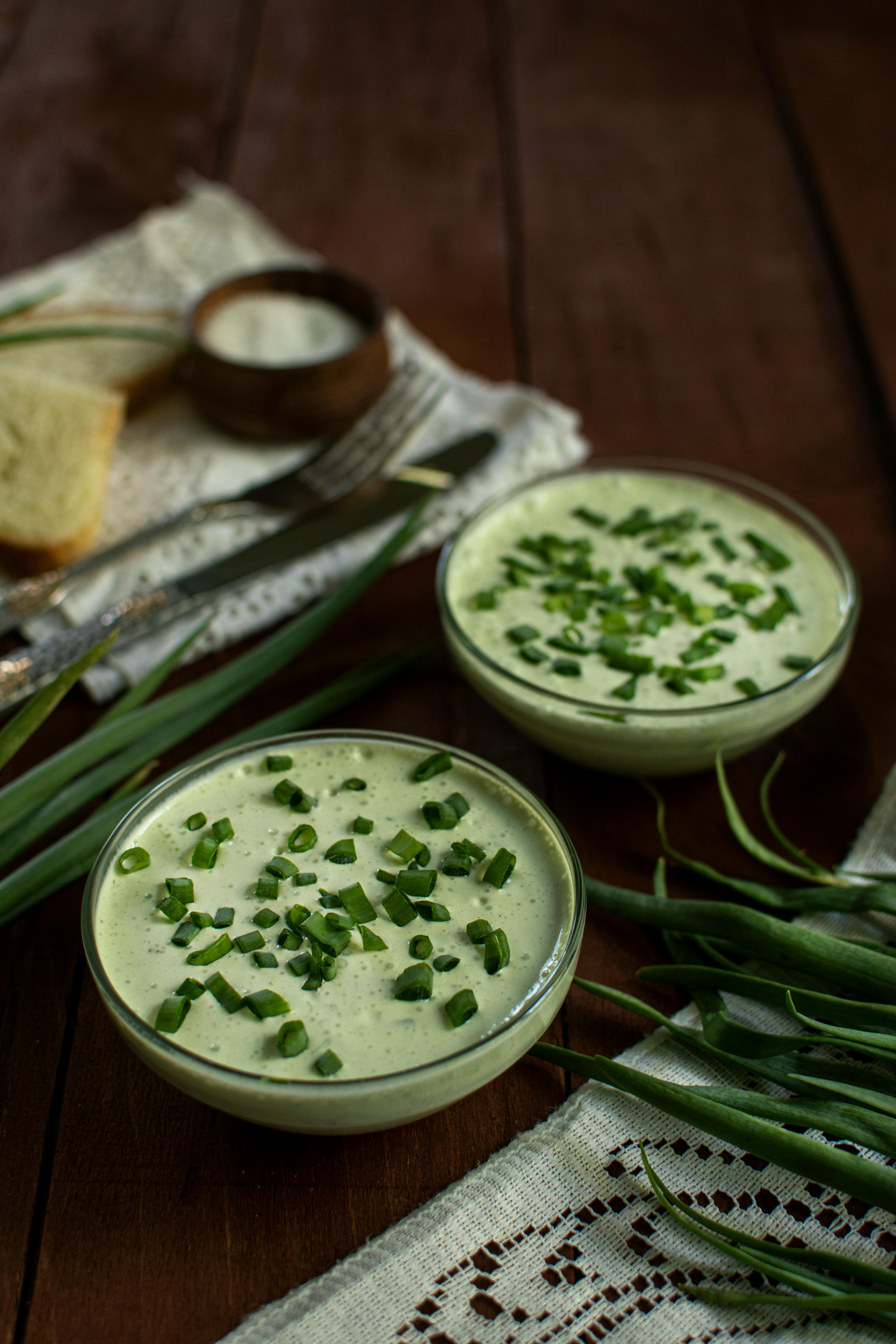
Photo: Юлия Чалова / Pexels
The diets react (see scores below)
Common Ingredients
- yogurt
- pearled wheat
- egg
- flour
- dried mint
- cilantro
- butter
Specific recipes may vary.
Incompatible with 6 of 11 diets
Diet Ratings
Spas is a traditional Armenian yogurt soup that is fundamentally incompatible with a ketogenic diet. The primary offender is pearled wheat, a grain that is extremely high in net carbs (roughly 38g net carbs per 1/4 cup dry). Flour is a second grain-based ingredient that compounds the carb load. Together, these two ingredients alone can easily push a single serving well past the entire daily 20-50g net carb limit. While yogurt and butter can be keto-friendly, and egg is excellent for keto, the grain components make this dish a clear avoid. No reasonable portion reduction could make Spas keto-compatible while preserving its identity as a dish.
Spas is a traditional Armenian yogurt soup that contains multiple animal-derived ingredients. Yogurt is a dairy product (excluded by all vegan standards), egg is an animal product (excluded by all vegan standards), and butter is a dairy derivative (excluded by all vegan standards). With three distinct animal ingredients, this dish is clearly incompatible with a vegan diet. There is no ambiguity here — this is not a borderline or contested case.
Spas is an Armenian yogurt soup that contains multiple non-paleo ingredients. Pearled wheat is a grain and a clear paleo exclusion. Yogurt is a dairy product, also excluded. Flour (wheat-based) is another grain derivative. Butter is dairy. Together, these four ingredients — wheat, yogurt, flour, and butter — represent fundamental violations of paleo principles. Only the egg, dried mint, and cilantro are paleo-compliant. With the majority of the dish's core ingredients firmly off-limits, this soup cannot be considered paleo in any interpretation.
Spas is a traditional Armenian yogurt and wheat soup that sits comfortably in the 'caution' zone of Mediterranean diet evaluation. The dish has several positive attributes: pearled wheat is a whole grain providing fiber and nutrients, yogurt offers probiotics and calcium, and fresh herbs (mint, cilantro) are encouraged. However, pearled wheat is a processed form of wheat with some bran removed, making it less ideal than fully intact whole wheat. The use of butter rather than olive oil is the primary concern — butter is a saturated animal fat that contradicts the Mediterranean diet's emphasis on olive oil as the primary fat. Yogurt and egg are acceptable in moderation as dairy and protein sources. Overall, this is a nutrient-dense, minimally processed traditional dish that is close to Mediterranean principles but uses butter instead of the preferred olive oil fat source.
Some Mediterranean diet interpretations, particularly those rooted in Eastern Mediterranean and Levantine traditions (which share culinary heritage with Armenian cuisine), acknowledge that yogurt-based soups and grain porridges are culturally aligned with the diet's plant-forward, fermented-dairy-inclusive ethos. A stricter modern clinical interpretation (e.g., Willett's Harvard Mediterranean pyramid) would flag the butter and pearled (refined) wheat as deviations requiring substitution with olive oil and whole wheat berries respectively.
Spas is a traditional Armenian yogurt-wheat soup that is fundamentally incompatible with the carnivore diet. While it contains some animal-derived ingredients (yogurt, egg, butter), the dish is dominated by plant-based components that are strictly excluded: pearled wheat (a grain), flour (grain-derived), dried mint (plant herb), and cilantro (plant herb). Pearled wheat alone is a core exclusion on any version of the carnivore diet — it is a high-carbohydrate grain with no place even in the most liberal carnivore frameworks. The plant herbs further compound the incompatibility. The presence of yogurt, egg, and butter does not redeem the dish when grains and plant foods form its structural and caloric foundation.
Spas contains multiple Whole30-excluded ingredients. Yogurt is dairy (excluded), pearled wheat is a grain (excluded), and flour is a grain-based ingredient (excluded). Butter is also excluded dairy (only ghee/clarified butter is allowed). With four distinct excluded ingredients, this dish is firmly off-limits on Whole30.
Spas contains two major high-FODMAP ingredients that make it unsuitable during the elimination phase. Pearled wheat is a significant source of fructans and is high-FODMAP at any reasonable serving — it is the primary grain in this soup and cannot be consumed in only trace amounts. Yogurt contains lactose, making it high-FODMAP at standard serving sizes (a bowl of soup would contain far more than the Monash low-FODMAP threshold of ~125g lactose-free or ~42g regular yogurt). The combination of these two ingredients makes this dish clearly high-FODMAP. Egg, butter, dried mint, cilantro, and flour (in small stabilizing amounts) are lower concerns, but flour also adds fructans if used in meaningful quantity. There is no realistic way to make traditional Spas low-FODMAP without substituting lactose-free yogurt and a non-wheat grain.
Spas is an Armenian yogurt-wheat soup with generally wholesome ingredients, but its DASH compatibility is nuanced. Pearled wheat (barley-like grain) provides fiber and is a positive whole-grain element, though pearled wheat is refined compared to whole grain options. Yogurt is a core DASH dairy food when low-fat, but traditional Spas often uses full-fat yogurt. Butter adds saturated fat, which DASH limits. The egg used as a stabilizer is a minor concern given older cholesterol guidelines but is acceptable in moderation under current interpretations. Dried mint and cilantro are sodium-free flavor enhancers that align well with DASH's emphasis on herbs over salt. The dish is not inherently high in sodium (no processed/cured ingredients), which is a significant positive. The main detractors are the full-fat dairy and butter content. Made with low-fat yogurt and minimal butter, this dish would rate considerably higher and approach 'approve' territory.
NIH DASH guidelines specify low-fat or fat-free dairy and limit saturated fat, which would flag full-fat yogurt and butter as problematic. However, updated clinical interpretations note that emerging evidence questions the cardiovascular harm of full-fat dairy specifically, and the overall sodium-free, herb-rich, grain-and-dairy profile of Spas is consistent with DASH principles when portion-controlled.
Spas is a traditional Armenian yogurt soup made with tangy yogurt, pearled wheat (akin to barley), egg, flour, dried mint, cilantro, and butter. From a Zone perspective, this dish has several issues but is not a categorical avoid. The yogurt provides some protein and is a Zone-acceptable dairy source, and the egg adds lean protein — however, the dish is listed with no primary protein, and the combined protein from yogurt and egg in typical serving sizes will likely fall short of a Zone meal's ~25g protein target without supplementation. The pearled wheat is a moderate-glycemic grain carbohydrate — Zone classifies whole grains as 'unfavorable' but usable in limited blocks (0-1 servings/day). Flour adds additional refined carbohydrate load, raising the glycemic burden. Butter is a saturated fat, which early Zone methodology restricted, though Sears' later writings are somewhat more permissive. The fat profile lacks the preferred monounsaturated emphasis. The dish does include beneficial herbs (mint, cilantro) with polyphenol value. Overall, the carbohydrate sources are moderate-to-unfavorable (refined flour + pearled wheat), protein is insufficient for a standalone Zone meal, and fat comes from butter rather than preferred monounsaturated sources. It could be incorporated cautiously as part of a Zone meal by reducing the wheat/flour portion and adding a lean protein side, but as served it skews toward excess carbohydrate with incomplete protein and unfavorable fat.
Some Zone practitioners following Sears' later anti-inflammatory writings (e.g., 'The Zone Diet' updated editions) would note that yogurt is a polyphenol-rich, probiotic food with a relatively modest glycemic impact, and that small amounts of butter in context are acceptable. A generous yogurt base also contributes meaningful protein. In this view, Spas could score closer to a 5-6 if portion sizes are carefully managed and the wheat/flour content is minimized, making it a reasonable occasional Zone-compatible dish rather than a clear caution.
Spas is a traditional Armenian yogurt soup made with pearled wheat, egg, flour, dried mint, cilantro, and butter. The profile is mixed from an anti-inflammatory standpoint. On the positive side, yogurt provides probiotics which can reduce gut-driven inflammation and support microbiome health; dried mint and cilantro contribute modest anti-inflammatory phytonutrients; and eggs offer choline and selenium with anti-inflammatory roles. Pearled wheat provides fiber and some B vitamins, though it is a refined grain (pearling strips the bran and germ), making it less favorable than whole-grain wheat or other intact whole grains. The butter is a saturated fat that falls into the 'limit' category under anti-inflammatory guidelines. The flour used to stabilize the egg-yogurt mixture adds refined carbohydrate with minimal nutritional benefit. Overall, this is a modest, traditional whole-food dish without strongly pro-inflammatory ingredients like seed oils, added sugars, or processed additives, but it also lacks the strong anti-inflammatory anchors (omega-3s, abundant colorful produce, polyphenol-rich foods) that would push it into 'approve' territory. It is a reasonable occasional dish — the yogurt and herbs are its best features, while the butter and pearled wheat temper the rating.
Some anti-inflammatory practitioners, particularly those following autoimmune or low-dairy protocols, would flag yogurt (even full-fat) as potentially problematic due to casein and the insulinogenic nature of dairy. However, Dr. Weil's Anti-Inflammatory Pyramid and mainstream anti-inflammatory research generally view probiotic-rich fermented dairy like yogurt favorably for its gut-health and inflammation-modulating benefits, distinguishing it from high-fat hard cheeses or cream.
Spas is a traditional Armenian yogurt and wheat soup made by simmering tangy yogurt with pearled wheat, stabilized with egg and flour, and finished with butter and dried herbs. It has several GLP-1-friendly qualities: yogurt provides moderate protein and probiotics, pearled wheat contributes meaningful fiber and slow-digesting complex carbohydrates, and the soup format is hydrating and easy to digest in small portions. The warm, liquid-based nature of the dish is generally well-tolerated on GLP-1 medications. However, the dish has notable limitations: protein content per serving is modest (yogurt is the only real protein source, with no dedicated lean protein), butter adds saturated fat which can worsen nausea and reflux, and the egg and flour are used in small stabilizing amounts rather than as significant protein contributors. The yogurt base also raises individual tolerance concerns given temporary lactose sensitivity reported in some GLP-1 patients. As a side dish or light starter in a small portion alongside a lean protein, Spas is acceptable. As a standalone meal, it falls short of the 15-30g protein per meal target and would not adequately support muscle preservation.
Some GLP-1-focused dietitians may rate this more favorably, noting that yogurt-based soups are gentle on the slowed GI tract and that the combination of yogurt, egg, and wheat delivers a reasonable amino acid profile for a meatless dish. Others would caution more strongly against the butter content and the dairy base, given that GLP-1 patients frequently report worsened nausea with high-fat dairy and new-onset lactose sensitivity during treatment.
*See how scores were generated at our methodology page.
Nutritional profile
Six traits that cut across every diet.
Fiber & Plants
How much whole-plant food and fiber it delivers.
Healthy Fats
The quality of its fats (unsaturated, omega-3).
Whole / Unprocessed
How close it is to its natural, unprocessed form.
Gut Gentle
How easy it is on digestion (low FODMAP, few irritants).
Low Glycemic
How little it spikes your blood sugar.
Protein Density
How much protein it packs per calorie.
Controversy Index
Higher controversy = more disagreement between diets.
Diet-Specific Tips
 Mediterranean — 5/10
View tips
- Butter used as primary fat instead of olive oil — contradicts core Mediterranean fat guidelines
- Pearled wheat is partially processed; whole wheat berries or bulgur would be preferred
- Yogurt is an acceptable fermented dairy product in moderate Mediterranean servings
- Egg inclusion is acceptable within moderate dairy/egg allowance
- Fresh herbs (mint, cilantro) are strongly encouraged and add flavor without processed additives
- No red meat, no added sugars, no highly processed ingredients — overall a clean dish
- Traditional Eastern Mediterranean dish closely related to the diet's regional heritage
 DASH — 5/10
View tips
- Full-fat yogurt increases saturated fat content vs. DASH-preferred low-fat dairy
- Butter contributes saturated fat, which DASH limits
- Pearled wheat provides fiber and whole-grain-adjacent nutrition
- No processed or cured ingredients means naturally low sodium
- Herbs (mint, cilantro) replace salt as flavor — strongly aligned with DASH
- Egg is a minor concern but acceptable in moderation under current guidelines
- Low-fat yogurt substitution would significantly improve DASH alignment
 Zone — 4/10
View tips
- Pearled wheat is a moderate-glycemic 'unfavorable' Zone carb — usable in very small blocks (0-1/day)
- Flour adds refined carbohydrate, increasing glycemic load beyond Zone-favorable range
- Yogurt provides some protein and is a Zone-acceptable dairy source with low glycemic index
- Egg contributes lean protein but combined protein likely insufficient for a full Zone meal (~25g target)
- Butter is a saturated fat — not the preferred Zone monounsaturated fat source
- No lean protein anchor (chicken, fish) makes meeting the 30% protein ratio difficult
- Herbs (mint, cilantro) are Zone-positive for polyphenol and anti-inflammatory content
- Dish is carbohydrate-heavy relative to protein, misaligning with 40/30/30 Zone ratio
 Anti-Inflammatory — 5/10
View tips
- Yogurt provides probiotics with gut-health and anti-inflammatory benefits
- Pearled wheat is a refined grain — less favorable than intact whole grains
- Butter (saturated fat) falls in the 'limit' category under anti-inflammatory guidelines
- Dried mint and cilantro contribute modest anti-inflammatory phytonutrients
- No strongly pro-inflammatory ingredients (no seed oils, no added sugar, no HFCS, no trans fats)
- Flour adds refined carbohydrate with low nutritional value
- Egg contributes choline and selenium, with a mixed but generally acceptable anti-inflammatory profile
- No omega-3 sources, antioxidant-rich produce, or polyphenol-rich foods to drive a higher score
 GLP-1 Friendly — 5/10
View tips
- Yogurt provides moderate protein but insufficient alone to meet 15-30g per meal target
- Pearled wheat adds beneficial fiber and slow-digesting carbohydrates
- Soup format is hydrating and easy to digest — well-suited to GLP-1 GI tolerance
- Butter contributes saturated fat, which can worsen nausea, bloating, and reflux
- Dairy base may trigger lactose sensitivity reported in some GLP-1 patients
- Egg and flour used as stabilizers, not meaningful protein contributors at typical quantities
- Best used as a side or starter paired with a lean protein source, not as a standalone meal