Photo: Milton Das / Pexels
The diets react (see scores below)
Common Ingredients
- chicken
- flour
- eggs
- breadcrumbs
- lemon
- oil
- salt
Specific recipes may vary.
Incompatible with 7 of 11 diets
Diet Ratings
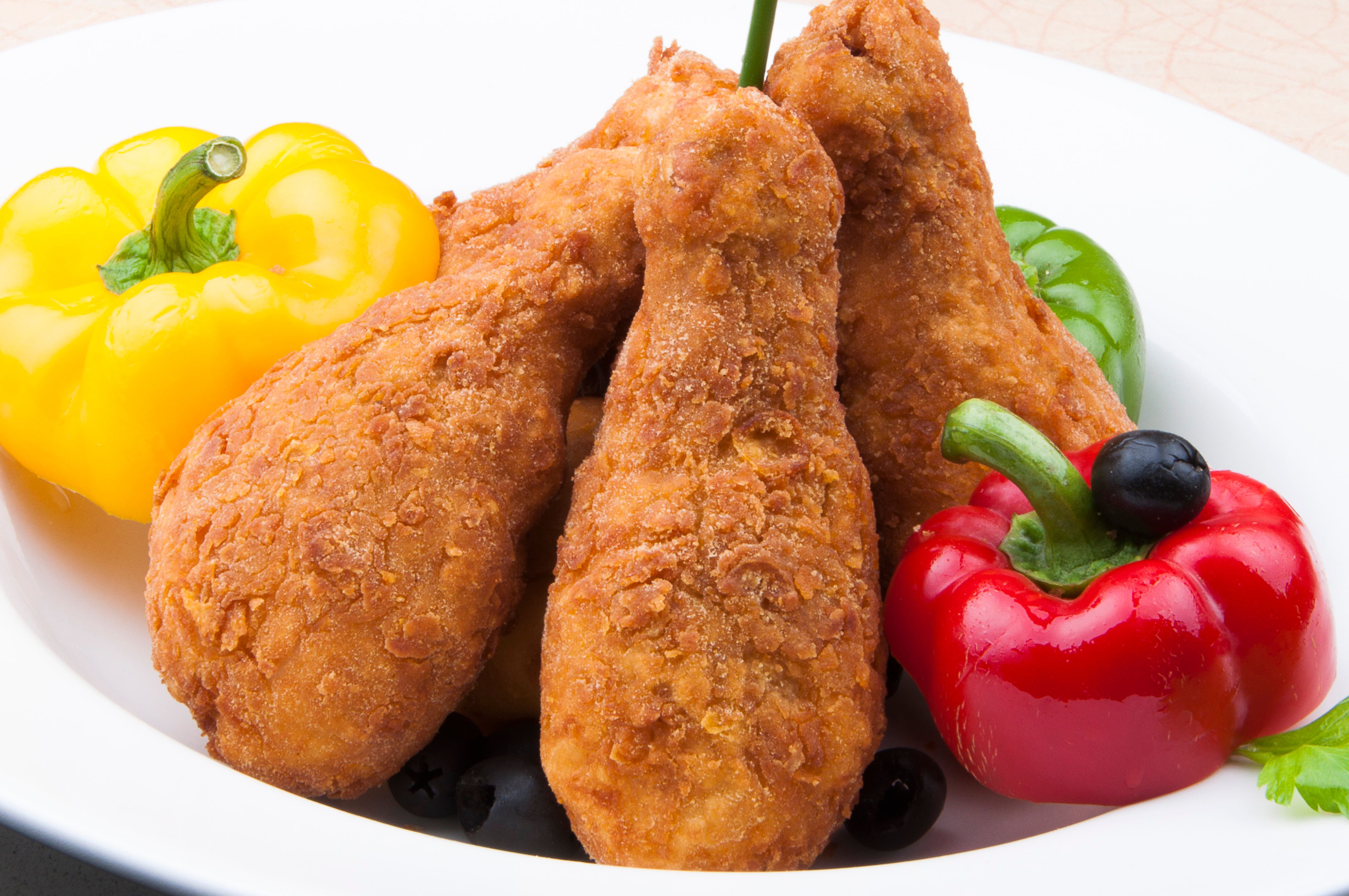
Backhendl is Austrian fried chicken that is breaded with flour and breadcrumbs before frying. These two ingredients are high-carbohydrate grains that are fundamentally incompatible with ketogenic eating. A standard serving would deliver a significant carb load — easily 20-30g or more of net carbs from the breading alone — which could single-handedly exhaust or exceed a full day's keto carb allowance. While the chicken itself and the frying oil are keto-friendly, the breading is non-negotiable in the traditional preparation and cannot be portioned around. Lemon and eggs also present no issue, but the flour and breadcrumbs render this dish incompatible with ketosis as standardly prepared.
Backhendl is an Austrian fried chicken dish that contains multiple animal products. Chicken is the primary protein and a direct animal product (poultry). Eggs are used in the breading process and are an animal product excluded by vegan standards. These two ingredients alone make this dish entirely incompatible with a vegan diet. There is no meaningful debate within the vegan community about this dish.
Backhendl is Austrian fried chicken that relies on a classic breading of flour and breadcrumbs — both grain-based and strictly excluded from the paleo diet. Salt is also added, and the frying oil is unspecified but typically a seed or vegetable oil in traditional preparation. While chicken and eggs are fully paleo-approved, and lemon is fine, the non-negotiable presence of wheat flour and breadcrumbs as core structural components of the dish makes this incompatible with paleo. There is no meaningful paleo adaptation without fundamentally changing the dish's identity.
Backhendl is Austrian fried breaded chicken, which presents a mixed Mediterranean diet profile. Chicken itself is an acceptable moderate protein source in the Mediterranean diet (poultry a few times per week). However, the preparation method is problematic: breading with refined white flour and breadcrumbs adds refined grains, and deep-frying (in oil) significantly increases the fat load and caloric density compared to grilled or roasted poultry. The lemon and eggs are benign. The type of oil matters greatly — if fried in olive oil, it aligns better with Mediterranean principles, but traditionally Backhendl is fried in lard or neutral vegetable oils, not extra virgin olive oil. The refined grain coating and frying method push this dish away from Mediterranean ideals, though the chicken base keeps it from being a full 'avoid.'
Some Mediterranean diet interpreters note that eggs, lemon, and olive oil are all traditional Mediterranean ingredients, and that fried dishes appear in Mediterranean coastal cuisines (e.g., Italian fritto misto, Spanish pollo rebozado). If prepared with olive oil and eaten occasionally, moderate portions could be considered acceptable within a broadly interpreted Mediterranean pattern.
Backhendl is Austrian fried breaded chicken, and while chicken itself is a carnivore-compatible food, this dish is fundamentally incompatible with the carnivore diet. The breading consists of flour and breadcrumbs — both grain-based plant foods that are strictly excluded. Lemon is a fruit and also excluded. The frying oil is almost certainly a plant-based oil (vegetable, sunflower, or canola), which is forbidden. Only the chicken, eggs, and salt are carnivore-compatible ingredients. The dish's identity is defined by its breaded coating, meaning it cannot be made compliant without ceasing to be Backhendl. This is a clear avoid verdict with high confidence across all carnivore authorities.
Backhendl is Austrian fried chicken that is breaded with flour and breadcrumbs before frying. Both flour (a wheat-based grain product) and breadcrumbs (also wheat/grain-based) are explicitly excluded on the Whole30 program. These are core, non-optional components of the dish — without them, it is no longer Backhendl. The remaining ingredients (chicken, eggs, lemon, oil, salt) are all Whole30-compliant, but the grain-based breading makes this dish incompatible with the program.
Backhendl is Austrian fried chicken coated in flour, egg, and breadcrumbs. The chicken, eggs, oil, salt, and lemon are all low-FODMAP. The critical issue is the breading: wheat flour and wheat-based breadcrumbs both contain fructans, which are high-FODMAP. A standard Backhendl serving uses a meaningful coating of both flour and breadcrumbs, which together could push fructan content into problematic territory even though the wheat quantities per serving may be relatively small. Monash University rates wheat flour as high-FODMAP, but small amounts (e.g., a thin dusting) may stay below the fructan threshold. The combination of flour AND breadcrumbs in a full coating makes a standard serving borderline to problematic during strict elimination. The dish could be made low-FODMAP by substituting gluten-free flour and gluten-free breadcrumbs, but as traditionally prepared it requires caution.
Monash University acknowledges that small amounts of wheat (e.g., up to ~1 tablespoon of wheat flour) may remain below the fructan threshold, so some FODMAP practitioners may consider a lightly breaded piece acceptable. However, most clinical FODMAP dietitians advise avoiding wheat-based breadcrumbs during the elimination phase due to the combined fructan load from both flour and breadcrumbs in a standard breaded cutlet serving.
Backhendl is Austrian fried chicken — breaded with flour, eggs, and breadcrumbs, then deep- or pan-fried in oil. The base protein (chicken) is DASH-friendly as lean poultry, and lemon is a positive addition. However, the preparation method raises concerns: deep frying significantly increases total fat content, and depending on the oil used (and quantity), saturated fat intake can climb. The refined breadcrumb coating adds minimal nutritional value and moderate sodium from added salt. DASH emphasizes cooking methods like baking, grilling, or broiling rather than frying. The dish is not as problematic as red meat or processed foods, but it departs from ideal DASH preparation principles. Occasional consumption in a controlled portion is acceptable within a broader DASH pattern, especially if baked rather than fried and sodium is kept modest.
NIH DASH guidelines discourage frying and emphasize low-fat cooking methods, placing fried chicken preparations in a cautionary category. However, some updated DASH-oriented clinicians note that if fried in heart-healthy unsaturated oil (e.g., sunflower or canola) rather than saturated fats, and consumed in modest portions, the overall dietary impact may be less concerning than a categorical restriction implies — particularly in individuals without severe dyslipidemia.
Backhendl is Austrian fried chicken — chicken pieces coated in flour, eggs, and breadcrumbs, then deep-fried in oil. The lean protein base (chicken) is Zone-favorable, but the preparation method introduces multiple Zone challenges. The breading (flour + breadcrumbs) adds significant high-glycemic carbohydrates that are unfavorable in Zone terminology, shifting the carb block contribution toward refined starch rather than low-GI vegetables. Deep-frying also means the fat content is likely dominated by omega-6-heavy frying oils (typically vegetable or lard in Austrian tradition), which directly conflicts with Zone's anti-inflammatory fat priorities emphasizing monounsaturated sources. The overall macro ratio of the dish tilts heavily toward carbohydrates and fat, with protein representing a smaller fraction than Zone's 30% target. The lemon garnish is Zone-friendly. While technically a person could portion-control a small serving of Backhendl and pair it with a large salad of low-GI vegetables to approximate a Zone-balanced meal, the dish itself as traditionally prepared is a poor Zone building block requiring significant external correction. It is not categorically 'avoid' because the chicken protein is real and useful, but it earns a low caution score.
Backhendl is an Austrian fried breaded chicken dish. The base protein (chicken) is a lean poultry that fits the 'moderate' tier of anti-inflammatory eating. However, the preparation method and supporting ingredients introduce several concerns. The breading (white flour + breadcrumbs) constitutes refined carbohydrates with little fiber, which can mildly elevate inflammatory markers when consumed regularly. Deep or pan frying in unspecified oil is a significant variable: if using refined seed oils (sunflower, corn, etc.) — which are common for this dish in Austrian cooking — the high omega-6 content and oxidation potential under heat are pro-inflammatory concerns. Lemon adds a small positive (vitamin C, antioxidants). Eggs contribute some beneficial nutrients. The dish lacks any meaningful anti-inflammatory components (no vegetables, herbs, whole grains, or omega-3 sources). As an occasional meal using a neutral frying oil (e.g., high-oleic sunflower, refined olive oil, or even lard as traditionally used), it sits in the caution zone — not aggressively inflammatory, but offering no anti-inflammatory benefit and carrying real concerns around refined carbs and frying oil quality.
The verdict hinges heavily on frying oil choice: if cooked in extra virgin olive oil or a high-oleic variety, mainstream anti-inflammatory nutritionists (including Dr. Weil's framework) would see this as a more acceptable occasional meal. However, protocols emphasizing strict avoidance of refined grains and fried foods — such as Terry Wahls' anti-inflammatory approach or AIP-adjacent frameworks — would rate this more negatively given the refined breading and frying process.
Backhendl is Austrian-style fried chicken — a whole chicken (typically bone-in pieces) coated in flour, egg wash, and breadcrumbs, then deep-fried in oil. Despite chicken being an excellent protein source, the preparation method is the critical disqualifier for GLP-1 patients. Deep frying adds substantial fat, significantly slowing gastric emptying beyond what GLP-1 medication already causes, and dramatically increasing the risk of nausea, bloating, and reflux — the most common and debilitating GLP-1 side effects. The refined breadcrumb coating adds empty carbohydrates with minimal fiber or nutritional value. The lemon garnish is the only GLP-1-friendly element. This is a textbook case where a protein-containing dish scores poorly because cooking method overrides ingredient quality.
*See how scores were generated at our methodology page.
Nutritional profile
Six traits that cut across every diet.
Fiber & Plants
How much whole-plant food and fiber it delivers.
Healthy Fats
The quality of its fats (unsaturated, omega-3).
Whole / Unprocessed
How close it is to its natural, unprocessed form.
Gut Gentle
How easy it is on digestion (low FODMAP, few irritants).
Low Glycemic
How little it spikes your blood sugar.
Protein Density
How much protein it packs per calorie.
Controversy Index
Higher controversy = more disagreement between diets.
Diet-Specific Tips
 Mediterranean — 4/10
View tips
- Chicken is an acceptable moderate protein source in Mediterranean diet
- Breading uses refined flour and breadcrumbs — not whole grain
- Deep-frying method adds excess fat and calories
- Traditional preparation typically uses lard or non-olive oils, not EVOO
- Lemon is a positive Mediterranean ingredient
- Dish is not plant-forward and lacks vegetables or legumes
- Acceptable only in moderation and occasional consumption
 DASH — 5/10
View tips
- Chicken is DASH-approved lean protein, supporting the dish's core ingredient
- Frying method increases total fat content significantly, departing from DASH preferred low-fat cooking
- Refined breadcrumb coating adds refined carbohydrates with minimal fiber or micronutrient benefit
- Salt in preparation contributes to sodium load; total sodium depends on quantity used
- Oil type matters: unsaturated oils (sunflower, canola) are preferable to saturated fats under DASH
- Lemon is a positive ingredient — adds flavor without sodium, supporting DASH's low-sodium seasoning approach
- Baking instead of frying would substantially improve DASH compatibility and raise the score to 7-8
 Zone — 4/10
View tips
- Chicken provides lean protein — a Zone-favorable base
- Breadcrumb and flour coating adds refined, high-glycemic carbohydrates — unfavorable Zone carb source
- Deep-frying significantly increases fat content, likely omega-6-heavy from frying oil
- Oil type used for frying is typically not monounsaturated, conflicting with Zone anti-inflammatory fat guidelines
- Macro ratio of finished dish skews toward carbs and fat, under-weighting protein relative to Zone's 30/30/40 target
- Lemon garnish is Zone-neutral to favorable (minimal carbs, polyphenols)
- Can be incorporated into a Zone meal only with careful portioning and substantial low-GI vegetable accompaniment
 Anti-Inflammatory — 4/10
View tips
- Lean chicken is anti-inflammatory-friendly in the 'moderate' tier
- White flour and breadcrumbs are refined carbohydrates — mild pro-inflammatory
- Frying oil is unspecified; common Austrian versions use sunflower or lard — high omega-6 or saturated fat concern
- High-heat frying of refined breading increases glycemic load and AGE (advanced glycation end products) formation
- No anti-inflammatory ingredients present (no herbs, vegetables, whole grains, omega-3s)
- Lemon adds minor antioxidant benefit
- Acceptable occasionally but not aligned with regular anti-inflammatory eating patterns