Austrian
Frittatensuppe
The diets react (see scores below)
Common Ingredients
- beef broth
- flour
- eggs
- milk
- chives
- butter
- nutmeg
Specific recipes may vary.
Incompatible with 7 of 11 diets
Diet Ratings
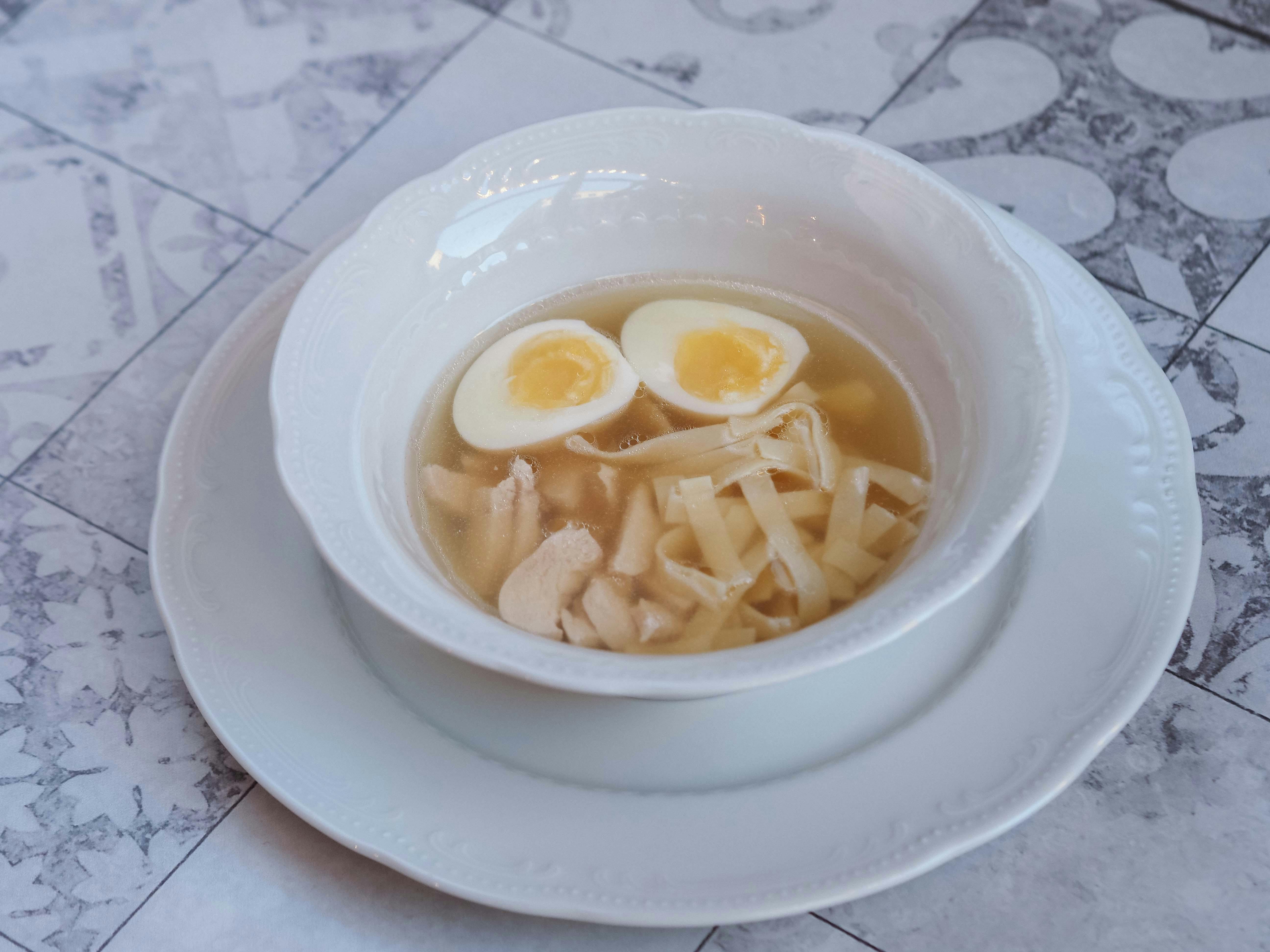
Frittatensuppe is an Austrian soup made with a clear beef broth base into which thin sliced pancake strips (Frittaten) are added. The pancakes are made from flour, eggs, and milk — a classic wheat-flour crepe batter. Flour is a high-carb grain product that is fundamentally incompatible with ketogenic diets. A standard serving of Frittatensuppe would deliver a significant carbohydrate load from the flour-based crepe strips, easily exceeding a meaningful portion of the daily keto carb budget in a single dish. While the beef broth, eggs, butter, and chives are all keto-friendly, the flour is the dominant structural ingredient of the dish and cannot simply be reduced to a trace amount — it defines the dish. The milk also adds a small amount of additional carbs. This dish cannot be consumed on keto in its traditional form without a complete reformulation (e.g., substituting almond or coconut flour crepes).
Frittatensuppe is an Austrian soup consisting of thin pancake strips (Frittaten) served in broth. This dish contains multiple animal-derived ingredients that make it entirely incompatible with a vegan diet. Beef broth is made from animal bones and meat. Eggs and milk are key components of the pancake batter. Butter is a dairy product. Every core element of this dish — the broth, the pancakes — relies on animal products, leaving no plant-based foundation to salvage.
Frittatensuppe is an Austrian soup made from beef broth topped with sliced thin crepes (Frittaten). While beef broth, eggs, chives, and nutmeg are paleo-compatible, the dish is fundamentally built around flour-based crepes and milk — both of which are strictly excluded from the paleo diet. Wheat flour is a grain product, a core exclusion in all paleo frameworks. Milk is dairy, also excluded. Butter is debated but generally discouraged under strict paleo (unlike ghee, butter retains casein and lactose). With three non-paleo ingredients (flour, milk, butter) forming the structural core of the dish, this cannot be considered paleo-compatible in its traditional form.
Frittatensuppe is an Austrian soup consisting of thin crepe strips (made with refined flour, eggs, milk, and butter) served in beef broth. It conflicts with Mediterranean diet principles on multiple fronts: the base fat is butter rather than olive oil, the broth is beef-based (red meat category, limited to a few times per month), and the crepes use refined white flour rather than whole grains. Eggs and milk are acceptable in moderation, but the overall composition — refined grain crêpes, animal fat, beef broth — makes this dish a poor fit. It lacks vegetables, legumes, or plant-forward elements entirely.
Some Mediterranean diet interpreters note that eggs and dairy (milk) are acceptable moderate foods, and a light broth-based soup format is generally diet-friendly. If the beef broth were replaced with vegetable broth and the butter swapped for olive oil, portions of this dish could be considered occasional fare rather than a strict avoid.
Frittatensuppe is an Austrian soup consisting of beef broth with thin crepe-like strips (Frittaten) made from a flour-based batter. While several ingredients are carnivore-compatible — beef broth (excellent), eggs (widely accepted), butter (debated but common), and milk (debated dairy) — the dish is fundamentally disqualifying due to flour, which is a grain-based plant product and a core excluded food on any version of the carnivore diet. Chives are a plant food and also excluded. Nutmeg is a plant-derived spice, also excluded. The Frittaten (crepes) themselves are the structural centerpiece of the dish and cannot be removed without eliminating the dish entirely. The beef broth base alone would be carnivore-approved, but the overall dish as prepared cannot be adapted to carnivore standards.
Frittatensuppe is an Austrian soup consisting of a clear beef broth served with thin sliced crêpe strips (Frittaten). The dish contains multiple excluded ingredients: flour (a grain product) and milk (dairy) are used to make the crêpe strips, and butter (dairy) is used to cook them. Even if the beef broth itself is compliant, the crêpe strips are fundamentally a grain-and-dairy-based component. Additionally, the crêpe strips themselves fall into the 'no recreating baked goods/junk food' category — they are essentially crepes/wraps, which are explicitly listed as non-compliant even when made with otherwise compliant ingredients. This dish cannot be made Whole30-compliant without fundamentally changing its identity.
Frittatensuppe is an Austrian soup made of beef broth with thin sliced pancake strips (Frittaten). The main FODMAP concerns are: (1) Wheat flour — used to make the pancake crepes, which contains fructans and is high-FODMAP. Even a small amount of wheat flour contributes fructans, making this problematic during elimination. (2) Milk — used in the crepe batter; lactose is a FODMAP and a standard pancake batter uses enough milk that lactose load becomes significant. (3) Beef broth — plain, unseasoned beef broth is low-FODMAP, but commercially prepared or restaurant broths frequently contain onion, garlic, or onion powder, which are high-FODMAP fructan sources. (4) Butter — low-FODMAP as it is essentially fat with negligible lactose. (5) Eggs — low-FODMAP. (6) Chives — low-FODMAP at typical garnish quantities (per Monash, chives are low-FODMAP). (7) Nutmeg — low-FODMAP at spice quantities. The combination of wheat flour in the crepes and milk creates a moderate-to-high FODMAP load. Substituting gluten-free flour and lactose-free milk would make this dish low-FODMAP, but in its traditional form it warrants caution to avoid.
Monash University rates small amounts of wheat flour as lower in fructans when diluted, and some FODMAP practitioners may allow very thin crepe strips if the portion is tightly controlled. However, most clinical FODMAP dietitians advise avoiding wheat-based ingredients entirely during the elimination phase to prevent symptom ambiguity, and the lactose from milk adds a second concurrent FODMAP concern.
Frittatensuppe is an Austrian soup consisting of a beef broth base with thin crepe-like strips (Frittaten) made from flour, eggs, milk, and butter, garnished with chives. The primary DASH concern is sodium: standard beef broth is typically high in sodium (700–900mg per cup), which conflicts with DASH sodium limits (<2,300mg/day standard, <1,500mg for low-sodium DASH). The Frittaten themselves contain butter (saturated fat), whole eggs (moderate cholesterol), and refined white flour (low fiber, not a whole grain). On the positive side, portions of butter and eggs per serving are relatively small, and the dish is not heavily processed or laden with added sugars. Chives contribute minor potassium and vitamins. If low-sodium broth is used and whole-wheat flour substituted, this dish becomes more DASH-compatible. As commonly prepared, the sodium from conventional beef broth is the dominant concern, placing this solidly in the caution category.
NIH DASH guidelines explicitly flag high-sodium broths as problematic; however, some DASH-oriented clinicians note that the overall sodium load depends heavily on serving size and broth preparation, and that homemade low-sodium beef broth would substantially improve compatibility — making this dish acceptable in moderate portions under an updated clinical interpretation.
Frittatensuppe is an Austrian soup consisting of beef broth with thin sliced crêpe strips (Frittaten) made from flour, eggs, milk, and butter, garnished with chives. From a Zone perspective, this dish presents a mixed profile. The beef broth is a near-zero calorie base and Zone-neutral. The eggs provide some lean protein but the overall protein content is modest since the crêpes are primarily a flour-based carbohydrate vehicle. The flour and milk create a moderate-to-high glycemic carbohydrate load from refined white flour — an 'unfavorable' Zone carbohydrate. Butter adds saturated fat rather than preferred monounsaturated fat. The macro ratio skews toward carbohydrates with inadequate protein and the wrong type of fat, making it difficult to achieve the 40/30/30 Zone balance without significant modification. The dish lacks lean protein (no chicken, fish, or substantial egg white content) and vegetables, which are core Zone meal components. Chives contribute negligible macros. As served traditionally, this would not constitute a Zone-balanced meal, but in small portions as a starter alongside a properly balanced Zone meal, it is manageable.
Some Zone practitioners may note that eggs do provide a favorable protein source and the portion of crêpes in a typical serving is relatively small, meaning the absolute carbohydrate load may not be extreme. In Sears' later writings on anti-inflammatory eating, the focus on polyphenols and omega-3s is paramount — beef broth itself offers some amino acid benefits. A more flexible Zone interpretation could treat this as a minor carbohydrate side in a larger balanced meal plan, bumping the caution score slightly higher.
Frittatensuppe is a traditional Austrian soup consisting of beef broth with thin sliced crêpes (made from flour, eggs, milk, and butter) garnished with chives and nutmeg. From an anti-inflammatory standpoint, the dish is mixed. On the positive side, the broth base can contain beneficial compounds (especially if made from bones), chives provide quercetin and antioxidants, nutmeg has modest anti-inflammatory properties, and eggs contribute choline and selenium. However, the dish has several anti-inflammatory concerns: refined white flour is a refined carbohydrate that anti-inflammatory protocols generally limit; butter is a saturated fat source that should be moderated; conventional beef broth (especially commercial) may carry some pro-inflammatory associations with red meat; and milk adds a small amount of full-fat dairy. The dish is notably absent of omega-3 sources, colorful antioxidant-rich vegetables, or other strongly anti-inflammatory components. It is essentially a refined-carb and saturated-fat-forward comfort food with minimal anti-inflammatory upside. It is not aggressively pro-inflammatory — there are no trans fats, added sugars, or heavily processed ingredients — but it doesn't align well with anti-inflammatory principles either. Acceptable occasionally as a light starter but not a dish to build an anti-inflammatory diet around.
Some anti-inflammatory practitioners view quality bone broth as actively anti-inflammatory due to collagen, glycine, and glutamine content that may support gut lining integrity — a key factor in systemic inflammation. From this perspective, a broth-forward soup with eggs could be viewed more favorably. Conversely, stricter AIP or grain-free anti-inflammatory protocols would flag the refined flour crêpes as a concern, potentially rating this dish lower.
Frittatensuppe is an Austrian clear beef broth soup containing thin crepe-like strips (Frittaten) made from eggs, flour, milk, and butter, garnished with chives. The beef broth base is hydrating, easy to digest, low in fat, and supportive of GLP-1 patients who struggle with nausea or low appetite. The egg-based crepes contribute some protein, but the overall protein content per serving is modest — likely 8–14g depending on portion — falling short of the 15–30g per meal target. The flour-and-milk crepes add refined carbohydrates with limited fiber, and the butter introduces saturated fat, though amounts are small per serving. Nutmeg in small culinary doses is fine. This is a light, easily digestible, warm dish well-suited to GLP-1 side effect days (nausea, low appetite), but it functions more as a comfort/recovery meal than a nutritionally optimized one. It lacks the protein density and fiber to score higher. Adding a protein source (e.g., shredded chicken in the broth) would significantly improve its GLP-1 suitability.
Some GLP-1-focused dietitians would view this soup favorably on high-nausea or injection days precisely because of its low fat content, small volume, and easy digestibility — prioritizing tolerability over protein density in the short term. Others would flag the refined flour crepes and butter as unnecessarily displacing more nutrient-dense options and would recommend it only as an occasional comfort food rather than a regular meal.
*See how scores were generated at our methodology page.
Nutritional profile
Six traits that cut across every diet.
Fiber & Plants
How much whole-plant food and fiber it delivers.
Healthy Fats
The quality of its fats (unsaturated, omega-3).
Whole / Unprocessed
How close it is to its natural, unprocessed form.
Gut Gentle
How easy it is on digestion (low FODMAP, few irritants).
Low Glycemic
How little it spikes your blood sugar.
Protein Density
How much protein it packs per calorie.
Controversy Index
Higher controversy = more disagreement between diets.
Diet-Specific Tips
 DASH — 4/10
View tips
- High sodium from conventional beef broth (primary concern)
- Butter adds saturated fat, limiting DASH alignment
- Refined white flour rather than whole grain reduces fiber value
- Eggs present in moderate quantity — acceptable in most current DASH interpretations
- Chives provide minor nutrient benefit (potassium, vitamins)
- Low-sodium broth and whole-wheat flour substitutions would significantly improve DASH score
- Small portion sizes of crepe strips mitigate fat and cholesterol impact
 Zone — 4/10
View tips
- Refined white flour in crêpes is an 'unfavorable' high-glycemic Zone carbohydrate
- Butter provides saturated fat rather than preferred monounsaturated fat (olive oil, avocado)
- Low overall protein content — eggs are present but in small relative quantity
- No lean protein source listed (no chicken, fish, or substantial egg whites)
- Absence of low-glycemic vegetables reduces Zone meal quality
- Beef broth is Zone-neutral and anti-inflammatory (collagen/amino acids)
- Macro ratio skews carbohydrate-heavy, misaligning with 40/30/30 target
- Chives add negligible polyphenols but do not meaningfully alter macro balance
 Anti-Inflammatory — 4/10
View tips
- Refined white flour in crêpes — a refined carbohydrate, limited by anti-inflammatory guidelines
- Butter adds saturated fat, which should be moderated
- Beef broth base has mixed anti-inflammatory profile; quality bone broth may have gut-supportive benefits
- Eggs provide choline and selenium but also some arachidonic acid (mixed evidence)
- Chives contribute quercetin and antioxidant polyphenols (minor positive)
- Nutmeg has modest anti-inflammatory properties at culinary doses
- No omega-3 sources, colorful vegetables, or strongly anti-inflammatory ingredients present
- No trans fats, added sugars, or artificial additives — not actively harmful
 GLP-1 Friendly — 5/10
View tips
- Beef broth base is hydrating and easy to digest — a positive for GLP-1 patients
- Protein content is low per serving (est. 8–14g), below the 15–30g per meal target
- Egg-based crepes provide some protein but are diluted by refined flour and milk
- Low fiber — refined flour crepes and broth contribute minimal dietary fiber
- Butter adds saturated fat, though in small culinary amounts per serving
- Highly digestible and light — well-suited for nausea or low-appetite days
- No major GLP-1 side effect triggers (not fried, not spicy, not carbonated, not high-sugar)
- Portion-sensitive: a small cup as a starter is more appropriate than a large bowl as a main