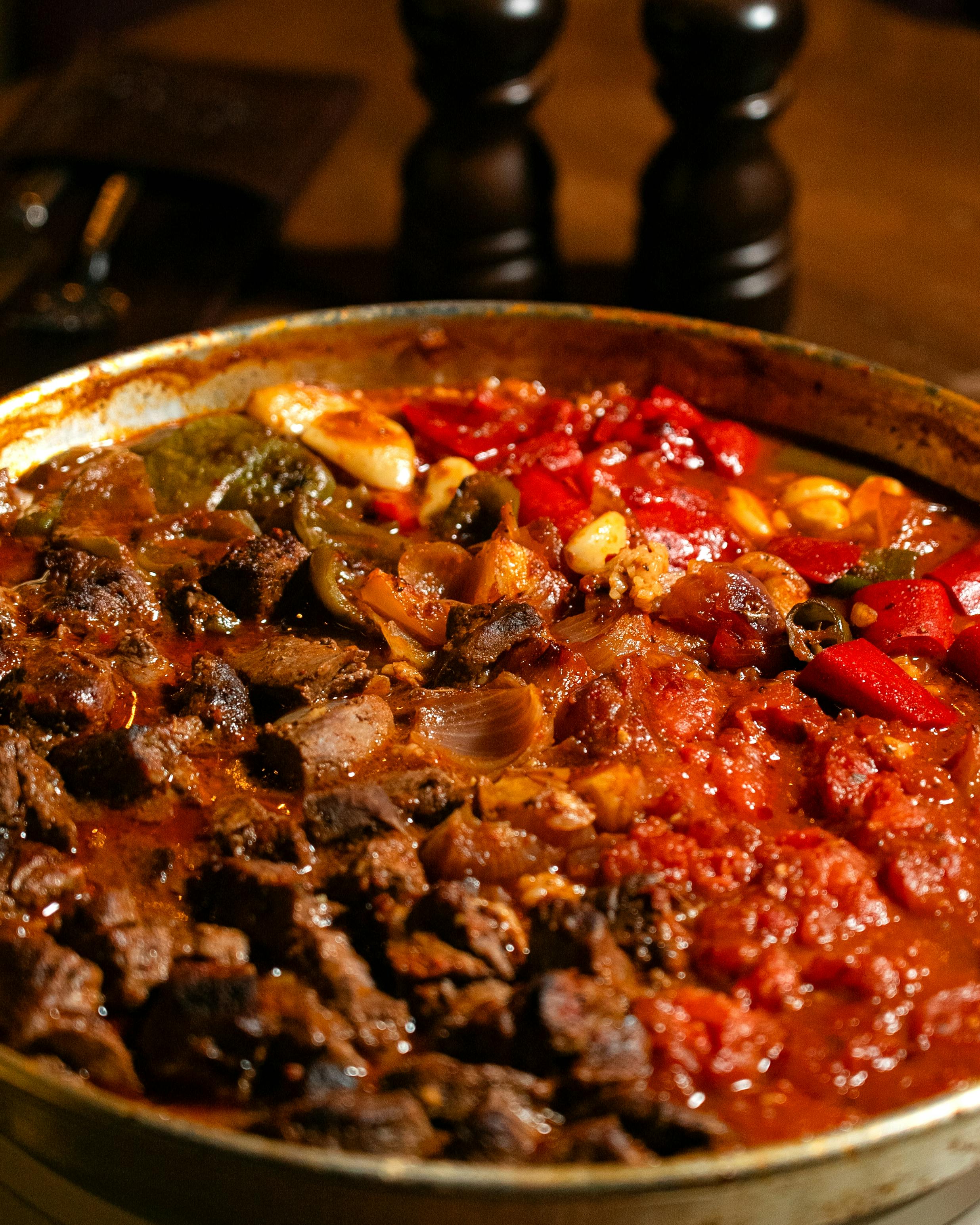
Photo: Mohamed Olwy / Pexels
Austrian
Gulasch
The diets react (see scores below)
Common Ingredients
- beef
- onion
- paprika
- garlic
- tomato paste
- caraway
- marjoram
- beef broth
Specific recipes may vary.
Incompatible with 4 of 11 diets
Diet Ratings
Austrian Gulasch is primarily beef-based with a paprika-rich sauce, which aligns reasonably well with keto principles. The main concern is the onion and tomato paste content. Onions are moderate in net carbs (~5g per 100g), and traditional Gulasch uses a substantial amount — often a near 1:1 ratio with beef by weight — which can push net carbs notably higher. Tomato paste adds another ~8-10g net carbs per 2 tablespoons. The beef itself is excellent for keto (high protein, moderate fat), and spices like paprika, caraway, and marjoram are negligible in typical quantities. Beef broth is essentially zero-carb. In a standard restaurant serving, total net carbs could range from 10-20g, which is manageable within daily limits but requires careful portion control and accounting. No grains or added sugars are present in the traditional recipe, which is a plus. Strict keto practitioners may find the onion load problematic, while lazy keto adherents may accommodate it easily within a single meal.
Strict keto protocols flag this dish due to the high volume of onions traditionally used — some recipes call for equal parts onion to beef — which can contribute 15-25g net carbs per serving, potentially consuming most or all of a day's carb budget in one dish. These practitioners would recommend reducing onions significantly or substituting with leek whites only.
Austrian Gulasch contains multiple animal-derived ingredients that make it entirely incompatible with a vegan diet. Beef is the primary protein, and the dish is also prepared with beef broth, making it doubly reliant on animal products. There are no ambiguous ingredients here — this is a classic meat-based stew with no plant-based substitution implied in the listed recipe.
Austrian Gulasch in this form is largely paleo-compatible. Beef is a core paleo protein, and onion, garlic, paprika, caraway, marjoram, and tomato paste are all whole-food vegetables, spices, or herb-based ingredients available in unprocessed form. The main consideration is the beef broth — homemade bone broth is fully paleo-approved, but commercial beef broth often contains added salt, yeast extract, or other additives, which would push it toward caution. Assuming the broth is homemade or a clean, additive-free version, this dish is a straightforward paleo meal. Traditional Gulasch is also sometimes thickened with flour or served over egg noodles/bread dumplings, but those accompaniments are not listed here, so the dish as described avoids those non-paleo elements.
Some strict paleo practitioners flag commercial tomato paste for potential added salt or citric acid, and store-bought broth for sodium and preservatives. Loren Cordain's original framework discourages any added salt, which is common in both commercial broth and processed tomato paste; adherents to his strict protocol would recommend homemade versions of both.
Austrian Gulasch is a beef-heavy dish where red meat is the primary and dominant ingredient, directly contradicting Mediterranean diet principles that limit red meat to a few times per month. While the dish does include some beneficial Mediterranean-compatible ingredients such as onion, garlic, tomato paste, and spices, these supporting ingredients do not redeem a dish centered on a large quantity of red meat. There is no olive oil, no plant-forward emphasis, no legumes or whole grains, and the beef broth base adds further saturated fat concerns. This is a Central European comfort dish with no meaningful alignment with Mediterranean dietary patterns.
Austrian Gulasch is fundamentally incompatible with the carnivore diet. While beef and beef broth are excellent carnivore foods, the dish is built around multiple plant-based ingredients that are excluded on carnivore: onion, garlic, tomato paste, paprika (the defining spice of gulasch), caraway seeds, and marjoram. These are not minor trace additives — onions and tomato paste form the structural base of the sauce, and paprika defines the dish's entire flavor profile. This is a plant-heavy stew that happens to contain beef, not a beef dish with minor seasonings. Even the most lenient carnivore practitioners who tolerate occasional spices would consider the volume of plant matter here unacceptable.
Austrian Gulasch as described contains exclusively Whole30-compliant ingredients. Beef is an approved protein, onion and garlic are vegetables, paprika and caraway and marjoram are allowed spices, tomato paste is a compliant ingredient (assuming no added sugar or non-compliant additives), and beef broth is acceptable provided it contains no added sugar, MSG (now allowed anyway), or non-compliant additives. Every component falls squarely within Whole30's approved categories of meat, vegetables, and herbs/spices. This is a straightforward whole-food stew with no excluded ingredients.
Austrian Gulasch is fundamentally built on two high-FODMAP ingredients that cannot be reduced to safe levels without completely altering the dish: onion and garlic. Onion is one of the highest-fructan foods tested by Monash University and is high-FODMAP even in very small quantities (1/4 cup of cooked onion is still high-FODMAP). Garlic is similarly one of the most potent fructan sources — even a single clove is high-FODMAP. Traditional Gulasch recipes use onion in quantities roughly equal to or exceeding the weight of the beef, making this dish extremely high in fructans. Garlic compounds further the fructan load. Tomato paste can also become high-FODMAP at the quantities typically used in Gulasch (high fructose at >2 tablespoons). The beef itself, paprika spice, caraway, marjoram, and plain beef broth (without onion/garlic) are all low-FODMAP, but the foundational aromatics make this dish unsuitable during the elimination phase.
Austrian Gulasch sits in a gray zone for DASH compliance. The dish contains several DASH-friendly ingredients — onions, garlic, paprika, and tomato paste provide potassium, antioxidants, and fiber, while the spices (caraway, marjoram) are sodium-free. However, the primary protein is beef (red meat), which DASH guidelines explicitly limit due to saturated fat content. The fat content depends heavily on the cut used — traditional Gulasch often uses fatty chuck or shank cuts that contribute significant saturated fat. The larger concern is sodium: beef broth and tomato paste are typically high in sodium, and combined they can push a single serving well above 800–1,000mg, a substantial portion of the 1,500–2,300mg daily DASH limit. The dish is not inherently processed, but as commonly prepared it conflicts with DASH's red meat limitation and sodium targets. With modifications — low-sodium broth, leaner beef cuts (e.g., top round), and sodium-conscious tomato paste — the score could improve to 6. Without those adjustments, caution is warranted.
NIH DASH guidelines categorically limit red meat and recommend lean poultry or fish as primary proteins, placing beef-centric dishes in the 'limit' category regardless of preparation. However, some updated DASH clinical interpretations note that unprocessed red meat in moderate portions (3oz, 1–2x/week) can fit within an otherwise DASH-compliant diet, particularly if sodium from broth is controlled using homemade or low-sodium stock.
Austrian Gulasch is a moderately Zone-compatible dish that requires attention to protein cut selection and portioning. The beef provides the protein block, but the cut matters significantly — traditional gulasch uses chuck or shoulder, which carries more saturated fat than Zone-ideal lean cuts. The onion and paprika provide low-glycemic carbohydrate blocks with beneficial polyphenols (paprika is rich in carotenoids and vitamin C, strongly aligned with Sears' anti-inflammatory focus). Tomato paste adds lycopene and modest carbs. The dish is notably fat-heavy depending on preparation — rendered beef fat and potentially added lard are common in Austrian versions, pushing saturated fat above Zone ideals. There is no added sugar or high-glycemic starch in this base recipe, which is a positive. The broth-based format means it can be served without the traditional egg noodle or bread accompaniment, keeping glycemic load manageable. To Zone-optimize: use leaner beef cuts (round or trimmed chuck), skim excess fat, control portion size to ~25g protein, and pair with a large side salad or additional vegetables to complete the carb blocks with minimal fat blocks needed from the dish itself. The herb profile (caraway, marjoram, garlic) adds polyphenols with negligible macro impact.
Some Zone practitioners would rate this higher (7) noting that paprika-heavy dishes are explicitly polyphenol-rich foods Sears championed in his later Zone writings (The Mediterranean Zone), and that beef-based stews with vegetables are a practical Zone meal format. Others would rate it lower (4-5) citing the saturated fat content from traditional fatty beef cuts and the difficulty of controlling the fat-to-protein ratio in a restaurant or traditional preparation where fat is not trimmed.
Austrian Gulasch presents a mixed anti-inflammatory profile. On the positive side, the dish is rich in anti-inflammatory spices and aromatics: paprika provides carotenoids (capsanthin, beta-carotene) and vitamin C; garlic contains allicin and organosulfur compounds with well-documented anti-inflammatory effects; caraway and marjoram offer additional polyphenols and antioxidants; and onions supply quercetin, a flavonoid that inhibits inflammatory pathways. Tomato paste is a concentrated source of lycopene, a potent antioxidant. These ingredients collectively make a meaningful anti-inflammatory contribution. The main concern is the beef itself. Red meat is classified as 'limit' in anti-inflammatory frameworks due to its saturated fat content, arachidonic acid (a precursor to pro-inflammatory eicosanoids), and association with elevated CRP and IL-6 in population studies. However, the beef here is used in a soup/stew format, likely leaner cuts, with significant dilution by broth and vegetables. The dish contains no refined carbohydrates, no seed oils, no added sugars, and no processed additives — which distinguishes it favorably from many other red meat dishes. The overall balance tips to cautious acceptance: the spice and vegetable base provides genuine anti-inflammatory benefit, but the red meat primary protein prevents an 'approve' rating under mainstream anti-inflammatory guidelines.
Some anti-inflammatory practitioners, particularly those following Dr. Weil's broader Mediterranean-influenced framework, would rate this more leniently, noting that traditional stewed beef in a polyphenol-rich sauce is very different from processed red meat, and that occasional consumption poses minimal inflammatory risk in an otherwise plant-forward diet. Conversely, stricter anti-inflammatory or AIP-adjacent protocols would rate it lower, emphasizing that any red meat raises arachidonic acid and saturated fat load, and that regular consumption is incompatible with a robust anti-inflammatory approach.
Austrian Gulasch is a slow-braised beef stew built on onions, paprika, and beef broth — a dish with genuine nutritional merit but meaningful drawbacks for GLP-1 patients. On the positive side, beef provides substantial protein (roughly 25-30g per standard serving), the broth base is hydrating and easy on the stomach compared to fried or greasy preparations, and the spice profile (paprika, caraway, marjoram, garlic) is generally well-tolerated at moderate levels. Onions add modest fiber and prebiotics. However, the primary concern is fat content: traditional Gulasch uses fattier beef cuts (chuck, shank, or brisket) that are necessary for the long braise to work — leaner cuts don't yield the same result. A standard serving can carry 15-25g of fat, a meaningful amount given that high-fat meals worsen GLP-1 side effects including nausea, bloating, and delayed gastric emptying. The dish is also low in fiber by itself and typically served over egg noodles, bread dumplings, or spaetzle, which would push the meal toward refined carbohydrates and further fat. Rated as a standalone soup/stew without the traditional accompaniments, it clears 'caution' but not 'approve.' A leaner version using beef round or sirloin, trimmed aggressively, would improve the rating.
Some GLP-1-focused dietitians would rate a braised beef stew more favorably, arguing that the protein density and satiety value of slow-cooked beef outweigh the fat concern, particularly for patients who tolerate dietary fat without significant GI symptoms — individual gastric emptying sensitivity varies considerably. Others maintain that any dish relying on fatty braising cuts should be avoided on GLP-1 medications regardless of preparation method, citing the consistent clinical pattern of fat-triggered nausea in this population.
*See how scores were generated at our methodology page.
Nutritional profile
Six traits that cut across every diet.
Fiber & Plants
How much whole-plant food and fiber it delivers.
Healthy Fats
The quality of its fats (unsaturated, omega-3).
Whole / Unprocessed
How close it is to its natural, unprocessed form.
Gut Gentle
How easy it is on digestion (low FODMAP, few irritants).
Low Glycemic
How little it spikes your blood sugar.
Protein Density
How much protein it packs per calorie.
Controversy Index
Higher controversy = more disagreement between diets.
Diet-Specific Tips
 Keto — 5/10
View tips
- Beef is keto-friendly: zero carbs, high protein, moderate fat
- High onion content is the primary carb concern (~10-20g net carbs per serving depending on ratio)
- Tomato paste adds moderate net carbs (~4-8g per serving)
- No grains, starches, or added sugars in traditional recipe
- Paprika and spices negligible in carb content
- Portion size and onion quantity are critical variables
- Traditional serving is often paired with bread dumplings — those must be excluded
 Paleo — 8/10
View tips
- Beef is a fully approved paleo protein
- Onion, garlic, paprika, caraway, and marjoram are whole paleo-compliant vegetables/spices
- Tomato paste is acceptable if free of added salt or preservatives
- Beef broth quality is the key variable — homemade or additive-free broth is essential for full paleo compliance
- No grains, legumes, dairy, or seed oils present
- Traditional accompaniments like bread or noodles are absent from the listed ingredients
 Whole30 — 9/10
View tips
- Beef is explicitly allowed as a whole protein
- All spices (paprika, caraway, marjoram) are Whole30-compliant
- Tomato paste is compliant — label should be checked for added sugar in commercial versions
- Beef broth should be verified to contain no added sugar or non-compliant additives
- No grains, dairy, legumes, or other excluded ingredients present
- Dish is a legitimate whole-food stew, not a 'junk food recreation'
 DASH — 4/10
View tips
- Red meat (beef) is a primary ingredient — DASH limits red meat consumption
- Beef broth and tomato paste typically contribute high sodium, potentially 800–1,200mg per serving
- Paprika, onion, garlic, and tomato paste provide DASH-beneficial potassium and antioxidants
- No added sugars, refined grains, or processed meats
- Saturated fat content varies by beef cut — traditional cuts tend to be fatty
- Low-sodium broth and leaner beef cuts would significantly improve DASH compatibility
 Zone — 6/10
View tips
- Beef cut determines saturated fat load — lean cuts (round) improve Zone compatibility significantly
- Paprika and onion provide low-glycemic carb blocks with strong polyphenol content
- No high-glycemic starches in base recipe — favorable carbohydrate profile
- Traditional preparation often uses fatty chuck or lard, pushing saturated fat above Zone recommendations
- Broth-based format avoids cream or roux, keeping fat more manageable than many stews
- Pairs well with Zone-friendly sides (vegetables) rather than traditional bread or noodles to complete the 40/30/30 ratio
 Anti-Inflammatory — 5/10
View tips
- Red meat (beef) is a 'limit' food in anti-inflammatory frameworks due to saturated fat and arachidonic acid content
- Paprika is a rich source of carotenoids (capsanthin, beta-carotene) with antioxidant activity
- Garlic provides allicin and organosulfur compounds with strong anti-inflammatory evidence
- Onions supply quercetin, a well-researched anti-inflammatory flavonoid
- Tomato paste delivers concentrated lycopene, associated with reduced inflammatory markers
- Caraway and marjoram add polyphenol diversity
- No refined carbohydrates, seed oils, added sugars, or artificial additives
- Stew/soup format likely uses leaner cuts and dilutes saturated fat content relative to grilled or pan-fried beef
 GLP-1 Friendly — 5/10
View tips
- Moderate-to-high protein from beef (~25-30g per serving) supports muscle preservation
- Fat content is a significant concern — traditional cuts used for braising (chuck, shank) are high in saturated fat
- Broth-based preparation is easier to digest than fried or creamy alternatives
- Paprika at typical Gulasch quantities is generally tolerated but heavy spicing could worsen reflux in sensitive patients
- Dish is low in fiber on its own — no vegetables beyond onion and tomato paste
- Traditional accompaniments (noodles, dumplings, bread) add refined carbohydrates and should be avoided or minimized
- Portion-sensitive: a small serving is more manageable than a full bowl given slowed gastric emptying