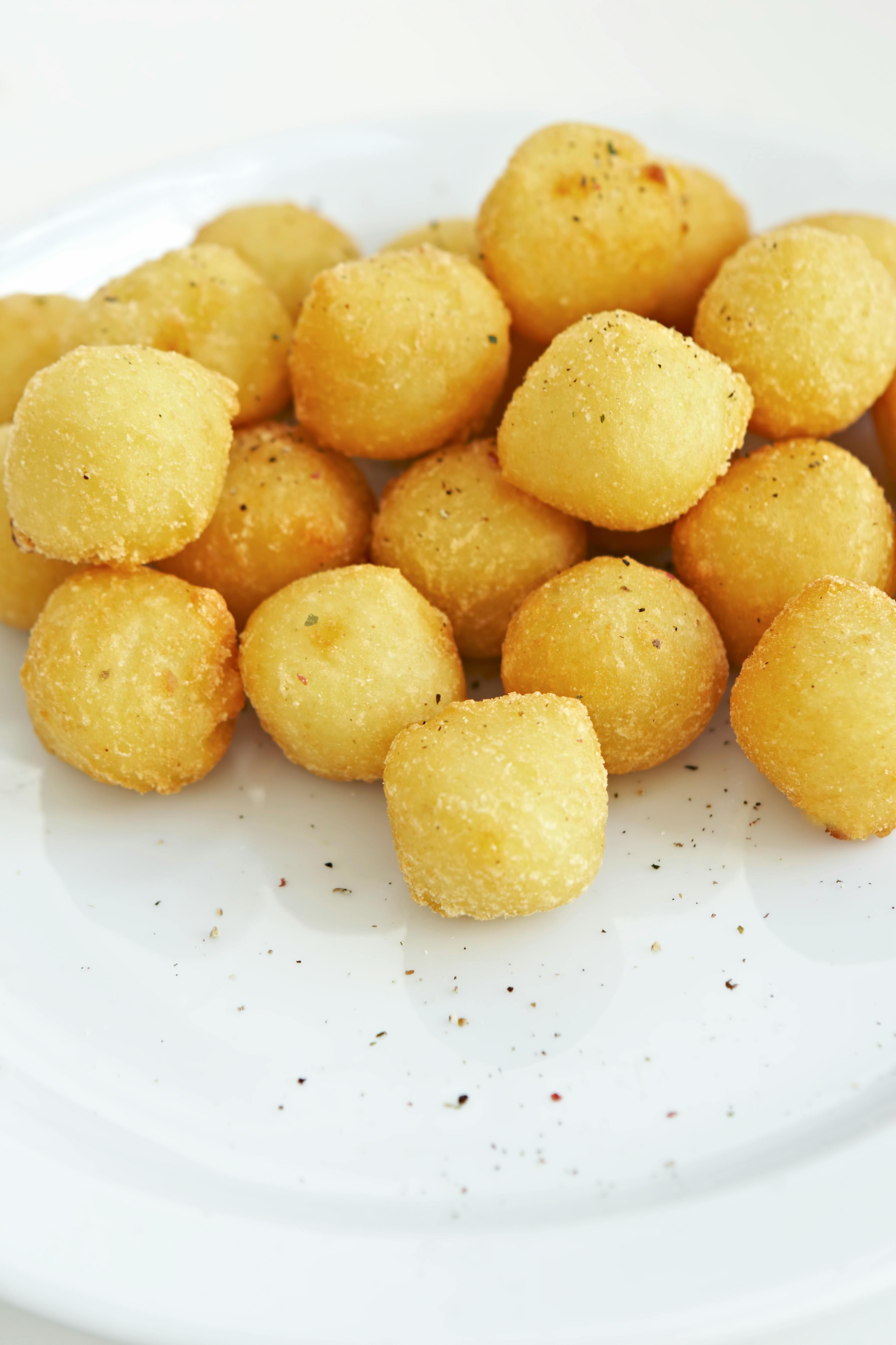
Photo: Electra Studio / Pexels
The diets react (see scores below)
Common Ingredients
- bread
- potatoes
- flour
- eggs
- milk
- onion
- parsley
- nutmeg
Specific recipes may vary.
Incompatible with 7 of 11 diets
Diet Ratings
Knödel is fundamentally incompatible with a ketogenic diet. The dish is built on a triple foundation of high-carb ingredients: bread, potatoes, and flour — all of which are among the most keto-incompatible foods that exist. A single standard Knödel (roughly 100-150g) can easily contain 30-50g of net carbs on its own, far exceeding or consuming an entire day's keto carb allowance in one side dish. Potatoes are starchy vegetables explicitly excluded from keto, bread and flour are grain-based products with very high glycemic impact, and milk adds additional carbohydrates. There is no meaningful portion size of this dish that would fit within ketogenic parameters.
Traditional Austrian Knödel contains both eggs and milk, which are animal-derived products explicitly excluded from a vegan diet. These are not incidental or trace ingredients — they are structural components that bind the dumpling and provide moisture. Without them, the dish would not hold together in its traditional form. While a vegan version could theoretically be made using plant-based milk and a flax or chia egg substitute, the dish as listed is not vegan-compatible.
Knödel is a traditional Austrian bread dumpling made primarily from bread (wheat-based, a grain), flour (grain-derived), and milk (dairy) — three core non-paleo ingredients that are explicitly excluded from the Paleolithic diet. Bread is a processed grain product, flour is refined grain, and milk is dairy. While eggs, onion, parsley, and nutmeg are paleo-approved, and potatoes occupy a debated gray area, the dominant ingredients (bread, flour, milk) render this dish fundamentally incompatible with paleo principles. There is no meaningful way to classify Knödel as paleo-friendly in its traditional form.
Knödel are Austrian dumplings made primarily from refined bread or white flour and potatoes, with eggs and milk as binders. The dish is not inherently unhealthy but sits awkwardly within Mediterranean diet principles. The base ingredients (refined bread, white flour, potatoes) are starchy refined carbohydrates rather than the whole grains emphasized by the diet. Eggs and dairy (milk) are acceptable in moderation. Positive elements include onion, parsley, and nutmeg, which add plant-based value. The dish contains no red meat or added sugars, and could be served alongside Mediterranean-friendly mains (fish, legumes), but as a refined-grain-heavy side dish it is not a staple of the diet. Prepared with whole grain bread and served in modest portions, it becomes more acceptable.
Some Mediterranean diet interpretations, particularly those rooted in traditional Southern European peasant cooking, allow starchy potato and bread-based dishes as part of a plant-forward, low-meat diet. If made with whole grain or sourdough bread and eggs from pasture-raised hens, moderate portions could fit occasional consumption without violating core principles.
Knödel is a traditional Austrian bread/potato dumpling that is almost entirely plant-based. The primary ingredients — bread, potatoes, flour, and onion — are all plant-derived carbohydrates that are strictly excluded from the carnivore diet. Parsley and nutmeg are plant-based seasonings, also excluded. While eggs and milk appear in the recipe, they are minor binders within an otherwise completely non-carnivore dish. This food has no meaningful animal-protein base and is fundamentally a grain and starch dish, making it entirely incompatible with carnivore principles.
Knödel (Austrian bread/potato dumplings) contains multiple excluded ingredients. Bread is made from grains (wheat flour), which are explicitly excluded on Whole30. Flour is also a grain product. Milk is dairy, which is excluded. Additionally, even if compliant versions of these ingredients could somehow be found, Knödel falls squarely into the 'no recreating baked goods or pasta-like items' rule — dumplings are structurally analogous to pasta/noodles, which are explicitly on the excluded list. This dish is fundamentally incompatible with Whole30.
Knödel (Austrian bread/potato dumplings) contains multiple high-FODMAP ingredients that make it unsuitable during the elimination phase. The most significant offenders are: (1) bread — typically made from wheat, which is high in fructans and a major FODMAP source; (2) onion — one of the highest-FODMAP foods, rich in fructans, problematic even in small amounts; (3) milk — contains lactose, a disaccharide that is high-FODMAP at standard quantities used in dumpling recipes; and (4) wheat flour — adds further fructan load. While potatoes, eggs, parsley, and nutmeg are individually low-FODMAP, the combination of wheat bread, wheat flour, onion, and milk creates a dish with stacked high-FODMAP ingredients at any realistic serving size. There is no realistic portion of a traditional Knödel that would remain within safe FODMAP thresholds given these multiple sources of FODMAPs.
Knödel (Austrian bread/potato dumplings) is a mixed dish from a DASH perspective. The core ingredients — potatoes, onion, parsley, eggs, milk — are broadly acceptable or even beneficial on DASH. Potatoes provide potassium and fiber; parsley and onion add micronutrients. However, the bread component is typically made from white bread (refined grain, not whole grain), and traditional recipes often use whole eggs and whole milk, adding moderate saturated fat. The primary concern is sodium: bread-based dumplings carry a meaningful sodium load from the bread itself, and recipes vary widely — some call for salted water, seasoned bread, or added salt. As a starchy side dish with refined carbohydrates and moderate sodium, Knödel is not a core DASH food but is not categorically excluded. Portion control matters — one or two dumplings as an occasional side is manageable. Made with whole-grain bread, low-fat milk, and minimal added salt, the dish could score higher.
NIH DASH guidelines emphasize whole grains and low-fat dairy while limiting refined grains and sodium; traditional Knödel uses white bread and whole milk, placing it outside core DASH recommendations. However, updated clinical interpretations note that eggs no longer carry a strict cholesterol limit per the 2020–2025 Dietary Guidelines, and if Knödel is prepared with whole-grain bread, low-fat milk, and reduced salt, many DASH-oriented dietitians would consider it an acceptable starchy side in moderate portions.
Knödel (Austrian bread/potato dumplings) are composed almost entirely of high-glycemic carbohydrates: white bread, potatoes, and flour. These are three of the most unfavorable carbohydrate sources in Zone Diet methodology — all high-glycemic, all explicitly discouraged by Dr. Sears. The macronutrient profile is severely imbalanced: carbohydrates dominate at roughly 70-80% of calories, with minimal protein (small amounts from eggs and milk) and minimal fat. There is no lean protein component, making it essentially impossible to build a Zone-balanced block from this dish alone. Even with aggressive portioning, the glycemic load is extremely high and the 40/30/30 ratio cannot be achieved from this dish as a base. A tiny portion could theoretically accompany a Zone meal, but Knödel's identity as a substantial starchy side dish makes it a poor fit for Zone principles in any practical sense.
Knödel (Austrian bread/potato dumplings) is a starchy, refined-carbohydrate-heavy dish with a neutral-to-mildly-inflammatory profile. The base ingredients — white bread, white flour, and potatoes — are predominantly refined or high-glycemic carbohydrates that offer little fiber and can promote modest blood sugar spikes and mild inflammatory signaling when consumed regularly. Milk and eggs are moderate-category ingredients on the anti-inflammatory framework; eggs provide some choline and selenium, while whole milk contributes saturated fat in modest amounts. On the positive side, onion contains quercetin (a notable anti-inflammatory flavonoid), parsley is rich in vitamin K, apigenin, and antioxidants, and nutmeg has mild anti-inflammatory properties as a spice. These beneficial elements are present only in small quantities relative to the starchy base. There are no omega-3 sources, no colorful antioxidant-rich vegetables, and no legumes or whole grains. Overall, Knödel is a traditional comfort food that is nutritionally neutral to mildly inflammatory — acceptable occasionally but not aligned with anti-inflammatory dietary patterns as a regular side dish.
Knödel are dense, starchy dumplings made primarily from bread or potatoes, flour, and milk — a combination that is high in refined carbohydrates and very low in protein per serving. As a side dish with no primary protein source, they contribute mostly empty starch calories, which is problematic for GLP-1 patients who need every bite to be nutritionally dense. The eggs and milk add a small amount of protein but not enough to meaningfully offset the carbohydrate load. The ingredients are not fried and are relatively low in fat, which prevents a lower score — the dish is easy enough to digest and unlikely to worsen nausea or reflux significantly. However, the large, dense portion size works against GLP-1 patients who have limited stomach capacity and need protein-first eating. Knödel displace protein and fiber from the plate without contributing meaningfully to either. The nutmeg and parsley are benign. If consumed, it should be a very small portion alongside a high-protein main, not as a featured component of the meal.
*See how scores were generated at our methodology page.
Nutritional profile
Six traits that cut across every diet.
Fiber & Plants
How much whole-plant food and fiber it delivers.
Healthy Fats
The quality of its fats (unsaturated, omega-3).
Whole / Unprocessed
How close it is to its natural, unprocessed form.
Gut Gentle
How easy it is on digestion (low FODMAP, few irritants).
Low Glycemic
How little it spikes your blood sugar.
Protein Density
How much protein it packs per calorie.
Controversy Index
Higher controversy = more disagreement between diets.
Diet-Specific Tips
 Mediterranean — 4/10
View tips
- Refined bread and white flour are the primary base — not whole grains
- Potatoes add further refined starch with limited fiber
- Eggs and milk are acceptable in moderation (caution tier)
- No red meat, added sugar, or highly processed ingredients
- Onion, parsley, and nutmeg provide small plant-based contributions
- Not a traditional Mediterranean dish — Austrian cuisine origin
- Could complement a Mediterranean meal if portioned modestly
 DASH — 5/10
View tips
- Refined white bread as primary base — not a whole grain as DASH emphasizes
- Potatoes provide beneficial potassium and fiber, supporting DASH goals
- Sodium content varies by recipe and bread used; traditional versions can be moderate-to-high in sodium
- Eggs and whole milk add moderate saturated fat; low-fat milk substitution improves DASH compatibility
- No saturated-fat-heavy meats or tropical oils present
- Starchy, energy-dense dish — portion control critical within DASH calorie and grain-serving limits
- Whole-grain bread substitution would significantly improve DASH alignment
 Anti-Inflammatory — 4/10
View tips
- High refined carbohydrate load from white bread, flour, and potatoes — associated with higher glycemic response
- No whole grains, legumes, or omega-3 sources present
- Onion provides quercetin, a well-studied anti-inflammatory flavonoid
- Parsley contributes apigenin and vitamin K with anti-inflammatory properties
- Eggs and milk are moderate-tier ingredients — not strongly pro- or anti-inflammatory
- Nutmeg adds minor anti-inflammatory spice benefit
- Low fiber content overall; limited antioxidant density
 GLP-1 Friendly — 4/10
View tips
- Very low protein density — eggs and milk contribute minimally given the starch base
- High refined carbohydrate load from bread, potato, and flour combined
- Low fat content is a mild positive — unlikely to worsen GI side effects
- Dense, filling texture can displace protein-rich foods in a limited-capacity stomach
- No meaningful fiber contribution despite starchy ingredients
- Not fried or spicy — digestibility is acceptable
- Small portion alongside a high-protein main is the only viable use case for GLP-1 patients