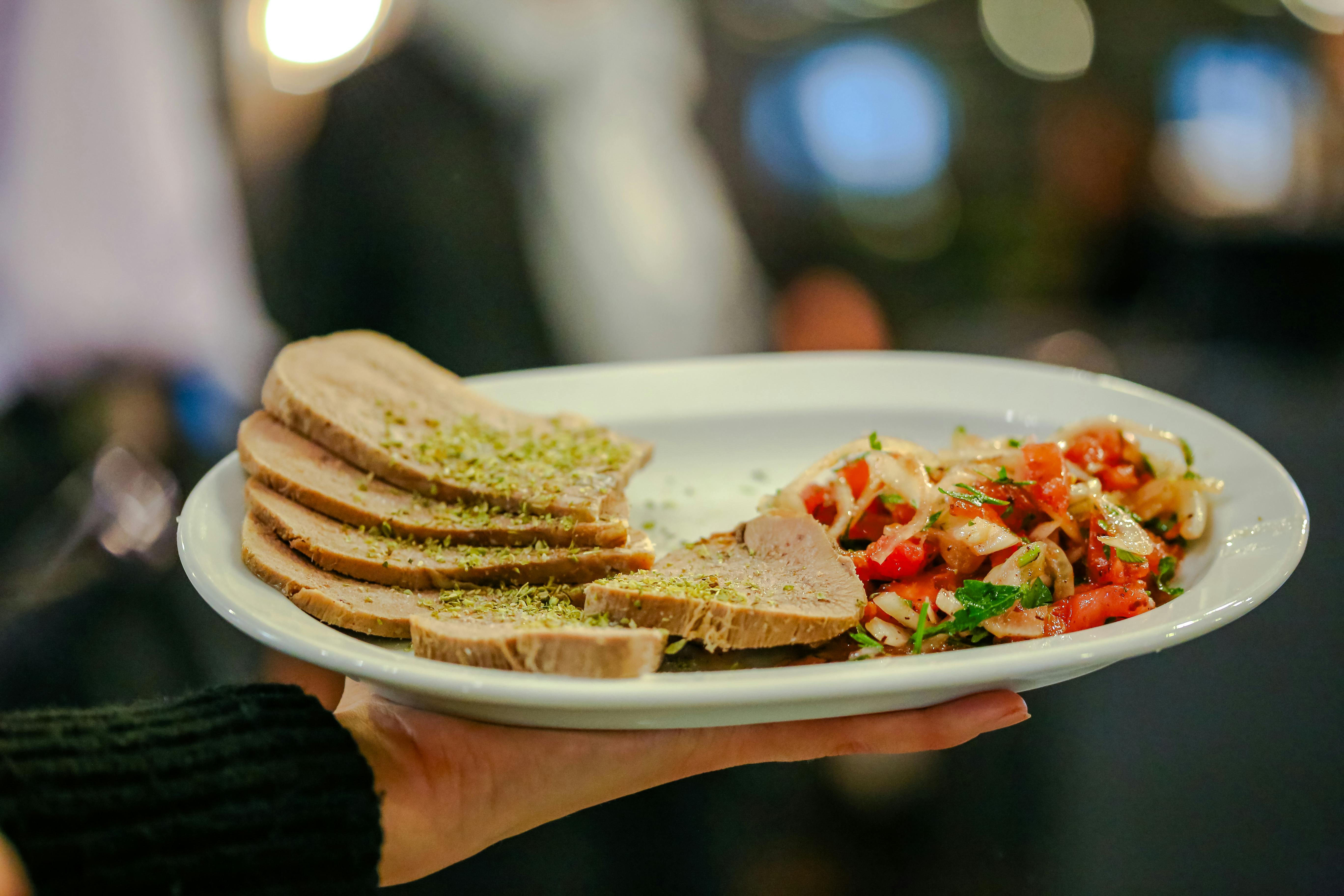
Photo: Doğu Tuncer / Pexels
Austrian
Tafelspitz
The diets react (see scores below)
Common Ingredients
- beef rump
- carrot
- celery root
- onion
- leek
- horseradish
- apple
- chives
Specific recipes may vary.
Incompatible with 4 of 11 diets
Diet Ratings
Tafelspitz is a traditional Austrian boiled beef dish that is fundamentally keto-friendly in its protein base (beef rump is lean but acceptable), but the accompaniments introduce meaningful carb load. The vegetables used in the broth — carrot, celery root, onion, and leek — contribute moderate net carbs, especially celery root (~7g net carbs/100g) and carrots (~7g net carbs/100g). The most problematic ingredient is the apple, which is classically used in the horseradish-apple sauce (Apfelkren): apples are high-sugar fruits incompatible with strict keto. If consumed as typically served — with the full vegetable garnish and apple-horseradish sauce — total net carbs could easily push 15-25g per serving, making it borderline or over limit for strict keto. With modifications (omitting apple, limiting root vegetables, eating mostly the beef and broth), it can fit within keto. The dish is also lean, lacking the high fat profile preferred on keto, though fat can be added via butter or cream-based sides.
Some lazy keto and flexible keto practitioners would approve this dish as-is, arguing the apple used in Apfelkren is a small quantity and the overall meal is protein-dense and unprocessed; strict keto adherents, however, consider any apple use a hard violation given fructose content and would require substitution with grated horseradish alone.
Tafelspitz is a classic Austrian boiled beef dish. The primary protein is beef rump, which is unambiguously an animal product and entirely incompatible with a vegan diet. While the accompanying vegetables (carrot, celery root, onion, leek), condiments (horseradish, apple, chives) are all plant-based, the dish is fundamentally defined by and centered on beef. There is no vegan version of Tafelspitz — removing the beef would result in a completely different dish.
Tafelspitz is a traditional Austrian boiled beef dish with an exceptionally clean ingredient profile from a paleo perspective. Beef rump is a whole, unprocessed cut of meat — the cornerstone of any paleo diet. All accompanying vegetables (carrot, celery root, onion, leek) are non-starchy vegetables fully compatible with paleo. Horseradish is a natural root used as a condiment with no paleo concerns. Apple and chives add natural flavor without any processed or excluded ingredients. The dish is typically prepared by slow-boiling in water or bone broth, which is an entirely paleo-compatible cooking method. There are no grains, legumes, dairy, seed oils, refined sugars, or processed additives in this dish. The traditional preparation actually produces a nutrient-rich bone broth as a byproduct, which paleo advocates strongly encourage. This is essentially a hunter-gatherer meal — meat and vegetables cooked simply together.
Tafelspitz is a classic Austrian boiled beef dish where beef rump is the central and defining ingredient. Red meat is explicitly limited in the Mediterranean diet to a few times per month at most. While the accompanying vegetables (carrot, celery root, onion, leek) and the apple-horseradish sauce are Mediterranean-friendly, the dish is fundamentally built around a substantial portion of beef, which contradicts core Mediterranean principles. No olive oil is used as the primary fat, and there are no legumes, whole grains, or plant-forward elements that would offset the red meat centerpiece.
Tafelspitz is an Austrian boiled beef dish that, while centered on beef rump (an approved carnivore protein), is prepared with a substantial array of plant-based ingredients that disqualify it from the carnivore diet. The dish includes carrot, celery root, onion, leek, horseradish, apple, and chives — all plant foods explicitly excluded on carnivore. The traditional accompaniments (horseradish sauce and apple) are particularly problematic. The beef itself would be approved, but the dish as prepared and served cannot be considered carnivore-compatible.
Tafelspitz is a classic Austrian boiled beef dish consisting entirely of Whole30-compliant ingredients. Beef rump is a whole, unprocessed meat. All vegetables listed — carrot, celery root, onion, leek — are compliant vegetables. Horseradish (fresh root) is a compliant spice/condiment. Apple is an allowed fruit. Chives are a compliant herb. The dish is traditionally prepared by simmering the beef in broth with the vegetables, with fresh grated horseradish and apple served as accompaniments. None of the listed ingredients fall into any excluded category. This is a clean, whole-food preparation that aligns perfectly with the Whole30 philosophy.
Tafelspitz contains several high-FODMAP ingredients that make it unsuitable during the elimination phase. Onion is one of the highest-FODMAP foods (fructans) and is a definitive avoid at any serving size. Leek (green tops only are low-FODMAP, but the whole leek including white parts is high in fructans) and celery root (celeriac) are also high-FODMAP. Apple, typically served as an accompaniment in the horseradish-apple sauce (Apfelkren), is high in excess fructose and polyols (sorbitol). The beef rump itself is naturally FODMAP-free, and carrot and chives are low-FODMAP. However, the combination of onion, celery root, leek (white parts), and apple creates multiple high-FODMAP triggers that cannot be separated from the dish as traditionally prepared.
Tafelspitz is a traditional Austrian boiled beef dish that presents a mixed DASH diet profile. On the positive side, it is prepared by simmering (not frying), includes an excellent array of DASH-friendly vegetables (carrot, celery root, onion, leek) and the horseradish-apple sauce adds fiber and potassium with minimal added fat or sugar. However, the primary protein is beef rump, which is a red meat — a category DASH limits due to saturated fat and potential sodium content from broth. Beef rump is relatively lean compared to fattier cuts, but DASH still emphasizes poultry and fish over red meat. The traditional broth-based preparation can accumulate significant sodium depending on seasoning. As commonly prepared in Austrian cuisine, salt is used generously in the cooking water and broth, which is a concern for the standard DASH sodium limit of 2,300mg/day and especially the low-sodium target of 1,500mg/day. The dish is otherwise whole-food based with no processed ingredients, no added sugars, no tropical oils, and no full-fat dairy, which works in its favor.
NIH DASH guidelines categorize red meat as a food to limit and favor lean poultry and fish as primary proteins; however, some updated clinical DASH interpretations note that lean, unprocessed beef like rump prepared by boiling (which reduces fat) can fit within DASH in moderate portions (3oz or less), particularly given the strong vegetable component and absence of processed ingredients in this dish.
Tafelspitz is a classic Austrian boiled beef dish that has several Zone-friendly elements but also some considerations. The protein source — beef rump — is a lean cut (especially when boiled, which renders out much of the fat), making it a reasonable lean protein choice, though slightly fattier than ideal Zone proteins like skinless chicken or fish. The vegetable base (carrot, celery root, onion, leek) contributes low-glycemic carbohydrate blocks with good polyphenol value. Horseradish is a Zone-favorable condiment with minimal carbs. The apple in the accompaniment (often served as apple-horseradish sauce) adds some sugar/glycemic load but in small amounts is manageable as a fruit block. The dish lacks a meaningful fat source for the monounsaturated fat component, so a Zone meal would need supplementation (e.g., a small drizzle of olive oil or a few almonds on the side). The main concern is portioning the beef correctly (~3 oz cooked for a 3-block meal) and managing the overall carb-to-protein ratio, as the vegetable broth base can accumulate carbs from multiple vegetables. With careful portioning, this dish can be Zone-balanced, but the slightly higher fat content of rump beef versus ideal Zone proteins and the need to add a fat block externally place it in 'caution' territory.
Some Zone practitioners would rate this more favorably (approve, score 7) given that boiling removes significant fat from the beef rump, making it closer to a lean protein source, and the vegetable-heavy composition aligns well with Zone's emphasis on 8 servings of vegetables per day. Dr. Sears' later anti-inflammatory writings also acknowledge that grass-fed beef fat, common in traditional European cattle, has a more favorable omega-6/omega-3 ratio than grain-fed beef, potentially upgrading the fat quality concern.
Tafelspitz is a classic Austrian boiled beef dish that presents a mixed anti-inflammatory profile. On the positive side, the preparation method (slow boiling/poaching in broth) avoids high-heat cooking that can generate advanced glycation end-products (AGEs), and the dish is rich in anti-inflammatory vegetables: carrots (beta-carotene, carotenoids), celery root (antioxidants, vitamin C), leek (quercetin, organosulfur compounds), and onion (quercetin, flavonoids). Horseradish contains glucosinolates and isothiocyanates with documented anti-inflammatory properties, and apple adds polyphenols and fiber. Chives contribute organosulfur compounds similar to garlic. The primary concern is the beef rump itself — red meat is firmly in the 'limit' category within anti-inflammatory guidelines due to saturated fat content, arachidonic acid (a precursor to pro-inflammatory eicosanoids), and associations with elevated CRP and IL-6 in epidemiological research. Rump is a relatively lean cut compared to fatty beef cuts, which partially mitigates this concern. The dish contains no processed ingredients, added sugars, trans fats, or refined carbohydrates. Overall, this is a whole-food, vegetable-forward preparation of red meat — better than most beef dishes but still not aligned with anti-inflammatory principles as a regular staple due to its central protein.
Most anti-inflammatory frameworks (Dr. Weil, IF Rating system) place red meat in the 'limit' category and would rate this dish as borderline acceptable at most. However, some ancestral and whole-food nutrition advocates argue that lean, grass-fed beef prepared without high-heat methods (as in Tafelspitz) has a meaningfully better fatty acid profile and lower AGE content than conventionally assessed, and that the abundant vegetables in the broth create a net-neutral or even modestly anti-inflammatory dish in a real-world dietary context.
Tafelspitz is a traditional Austrian dish of boiled beef rump served with root vegetables (carrot, celery root, leek, onion) and a horseradish-apple sauce. The cooking method — slow boiling — is genuinely GLP-1 friendly: it produces a lean, tender, easily digestible protein source without added fats from frying or heavy sauces. Beef rump is a relatively lean cut (compared to ribeye or brisket), providing good protein density. The vegetable accompaniments add fiber, micronutrients, and water content, and the broth supports hydration. However, beef is still a red meat with moderate saturated fat, which puts it in a different tier than chicken breast, fish, or legumes for GLP-1 patients. The horseradish-apple condiment is low in fat and mildly spicy — horseradish can occasionally trigger reflux or nausea in sensitive GLP-1 patients, though it is far milder than chili-based condiments. Portion size matters: a modest serving of lean boiled beef with vegetables is well-tolerated, but a large portion of red meat may slow gastric emptying further and increase GI discomfort. Overall this is one of the more GLP-1-compatible red meat dishes due to its lean cut and boiling preparation, but the red meat base prevents a full approval.
Some GLP-1-focused dietitians accept lean boiled beef regularly as a practical high-protein option, particularly for patients who do not tolerate chicken or fish well, and would rate this dish higher given the absence of added fats and the vegetable-forward accompaniments. Others restrict all red meat to once weekly due to saturated fat load and the additive effect on already-slowed gastric emptying, which can worsen bloating and fullness on GLP-1 medications.
*See how scores were generated at our methodology page.
Nutritional profile
Six traits that cut across every diet.
Fiber & Plants
How much whole-plant food and fiber it delivers.
Healthy Fats
The quality of its fats (unsaturated, omega-3).
Whole / Unprocessed
How close it is to its natural, unprocessed form.
Gut Gentle
How easy it is on digestion (low FODMAP, few irritants).
Low Glycemic
How little it spikes your blood sugar.
Protein Density
How much protein it packs per calorie.
Controversy Index
Higher controversy = more disagreement between diets.
Diet-Specific Tips
 Keto — 5/10
View tips
- Beef rump is lean, low-fat protein — acceptable but not ideal for keto macros
- Apple in traditional Apfelkren sauce is a significant carb/sugar concern
- Celery root and carrots add notable net carbs to the broth and garnish
- Onion and leek contribute additional moderate carbs
- Dish is unprocessed and whole-food based — a positive factor
- Modification potential is high: skip apple sauce, limit root vegetable portions
- Standard serving likely lands 15-25g net carbs, borderline for keto limits
 Paleo — 9/10
View tips
- Beef rump is unprocessed whole meat — core paleo protein
- All vegetables (carrot, celery root, onion, leek) are fully paleo-approved
- Horseradish is a natural root with no paleo concerns
- Apple provides natural flavoring — whole fruit is paleo-approved
- Chives are paleo-compliant herbs
- Boiling/slow-cooking method is paleo-friendly and produces nutrient-rich broth
- No grains, legumes, dairy, seed oils, or refined sugars present
- No processed ingredients of any kind
 Whole30 — 9/10
View tips
- Beef rump is unprocessed whole meat — fully compliant
- All vegetables (carrot, celery root, onion, leek) are Whole30-approved
- Fresh horseradish is a natural spice/condiment with no excluded additives
- Apple is an explicitly allowed fruit
- Chives are a compliant fresh herb
- No grains, dairy, legumes, added sugars, or other excluded ingredients
- Traditional preparation method (boiling/simmering) is inherently Whole30-friendly
 DASH — 5/10
View tips
- Red meat (beef rump) — DASH limits red meat; caution applies even for lean cuts
- Boiled/simmered preparation reduces fat versus frying or roasting
- High vegetable content (carrot, celery root, onion, leek) aligns well with DASH vegetable servings
- Sodium risk from traditional broth preparation — low-sodium preparation scores higher
- Horseradish-apple sauce is DASH-compatible: whole food, low fat, natural sugars only
- No processed ingredients, no added sugars, no tropical oils, no full-fat dairy
- Portion control of beef (≤3oz serving) is essential for DASH compliance
 Zone — 6/10
View tips
- Beef rump is a moderately lean cut; boiling reduces fat content, improving Zone protein compatibility
- Vegetable base (carrot, celery root, onion, leek) provides low-glycemic carbohydrate blocks with good micronutrient density
- Apple in horseradish sauce adds glycemic load but is manageable as a small fruit block
- Dish lacks inherent monounsaturated fat — requires external fat block addition to complete Zone 40/30/30 ratio
- Portion control of beef is critical (~85g cooked for a 3-block protein serving)
- Traditional preparation involves no processed ingredients or seed oils — aligns with Zone anti-inflammatory principles
- Horseradish is a Zone-favorable, polyphenol-rich condiment
 Anti-Inflammatory — 5/10
View tips
- Red meat (beef rump) is pro-inflammatory at high frequency — high saturated fat, arachidonic acid; limit per anti-inflammatory guidelines
- Lean cut and low-heat boiling method reduces AGE formation compared to grilled/fried beef preparations
- Carrots and celery root provide carotenoids and antioxidants
- Onion and leek supply quercetin and organosulfur compounds with anti-inflammatory activity
- Horseradish contributes glucosinolates/isothiocyanates — documented anti-inflammatory phytochemicals
- Apple adds polyphenols and soluble fiber
- No processed ingredients, trans fats, refined sugars, or additives
- Vegetable-rich broth preparation is a positive feature of this traditional dish
 GLP-1 Friendly — 5/10
View tips
- Lean cut of beef (rump) and boiling preparation reduce saturated fat compared to other red meat preparations
- Good protein source supporting the 100-120g daily protein target
- Root vegetables add fiber and micronutrients
- Broth supports hydration — a GLP-1 benefit
- Red meat saturated fat is a moderate concern vs. preferred proteins (fish, chicken, legumes)
- Horseradish may trigger mild reflux or nausea in sensitive individuals
- Portion-sensitive: a small-to-moderate serving is well tolerated; a large portion risks worsening GLP-1 GI side effects
- Boiling is one of the most GLP-1-friendly cooking methods — no added fats, easy digestibility