Photo: Valeria Boltneva / Pexels
The diets react (see scores below)
Common Ingredients
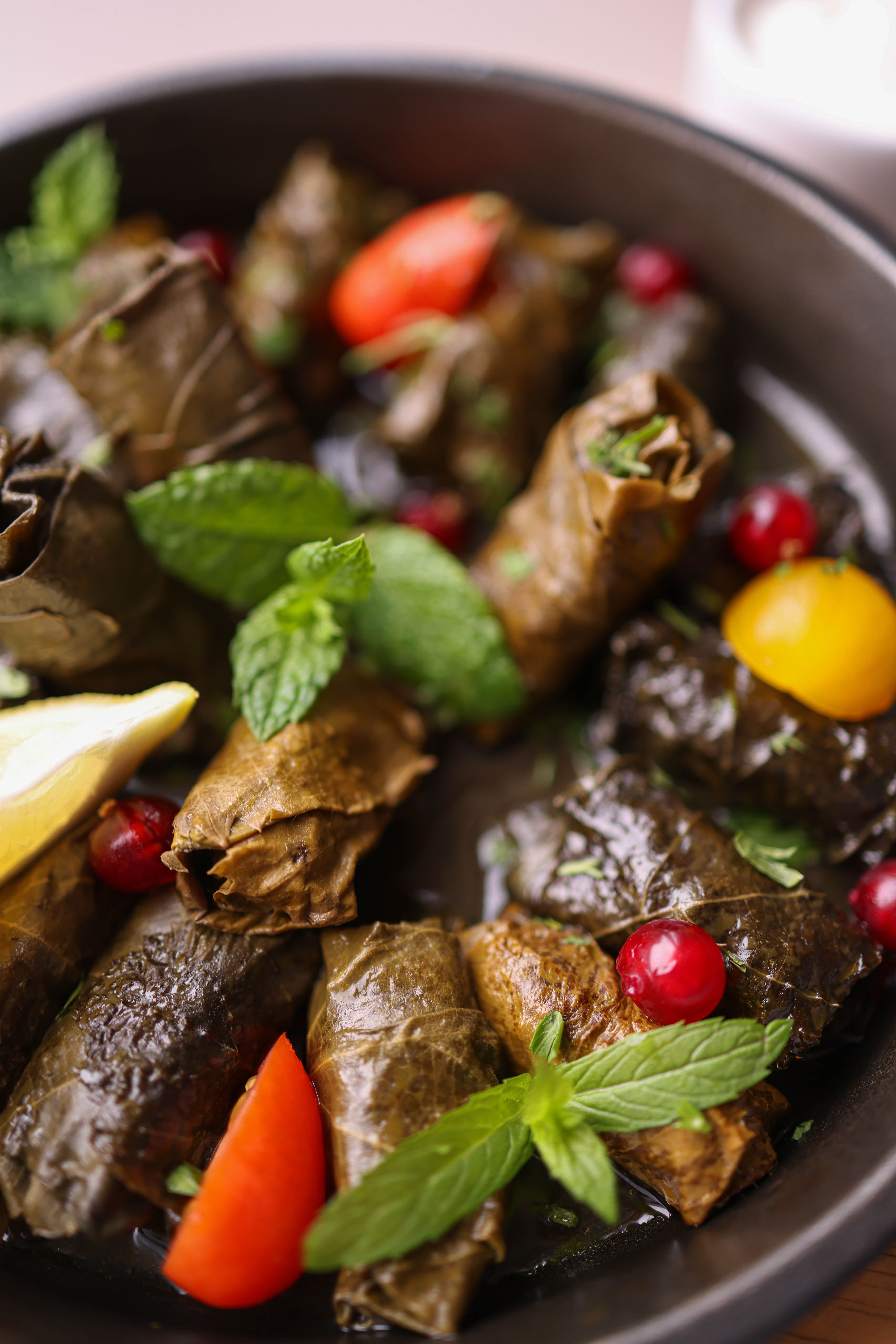
- grape leaves
- lamb
- rice
- onion
- mint
- dill
- cilantro
- tomato
Specific recipes may vary.
Incompatible with 6 of 11 diets
Diet Ratings
Azerbaijani Dolma is fundamentally incompatible with ketogenic eating. The dish centers on rice as a primary filling ingredient, which is a high-carb grain that alone can easily exceed an entire day's keto carb budget in a single serving. A standard serving of 4-6 dolma pieces contains roughly 25-40g of net carbs from rice alone, making ketosis maintenance impossible. Grape leaves themselves are relatively low in carbs, and lamb is an excellent keto protein source, but the rice filling is a non-negotiable disqualifier. The remaining ingredients (onion, mint, dill, cilantro, tomato) add modest additional carbs but are not the primary concern.
Azerbaijani dolma contains lamb as its primary protein, which is a direct animal product and unambiguously incompatible with a vegan diet. While the other ingredients — grape leaves, rice, onion, mint, dill, cilantro, and tomato — are all plant-based, the presence of lamb makes this dish non-vegan. A vegan version of dolma could theoretically be made by substituting the lamb with a plant-based filling such as lentils or mushrooms, but as presented, this dish cannot be approved.
Azerbaijani Dolma contains rice, which is a grain and a clear exclusion under paleo rules. Rice is a staple ingredient in this dish — not optional or incidental — making the entire preparation non-compliant. The remaining ingredients (lamb, grape leaves, onion, mint, dill, cilantro, tomato) are all paleo-approved, but rice disqualifies the dish outright. Grape leaves themselves are paleo-compatible, and lamb is an excellent paleo protein, but the grain-based filling renders this a dish to avoid.
Dolma is a dish with deep roots across Mediterranean and Middle Eastern cuisines, and many of its components align well with Mediterranean principles: grape leaves are a traditional Mediterranean ingredient, and the herbs (mint, dill, cilantro), onion, and tomato are all plant-forward staples. However, the primary protein is lamb, which is red meat — limited to a few times per month under Mediterranean guidelines. White rice rather than a whole grain also reduces alignment. The dish is not processed and uses whole ingredients, which is a positive, but the lamb content pushes it toward 'caution' territory. Portion size and frequency matter greatly; a small serving occasionally is acceptable, but this should not be a regular main course.
In traditional Greek, Turkish, and Levantine Mediterranean cuisines, lamb-stuffed dolma/dolmades are considered a culturally authentic dish eaten on festive or weekly occasions, and some Mediterranean diet authorities recognize that lean lamb in modest portions fits within the framework, particularly given the dish's otherwise vegetable- and herb-rich profile. The traditional Mediterranean diet as studied in Crete and Greece did include small amounts of lamb regularly, especially in rural communities.
Dolma is fundamentally incompatible with the carnivore diet. While lamb is an excellent ruminant meat that would score a 9-10 on its own, the dish is built around multiple plant-based ingredients that are explicitly excluded. Grape leaves serve as the wrapping (plant), rice is a grain, onion is a vegetable, and mint, dill, and cilantro are plant-based herbs. Tomato is also a plant food. The lamb content is entirely overshadowed by the predominantly plant-based composition of this dish. There is universal consensus across all carnivore frameworks — strict Lion Diet, Baker's approach, and even Saladino's more permissive animal-based protocol — that grains, grape leaves, and the volume of plant ingredients here make this a clear avoid.
Dolma contains rice, which is a grain explicitly excluded from the Whole30 program. Rice is listed directly in the excluded grains category alongside wheat, oats, corn, quinoa, and others. All other ingredients — grape leaves, lamb, onion, mint, dill, cilantro, and tomato — are fully Whole30-compliant. However, the presence of rice makes this dish non-compliant as traditionally prepared. A cauliflower rice substitution could make a modified version compliant, but the traditional dish as described cannot be approved.
Azerbaijani Dolma contains two significant high-FODMAP ingredients that make it unsuitable during the elimination phase. Onion is one of the highest FODMAP foods tested by Monash University, containing large amounts of fructans at any cooking amount — it cannot be made safe by portion control. Grape leaves (vine leaves) have limited Monash testing, but the dish as a whole is disqualifying due to onion. Lamb and rice are low-FODMAP and safe. Mint, dill, cilantro, and tomato (at standard serving sizes) are generally low-FODMAP. However, onion alone — used as a core flavoring ingredient cooked into the filling — makes this dish a clear avoid during elimination. The fructans from onion leach into the entire filling during cooking, making it impossible to simply remove the onion pieces.
Azerbaijani dolma contains several DASH-friendly ingredients — grape leaves (rich in antioxidants and fiber), rice, onion, tomato, and fresh herbs (mint, dill, cilantro) are all well-aligned with DASH principles. However, lamb is a red meat with notable saturated fat content, which DASH guidelines explicitly limit. The dish is acceptable in moderation when prepared with lean lamb portions and minimal added salt, but it cannot be fully approved due to the red meat concern. Sodium levels can vary significantly depending on preparation; jarred/brined grape leaves are high in sodium, while fresh grape leaves score much better. If prepared with fresh grape leaves and lean, trimmed lamb, the dish moves closer to DASH-compliant.
Traditional NIH DASH guidelines categorize red meat (including lamb) as a food to limit due to saturated fat and cardiovascular risk. However, some updated clinical interpretations note that lean cuts of lamb in modest portions (2-3 oz) consumed infrequently can fit within a heart-healthy dietary pattern, particularly when the overall dish is rich in vegetables, herbs, and fiber — as is the case here.
Azerbaijani Dolma presents a mixed Zone Diet profile. The dish has several favorable components — grape leaves are low-glycemic and polyphenol-rich, and the herbs (mint, dill, cilantro) and tomato are excellent Zone-friendly vegetables. However, the two primary concerns are the protein source (lamb) and the carbohydrate source (rice). Lamb is a higher-fat red meat with notable saturated fat content, making it a less favorable Zone protein compared to skinless chicken or fish. A typical Zone meal targets ~25g lean protein, so lamb requires careful trimming and portioning to stay within Zone parameters. The rice is a high-glycemic carbohydrate that Sears classifies as 'unfavorable' — in traditional dolma recipes, rice is often the dominant carb source, which can quickly spike the glycemic load and skew the 40/30/30 ratio. The dish is rescuable in Zone terms by: (1) using lean ground lamb or substituting ground turkey, (2) reducing rice quantity significantly and relying on the grape leaves and tomato for carb blocks, and (3) keeping portions modest. As traditionally prepared, the rice-to-protein ratio and the saturated fat from lamb make this a dish requiring significant modification for Zone compliance.
Some Zone practitioners note that Sears' later anti-inflammatory writings (The Zone Diet and Inflammation) softened the strict stance on all red meat, acknowledging that grass-fed lamb in moderate portions carries acceptable omega-3 and CLA profiles. From this perspective, a small, well-portioned dolma with minimal rice could be viewed as a reasonable Zone meal, especially given the polyphenol richness of the grape leaves and herbs. Additionally, rice in small amounts (1 carb block ≈ roughly 2–3 tablespoons cooked) is technically workable within the block system, even if it is an 'unfavorable' carb.
Azerbaijani dolma presents a mixed anti-inflammatory profile. On the positive side, grape leaves are rich in polyphenols and antioxidants, and the herb combination of mint, dill, and cilantro provides meaningful anti-inflammatory compounds. Tomato contributes lycopene and other carotenoids. Onion offers quercetin, a well-studied flavonoid. Rice is a neutral whole grain (assuming white rice, which is the traditional choice — neither strongly pro- nor anti-inflammatory). The primary concern is lamb as the protein. Lamb is red meat with moderate-to-high saturated fat content, which anti-inflammatory frameworks consistently recommend limiting. However, the lamb here is used as a filling mixed with rice and herbs, so portion concentration is moderate rather than a full lamb-centric serving. Anti-inflammatory guidance doesn't prohibit occasional lean red meat, and lamb does contain some zinc and iron. The dish is traditionally cooked simply (simmered or baked) without seed oils or processed additives, which is favorable. Overall, this is a borderline dish — the herb and vegetable components pull it toward neutral-to-positive, but the lamb as primary protein prevents an approval under anti-inflammatory principles.
Some anti-inflammatory practitioners (e.g., Terry Wahls Protocol, Mediterranean-leaning frameworks) would argue that grass-fed lamb in modest quantities, combined with the polyphenol-rich grape leaves and anti-inflammatory herbs, makes this a reasonable inclusion in an anti-inflammatory diet. Conversely, stricter anti-inflammatory approaches emphasizing plant-forward eating (Dr. Joel Fuhrman's nutritarian model) would flag red meat in any regular quantity as a concern due to arachidonic acid and saturated fat content.
Azerbaijani dolma consists of grape leaves stuffed with a lamb-rice-herb mixture. The dish has meaningful strengths: grape leaves provide fiber and are easy to digest in small portions, the herb blend (mint, dill, cilantro) adds micronutrients, onion and tomato contribute water content and nutrients, and the overall preparation is braised rather than fried, making it relatively easy on the stomach. However, lamb is a fatty red meat with significant saturated fat — a meaningful drawback for GLP-1 patients who are sensitive to high-fat foods and at risk for nausea, bloating, and reflux. The rice adds refined carbohydrates with limited fiber. Protein content is moderate but the fat-to-protein ratio is less favorable than leaner proteins like chicken or fish. Portion size matters considerably here: 2-3 pieces can be a reasonable small meal, but the lamb fat content makes this a caution rather than an approve. The dish is not fried, not spicy, and not sugary, which keeps it out of avoid territory.
Some GLP-1-focused dietitians consider lean lamb cuts (such as leg of lamb) acceptable given that the protein content is substantial and the braised preparation is gentle on the GI tract; they would rate this higher if the lamb used is visibly lean. Others are more conservative about all red meat for GLP-1 patients due to the saturated fat burden slowing gastric emptying further and increasing nausea risk, and would recommend substituting ground chicken or turkey to make this dish an approve.
*See how scores were generated at our methodology page.
Nutritional profile
Six traits that cut across every diet.
Fiber & Plants
How much whole-plant food and fiber it delivers.
Healthy Fats
The quality of its fats (unsaturated, omega-3).
Whole / Unprocessed
How close it is to its natural, unprocessed form.
Gut Gentle
How easy it is on digestion (low FODMAP, few irritants).
Low Glycemic
How little it spikes your blood sugar.
Protein Density
How much protein it packs per calorie.
Controversy Index
Higher controversy = more disagreement between diets.
Diet-Specific Tips
 Mediterranean — 4/10
View tips
- Lamb is red meat — Mediterranean diet limits red meat to a few times per month
- Grape leaves are a traditional, nutrient-rich Mediterranean ingredient
- White rice is a refined grain, less preferred than whole grains
- Rich in fresh herbs and vegetables, aligning with plant-forward principles
- Whole, unprocessed ingredients with no added sugars or industrial fats
- Cultural authenticity: dolma variants are present in traditional Mediterranean cuisines
 DASH — 5/10
View tips
- Lamb is a red meat — DASH limits red meat due to saturated fat content
- Grape leaves are nutrient-dense but are commonly sold brined/jarred, which is high in sodium; fresh grape leaves are preferred
- Herbs (mint, dill, cilantro), onion, and tomato are strongly DASH-aligned
- Rice adds whole-grain carbohydrates when white rice is used; brown rice would improve the DASH score
- Portion size of lamb is critical — smaller portions with leaner cuts reduce saturated fat burden
- No added sugars, tropical oils, or heavily processed ingredients present
 Zone — 5/10
View tips
- Lamb is a higher-saturated-fat protein, less favorable than lean Zone proteins like chicken or fish
- Rice is a high-glycemic, 'unfavorable' carbohydrate in Zone terminology
- Grape leaves are low-glycemic and rich in polyphenols — strongly Zone-favorable
- Fresh herbs (mint, dill, cilantro) and tomato add Zone-friendly vegetable carb blocks
- Dish can be modified toward Zone compliance by trimming fat from lamb and reducing rice content
- Traditional portion sizes may push rice content too high for a balanced 40/30/30 block meal
- No added oils listed, which avoids seed oil concerns, but lamb fat contributes saturated fat
 Anti-Inflammatory — 5/10
View tips
- Lamb is red meat — moderate-to-high saturated fat, arachidonic acid; should be limited under anti-inflammatory guidelines
- Grape leaves are rich in polyphenols and antioxidants — a strong positive
- Mint, dill, and cilantro provide anti-inflammatory phytochemicals and flavonoids
- Tomato contributes lycopene and carotenoids — anti-inflammatory benefit
- Onion provides quercetin, a well-researched anti-inflammatory flavonoid
- White rice is nutritionally neutral — neither pro- nor anti-inflammatory
- Simple preparation method (no seed oils, no processing) is favorable
- Lamb is diluted by rice and herbs, moderating red meat impact per serving
 GLP-1 Friendly — 5/10
View tips
- Lamb is a fatty red meat with notable saturated fat — increases nausea and reflux risk on GLP-1 medications
- Braised preparation is GI-friendly compared to fried or grilled fatty meats
- Grape leaves contribute fiber and are easy to digest
- Rice is a refined carbohydrate with low fiber contribution
- Moderate protein per serving but fat-to-protein ratio is suboptimal
- Herb-rich filling (mint, dill, cilantro) adds micronutrient value
- Portion-sensitive: 2-3 small dolma can fit a GLP-1 meal; larger servings increase fat load
- No spice, no frying, no added sugar — avoids common GLP-1 triggers