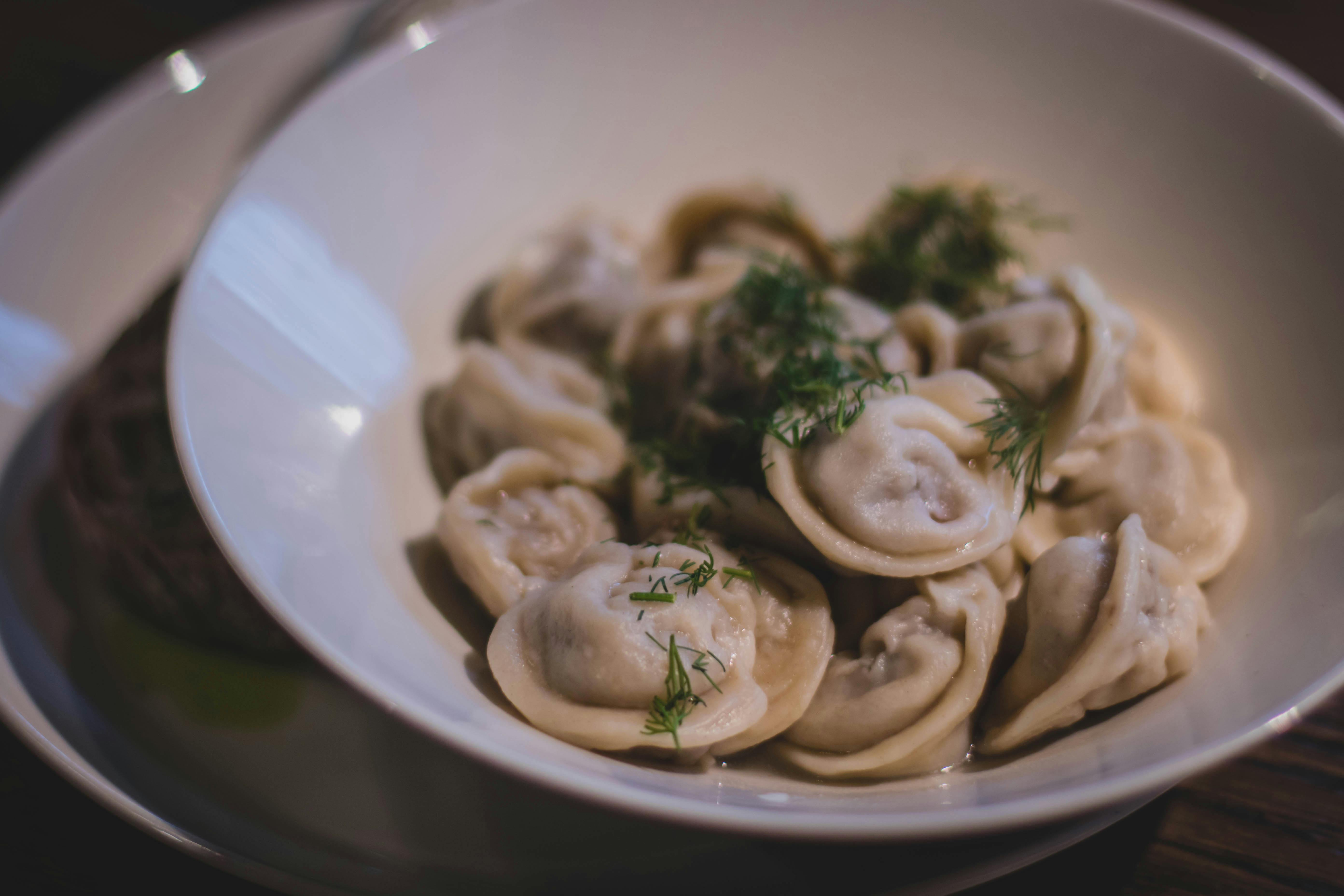
Photo: Valeria Boltneva / Pexels
Azerbaijani
Dushbara
The diets react (see scores below)
Common Ingredients
- flour
- lamb
- onion
- garlic
- dried mint
- vinegar
- black pepper
- salt
Specific recipes may vary.
Incompatible with 8 of 11 diets
Diet Ratings
Dushbara is an Azerbaijani dumpling soup where small lamb-filled dumplings are made with wheat flour dough. The flour-based dumpling wrappers are the critical disqualifying factor — wheat flour is a high-glycemic grain that delivers significant net carbs and directly disrupts ketosis. A typical serving of dushbara contains dozens of small dumplings, meaning the flour content is substantial and unavoidable, as it is structurally integral to the dish. The lamb filling and broth base would otherwise be keto-friendly, but the dish cannot be consumed in any meaningful portion without a large carbohydrate load from the dough. This is not a borderline case — flour-based dumplings are incompatible with ketogenic eating by any mainstream definition.
Dushbara is an Azerbaijani dumpling soup whose primary protein is lamb, a red meat and clear animal product. The dish is fundamentally defined by its lamb filling — there is no plant-based version of this dish in its traditional form. All other ingredients (flour, onion, garlic, dried mint, vinegar, black pepper, salt) are plant-based, but the lamb alone disqualifies it entirely under any vegan framework.
Dushbara is an Azerbaijani dumpling soup whose defining feature is wheat flour-based dough wrappers. Flour (wheat) is a grain and one of the clearest exclusions in the paleo diet — it contains gluten, phytates, and lectins that paleo authorities universally reject. While the remaining ingredients are largely paleo-compatible (lamb is an excellent paleo protein; onion, garlic, dried mint, black pepper, and vinegar are all approved), salt is discouraged, and the foundational grain-based pasta dumplings make this dish impossible to approve in its traditional form. No paleo substitution exists that preserves the dish's identity — almond or cassava flour wrappers would be a separate creation entirely.
Dushbara is an Azerbaijani dumpling soup featuring lamb as the primary protein and refined wheat flour dumplings as the base. Both core components conflict with Mediterranean diet principles: lamb is a red meat, which is limited to a few times per month, and the refined flour dumplings represent refined grains with no whole-grain alternative indicated. The broth base with onion, garlic, dried mint, and vinegar contains Mediterranean-friendly aromatics, but these supportive ingredients cannot redeem the dish's structural reliance on red meat and refined grains. There is no olive oil, legumes, vegetables, or whole grains to offset the two primary problematic components. As an occasional, small-portion indulgence it might be tolerable, but as a dish it fundamentally contradicts the dietary pattern's core guidance.
Dushbara is an Azerbaijani dumpling soup that is fundamentally incompatible with the carnivore diet. While the primary protein is lamb — an excellent ruminant meat that would otherwise score highly — the dish is built around flour-based dumplings, which are a grain-derived plant food strictly excluded on carnivore. Additionally, onion, garlic, and dried mint are all plant-based ingredients, and vinegar (typically plant-derived) is also excluded. The only carnivore-compliant elements are the lamb, black pepper (debated), and salt. The dish cannot be considered carnivore-compatible in its traditional form due to the flour dumplings being a structural, non-optional component.
Dushbara is an Azerbaijani dumpling soup in which small dumplings are made from wheat flour dough filled with seasoned lamb. Wheat flour is a grain product and is explicitly excluded on the Whole30 program. Additionally, dumplings — even if made with compliant fillings — fall into the category of pasta/noodle-like foods that the program explicitly prohibits recreating. The remaining ingredients (lamb, onion, garlic, dried mint, vinegar, black pepper, salt) are all Whole30-compatible, but the flour-based dumpling wrappers make this dish non-compliant regardless of everything else.
Dushbara contains multiple high-FODMAP ingredients that make it unsuitable during the elimination phase. Wheat flour (used for the dumpling dough) is high in fructans, and a standard serving of dushbara would involve a significant quantity of these small dumplings, making the fructan load substantial. Onion is one of the highest-FODMAP foods tested by Monash University, rich in fructans, and is a core flavoring ingredient in both the filling and likely the broth. Garlic is similarly very high in fructans even in tiny amounts. Dried mint, while used in small quantities, can contribute additional fructans at larger doses. The lamb itself is low-FODMAP, as is vinegar, black pepper, and salt. However, the combination of wheat flour dumplings plus onion plus garlic creates an unavoidably high-FODMAP dish at any standard serving size. There is no realistic modification pathway that preserves the character of dushbara while making it low-FODMAP, short of replacing the wheat dough with a gluten-free alternative and eliminating onion and garlic entirely.
Dushbara is an Azerbaijani dumpling soup featuring small lamb-filled pasta in broth. From a DASH perspective, this dish presents multiple concerns. Lamb is a red meat with significant saturated fat content, which DASH explicitly limits. The broth-based preparation typically involves substantial added salt, and the combined sodium from salted broth, seasoned filling, and added salt during cooking likely pushes this dish well above DASH sodium thresholds per serving. Refined white flour dumplings offer little fiber or micronutrient benefit compared to whole grains emphasized in DASH. The dish lacks the vegetables, legumes, or low-fat dairy that would offset these concerns. Positive notes include garlic and onion (potassium contributors), vinegar (no sodium impact), and dried mint (negligible). However, the core issues — red meat as primary protein, high probable sodium from broth and seasoning, refined carbohydrates, and saturated fat from lamb — make this a poor fit for DASH guidelines as typically prepared.
NIH DASH guidelines categorically limit red meat and high-sodium preparations; however, some updated clinical interpretations note that lean cuts of lamb (e.g., leg of lamb, trimmed) have a saturated fat profile closer to lean beef, and a small portion of dumplings in a low-sodium homemade broth could be incorporated occasionally within a DASH-adherent diet — reducing salt significantly and using lean lamb would raise the score to caution range.
Dushbara is an Azerbaijani dumpling soup featuring small flour-dough dumplings filled with lamb, served in broth with onion, garlic, dried mint, and vinegar. From a Zone perspective, this dish presents several challenges. The primary carbohydrate source is refined wheat flour (dumpling dough), which is high-glycemic and an 'unfavorable' Zone carb — it raises insulin rapidly and lacks fiber to slow digestion. Lamb is a functional protein source but is fattier than Zone-preferred lean proteins like skinless chicken or fish, contributing saturated fat rather than monounsaturated fat. The dish also lacks the low-glycemic vegetables (broccoli, spinach, peppers, etc.) that should dominate Zone carbohydrate intake. On the positive side, garlic and onion are favorable Zone carbs in small amounts, dried mint adds polyphenols, and vinegar may modestly help glycemic response. The broth base is inherently low-calorie. With careful portioning — a small serving of dumplings, a lean lamb filling leaning on less fatty cuts, and adding a large vegetable side — this dish could be incorporated cautiously into a Zone meal plan, but the refined flour dumpling dough and fatty lamb combination make Zone-balancing difficult in practice.
Some Zone practitioners, particularly those following Sears' later anti-inflammatory framework, note that traditional whole-food dishes like Dushbara — despite containing refined flour — are far preferable to ultra-processed foods. The vinegar component may reduce the glycemic impact of the dumplings modestly. If the lamb used is lean (e.g., leg of lamb, trimmed), the protein profile becomes more Zone-compatible. A small portion (3-4 dumplings) paired with a large vegetable-rich broth could represent an acceptable Zone 'unfavorable' carb usage within a well-structured daily block plan.
Dushbara is a traditional Azerbaijani dumpling soup featuring small lamb-filled dumplings in a broth, seasoned with garlic, dried mint, vinegar, and black pepper. The dish has a mixed anti-inflammatory profile. On the positive side, garlic offers allicin with documented anti-inflammatory properties, dried mint provides antioxidant polyphenols, black pepper contains piperine (which enhances absorption of anti-inflammatory compounds), and onion contributes quercetin. The broth-based preparation is generally favorable compared to fried or heavily processed dishes. However, lamb is a red meat with notable saturated fat content, which anti-inflammatory frameworks consistently recommend limiting. The refined wheat flour used in the dumpling wrappers adds refined carbohydrates with limited nutritional value. Vinegar is generally neutral to mildly beneficial. The dish is not inherently processed or laden with additives, and the portion of lamb per serving in a soup context is moderate, which partially mitigates the red meat concern. Overall, this dish sits in caution territory — traditional, minimally processed, with beneficial herbs and aromatics, but anchored by red meat and refined flour that work against an anti-inflammatory profile.
Some anti-inflammatory practitioners, particularly those following Dr. Weil's broader Mediterranean-influenced approach, would note that lamb in a soup (broth-based, moderate portions, herb-seasoned) is meaningfully different from a large grilled lamb portion — and that the garlic, mint, and onion provide real anti-inflammatory benefit. A stricter reading of anti-inflammatory guidelines, however, would classify any regular red meat consumption as problematic regardless of preparation method, keeping this firmly in caution or even avoid territory for those with elevated inflammatory conditions.
Dushbara is a traditional Azerbaijani dumpling soup featuring tiny lamb-filled dumplings in a broth seasoned with dried mint, vinegar, garlic, and black pepper. The soup format is a genuine positive — broth-based dishes are easy to digest, support hydration, and work well in small portions, all of which align with GLP-1 dietary needs. The vinegar and mint seasoning are mild and generally well-tolerated. However, the primary protein is lamb, which is a fatty red meat. The fat content of lamb — particularly in ground form used for dumplings — is a meaningful concern for GLP-1 patients, as higher fat content slows digestion further (on top of GLP-1-induced delayed gastric emptying) and can worsen nausea, bloating, and reflux. The wheat flour dumpling wrappers add refined carbohydrates with minimal fiber, reducing nutrient density per calorie. Protein contribution is moderate but not exceptional given the small dumpling size typical of this dish. Overall, this dish sits in the caution zone: the broth base and small portion format are GLP-1-friendly, but the lamb fat content and refined flour wrappers are drawbacks that could trigger GI side effects in sensitive patients.
Some GLP-1-focused dietitians may view lamb in a broth-based soup more favorably than other fatty red meat preparations, arguing that soup dilutes fat per serving and that the overall meal volume is low — making it a reasonable occasional choice if lamb is lean-trimmed. Others maintain that any fatty red meat is problematic during the active weight loss phase due to compounded gastric slowdown and elevated saturated fat, and would recommend substituting chicken or turkey filling instead.
*See how scores were generated at our methodology page.
Nutritional profile
Six traits that cut across every diet.
Fiber & Plants
How much whole-plant food and fiber it delivers.
Healthy Fats
The quality of its fats (unsaturated, omega-3).
Whole / Unprocessed
How close it is to its natural, unprocessed form.
Gut Gentle
How easy it is on digestion (low FODMAP, few irritants).
Low Glycemic
How little it spikes your blood sugar.
Protein Density
How much protein it packs per calorie.
Controversy Index
Higher controversy = more disagreement between diets.
Diet-Specific Tips
 Zone — 4/10
View tips
- Refined wheat flour dumpling dough is a high-glycemic, 'unfavorable' Zone carbohydrate
- Lamb is higher in saturated fat than Zone-preferred lean proteins
- Dish lacks low-glycemic colorful vegetables as primary carbohydrate source
- Garlic and onion are favorable Zone carb contributions, albeit in small quantities
- Vinegar may modestly blunt glycemic response
- Broth base is low-calorie and Zone-neutral
- Portioning is critical — small serving could fit as an 'unfavorable' carb block
- No monounsaturated fat source present; fat comes primarily from lamb (saturated)
 Anti-Inflammatory — 4/10
View tips
- Lamb (red meat): saturated fat content is pro-inflammatory; anti-inflammatory frameworks recommend limiting red meat
- Refined wheat flour dumplings: refined carbohydrates with low fiber, minimal anti-inflammatory value
- Garlic: well-documented anti-inflammatory properties via allicin and organosulfur compounds
- Dried mint: contains rosmarinic acid and other polyphenols with antioxidant activity
- Black pepper: piperine has anti-inflammatory properties and enhances bioavailability of other compounds
- Onion: rich in quercetin, a flavonoid with anti-inflammatory effects
- Broth-based soup format: favorable preparation method, typically moderate in fat compared to fried dishes
- No processed additives, seed oils, or trans fats: a relative positive for a red meat dish
 GLP-1 Friendly — 4/10
View tips
- Lamb is a fatty red meat — elevated saturated fat content may worsen GLP-1 GI side effects including nausea and bloating
- Broth-based soup format is GLP-1-friendly: easy to digest, hydrating, and portion-appropriate
- Refined wheat flour dumpling wrappers add carbohydrates with minimal fiber, reducing nutrient density
- Moderate protein per serving but not protein-dense enough to be a primary GLP-1 protein source
- Vinegar and dried mint seasoning are mild and generally well-tolerated
- Small dumpling size supports small-portion eating pattern recommended on GLP-1 medications
- Fatty red meat compounds GLP-1-induced delayed gastric emptying