Photo: Abdullah Miraz / Pexels
Azerbaijani
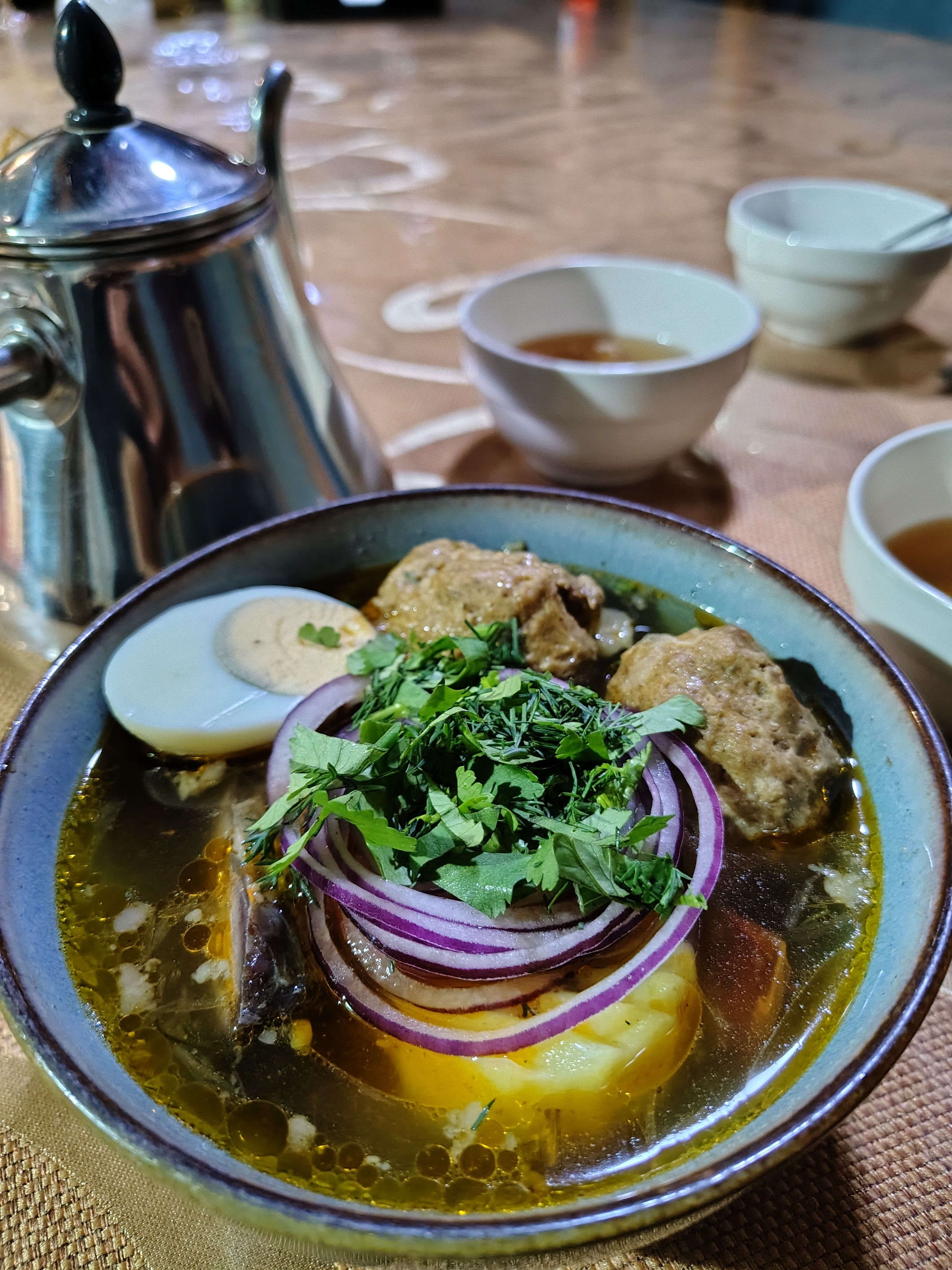
Kufta Bozbash
The diets react (see scores below)
Common Ingredients
- lamb
- rice
- chickpeas
- dried plums
- potato
- onion
- saffron
- turmeric
Specific recipes may vary.
Incompatible with 6 of 11 diets
Diet Ratings
Kufta Bozbash is fundamentally incompatible with a ketogenic diet due to multiple high-carbohydrate ingredients that stack together to create a very high net carb load. Rice is used inside the lamb meatballs (kufta), chickpeas are a legume with significant net carbs (~20g per 100g), potato adds starchy carbs, and dried plums contribute sugar and carbs. Even a moderate serving of this dish would likely exceed the entire daily keto carb allowance of 20-50g. The lamb itself and spices (saffron, turmeric, onion) are keto-friendly, but the structural carb components — rice, chickpeas, potato, and dried plums — are all on the keto avoid list and cannot simply be reduced to trace amounts without fundamentally changing the dish.
Kufta Bozbash is an Azerbaijani meatball soup in which lamb is the primary and defining ingredient. Lamb is an animal product and is categorically excluded from a vegan diet. The dish cannot be made vegan in its traditional form, as the lamb meatballs (kufta) are the central component around which the soup is built. While several other ingredients — rice, chickpeas, dried plums, potato, onion, saffron, and turmeric — are fully plant-based, the presence of lamb makes the dish entirely incompatible with a vegan diet.
Kufta Bozbash contains two clear paleo violations: rice (a grain) and chickpeas (a legume). Both are explicitly excluded from the paleo diet due to their anti-nutrient content (phytates, lectins) and the fact that they were not staple foods for Paleolithic hunter-gatherers. The remaining ingredients — lamb, dried plums, potato, onion, saffron, and turmeric — are largely paleo-compatible (with potato being a minor gray area), but the presence of rice and chickpeas disqualifies the dish as a whole. These are not trace or optional ingredients; they are structural components of the recipe.
Kufta Bozbash is a traditional Azerbaijani lamb meatball soup with several Mediterranean-compatible elements: chickpeas (excellent legume), potato, onion, and anti-inflammatory spices like saffron and turmeric are all positive. Dried plums add fruit-based depth. However, lamb is the primary protein and acts as the centerpiece of the dish. In Mediterranean diet guidelines, red meat like lamb is limited to a few times per month or once weekly — it is not a staple. The dish is minimally processed and whole-food-based, which is favorable, but the red meat focus prevents an 'approve' verdict. The chickpeas partially offset the red meat concern by contributing plant protein and fiber. Overall, this is an acceptable occasional dish but should not be consumed frequently.
Some Mediterranean diet interpretations, particularly those rooted in traditional Middle Eastern and Eastern Mediterranean regional practices, acknowledge that lamb has long been a cultural staple in these cuisines and is acceptable in moderate portions within a diet otherwise rich in vegetables and legumes. The strong presence of chickpeas and plant-based aromatics in this dish could be viewed favorably by these more flexible regional interpretations.
Kufta Bozbash is a traditional Azerbaijani lamb meatball soup that contains numerous plant-based ingredients incompatible with the carnivore diet. While lamb is the primary protein and fully approved, the dish also includes rice (grain), chickpeas (legume), dried plums (fruit), potato (starchy vegetable), onion (vegetable), saffron (plant spice), and turmeric (plant spice). The overwhelming majority of ingredients are plant-derived and explicitly excluded from the carnivore diet. This dish cannot be adapted without fundamentally changing its character — removing the plant ingredients would leave only plain lamb meatballs in broth, which is a completely different dish.
Kufta Bozbash contains two excluded ingredients: rice (a grain, explicitly excluded on Whole30) and chickpeas (a legume, explicitly excluded on Whole30). Unlike green beans, sugar snap peas, or snow peas — which are the only legume exceptions — chickpeas have no special exemption. Rice is also firmly on the excluded grains list with no exceptions. The remaining ingredients (lamb, potato, onion, dried plums, saffron, turmeric) are all Whole30-compliant, but the presence of two hard-excluded ingredients makes this dish incompatible with the program.
Kufta Bozbash contains multiple high-FODMAP ingredients that make it unsuitable during the elimination phase. Chickpeas are high in GOS (galacto-oligosaccharides) and are high-FODMAP at standard serving sizes used in this dish. Onion is one of the highest-FODMAP foods tested by Monash University, being very high in fructans even in small amounts. Dried plums (prunes) are high in polyols (sorbitol) and excess fructose, making them high-FODMAP at any typical serving. These three ingredients alone — chickpeas, onion, and dried plums — are each individually sufficient to classify this dish as avoid. The remaining ingredients (lamb, rice, potato, saffron, turmeric) are generally low-FODMAP and would not pose issues on their own.
Kufta Bozbash is a traditional Azerbaijani meatball soup featuring lamb as the primary protein, which is a red meat that DASH guidelines recommend limiting due to its saturated fat content. However, the dish has several DASH-positive elements: chickpeas provide fiber, potassium, and plant-based protein; potato and onion are DASH-friendly vegetables; dried plums contribute potassium and fiber; rice adds whole-food carbohydrates; and saffron and turmeric are anti-inflammatory spices with no sodium concerns. The main DASH concerns are lamb (saturated fat, red meat category) and the typical sodium load of a broth-based soup, which can be high depending on preparation. If made with lean lamb (trimmed of visible fat), low-sodium broth, and moderate portions, the dish aligns reasonably with DASH principles. The chickpeas and vegetable components partially offset the lamb, making this a moderate rather than prohibited choice.
NIH DASH guidelines explicitly limit red meat including lamb due to saturated fat content, recommending no more than a few servings per week. However, some updated DASH-oriented clinical interpretations note that lean lamb in moderate portions within a vegetable- and legume-rich dish can fit within weekly red meat allowances, particularly when the overall dietary pattern is otherwise DASH-compliant.
Kufta Bozbash is a traditional Azerbaijani meatball soup with a complex macro profile that creates real challenges for Zone compliance. The primary protein, lamb, is problematic in Zone because it carries significant saturated fat compared to preferred lean proteins like chicken breast or fish. The lamb meatballs (kufta) also incorporate rice as a binder, adding high-glycemic carbohydrate load directly into the protein portion, which disrupts the clean block accounting Zone requires. The soup base includes two unfavorable Zone carbohydrates: potato (high-glycemic, explicitly discouraged by Dr. Sears) and rice (high-glycemic grain). These stack glycemic load in ways that push the dish away from the 40/30/30 target. Chickpeas are a positive element — they are a Zone-favorable legume, providing protein and low-GI carbohydrate simultaneously, much like lentils. Dried plums add natural sugars and moderate glycemic impact but also bring polyphenols that align with Sears' anti-inflammatory emphasis in later writings. Onion and saffron/turmeric are Zone-friendly (turmeric is explicitly praised for anti-inflammatory properties in Sears' later work). The dish is not impossible to adapt — reducing potato, minimizing rice in the kufta, and choosing a leaner lamb trim would bring it closer — but as traditionally prepared, the combination of fatty red meat protein, rice, and potato makes Zone balance difficult without significant modification.
Some Zone practitioners applying Sears' later anti-inflammatory framework (from 'The Mediterranean Zone' and 'Toxic Fat') might view this dish more favorably in small portions. The turmeric and saffron are potent anti-inflammatory polyphenol sources. Chickpeas partially offset the glycemic load of potato and rice. Lamb, while higher in saturated fat than chicken, contains conjugated linoleic acid (CLA) and is less problematic than processed meats. A small serving of this soup as part of a broader Zone-balanced meal day could be workable, pushing the score toward a 5.
Kufta Bozbash is a traditional Azerbaijani meatball soup with a genuinely mixed anti-inflammatory profile. On the positive side, the dish features several notable anti-inflammatory ingredients: turmeric (curcumin is one of the most researched anti-inflammatory compounds), saffron (contains crocin and safranal with documented antioxidant properties), chickpeas (a legume high in fiber and associated with reduced CRP), dried plums/prunes (rich in polyphenols and antioxidants), and onion (quercetin, a potent flavonoid). Rice and potato are neutral starchy carbohydrates — not inflammatory, but not especially beneficial either. The primary concern is lamb, which is red meat high in saturated fat and arachidonic acid, both of which are associated with pro-inflammatory pathways when consumed regularly. Anti-inflammatory guidelines consistently place red meat in the 'limit' category. However, this is a broth-based soup rather than a fatty roasted meat dish, which somewhat moderates the saturated fat load per serving. The spice profile — particularly turmeric and saffron — meaningfully offsets some inflammatory concerns. Overall, this dish is acceptable occasionally but should not be a dietary staple for those following a strict anti-inflammatory protocol due to lamb's regular inclusion.
Some anti-inflammatory practitioners, particularly those following Mediterranean or traditional food frameworks, would note that lamb consumed in moderate portions within a vegetable- and legume-rich broth soup is quite different from a lamb chop or fatty cuts — and that the overall meal context (fiber from chickpeas, anti-inflammatory spices, low added fat) brings this closer to acceptable. Conversely, stricter anti-inflammatory protocols like Dr. Weil's pyramid and AIP-influenced guidance would flag any regular red meat consumption, including lamb, as a meaningful inflammatory driver regardless of preparation method.
Kufta Bozbash is an Azerbaijani meatball soup featuring lamb kofta, chickpeas, rice, dried plums, potato, and aromatic spices. It has genuine nutritional strengths for GLP-1 patients — chickpeas contribute meaningful fiber and plant protein, the broth-based format is easy to digest and hydrating, and the soup is naturally portion-friendly. Saffron and turmeric are anti-inflammatory and GI-neutral. However, lamb is a fatty red meat with significant saturated fat content, particularly in the ground/kufta form where fattier cuts are traditionally used. This raises concerns under GLP-1 guidelines on three fronts: saturated fat worsens nausea and reflux, slowed gastric emptying makes high-fat meals harder to tolerate, and lamb provides less protein per calorie than lean alternatives. Dried plums (prunes) add sugar and some fiber but also increase the glycemic load. The rice and potato together make this relatively starch-heavy for a reduced-calorie eating pattern. The dish is not a clear avoid — it is a whole-food, broth-based soup with fiber and some protein — but it is not optimized for GLP-1 patients without modification (e.g., substituting lean ground turkey or chicken for lamb, reducing potato and rice portions).
Some GLP-1-focused dietitians accept lamb in soup preparations because the fat partially renders into the broth and can be skimmed, and because the protein contribution is meaningful in patients struggling to meet daily targets. Others maintain that any fatty red meat is too high-risk for GI side effects given slowed gastric emptying, and would recommend substituting regardless of preparation method.
*See how scores were generated at our methodology page.
Nutritional profile
Six traits that cut across every diet.
Fiber & Plants
How much whole-plant food and fiber it delivers.
Healthy Fats
The quality of its fats (unsaturated, omega-3).
Whole / Unprocessed
How close it is to its natural, unprocessed form.
Gut Gentle
How easy it is on digestion (low FODMAP, few irritants).
Low Glycemic
How little it spikes your blood sugar.
Protein Density
How much protein it packs per calorie.
Controversy Index
Higher controversy = more disagreement between diets.
Diet-Specific Tips
 Mediterranean — 4/10
View tips
- Lamb is a red meat, limited to a few times per month under Mediterranean guidelines
- Chickpeas are an excellent legume and Mediterranean staple, partially offsetting the red meat concern
- Saffron and turmeric are anti-inflammatory spices consistent with Mediterranean principles
- Potato, onion, and dried plums are whole, minimally processed plant foods
- Dish is not highly processed and contains no refined grains or added sugars
- Rice inclusion is minor and acceptable in this context
- Overall dish is whole-food-based but red meat-centric, making it suitable only occasionally
 DASH — 5/10
View tips
- Lamb is a red meat high in saturated fat — DASH recommends limiting red meat consumption
- Chickpeas are a DASH-approved legume providing fiber, potassium, and plant protein
- Potato and onion are DASH-friendly vegetables contributing potassium and fiber
- Dried plums add potassium and fiber, consistent with DASH fruit recommendations
- Soup format risks high sodium depending on broth preparation — low-sodium broth strongly preferred
- Saffron and turmeric are sodium-free spices, consistent with DASH flavor-without-salt approach
- Portion control of lamb meatballs is critical to keeping saturated fat within DASH limits
- Overall dish is vegetable- and legume-forward, partially mitigating the red meat concern
 Zone — 4/10
View tips
- Lamb is a fatty red meat — higher saturated fat than Zone-preferred lean proteins like chicken or fish
- Potato is an explicitly unfavorable, high-glycemic carbohydrate in Zone methodology
- Rice (in kufta binder) adds additional high-glycemic carb load directly into the meatball
- Chickpeas are a Zone-favorable legume — low-GI, dual protein/carb source — a positive element
- Dried plums add sugars but contribute polyphenols aligned with Sears' anti-inflammatory emphasis
- Turmeric and saffron are anti-inflammatory polyphenol sources praised in later Sears writings
- Stacking of multiple unfavorable carbs (rice + potato) makes 40/30/30 ratio difficult to achieve
- Dish could be partially rehabilitated by reducing potato, using leaner lamb, and minimizing rice in kufta
 Anti-Inflammatory — 5/10
View tips
- Lamb (red meat) is in the 'limit' category — saturated fat and arachidonic acid are pro-inflammatory
- Turmeric contains curcumin, one of the most evidence-backed anti-inflammatory compounds
- Saffron provides crocin and safranal with antioxidant and anti-inflammatory properties
- Chickpeas are an anti-inflammatory legume high in fiber, reducing CRP
- Dried plums are polyphenol-rich with antioxidant benefits
- Onion provides quercetin, a potent anti-inflammatory flavonoid
- Broth-based preparation reduces overall saturated fat density compared to dry-heat lamb dishes
- Rice and potato are neutral starches — not inflammatory but not beneficial
 GLP-1 Friendly — 5/10
View tips
- Lamb is a fatty red meat with high saturated fat — primary concern for GLP-1 GI side effects
- Broth-based soup format is easy to digest and hydrating — a meaningful positive
- Chickpeas provide fiber and plant protein, supporting both GLP-1 priorities #1 and #2
- Dried plums add sugar and glycemic load, though also contribute some fiber
- Rice plus potato together create a starch-heavy profile for a reduced-calorie eating pattern
- Portion-friendly format as a soup — naturally suited to small-meal eating pattern
- Saffron and turmeric are GI-neutral and anti-inflammatory