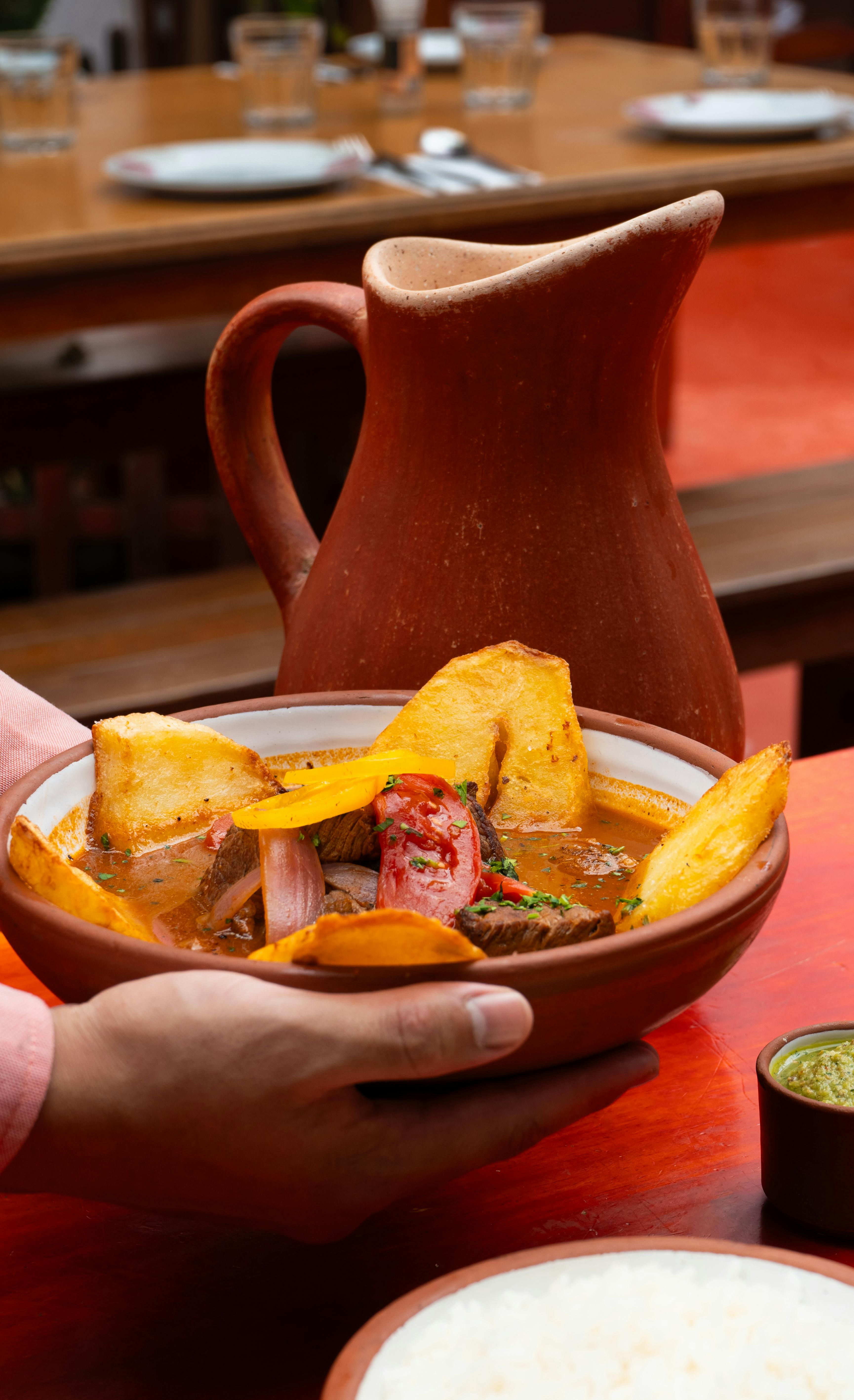
Photo: Blas Gonzales / Pexels
The diets react (see scores below)
Common Ingredients
- lamb
- chickpeas
- chestnuts
- potato
- onion
- saffron
- dried plums
- turmeric
Specific recipes may vary.
Incompatible with 6 of 11 diets
Diet Ratings
Piti is a traditional Azerbaijani slow-cooked lamb soup that is fundamentally incompatible with a ketogenic diet due to multiple high-carbohydrate ingredients. Chickpeas (~27g net carbs per 100g), chestnuts (~40g net carbs per 100g — one of the highest-carb nuts), and potato (~15g net carbs per 100g) together easily push a single serving well past the entire daily keto carb limit of 20-50g. Dried plums (prunes) add significant sugar content on top of this. While lamb is an excellent keto protein and fat source, and saffron/turmeric/onion are benign in small quantities, the structural carb load of this dish cannot be rescued by portion reduction — reducing to a keto-safe portion would leave virtually no recognizable dish. This is not a borderline case.
Piti contains lamb as its primary protein, making it entirely incompatible with a vegan diet. Lamb is a direct animal product (meat), which is categorically excluded under all vegan standards. There is no ambiguity here — while the remaining ingredients (chickpeas, chestnuts, potato, onion, saffron, dried plums, turmeric) are all fully plant-based, the inclusion of lamb renders the dish non-vegan without exception.
Piti contains chickpeas, which are legumes — a clear paleo exclusion with high consensus. Chickpeas contain lectins and phytates that paleo authorities consistently flag as harmful, making this dish non-compliant regardless of its other ingredients. The lamb, onion, saffron, turmeric, and dried plums are all paleo-approved. Chestnuts are a paleo-friendly nut. Potato is debated but tolerated by many modern paleo practitioners. However, the chickpeas alone are a dealbreaker under any mainstream paleo framework, earning this dish an avoid verdict.
Piti is a traditional Azerbaijani lamb and chickpea soup with several Mediterranean-compatible elements alongside one notable concern. The chickpeas, potato, onion, saffron, dried plums, and turmeric all align well with plant-forward Mediterranean principles, providing legumes, vegetables, and beneficial spices. However, lamb is classified as red meat in the Mediterranean diet, which should be limited to a few times per month or at most once weekly. The dish is not highly processed and contains no added sugars or refined grains, which is positive. The overall dish is a wholesome, home-cooked stew-style preparation, which moderates the concern somewhat — particularly if the lamb portion is modest relative to the chickpeas and vegetables. Occasional consumption fits within Mediterranean guidelines, but the red meat component prevents a full approval.
Some Mediterranean diet researchers, particularly those studying Eastern Mediterranean and Levantine traditions (which share cultural and culinary overlap with Caucasian cuisines), acknowledge that slow-cooked legume-heavy stews with small amounts of lamb are a traditional and acceptable pattern — the chickpeas may dominate nutritionally. Modern clinical guidelines (e.g., Willett et al., 2019 planetary health diet) would, however, flag any significant lamb portion as a limiting factor.
Piti is a traditional Azerbaijani lamb soup that is almost entirely incompatible with the carnivore diet. While lamb is an excellent carnivore-approved protein, the dish contains numerous plant-based ingredients that are strictly excluded: chickpeas (legume), chestnuts (nut/seed), potato (starchy vegetable), onion (vegetable), saffron (plant spice), dried plums (fruit), and turmeric (plant spice). The majority of the dish by ingredient count is plant-derived, making this a clear avoid regardless of the high-quality lamb base.
Piti contains chickpeas, which are legumes explicitly excluded on the Whole30 program. Unlike green beans, sugar snap peas, and snow peas — which are specifically excepted despite being legumes — chickpeas have no such exception and are firmly off-limits. All other ingredients (lamb, chestnuts, potato, onion, saffron, dried plums, turmeric) are individually Whole30-compatible, but the presence of chickpeas disqualifies the dish as traditionally prepared.
Piti contains multiple high-FODMAP ingredients that make it unsuitable during the elimination phase. Chickpeas are high in GOS (galacto-oligosaccharides) and are high-FODMAP at typical serving sizes used in a dish like this (low-FODMAP only at a very restricted 42g canned, well-rinsed portion). Onion is one of the highest fructan-containing foods and is always avoided during elimination. Chestnuts contain moderate polyols (sorbitol) and are only low-FODMAP at very small servings (about 3 chestnuts). Dried plums (prunes) are high-FODMAP due to sorbitol and excess fructose. Lamb, potato, saffron, and turmeric are low-FODMAP and safe. However, with at least four problematic ingredients — chickpeas, onion, chestnuts, and dried plums — this dish cannot be made FODMAP-friendly without fundamentally changing its character. The combination of GOS, fructans, polyols, and excess fructose makes this a clear avoid during the elimination phase.
Monash University rates canned, well-rinsed chickpeas as low-FODMAP at 42g, and chestnuts as low-FODMAP at approximately 3 pieces; some FODMAP-aware cooks argue that with very small amounts of these ingredients, strict portion control could lower the overall FODMAP load — however, most clinical FODMAP practitioners would still flag onion and dried plums as absolute barriers during elimination regardless of quantity.
Piti is an Azerbaijani slow-cooked lamb soup with a generally wholesome ingredient base — chickpeas (fiber, magnesium, potassium), chestnuts (low-fat complex carbs), potato, onion, and anti-inflammatory spices like saffron and turmeric. These components align well with DASH principles. However, the primary protein is lamb, which is classified as red meat — a category DASH limits due to its saturated fat content. Lamb in particular tends to be higher in saturated fat than lean poultry or fish. The dish's DASH compatibility depends heavily on the cut and quantity of lamb used: a lean cut (e.g., leg of lamb, trimmed) in a modest portion shifts it toward acceptable, while fattier cuts (shoulder, ribs) or large portions push it toward avoidance. The fat from lamb also renders into the broth during slow cooking, increasing overall saturated fat intake. The remaining ingredients are DASH-positive. Sodium concerns depend on preparation — no inherently high-sodium ingredients are listed, which is a favorable sign, though traditional recipes may add salt generously. Overall, this is a borderline dish where portion size, lamb cut, and preparation method are decisive factors.
NIH DASH guidelines explicitly limit red meat due to saturated fat concerns, placing lamb-based dishes in a cautious category. However, some updated DASH-oriented clinicians note that lean lamb in moderate portions within an otherwise vegetable- and legume-rich dish (as in Piti) may be acceptable 1-2 times per week, particularly given the beneficial fiber and potassium from chickpeas, chestnuts, and vegetables that offset cardiovascular risk.
Piti is a traditional Azerbaijani slow-cooked soup/stew that presents several Zone Diet challenges. The protein source (lamb) is not lean — it typically contains significant saturated fat, making it an 'unfavorable' Zone protein compared to skinless chicken or fish. The carbohydrate profile is the bigger issue: potatoes are explicitly unfavorable in Zone methodology due to their high glycemic index, and chestnuts are among the highest-carb nuts (essentially a starchy carb). Dried plums add concentrated sugar. Together, potato + chestnuts + chickpeas + dried plums create a high-glycemic carbohydrate load that would be very difficult to keep in Zone ratio without dramatically reducing portion sizes. On the positive side, chickpeas are a relatively favorable legume carb with decent fiber (lowering net carbs), onion and saffron/turmeric are anti-inflammatory polyphenol-rich additions that Sears would approve of, and the slow-cooked format means fat is somewhat rendered off. As a whole dish served in traditional portions, the macro ratio likely skews heavily toward carbohydrates and saturated fat — out of Zone balance. It could theoretically be modified (smaller portion, skip potato, reduce chestnuts) but as traditionally prepared it is difficult to Zone-balance.
Some Zone practitioners following Sears' later anti-inflammatory writings (Zone Perfect, The Anti-Inflammation Zone) would note that the turmeric, saffron, and polyphenol-rich ingredients partially offset some concerns. Additionally, if the stew is served in a small portion and lamb fat is skimmed from the broth (a traditional step in piti preparation), the fat profile improves. Chickpeas have a low glycemic index and contribute fiber, reducing net carb impact. A strict Zone purist would still flag potato and chestnuts as unfavorable, but a more flexible Zone practitioner might allow a small portion as an occasional meal.
Piti is a traditional Azerbaijani lamb and chickpea soup with a genuinely mixed anti-inflammatory profile. On the positive side, the dish contains several potent anti-inflammatory ingredients: turmeric (curcumin) and saffron are both well-researched anti-inflammatory spices; chickpeas provide fiber, plant protein, and polyphenols; onion contributes quercetin; dried plums (prunes) are rich in antioxidants and polyphenols; chestnuts are a lower-fat nut with moderate antioxidant content; and potato, while starchy, is a whole food with potassium and vitamin C. The primary concern is lamb, which is red meat with a higher saturated fat content than poultry or fish, and is categorized as 'limit' in the anti-inflammatory framework. However, lamb does contain some CLA (conjugated linoleic acid) and zinc, and grass-fed lamb has a more favorable omega-6 to omega-3 ratio than grain-fed alternatives. The overall dish is a whole-food, minimally processed stew with no refined carbohydrates, added sugars, or trans fats. The strong spice base (turmeric, saffron) partially offsets the red meat concern. This lands solidly in 'caution' territory — better than many red meat dishes due to the legumes and anti-inflammatory spices, but lamb as the primary protein prevents an 'approve' rating.
Some anti-inflammatory practitioners, particularly those following Dr. Weil's more moderate approach, might rate this more favorably given the legume base, whole-food ingredients, and potent spice combination — arguing that occasional red meat in a nutrient-dense, plant-forward context is acceptable. Conversely, stricter anti-inflammatory or AIP-aligned frameworks would penalize the lamb more heavily and might also flag potato (a nightshade) as potentially problematic for those with autoimmune conditions.
Piti is a traditional Azerbaijani slow-cooked lamb soup containing chickpeas, chestnuts, potato, onion, saffron, dried plums, and turmeric. It has genuine nutritional strengths but meaningful drawbacks for GLP-1 patients. On the positive side, lamb provides complete protein, chickpeas add both protein and fiber, and the soup format supports hydration and easy digestibility — all relevant for GLP-1 patients. Turmeric has anti-inflammatory properties and saffron is benign. However, lamb is a fatty red meat with significant saturated fat content, especially in traditional preparations where fattier cuts (shoulder, shank with fat cap) are standard and fat is often considered part of the dish's character. Chestnuts are notably high in carbohydrates and low in protein compared to other legumes. Potato adds additional starch load. Dried plums contribute sugar. The overall macronutrient profile skews toward moderate fat and carbohydrate rather than the high-protein, lower-fat ideal for GLP-1 patients. A standard serving likely delivers 15-20g protein and meaningful saturated fat — acceptable but not optimized. The soup format is a genuine positive: broth-based soups are generally well-tolerated on GLP-1 medications, portion-friendly, and hydrating. This dish earns a caution rather than avoid because it is not fried, not highly processed, not carbonated, and contains real fiber and protein — but the fatty lamb and carbohydrate-heavy accompaniments prevent an approve rating.
Some GLP-1-focused dietitians would rate this more favorably, arguing that the broth-based format, chickpea fiber, and moderate protein make it a reasonable choice when fatty visible fat is trimmed from the lamb before or after cooking. Others would rate it lower, noting that red meat saturated fat is a consistent concern in GLP-1 nutrition guidance and that patients with GLP-1-related nausea are particularly sensitive to high-fat cuts — and that leaner protein substitutions (chicken, turkey, lentils) would make this dish substantially more appropriate.
*See how scores were generated at our methodology page.
Nutritional profile
Six traits that cut across every diet.
Fiber & Plants
How much whole-plant food and fiber it delivers.
Healthy Fats
The quality of its fats (unsaturated, omega-3).
Whole / Unprocessed
How close it is to its natural, unprocessed form.
Gut Gentle
How easy it is on digestion (low FODMAP, few irritants).
Low Glycemic
How little it spikes your blood sugar.
Protein Density
How much protein it packs per calorie.
Controversy Index
Higher controversy = more disagreement between diets.
Diet-Specific Tips
 Mediterranean — 5/10
View tips
- Lamb is red meat — should be limited to a few times per month under Mediterranean guidelines
- Chickpeas are an excellent Mediterranean staple legume, boosting the dish's nutritional profile
- No processed ingredients, refined grains, or added sugars
- Saffron, turmeric, and dried plums are antioxidant-rich ingredients consistent with Mediterranean principles
- Potato is a neutral starchy vegetable — acceptable but not emphasized
- Slow-cooked, whole-food preparation method is favorable
- Overall dish is acceptable occasionally but not a Mediterranean staple due to lamb content
 DASH — 5/10
View tips
- Lamb is red meat — DASH limits red meat due to saturated fat content
- Chickpeas provide DASH-positive fiber, potassium, and plant protein
- Chestnuts are low in fat and rich in complex carbohydrates — DASH-compatible
- Saffron and turmeric are anti-inflammatory spices with no DASH concerns
- Sodium level depends on added salt during preparation — no inherently high-sodium ingredients listed
- Lamb cut matters: lean trimmed cuts are more DASH-compatible than fatty shoulder or rib cuts
- Slow cooking renders lamb fat into broth, increasing saturated fat load of the dish
- Dried plums add potassium and fiber but also natural sugar — acceptable in small amounts
- Portion control of lamb is critical to DASH compliance
 Zone — 4/10
View tips
- Lamb is a fatty, higher-saturated-fat protein — unfavorable Zone protein source
- Potatoes are explicitly high-glycemic and unfavorable in Zone Diet
- Chestnuts are starchy, high-carb, and raise the glycemic load significantly
- Dried plums add concentrated sugar, further elevating glycemic impact
- Chickpeas are a relatively favorable legume with good fiber reducing net carbs
- Turmeric and saffron are anti-inflammatory polyphenols — Zone-positive
- Overall dish likely skews heavily carbohydrate-dominant with poor carb quality
- Traditional portion sizes would make Zone macro balance very difficult to achieve
 Anti-Inflammatory — 5/10
View tips
- Lamb (red meat) is 'limit' category — higher saturated fat, pro-inflammatory potential at regular consumption
- Turmeric contributes curcumin, one of the most well-studied anti-inflammatory compounds
- Saffron contains crocin and safranal with documented antioxidant and anti-inflammatory properties
- Chickpeas provide fiber, plant protein, and anti-inflammatory polyphenols
- Dried plums are high in antioxidants and have been linked to reduced oxidative stress
- Chestnuts are a lower-fat, fiber-rich whole food addition
- No refined carbohydrates, seed oils, trans fats, or added sugars
- Whole-food, minimally processed preparation method (slow-cooked stew)
 GLP-1 Friendly — 5/10
View tips
- Lamb is a fatty red meat — saturated fat content is a drawback for GLP-1 patients
- Chickpeas provide meaningful fiber and some protein — a genuine positive
- Broth-based soup format is well-tolerated on GLP-1 medications and supports hydration
- Chestnuts are high in carbohydrates and low in protein relative to their caloric contribution
- Potato and dried plums add to the carbohydrate and sugar load
- Traditional preparation often uses fattier lamb cuts, worsening the saturated fat concern
- Saffron and turmeric are benign to beneficial; no GLP-1 side effect concern
- Protein yield per serving is moderate but not exceptional for a GLP-1 protein target