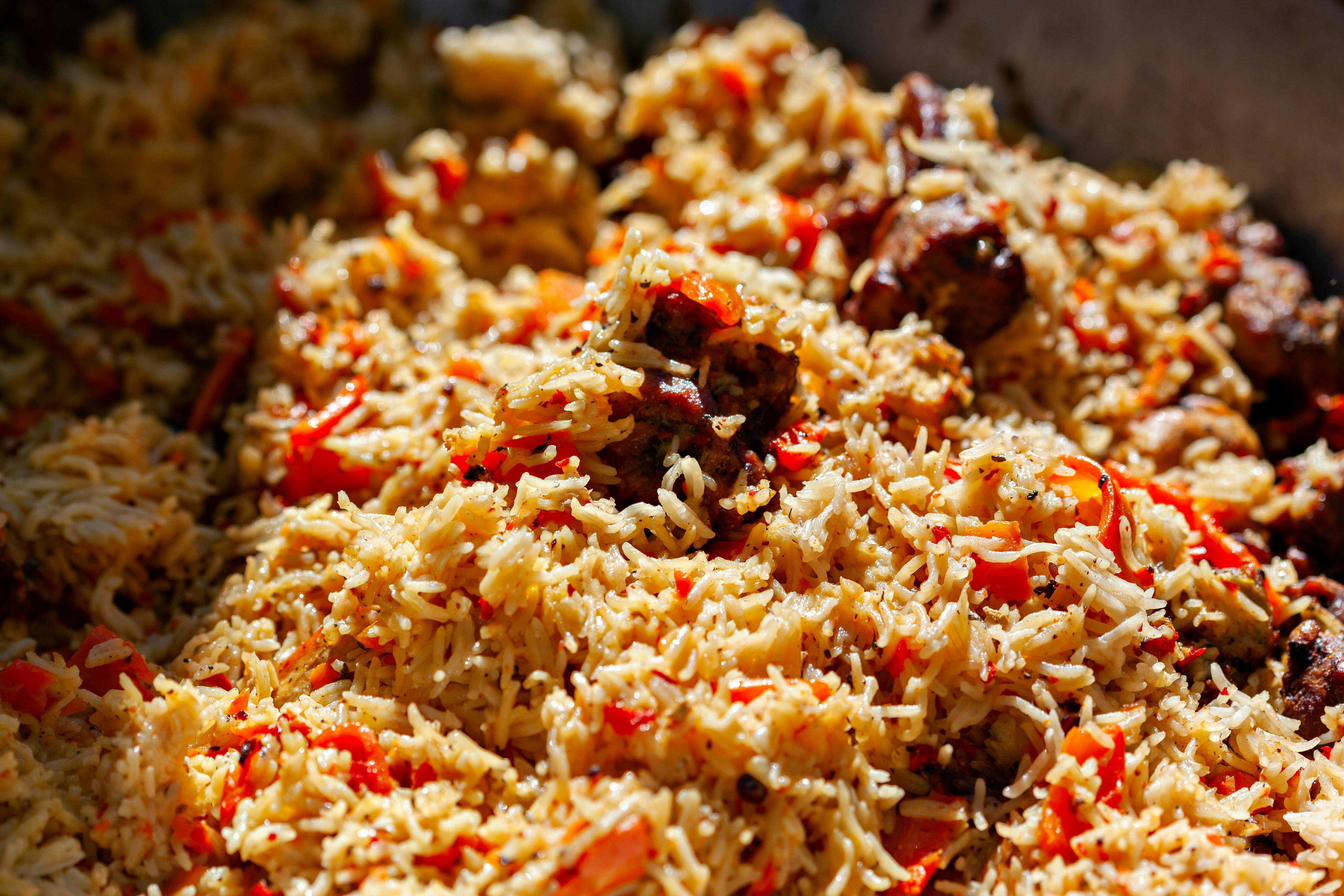
Photo: Julia Filirovska / Pexels
The diets react (see scores below)
Common Ingredients
- rice
- lamb
- saffron
- dried apricots
- chestnuts
- raisins
- butter
- onion
Specific recipes may vary.
Incompatible with 9 of 11 diets
Diet Ratings
Azerbaijani Plov is fundamentally incompatible with ketogenic diet. The dish is built on a rice base, which is a high-glycemic grain delivering roughly 45g net carbs per half-cup cooked serving alone — immediately exceeding or saturating the entire daily keto carb allowance. Beyond rice, the recipe compounds the carb load with dried apricots (very high in sugar, ~60g net carbs per 100g), raisins (among the highest sugar-density foods, ~79g net carbs per 100g), and chestnuts (the highest-carb nut, ~45g net carbs per 100g). While lamb and butter are excellent keto-friendly components, they cannot offset the overwhelming carbohydrate content of the other ingredients. A standard serving of this dish would likely deliver 80-120g+ net carbs, making ketosis impossible.
Azerbaijani Plov contains two clear animal-derived ingredients: lamb (meat) and butter (dairy). Both are explicitly excluded under vegan dietary rules. The dish cannot be considered vegan in its traditional form regardless of the presence of plant-based ingredients like rice, saffron, dried apricots, chestnuts, raisins, and onion.
Azerbaijani Plov is fundamentally built on rice, a grain that is excluded from the paleo diet. Rice forms the structural base of this dish and cannot be removed without fundamentally altering it. Additionally, butter (dairy) is used in the preparation, which is also non-paleo. While several ingredients are paleo-compliant — lamb, saffron, dried apricots, chestnuts, raisins, and onion — the two core non-paleo ingredients (rice and butter) make this dish incompatible with a paleo lifestyle. The dish cannot be considered paleo in its traditional form.
Azerbaijani Plov is a rice-based dish centered on lamb as the primary protein, cooked with butter as the primary fat. This combination presents multiple conflicts with Mediterranean diet principles: lamb is red meat, which should be limited to only a few times per month; butter replaces olive oil as the cooking fat, which contradicts the Mediterranean emphasis on extra virgin olive oil as the primary fat source; and white rice is a refined grain offering less nutritional value than whole grains. While the dish does include beneficial ingredients—dried apricots, raisins, chestnuts, onion, and saffron all contribute plant-based nutrients, antioxidants, and fiber—these positives are outweighed by the red meat centerpiece, the butter-based fat profile, and the refined grain base. As a main dish built around lamb and butter with white rice, it fundamentally contradicts core Mediterranean diet tenets and cannot be regularly incorporated.
Some Mediterranean diet interpreters note that lamb is consumed in traditional Eastern Mediterranean and Middle Eastern cuisines (e.g., Greek, Turkish, Levantine) on celebratory or weekly occasions, and the fruit and nut components (apricots, raisins, chestnuts) align well with the diet's plant-forward philosophy; in this view, Plov eaten rarely and with olive oil substituted for butter could qualify as a 'caution' dish rather than a strict 'avoid.'
Azerbaijani Plov is fundamentally incompatible with the carnivore diet. While lamb is an excellent carnivore-approved ruminant protein, the dish is built around rice as its primary base — a grain that is entirely excluded from all tiers of the carnivore diet. Beyond rice, the dish contains multiple plant-derived ingredients: dried apricots (fruit), chestnuts (nuts/seeds), raisins (fruit), saffron (plant spice), and onion (vegetable). Butter is the only other animal-derived ingredient. The overwhelming majority of this dish's ingredients and caloric content comes from plant foods, making it essentially a plant-based dish with a lamb component. No adaptation short of completely reconstructing the dish would make it carnivore-compatible.
Azerbaijani Plov contains two excluded ingredients: rice (a grain, explicitly prohibited on Whole30) and butter (dairy, explicitly excluded — only ghee/clarified butter is the allowed dairy exception). Rice is a core structural component of plov and cannot simply be swapped out while keeping the dish recognizable. Butter is used for cooking and finishing. The remaining ingredients — lamb, saffron, dried apricots (check for added sugar/sulfites, though sulfites are now allowed), chestnuts, raisins, and onion — are generally Whole30-compliant on their own, but the presence of rice and butter makes this dish incompatible with the program.
Azerbaijani Plov contains multiple high-FODMAP ingredients that make it unsuitable during the elimination phase. Onion is one of the highest-FODMAP foods (fructans) and is a core aromatic in this dish — there is no safe serving size. Raisins are high in excess fructose and fructans and are typically used in quantities well above any Monash-safe threshold. Dried apricots contain polyols (sorbitol) and are high-FODMAP at standard serving sizes (more than 2 dried apricot halves). Chestnuts contain GOS and are moderate-to-high FODMAP at typical serving sizes used in a main dish. While rice, lamb, saffron, and butter are all low-FODMAP and safe, the combination of onion, raisins, dried apricots, and chestnuts creates an unavoidably high-FODMAP dish with no straightforward modification that would preserve its traditional character.
Azerbaijani Plov contains a mix of DASH-friendly and DASH-problematic ingredients. On the positive side, it includes white rice (an acceptable grain, though whole grain is preferred), onion, dried apricots, raisins, and chestnuts — all of which contribute fiber, potassium, and micronutrients aligned with DASH principles. However, lamb is a red meat with relatively high saturated fat content, which DASH explicitly limits, and butter adds additional saturated fat. The combination of lamb and butter creates a meaningful saturated fat load that conflicts with DASH guidance. White rice rather than whole grain is a minor negative. The dish has no obvious high-sodium ingredients (saffron, dried fruits, chestnuts are naturally low-sodium), which is a point in its favor. Portion control is key: a modest serving with reduced butter and a smaller lamb portion could be made more DASH-compatible, but as traditionally prepared it leans toward caution due to the red meat and butter combination.
NIH DASH guidelines categorically limit red meat and saturated fats, placing lamb-and-butter dishes in the caution-to-avoid range. However, some updated clinical interpretations note that lamb in small portions (2-3 oz) alongside the fiber-rich dried fruits and chestnuts may be acceptable within a broader DASH-compliant dietary pattern, particularly given the absence of high-sodium ingredients.
Azerbaijani Plov is a carbohydrate-heavy dish built around a foundation of white rice — one of the most unfavorable carbohydrates in Zone terminology due to its high glycemic index. The macro balance is dramatically skewed toward carbohydrates, making a 40/30/30 ratio essentially unachievable without fundamentally deconstructing the dish. Beyond the white rice base, multiple additional high-glycemic or high-sugar ingredients compound the problem: raisins are explicitly called out by Dr. Sears as an unfavorable carb to avoid, dried apricots carry significant sugar load, and chestnuts are a starchy, high-carb nut unlike Zone-favorable nuts (almonds, macadamia). The protein source, lamb, is fattier than Zone-ideal proteins like chicken breast or fish, and the butter adds saturated fat rather than the monounsaturated fats Sears prefers. Saffron and onion are the only ingredients without Zone concerns. Even with aggressive portion control, the ratio of white rice + raisins + dried apricots + chestnuts + butter creates a carbohydrate and saturated fat profile that cannot be corrected without eliminating most of what makes this dish Plov. This is not a Zone meal that requires adjustment — it is structurally incompatible with Zone ratios.
Azerbaijani Plov presents a mixed anti-inflammatory profile. On the positive side, saffron is one of the most potent anti-inflammatory spices, containing crocin and crocetin with documented effects on reducing oxidative stress. Dried apricots and raisins provide polyphenols and antioxidants. Chestnuts are notable among nuts for being low in fat and relatively high in antioxidants. Onion contributes quercetin, a well-studied anti-inflammatory flavonoid. However, the dish has meaningful pro-inflammatory elements: lamb is red meat, which anti-inflammatory guidelines consistently recommend limiting due to saturated fat content and arachidonic acid. Butter is a saturated fat that anti-inflammatory frameworks place in the 'limit' category. White rice is a refined carbohydrate with minimal fiber and a high glycemic index, contributing to post-meal inflammatory signaling. The combination of butter and lamb in a rice-based dish means the overall saturated fat load is notable. The dried fruit (apricots, raisins) adds natural sugars. This dish is not inherently harmful and contains genuinely beneficial ingredients, but the lamb-butter-white rice core pulls it into caution territory rather than approval.
Some anti-inflammatory practitioners with a Mediterranean/Middle Eastern lens (aligned with Dr. Weil's broader framework) would argue that traditional whole-food dishes like Plov — with minimal processing, aromatic spices like saffron, and modest portions of lamb — are far preferable to processed foods and represent a net anti-inflammatory eating pattern in context. Conversely, stricter anti-inflammatory and autoimmune protocol (AIP) adherents would flag both the lamb (arachidonic acid) and white rice (high glycemic load) more heavily, potentially rating this dish closer to 'avoid.'
Azerbaijani plov is a butter-enriched rice dish with lamb as the primary protein — a combination that creates multiple problems for GLP-1 patients. The butter adds significant saturated fat, which worsens nausea, bloating, and reflux — some of the most common and debilitating GLP-1 side effects. Lamb is a fatty red meat; even lean cuts carry more saturated fat than chicken, fish, or legumes, and traditional plov uses fattier cuts for flavor. White rice is a refined carbohydrate with low fiber and low protein density per calorie. The dried fruits (apricots, raisins) add concentrated sugar and minimal fiber benefit relative to their caloric load. Chestnuts are lower in fat than other nuts but still add starch with minimal protein. The overall macronutrient profile skews heavily toward refined carbs and saturated fat, with modest protein and very low fiber — the opposite of what GLP-1 patients need. Portion sensitivity is also a concern: the components that provide the most nutrition (the lamb) are diluted by large volumes of rice and butter, making it difficult to get adequate protein in a small serving. This dish is not recommended in its traditional form.
Some GLP-1-focused dietitians may allow a modified version — lamb trimmed of visible fat, butter reduced or substituted with a small amount of olive oil, portion kept very small as a side — on the basis that the lamb does provide complete protein and the dried fruits offer micronutrients. However, the consensus among obesity medicine RDs is that the saturated fat load from butter and lamb fat, combined with refined rice and low fiber, makes this dish poorly suited to GLP-1 patients even in moderation.
*See how scores were generated at our methodology page.
Nutritional profile
Six traits that cut across every diet.
Fiber & Plants
How much whole-plant food and fiber it delivers.
Healthy Fats
The quality of its fats (unsaturated, omega-3).
Whole / Unprocessed
How close it is to its natural, unprocessed form.
Gut Gentle
How easy it is on digestion (low FODMAP, few irritants).
Low Glycemic
How little it spikes your blood sugar.
Protein Density
How much protein it packs per calorie.
Controversy Index
Higher controversy = more disagreement between diets.
Diet-Specific Tips
 DASH — 4/10
View tips
- Lamb is a red meat high in saturated fat — DASH limits red meat consumption
- Butter adds saturated fat, compounding the concern
- Dried apricots, raisins, and chestnuts provide DASH-friendly fiber and potassium
- No high-sodium ingredients detected — favorable for DASH sodium targets
- White rice used instead of whole grains — minor negative
- Onion contributes beneficial micronutrients with no DASH concerns
- Portion size of lamb and butter critical to DASH compatibility
 Anti-Inflammatory — 4/10
View tips
- Saffron: potent anti-inflammatory spice with crocin and crocetin compounds
- Lamb (red meat): pro-inflammatory — high in saturated fat and arachidonic acid, anti-inflammatory guidelines recommend limiting
- Butter: saturated fat in the 'limit' category across anti-inflammatory frameworks
- White rice: refined carbohydrate with high glycemic index, low fiber, promotes post-meal inflammation
- Onion: good source of quercetin, an anti-inflammatory flavonoid
- Dried apricots and raisins: provide polyphenols and antioxidants but also concentrated natural sugars
- Chestnuts: lower fat than most nuts, contain antioxidants — a modest positive ingredient