Photo: Tim Douglas / Pexels
American
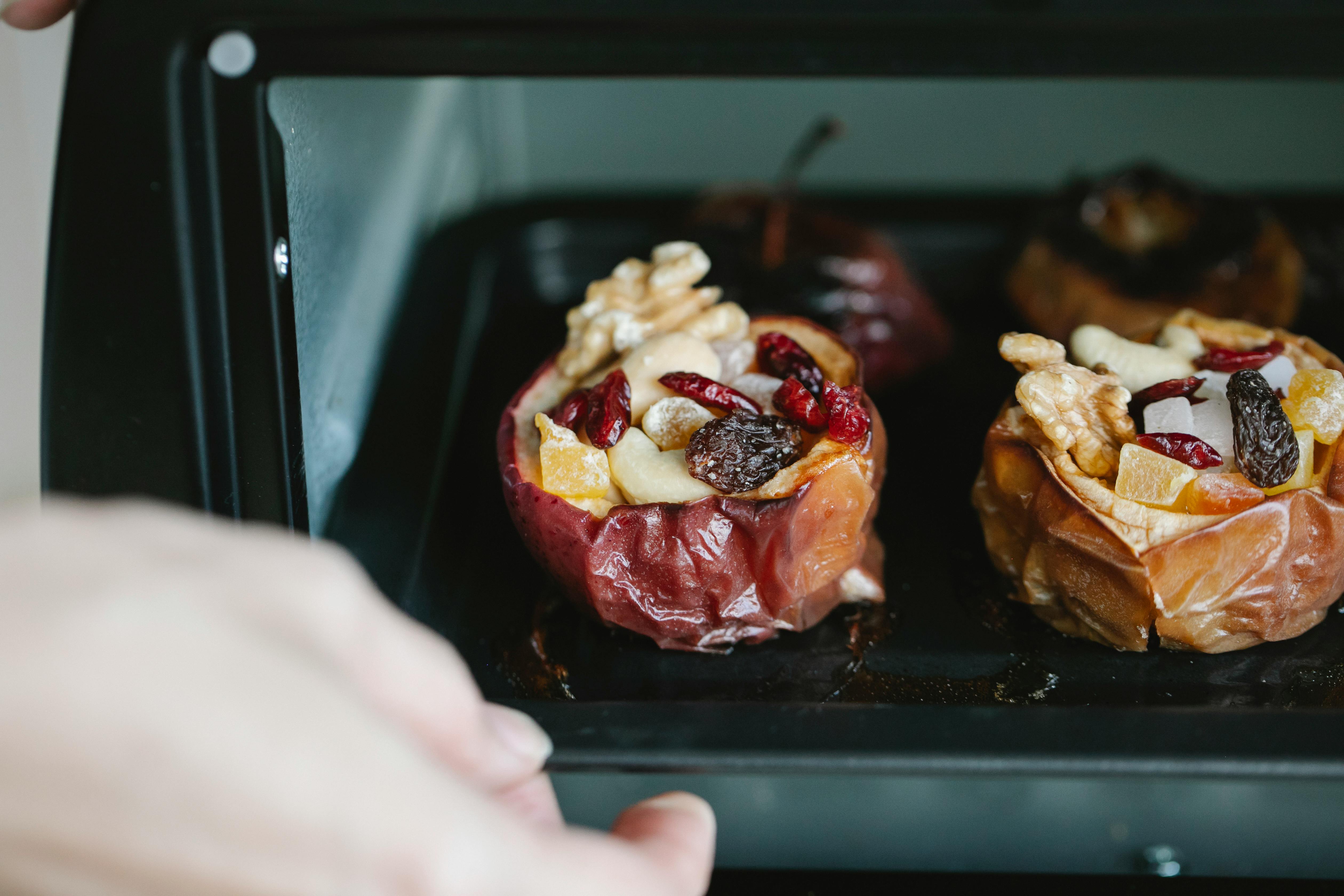
Baked Apple
The diets react (see scores below)
Common Ingredients
- apple
- butter
- cinnamon
- sugar
- nutmeg
Specific recipes may vary.
Incompatible with 6 of 11 diets
Diet Ratings
Baked Apple is fundamentally incompatible with a ketogenic diet. A medium apple alone contains approximately 20-25g of net carbs, which can single-handedly consume an entire day's carbohydrate allowance. The addition of added sugar compounds this problem significantly, pushing the net carb count well above 30g per serving. While butter, cinnamon, and nutmeg are keto-friendly ingredients, they cannot offset the high-sugar, high-carb base of the dish. Apples are classified as a high-sugar fruit that keto practitioners universally exclude. This dish would almost certainly disrupt ketosis.
This baked apple recipe contains butter, which is a dairy product derived from cow's milk and is therefore not vegan. All other ingredients — apple, cinnamon, sugar, and nutmeg — are fully plant-based. The dish can easily be made vegan by substituting butter with a plant-based alternative such as coconut oil, vegan margarine, or dairy-free butter.
This baked apple contains two clear paleo violations: butter (dairy) and sugar (refined sugar). While the apple, cinnamon, and nutmeg are fully paleo-approved, butter is excluded as a dairy product and refined white sugar is one of the most explicitly banned ingredients in the paleo framework. These are not minor or debated exclusions — both are core disqualifiers across all mainstream paleo authorities. The dish as written cannot be considered paleo-compatible.
A baked apple is fruit-forward and built around a Mediterranean staple (whole fruit), but the combination of added sugar and butter pulls it away from core Mediterranean principles. Apples, cinnamon, and nutmeg are perfectly aligned with the diet, but butter is not the traditional fat of choice (olive oil or no added fat would be preferred), and added sugar contradicts the emphasis on minimal added sugars. In small amounts as an occasional treat, this dish is acceptable — fruit remains the base, and the quantities of butter and sugar in a single baked apple are modest. However, it is not a diet staple.
Some traditional Mediterranean dessert preparations do use small amounts of butter and honey or sugar with fruit, particularly in Greek and Turkish culinary traditions. A strict modern clinical interpretation (e.g., the PREDIMED dietary pattern) would flag any added sugar and butter and prefer raw or plainly prepared fruit as the snack standard.
Baked Apple is almost entirely incompatible with the carnivore diet. The primary ingredient is apple, a fruit explicitly excluded from all tiers of carnivore eating. Sugar is added sweetener with zero animal origin. Cinnamon and nutmeg are plant-derived spices excluded even by lenient carnivore practitioners. The only carnivore-compatible ingredient is butter, which itself is a debated dairy product. Even in the most permissive 'animal-based' interpretation championed by Paul Saladino, this dish would not qualify — fruit is occasionally included in that framework, but combined with sugar, multiple plant spices, and no animal protein whatsoever, this dish has no meaningful place in any carnivore protocol.
This baked apple contains two excluded ingredients: butter (dairy, not the allowed ghee/clarified butter exception) and sugar (added sugar is explicitly prohibited on Whole30). Even though apple, cinnamon, and nutmeg are fully compliant, the presence of both butter and sugar makes this dish non-compliant. A compliant version could be made by substituting ghee for butter and omitting the sugar entirely.
The primary ingredient — apple — is high-FODMAP due to excess fructose and sorbitol (a polyol). Monash University rates a whole apple as high-FODMAP, with only a very small portion (approximately 1 medium apple is clearly high-FODMAP; even small slices of ~40g push into moderate-high territory depending on variety). A baked apple is typically made with a whole apple, placing it firmly in the high-FODMAP category. The remaining ingredients — butter (low-FODMAP in normal amounts), cinnamon (low-FODMAP at standard culinary doses), sugar (sucrose is low-FODMAP), and nutmeg (low-FODMAP in small amounts) — are all safe. However, the apple itself makes this dish incompatible with the elimination phase. There is no realistic reduction in serving size that would make a baked apple dish safe — you cannot bake a fraction of an apple meaningfully.
A baked apple is fruit-forward, which aligns well with DASH principles — apples provide fiber, potassium, and beneficial phytonutrients. However, this recipe includes butter (saturated fat) and added sugar, both of which DASH specifically limits. The combination moves this dish away from a pure DASH-approved snack. Cinnamon and nutmeg are fine spices with no DASH concerns. In small amounts, the butter and sugar may be acceptable within overall daily limits, but this is not a core DASH food as prepared. A DASH-optimized version would omit or minimize butter and sugar, relying on cinnamon and the apple's natural sweetness.
NIH DASH guidelines explicitly limit both saturated fat and added sugars, which the butter and sugar in this recipe introduce. However, updated clinical interpretations note that a small amount of butter and sugar in an otherwise fruit-rich snack can fit within a DASH plan if total daily saturated fat and sugar limits are respected — some DASH-aligned dietitians would approve a lightly sweetened baked apple as a healthier dessert alternative compared to pastries or sweets.
A baked apple is a snack that sits awkwardly in the Zone framework for several reasons. The apple itself is a Zone-favorable fruit — moderate glycemic index, reasonable fiber, and polyphenol-rich. However, the preparation undermines its Zone credentials significantly. Added sugar spikes the glycemic load considerably, pushing this well into 'unfavorable carb' territory. Butter adds saturated fat rather than the preferred monounsaturated fats (olive oil, avocado, almonds), which Sears deprioritizes. There is no protein component whatsoever, making this impossible to hit even a rough 40/30/30 ratio as a standalone snack — Zone snacks are supposed to include a mini-block of protein (e.g., a few almonds and some low-fat cheese or a small amount of lean protein). As a snack, Zone guidelines call for roughly 1 block each of protein, carb, and fat. This dish provides only carbs and saturated fat. The apple alone would be salvageable (a Zone-friendly carb block), but the sugar addition makes even that component problematic. To make this Zone-compatible, you would need to eliminate or drastically reduce the sugar, swap butter for a small amount of monounsaturated fat, reduce portion size, and pair with a lean protein source.
Some Zone practitioners and Sears' later writings on polyphenols would highlight cinnamon as a beneficial anti-inflammatory spice and the apple's polyphenol content as a positive. A small baked apple with minimal sugar and butter, paired with low-fat cottage cheese or a few almonds on the side, could be assembled into a reasonable Zone snack. The apple itself is not an 'unfavorable' fruit in Zone terminology (unlike bananas or raisins), so the core ingredient is sound — the issue is execution and accompaniment.
A baked apple sits in mixed territory on the anti-inflammatory spectrum. The apple itself is a genuine positive — rich in quercetin, polyphenols, and soluble fiber (pectin), all of which have demonstrated anti-inflammatory effects and support a healthy gut microbiome. Cinnamon is one of the most well-supported anti-inflammatory spices, with research showing it reduces CRP and NF-kB signaling. Nutmeg in small culinary amounts contributes minor antioxidant value. However, the addition of butter (saturated fat, classified as a 'limit' food on anti-inflammatory frameworks) and added sugar (a clear pro-inflammatory ingredient that raises insulin and inflammatory markers) meaningfully undercut the dish's benefits. The net profile depends heavily on amounts: a light sprinkle of cinnamon and nutmeg on an apple with a small pat of butter and minimal sugar is a reasonable occasional treat; a heavily buttered, sugar-laden preparation tips toward pro-inflammatory. As commonly prepared, this dish lands in the moderate/caution zone — beneficial core ingredients offset by two problematic additions.
Some anti-inflammatory practitioners (e.g., aligned with Dr. Weil's more flexible pyramid approach) would rate this closer to 'approve,' arguing that the apple's quercetin and pectin dominate, butter in small culinary amounts is relatively benign compared to trans fats, and the overall glycemic impact is moderated by apple fiber. Stricter anti-inflammatory and low-glycemic protocols (e.g., those used in autoimmune or metabolic health contexts) would push this toward 'avoid' due to the combined sugar and saturated fat load triggering insulin response and potential gut inflammation.
A baked apple with butter and sugar is a mixed snack for GLP-1 patients. The apple itself offers meaningful fiber (~4-5g), natural water content, and micronutrients, all of which align well with GLP-1 dietary goals. Cinnamon and nutmeg are fine in small amounts and cinnamon may even support blood sugar stability. However, the addition of butter (saturated fat) and sugar (refined, empty calories) reduces the nutritional value of what could otherwise be a reasonably good snack. The sugar raises blood glucose and adds empty calories at a time when every calorie needs to count. The butter adds saturated fat, which can worsen GLP-1 side effects like nausea and reflux. There is no meaningful protein, making this a poor standalone snack for GLP-1 patients who need 15-30g of protein per eating occasion. As a small-portion treat or dessert substitute it is tolerable, but it should not be a regular snack without pairing with a protein source (e.g., cottage cheese, Greek yogurt). Portion size matters — one small baked apple with minimal butter and sugar is far preferable to a larger serving.
Some GLP-1-focused dietitians view a lightly sweetened baked apple as a reasonable whole-food dessert substitute that satisfies sweet cravings without the fat load of pastries or ice cream, particularly for patients transitioning off ultra-processed sweets. Others caution that even modest added sugar and saturated fat are counterproductive given severely reduced caloric intake on GLP-1s, and recommend eliminating butter and sugar entirely if the dish is to be used regularly.
*See how scores were generated at our methodology page.
Nutritional profile
Six traits that cut across every diet.
Fiber & Plants
How much whole-plant food and fiber it delivers.
Healthy Fats
The quality of its fats (unsaturated, omega-3).
Whole / Unprocessed
How close it is to its natural, unprocessed form.
Gut Gentle
How easy it is on digestion (low FODMAP, few irritants).
Low Glycemic
How little it spikes your blood sugar.
Protein Density
How much protein it packs per calorie.
Controversy Index
Higher controversy = more disagreement between diets.
Diet-Specific Tips
 Mediterranean — 5/10
View tips
- Apple is a whole fruit and a Mediterranean-approved food
- Added sugar contradicts Mediterranean principles of minimal added sugars
- Butter is not the preferred fat — olive oil or no added fat would be more aligned
- Cinnamon and nutmeg are healthful spices with no dietary concern
- Small portion context moderates the impact of butter and sugar
- Fruit-based snack is preferable to processed alternatives
 DASH — 5/10
View tips
- Apple is a core DASH fruit — high in fiber and potassium
- Butter adds saturated fat, which DASH limits
- Added sugar conflicts with DASH guidance to limit sweets
- Cinnamon and nutmeg are DASH-neutral spices
- Sodium is negligible — no concern
- Portion size and quantity of butter/sugar determine overall compatibility
- Low-fat or no-butter version with minimal sugar would score higher (7-8)
 Zone — 4/10
View tips
- Apple is a Zone-favorable fruit (moderate GI, fiber, polyphenols) but added sugar significantly raises glycemic load
- No protein component — impossible to achieve 40/30/30 ratio as a standalone snack
- Butter is a saturated fat, not the preferred monounsaturated fat (olive oil, avocado, almonds)
- Cinnamon is a Zone-positive anti-inflammatory spice
- As prepared, this snack is carb-and-saturated-fat heavy with zero protein — a fundamental Zone imbalance
- Could be rehabilitated by eliminating sugar, minimizing butter, and pairing with a lean protein source
 Anti-Inflammatory — 5/10
View tips
- Apple provides quercetin, polyphenols, and pectin — well-supported anti-inflammatory compounds
- Cinnamon is a top-tier anti-inflammatory spice with research backing (CRP reduction, NF-kB inhibition)
- Added sugar is a clear pro-inflammatory ingredient that elevates insulin and inflammatory markers
- Butter contributes saturated fat, a 'limit' food in anti-inflammatory frameworks
- Nutmeg adds minor antioxidant value in culinary doses
- Net effect depends on proportions — light preparation is acceptable, heavy preparation is not
 GLP-1 Friendly — 4/10
View tips
- No protein — fails the 15-30g per meal/snack protein target entirely
- Apple provides ~4-5g dietary fiber, supporting the 25-30g daily fiber goal
- Added sugar contributes empty calories with no nutritional benefit at a time when caloric density must be maximized
- Butter adds saturated fat, which can worsen nausea, bloating, and reflux on GLP-1 medications
- High water content from the apple supports hydration, a key GLP-1 concern
- Cinnamon may modestly support blood sugar stability — a minor positive
- Should be paired with a protein source (Greek yogurt, cottage cheese) to be a suitable snack
- Small portion of a lightly dressed version is far preferable to a larger or heavily sweetened preparation