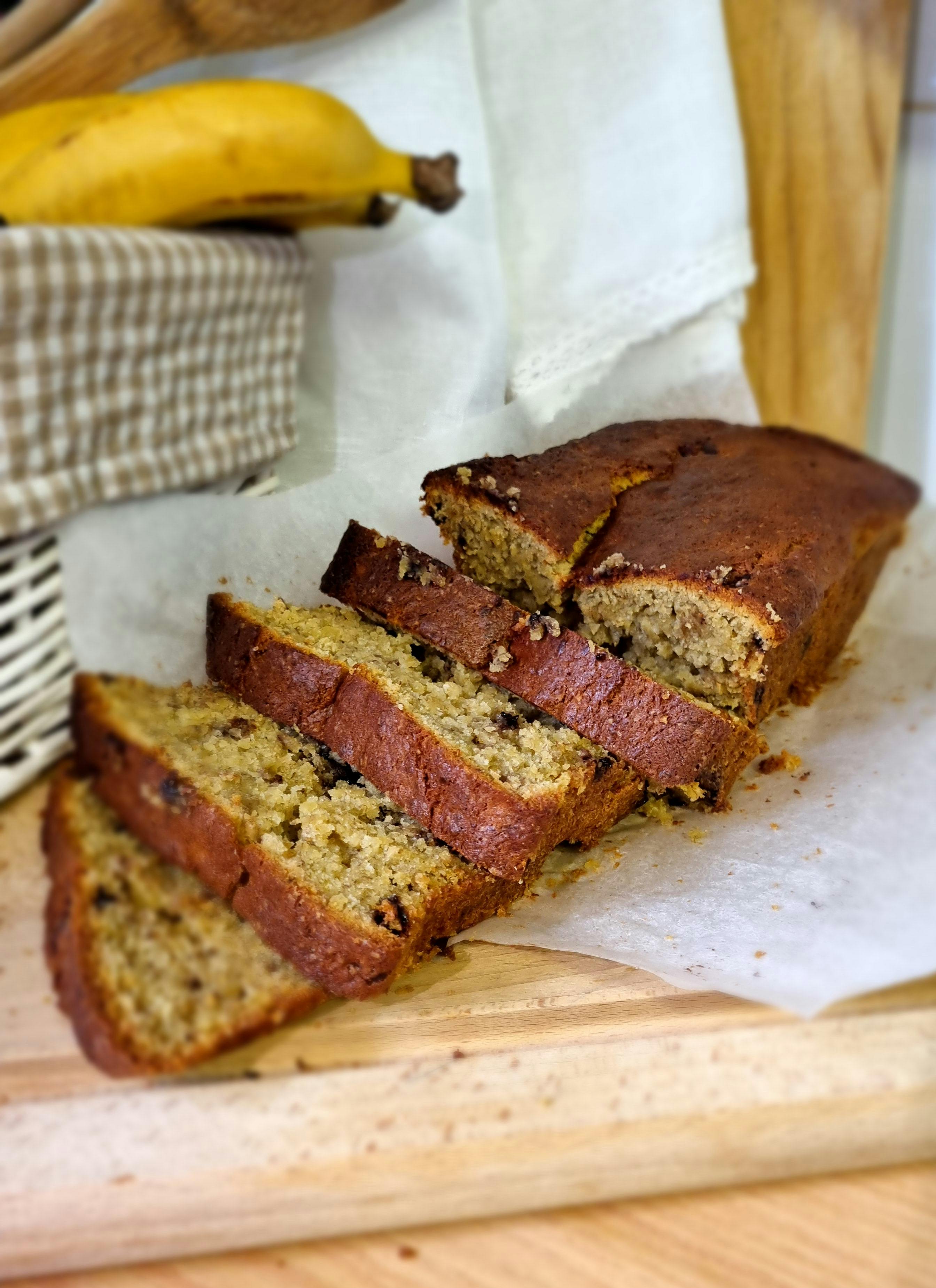
American
Banana Bread
The diets react (see scores below)
Common Ingredients
- bananas
- flour
- butter
- sugar
- eggs
- baking soda
- salt
- vanilla extract
Specific recipes may vary.
Incompatible with 9 of 11 diets
Diet Ratings
Banana bread is fundamentally incompatible with a ketogenic diet. It contains three major keto-disqualifying ingredients: bananas (high in sugar and net carbs, roughly 24g net carbs per medium banana), wheat flour (high in starch, ~20g+ net carbs per 1/4 cup), and added sugar. Together, a single standard slice of banana bread typically contains 30-40g of net carbs, which alone can exceed an entire day's keto carb allowance. There is no meaningful portion size that makes this food keto-compatible.
This banana bread recipe contains two clear animal-derived ingredients: butter (a dairy product) and eggs. Both are explicitly excluded under vegan dietary rules. The base of the recipe — bananas, flour, sugar, baking soda, salt, and vanilla extract — is fully plant-based, meaning a vegan version is easily achievable by substituting butter with plant-based margarine or coconut oil, and eggs with flax eggs, chia eggs, or mashed banana. However, as written with the stated ingredients, this dish is not vegan-compliant.
Banana bread contains multiple non-paleo ingredients that are clearly excluded from the diet. Flour (wheat) is a grain and one of the most definitively excluded foods in all paleo frameworks. Butter is a dairy product excluded by strict paleo guidelines. Refined sugar is explicitly banned as a processed, non-ancestral food. Added salt is also discouraged. Baking soda is a processed additive. While bananas, eggs, and vanilla extract are paleo-compatible, the foundational ingredients of this dish — flour, butter, and sugar — are core violations. No paleo variation of this dish is possible without fundamentally changing the recipe.
Banana bread as typically made is a refined baked good that contradicts Mediterranean diet principles. It relies on white refined flour, added sugar, and butter as primary ingredients — all of which the Mediterranean diet discourages. While bananas and eggs are acceptable foods individually, the overall composition is a high-sugar, refined-grain, saturated-fat product more aligned with American dessert culture than Mediterranean eating patterns. This is not a whole grain preparation, and the sugar-butter-refined flour combination places it firmly in the 'avoid' category.
Banana bread is almost entirely plant-based and is fundamentally incompatible with the carnivore diet. The primary ingredients — bananas, flour, sugar, vanilla extract, and baking soda — are all plant-derived or non-animal processed ingredients. Bananas are a fruit (excluded), flour is a grain product (excluded), sugar is a plant-derived sweetener (excluded), and vanilla extract is plant-derived. While butter and eggs are animal-derived and carnivore-acceptable, they represent a minor fraction of this dish and cannot redeem it. This is a processed baked good built on a foundation of exactly the foods the carnivore diet eliminates. There is no meaningful carnivore community debate here — this food is universally rejected across all carnivore tiers, from the strictest Lion Diet to the most liberal animal-based approaches.
Banana bread contains multiple excluded ingredients and violates a core Whole30 rule. Flour (a grain) is excluded. Butter (dairy) is excluded — only ghee/clarified butter is the dairy exception. Sugar (added sugar) is excluded. Beyond the individual ingredients, banana bread is explicitly listed as a prohibited food category under the 'no recreating baked goods' rule — bread, even made with compliant ingredients, is on the banned list. This dish fails on multiple fronts simultaneously.
Banana bread contains two significant high-FODMAP ingredients that make it problematic during the elimination phase. First, regular wheat flour is high in fructans at any standard bread/baked-good serving — there is no realistic portion of conventional banana bread that avoids a meaningful fructan load. Second, bananas are FODMAP-dependent on ripeness and quantity: unripe (firm, green-tipped) bananas are low-FODMAP at one medium banana, but ripe bananas (the kind typically used in banana bread, which are overripe for sweetness and moisture) are high in excess fructose and fructans at even moderate amounts. Banana bread recipes use 2–4 very ripe bananas spread across a loaf, and a standard slice still delivers a notable fructose load. The combination of wheat flour fructans plus ripe banana fructose/fructans makes a standard slice of banana bread high-FODMAP overall. Butter, eggs, sugar, baking soda, salt, and vanilla extract are all low-FODMAP and do not contribute to the concern.
Traditional banana bread contains several ingredients that conflict with DASH diet principles. While bananas themselves are a DASH-approved fruit (rich in potassium), the overall recipe is problematic: butter adds saturated fat, refined white flour lacks the fiber of whole grains, and significant added sugar makes this more of a dessert than a DASH-friendly snack. The combination results in a high-calorie, high-saturated-fat, high-added-sugar food that DASH discourages. However, it is not in the same category as processed meats or sodium-laden foods, and small portions occasionally are acceptable. A modified version using whole wheat flour, reduced sugar, unsweetened applesauce or low-fat yogurt in place of butter, and minimal added salt would score considerably higher (7-8).
Banana bread is a poor fit for the Zone Diet on nearly every front. The carbohydrate profile is the primary problem: bananas are explicitly listed by Dr. Sears as an 'unfavorable' high-glycemic fruit due to their high sugar and starch content, and refined white flour is a high-glycemic carbohydrate that causes rapid insulin spikes — the exact hormonal response the Zone Diet is designed to prevent. Added sugar compounds the glycemic load further. The fat source is butter (saturated fat), not the preferred monounsaturated fats like olive oil or avocado. While eggs provide some lean protein, there is no meaningful lean protein block in this dish — the protein contribution is minimal relative to the dominant carbohydrate and saturated fat load. The 40/30/30 macro ratio is wildly off: a typical slice of banana bread runs approximately 65-70% calories from carbohydrates, 10-15% from protein, and 20-25% from fat — essentially the opposite of Zone targets. Even a very small portion cannot be meaningfully 'balanced' into a Zone snack without pairing it with substantial lean protein and monounsaturated fat on the side, at which point the banana bread itself is contributing little but glycemic load. This is one of the clearer 'avoid' cases in Zone methodology.
Classic banana bread sits in caution territory for the anti-inflammatory framework. The bananas themselves contribute potassium, vitamin B6, and some antioxidants (dopamine, catechins), and ripe bananas provide prebiotic fiber — mildly positive signals. However, the remaining ingredient profile is largely neutral to mildly pro-inflammatory: white flour (refined carbohydrate with minimal fiber or micronutrients), added sugar (promotes inflammatory pathways at regular intake), and butter (saturated fat, limited quantities acceptable but not beneficial). Eggs are a moderate-category food. The dish as a whole is a refined, sugar-sweetened baked good — exactly the category anti-inflammatory frameworks caution against consuming regularly. It lacks omega-3s, meaningful antioxidant density, or fiber from whole sources. Occasional consumption is unlikely to cause measurable inflammatory harm for a healthy person, but it does not support an anti-inflammatory eating pattern and should not be a dietary staple.
Traditional banana bread is a poor fit for GLP-1 patients. It is built around refined flour and added sugar, delivering mostly empty carbohydrate calories with minimal protein and minimal fiber. Butter contributes saturated fat, which can worsen GLP-1 side effects like nausea and bloating. The egg content provides a small amount of protein, but nowhere near enough to meaningfully contribute to the 100-120g daily protein target — and the surrounding macros do not justify it. With reduced appetite and caloric intake, GLP-1 patients cannot afford to spend a snack slot on a food that offers little nutritional return. A standard slice is also calorie-dense relative to its protein and fiber content, making it a poor use of limited stomach capacity.
*See how scores were generated at our methodology page.
Nutritional profile
Six traits that cut across every diet.
Fiber & Plants
How much whole-plant food and fiber it delivers.
Healthy Fats
The quality of its fats (unsaturated, omega-3).
Whole / Unprocessed
How close it is to its natural, unprocessed form.
Gut Gentle
How easy it is on digestion (low FODMAP, few irritants).
Low Glycemic
How little it spikes your blood sugar.
Protein Density
How much protein it packs per calorie.
Controversy Index
Higher controversy = more disagreement between diets.
Diet-Specific Tips
 DASH — 4/10
View tips
- Bananas provide DASH-valued potassium and natural sweetness
- Butter contributes saturated fat, which DASH limits
- Refined white flour lacks the fiber emphasized in DASH; whole wheat flour would be preferred
- Added sugar conflicts with DASH guidelines limiting sweets
- Salt and baking soda contribute sodium, though at modest levels in typical recipes
- Overall nutrient profile (high fat, high sugar, low fiber) is not aligned with DASH snack goals
- Portion size is critical — a small slice occasionally is acceptable, but this is not a recommended DASH snack
 Anti-Inflammatory — 4/10
View tips
- Refined white flour — low fiber, high glycemic, no meaningful anti-inflammatory benefit
- Added sugar — pro-inflammatory at regular intake, raises blood glucose and can increase CRP
- Butter — saturated fat, limited by anti-inflammatory guidelines
- Bananas — mild antioxidant and prebiotic fiber contribution, modest positive signal
- Eggs — moderate-category ingredient, neither clearly pro- nor anti-inflammatory
- No omega-3s, polyphenol-rich foods, or anti-inflammatory herbs/spices present
- Overall profile: typical refined snack baked good — acceptable occasionally, not a dietary staple