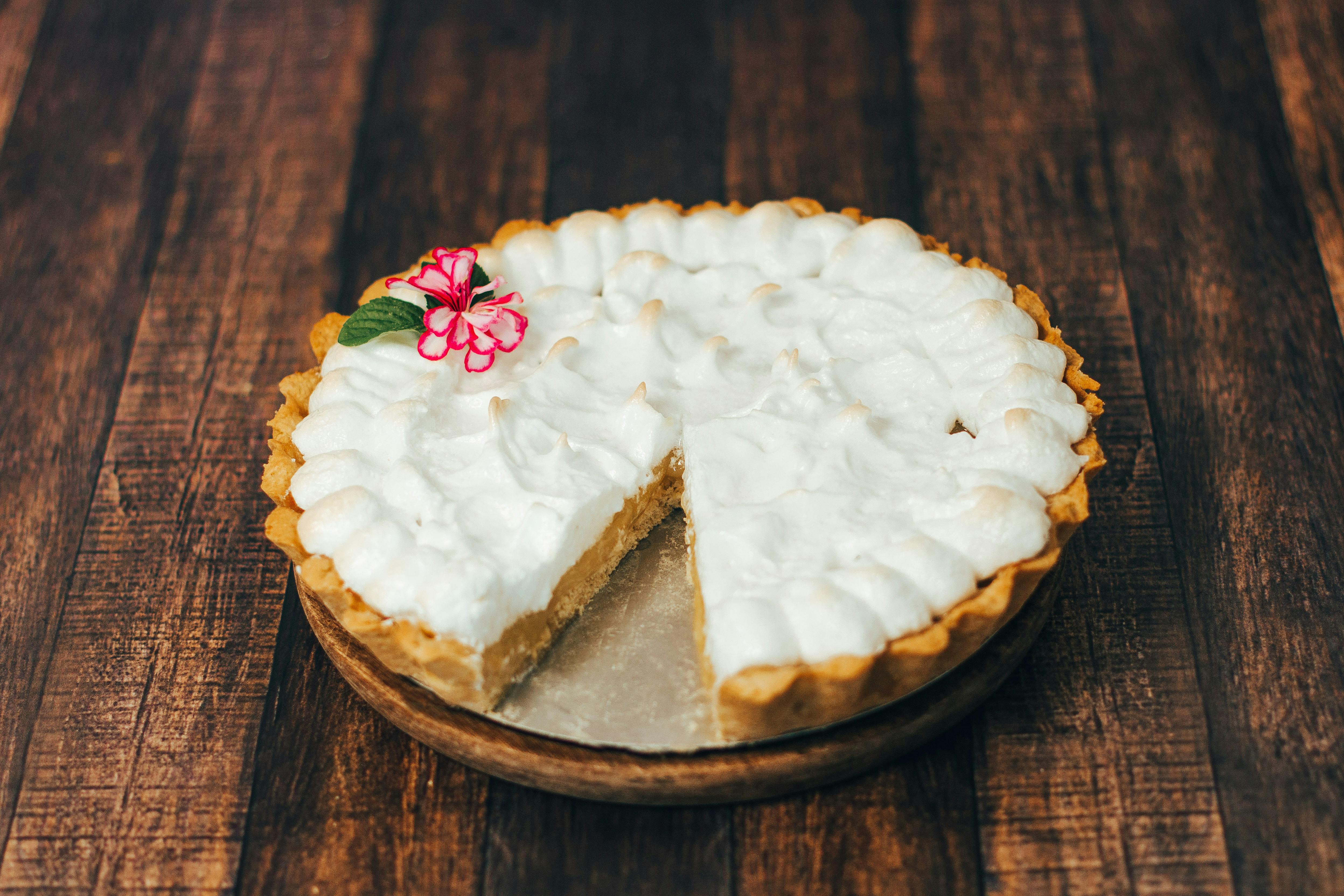
Photo: Camila Benítez / Pexels
American
Banana Cream Pie
The diets react (see scores below)
Common Ingredients
- pie crust
- whole milk
- egg yolks
- sugar
- cornstarch
- vanilla extract
- bananas
- whipped cream
- butter
Specific recipes may vary.
Incompatible with 11 of 11 diets
Diet Ratings
Banana Cream Pie is fundamentally incompatible with a ketogenic diet. Nearly every core ingredient is a keto disqualifier: the pie crust is made from grain-based flour (high carb), bananas are one of the highest-carb fruits available (~27g net carbs per medium banana), sugar is added throughout the filling, and cornstarch is a pure starch used as a thickener. A single serving would easily deliver 50-80g of net carbs, far exceeding the entire daily keto allowance. The only marginally keto-friendly ingredients are butter, egg yolks, and whipped cream, but they are completely overwhelmed by the carb-heavy components.
Banana Cream Pie as described contains multiple animal-derived ingredients that disqualify it from vegan compliance. Whole milk and butter are dairy products, egg yolks are an animal product, and whipped cream is dairy-based. These are not trace contaminants or ethically contested ingredients — they are primary, structural components of the dish. There is no ambiguity here under any mainstream vegan framework.
Banana Cream Pie is fundamentally incompatible with the Paleo diet. The pie crust is almost certainly made from wheat flour — a grain that is categorically excluded. Whole milk and whipped cream are dairy products, also excluded. Sugar is refined and excluded. Cornstarch is derived from corn, a grain, and is excluded. Butter is dairy and excluded. Only bananas, egg yolks, and vanilla extract are Paleo-compatible. The dish is essentially a showcase of non-Paleo ingredients, with the majority of its structure, sweetness, and richness coming from foods that hunter-gatherers had no access to in processed form.
Banana Cream Pie is a classic American dessert that contradicts Mediterranean diet principles on multiple fronts. The refined white flour pie crust is a processed, refined grain product. The filling is built on added sugar, butter, and a cornstarch-thickened custard — none of which are core Mediterranean components. Whipped cream adds saturated fat with no nutritional benefit aligned with the diet. While bananas and eggs offer minor redeeming nutritional value, the overall dish is a high-sugar, high-saturated-fat, refined-grain dessert with no olive oil, no whole grains, no legumes, and no emphasis on plant-forward nutrition. This is precisely the type of processed, sugar-laden dessert the Mediterranean diet advises against.
Banana Cream Pie is fundamentally incompatible with the carnivore diet. The dish is dominated by plant-based and processed ingredients: pie crust (grain-based flour), bananas (fruit), sugar (processed plant-derived sweetener), cornstarch (grain derivative), and vanilla extract (plant-derived). While egg yolks, whole milk, butter, and whipped cream are animal-derived, they are minor components in a dessert that is structurally built around excluded foods. No amount of dairy inclusion debate within the carnivore community rescues a dish whose primary identity is fruit, grain, and sugar. This is a clear avoid across all carnivore tiers — strict Lion Diet, standard carnivore, and even the more permissive animal-based approaches would reject this dish due to the grain crust, cornstarch, and added sugar.
Banana Cream Pie contains multiple excluded ingredients and also violates the 'no recreating baked goods/junk food' rule. Specific excluded ingredients include: pie crust (grain-based, typically made with wheat flour), whole milk (dairy), sugar (added sugar), cornstarch (excluded starch), whipped cream (dairy), and butter (dairy — only ghee/clarified butter is allowed). Even if one could hypothetically reformulate each filling ingredient to be compliant, the dish itself is explicitly a pie — a baked good that is categorically disallowed under Whole30's junk food recreation rule.
Banana Cream Pie contains multiple high-FODMAP ingredients that make it problematic during the elimination phase. The pie crust is almost certainly wheat-based (fructans — high-FODMAP), which alone is a disqualifier. Whole milk contains significant lactose, and a custard filling uses a substantial quantity of it. Bananas are dose-dependent: firm/unripe bananas are low-FODMAP at one small banana (~100g), but ripe bananas become high-FODMAP at larger servings due to excess fructose and fructans. A standard slice of banana cream pie would likely use ripe bananas in generous amounts. Whipped cream is low-FODMAP in small amounts (fat-based), and butter, egg yolks, sugar, cornstarch, and vanilla extract are generally low-FODMAP. However, the combination of a wheat-based crust and a lactose-heavy milk custard makes this dish clearly high-FODMAP at any realistic serving size during the elimination phase.
Monash University rates firm bananas and lactose-free milk as low-FODMAP, so a modified version with a gluten-free crust, lactose-free milk, and firm bananas could technically be made low-FODMAP — but the standard version of this dish as described fails elimination phase criteria. Clinical FODMAP practitioners would uniformly advise avoiding this dessert without significant ingredient substitutions.
Banana Cream Pie is fundamentally incompatible with the DASH diet. While bananas themselves are a DASH-friendly fruit rich in potassium, the overall dish is dominated by ingredients that DASH explicitly limits or discourages. The pie crust contributes refined flour, saturated fat, and sodium. Whole milk, egg yolks, butter, and whipped cream deliver significant saturated fat and cholesterol. The custard filling is heavily sweetened with added sugar, and whipped cream adds more fat and sugar on top. As a snack category item, portion control becomes even more critical, yet a single slice of banana cream pie can contain 400–600 calories, 15–25g of fat (8–12g saturated), and 30–40g of added sugar — far exceeding DASH targets for any single snack. The DASH diet explicitly limits sweets, saturated fat, full-fat dairy, and refined carbohydrates. This dish is essentially a dessert repurposed as a snack, hitting multiple DASH 'avoid' categories simultaneously. The banana content provides negligible nutritional benefit relative to the overall nutritional profile of the dish.
Banana Cream Pie is a near-perfect storm of Zone-unfavorable ingredients. The pie crust contributes refined flour and saturated fat (butter), sugar is a pure high-glycemic carbohydrate with zero nutritional value, cornstarch is a high-glycemic thickener, and bananas are specifically called out in Zone literature as an 'unfavorable' high-sugar fruit. Whipped cream and butter add significant saturated fat with no protein offset. There is essentially no lean protein, no monounsaturated fat, no low-glycemic vegetables, and no polyphenol-rich ingredients. The macronutrient ratio is wildly skewed — dominated by rapidly-digested carbohydrates and saturated fat, with negligible protein. Even a small serving would be nearly impossible to balance into a Zone block structure without a massive protein and fat correction on the side. As a snack (where portions are already small — typically 1 mini-block), the glycemic hit from sugar, cornstarch, and banana in a pastry crust is completely inconsistent with Zone principles. This is one of the relatively rare cases where a food earns a genuine 'avoid' rating.
Banana Cream Pie is a poor fit for an anti-inflammatory diet across nearly every component. The pie crust is typically made from refined white flour and butter or shortening — refined carbohydrates and saturated fat are both pro-inflammatory. The custard filling combines whole milk, egg yolks, sugar, cornstarch, butter, and vanilla: the added sugar and refined cornstarch are high-glycemic and drive insulin spikes linked to elevated inflammatory markers (CRP, IL-6). Butter and whole milk contribute saturated fat, which anti-inflammatory frameworks recommend limiting. Whipped cream adds more saturated fat and likely additional sugar. The one partial bright spot is bananas, which provide some potassium, vitamin B6, and modest antioxidants, but their benefit is overwhelmed by the surrounding ingredients. Vanilla extract is benign. Taken as a whole dish — refined crust, sugar-heavy custard, saturated fat from butter and cream — this dessert hits multiple pro-inflammatory triggers simultaneously with no meaningful omega-3, polyphenol, or fiber offset. It is an occasional treat at best and clearly outside anti-inflammatory dietary principles.
Banana cream pie is a poor choice for GLP-1 patients across nearly every relevant criterion. The pie crust is made from refined flour and butter or shortening, delivering saturated fat and empty refined carbohydrates with negligible fiber or protein. The custard filling relies on whole milk, egg yolks, sugar, butter, and cornstarch — a combination that is high in saturated fat, high in added sugar, and low in protein or micronutrient density. Whipped cream adds further saturated fat and calories. The bananas contribute some potassium and a small amount of natural fiber, but this benefit is entirely overwhelmed by the surrounding ingredients. As a snack, a standard slice provides roughly 350–450 calories, 15–20g of fat (much of it saturated), 40–55g of carbohydrates (majority from added sugar and refined starch), and only 4–6g of protein. For GLP-1 patients eating significantly reduced calorie volumes, this dish delivers almost no protein, no meaningful fiber, substantial saturated fat (which worsens nausea and bloating due to slowed gastric emptying), and high sugar (which contributes to blood glucose spikes and energy crashes). The high fat and sugar content also makes this particularly likely to trigger GI side effects. It is a textbook example of empty-calorie, nutrient-poor food that is counterproductive on a GLP-1 regimen.
*See how scores were generated at our methodology page.
Nutritional profile
Six traits that cut across every diet.
Fiber & Plants
How much whole-plant food and fiber it delivers.
Healthy Fats
The quality of its fats (unsaturated, omega-3).
Whole / Unprocessed
How close it is to its natural, unprocessed form.
Gut Gentle
How easy it is on digestion (low FODMAP, few irritants).
Low Glycemic
How little it spikes your blood sugar.
Protein Density
How much protein it packs per calorie.
Controversy Index
Higher controversy = more disagreement between diets.