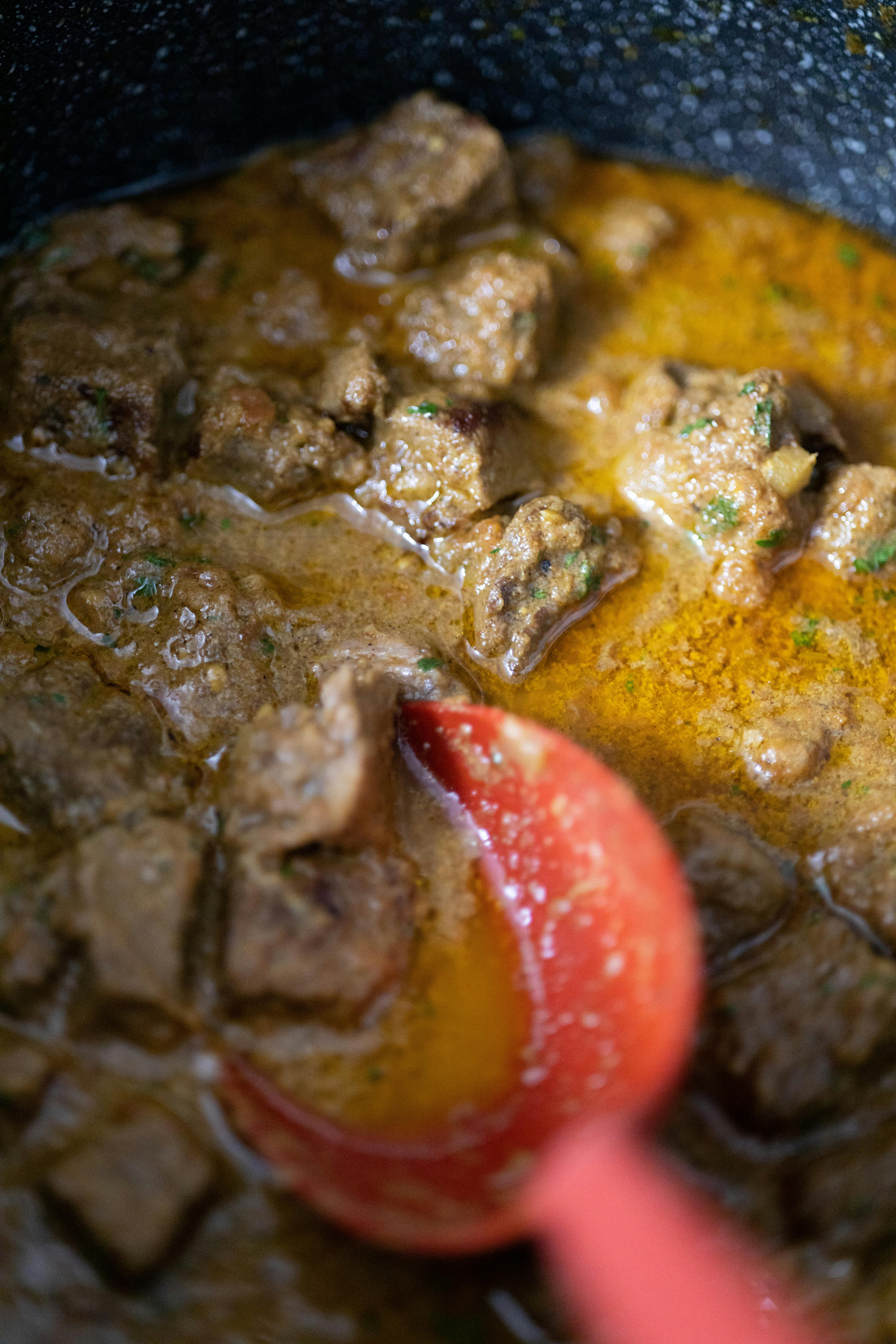
Photo: Jonathan Cooper / Pexels
Bangladeshi
Beef Bhuna
The diets react (see scores below)
Common Ingredients
- beef
- onion
- ginger
- garlic
- tomato
- garam masala
- turmeric
- cumin
- red chili
- mustard oil
Specific recipes may vary.
Incompatible with 6 of 11 diets
Diet Ratings
Beef Bhuna is fundamentally keto-friendly as a beef-based dry curry cooked in mustard oil with spices. The primary protein (beef) and cooking fat (mustard oil) are excellent keto choices. However, the dish includes onions and tomatoes which add moderate net carbs, and the cooking process for bhuna involves reducing these down significantly, concentrating their sugars. A standard serving of Beef Bhuna typically contains 8-15g net carbs depending on portion size and the ratio of onion/tomato used. Spices like garam masala, cumin, turmeric, and chili add negligible carbs. This dish can fit keto with mindful portioning, but the onion-tomato base warrants caution for those strictly tracking carbs.
Strict/clinical keto practitioners may flag this as borderline-avoid due to the caramelized onion base common in bhuna preparations, which concentrates fructose and can push a single serving toward the upper carb limit, especially if restaurant-prepared portions are larger than home-cooked versions.
Beef Bhuna contains beef as its primary protein, which is an animal product and categorically excluded from a vegan diet. There is no ambiguity here — beef is animal flesh, and no vegan framework permits its consumption. The remaining ingredients (onion, ginger, garlic, tomato, garam masala, turmeric, cumin, red chili, mustard oil) are all plant-based, but the presence of beef alone renders this dish entirely incompatible with vegan eating.
Beef Bhuna is nearly paleo-compliant — beef, onion, ginger, garlic, tomato, and the dry spices (garam masala, turmeric, cumin, red chili) are all paleo-approved ingredients. However, mustard oil is the critical disqualifier. Mustard oil is a seed oil and falls squarely on the excluded list alongside canola, sunflower, and other seed oils. The paleo framework strongly favors animal fats, olive oil, coconut oil, or avocado oil instead. Because mustard oil is a defining cooking medium in this dish — not a trace ingredient — it pulls the verdict to avoid. A simple substitution to ghee or coconut oil would make this dish largely paleo-friendly.
Beef Bhuna is primarily a beef dish, and red meat is one of the most restricted categories in the Mediterranean diet, limited to only a few times per month. The dish is built around beef as the central protein, making it incompatible with Mediterranean principles regardless of the otherwise beneficial spices and aromatics. Additionally, mustard oil is not a Mediterranean fat — extra virgin olive oil is the canonical fat source, and mustard oil, while healthy in South Asian culinary traditions, is not part of Mediterranean diet guidelines. The spices (turmeric, cumin, garam masala) and vegetables (onion, garlic, tomato) are Mediterranean-friendly, but they cannot offset the core issues of red meat as the primary protein and a non-Mediterranean cooking fat.
Some flexible Mediterranean diet interpreters note that occasional red meat consumption (a few times per month) is technically permitted, and if Beef Bhuna were eaten very infrequently as a treat rather than a staple, it could fall within that allowance. The vegetable-rich sauce and anti-inflammatory spices add modest nutritional value that some modern integrative practitioners might acknowledge.
Beef Bhuna is heavily incompatible with the carnivore diet despite containing beef as the primary protein. The dish is loaded with multiple plant-based ingredients that are strictly excluded: onion, garlic, tomato, and ginger are plant vegetables/roots; garam masala, turmeric, cumin, and red chili are plant-derived spices; and mustard oil is a plant-based oil. The only carnivore-compliant element is the beef itself. The preparation method is fundamentally plant-dependent, making this dish unsuitable without a complete reformulation. A carnivore-compliant version would require cooking the beef in tallow or butter with salt only, discarding all other ingredients.
Beef Bhuna is a dry-style curry made with entirely Whole30-compliant ingredients. Beef is an approved protein; onion, tomato, ginger, and garlic are compliant vegetables/aromatics; garam masala, turmeric, cumin, and red chili are all natural spices explicitly allowed on Whole30. Mustard oil is a natural plant-derived fat with no excluded ingredients. There are no grains, legumes, dairy, added sugars, or other excluded ingredients in this dish as described. This is a whole-food, minimally processed meal that aligns well with the spirit of the Whole30 program.
Beef Bhuna contains two of the most potent high-FODMAP ingredients: onion and garlic. Both are very high in fructans and cannot be made safe at any standard cooking portion. Onion is a major FODMAP trigger even in small amounts, and garlic contains concentrated fructans that remain problematic even after cooking. These two ingredients alone are sufficient to classify this dish as high-FODMAP and unsuitable during the elimination phase. Tomato is low-FODMAP at standard servings (up to ~65g), and beef is naturally FODMAP-free. Ginger, turmeric, cumin, and red chili are low-FODMAP as spices. Mustard oil is fat-based and FODMAP-free. However, the presence of onion and garlic as core structural ingredients — not trace additions — makes this dish definitively high-FODMAP. There is no practical way to order or prepare a traditional Beef Bhuna without these ingredients.
Beef Bhuna is problematic for DASH compliance on multiple fronts. Red meat (beef) is explicitly limited in DASH guidelines due to its saturated fat and cholesterol content. Bhuna-style cooking involves slow-frying the meat in oil, often with generous amounts of fat to develop the thick, dry masala coating — this increases total and saturated fat intake significantly. Mustard oil, while not a tropical oil, is high in erucic acid and adds substantial fat to the dish. The spice blend itself (garam masala, turmeric, cumin, chili) is DASH-neutral or mildly positive, and the inclusion of onion, garlic, ginger, and tomato adds some DASH-friendly vegetables and potassium. However, the core protein source (red meat) combined with the high-fat cooking method makes this a dish DASH guidelines would discourage. The score of 2 reflects the red meat base and fatty preparation as primary concerns, with marginal credit for the vegetable and spice components.
NIH DASH guidelines categorically limit red meat due to saturated fat; however, some updated clinical interpretations note that lean cuts of beef (e.g., round or sirloin, trimmed of visible fat) prepared with minimal added oil could be consumed in small portions (1-2 servings/week) within a broader DASH-compliant diet, and some practitioners view the anti-inflammatory spices in Bhuna as a modest mitigating factor.
Beef Bhuna presents a mixed Zone Diet profile. The dish has several Zone-friendly elements: the spice base (ginger, garlic, turmeric, cumin, garam masala) delivers powerful anti-inflammatory polyphenols highly valued by Sears, and the vegetables (onion, tomato) contribute low-glycemic carbohydrates. However, two factors push this into 'caution' territory. First, the protein source is beef — which can range from lean (eye of round, sirloin) to fatty (chuck, short rib). Bhuna-style cooking often uses fattier cuts to withstand the dry, high-heat reduction technique, which can elevate saturated fat beyond Zone targets. Second, mustard oil is high in erucic acid and omega-6 fatty acids, which conflicts with Zone's anti-inflammatory, omega-3/monounsaturated fat priority. The dish is not inherently unbalanceable — a leaner beef cut, controlled portion (~3 oz), and pairing with a large low-glycemic vegetable side could fit Zone blocks reasonably well — but it requires deliberate modification to optimize.
Dr. Sears' later anti-inflammatory work (The OmegaRx Zone, The Zone Diet) places greater emphasis on polyphenol density and omega-3 balance than on strict saturated fat limits. The exceptional spice profile of Beef Bhuna — turmeric (curcumin), ginger, garlic, cumin — represents exactly the kind of polyphenol-rich food Sears championed in his later writings, which some Zone practitioners would use to partially offset concerns about the beef fat and mustard oil. This perspective would rate the dish slightly higher, perhaps a 6, particularly if lean beef is used.
Beef Bhuna presents a genuinely mixed anti-inflammatory profile. On the positive side, the spice blend is exceptional — turmeric (curcumin), ginger, garlic, red chili (capsaicin), and cumin are all well-supported anti-inflammatory agents with research backing reduced CRP and IL-6. Tomatoes and onions add polyphenols and quercetin. However, the primary protein — beef — is categorized as 'limit' in anti-inflammatory frameworks due to its saturated fat content and arachidonic acid, which can promote inflammatory eicosanoids. The cooking oil, mustard oil, adds complexity: it has a favorable fatty acid profile (high in monounsaturated erucic acid and ALA/omega-3s) and is used in traditional South Asian anti-inflammatory cooking, but erucic acid safety remains debated in Western nutrition science, and the oil is typically used in substantial quantities in a bhuna (dry-fry) preparation. The overall dish is acceptable occasionally but the red meat base and potential oil volume prevent an 'approve' rating.
Some anti-inflammatory practitioners, particularly those following Dr. Weil's broader Mediterranean-inspired framework, might rate this more favorably given the exceptional spice density — curcumin, capsaicin, allicin, and gingerols together represent a meaningful anti-inflammatory load. Conversely, stricter anti-inflammatory and AIP-aligned protocols would push this toward 'avoid' due to the red meat base and mustard oil's erucic acid content, which the FDA restricts in food use.
Beef Bhuna presents a mixed profile for GLP-1 patients. On the positive side, beef provides meaningful protein (roughly 25-30g per standard serving), and the base aromatics — onion, garlic, ginger, tomato — add fiber, antioxidants, and micronutrients with minimal caloric cost. Turmeric and ginger may also support digestion. However, several factors push this into caution territory. Beef is a fatty red meat; a typical bhuna uses shoulder or chuck cuts with moderate-to-high saturated fat content, which can worsen GLP-1 side effects like nausea, bloating, and reflux — especially given already-slowed gastric emptying. Mustard oil is high in erucic acid and contributes additional fat load per serving, though it does contain some beneficial unsaturated fatty acids. Red chili at bhuna-typical quantities is a meaningful GI irritant and may exacerbate reflux or nausea in GLP-1 patients, who are already prone to these symptoms. The dish is also a dry, concentrated curry (bhuna refers to the reduction technique), meaning fat and spice are more concentrated per bite than in a saucier curry. If prepared with a lean cut (e.g., round or sirloin), minimal oil, and moderate chili, it becomes more acceptable — but the traditional preparation leans toward avoid territory for sensitive patients.
Some GLP-1-focused dietitians accept lean beef preparations as a valid protein source given the high protein-per-calorie ratio, arguing that the saturated fat concern is overstated when portions are small and the cut is lean. Others flag red meat more categorically due to its fat content and digestive burden under slowed gastric emptying, recommending chicken, fish, or legumes as lower-risk protein substitutes in spiced dishes like this one.
*See how scores were generated at our methodology page.
Nutritional profile
Six traits that cut across every diet.
Fiber & Plants
How much whole-plant food and fiber it delivers.
Healthy Fats
The quality of its fats (unsaturated, omega-3).
Whole / Unprocessed
How close it is to its natural, unprocessed form.
Gut Gentle
How easy it is on digestion (low FODMAP, few irritants).
Low Glycemic
How little it spikes your blood sugar.
Protein Density
How much protein it packs per calorie.
Controversy Index
Higher controversy = more disagreement between diets.
Diet-Specific Tips
 Keto — 6/10
View tips
- Beef is an ideal keto protein source with zero carbs
- Mustard oil is an acceptable high-fat cooking medium
- Onions contribute 4-5g net carbs per 100g and are used heavily in bhuna
- Tomatoes add additional 3-4g net carbs per 100g
- Bhuna cooking method reduces sauce, concentrating carbs from onion and tomato
- Spices contribute negligible net carbs
- Net carbs per serving estimated at 8-15g depending on portion and preparation
- Fits keto with portion control; problematic in large servings
 Whole30 — 9/10
View tips
- Beef is a fully approved Whole30 protein
- All spices (garam masala, turmeric, cumin, red chili) are natural and compliant
- Mustard oil is a compliant natural fat
- Onion, garlic, ginger, and tomato are all approved vegetables/aromatics
- No grains, dairy, legumes, or added sugars present
- Dish is a whole-food preparation consistent with Whole30 spirit
 Zone — 5/10
View tips
- Beef protein source — Zone-compatible but cut selection is critical; lean cuts preferred to minimize saturated fat
- Mustard oil is high in omega-6 and erucic acid, conflicting with Zone's monounsaturated/omega-3 fat priority
- Rich polyphenol and anti-inflammatory spice profile (turmeric, ginger, garlic, cumin) strongly aligns with Sears' anti-inflammatory focus
- Onion and tomato provide low-glycemic Zone-favorable carbohydrates
- Bhuna cooking style (dry reduction) can concentrate fat if a fatty cut is used
- Portion control essential — 3 oz lean beef keeps protein near the 25g/meal Zone target
- Pairing with additional low-glycemic vegetables needed to meet Zone carbohydrate block requirements
 Anti-Inflammatory — 4/10
View tips
- Beef is a 'limit' food in anti-inflammatory diets due to saturated fat and arachidonic acid content
- Turmeric (curcumin) is a top-tier anti-inflammatory spice with strong research support
- Garlic, ginger, red chili, and cumin all contribute anti-inflammatory polyphenols and bioactives
- Mustard oil has a favorable omega-3/omega-6 ratio and traditional anti-inflammatory use, but erucic acid is a safety concern in Western nutrition science
- Tomatoes and onions provide quercetin and lycopene
- Bhuna cooking style uses significant oil volume, potentially amplifying any oil-related concerns
- Overall spice density partially offsets the pro-inflammatory potential of the red meat base
 GLP-1 Friendly — 4/10
View tips
- Beef provides good protein per serving (~25-30g) but is a fatty red meat with meaningful saturated fat
- Mustard oil adds additional fat load; bhuna cooking technique concentrates fat and spice
- Red chili at traditional quantities is a GI irritant — risk of worsened reflux and nausea on GLP-1s
- Slowed gastric emptying makes high-fat, spice-heavy meals harder to tolerate
- Aromatics (ginger, turmeric, garlic) have digestive and anti-inflammatory benefits
- Lean cut substitution and chili reduction would significantly improve the GLP-1 suitability of this dish
- Small portion sizing is essential if consumed — this is not a small-portion-friendly dish in traditional preparation