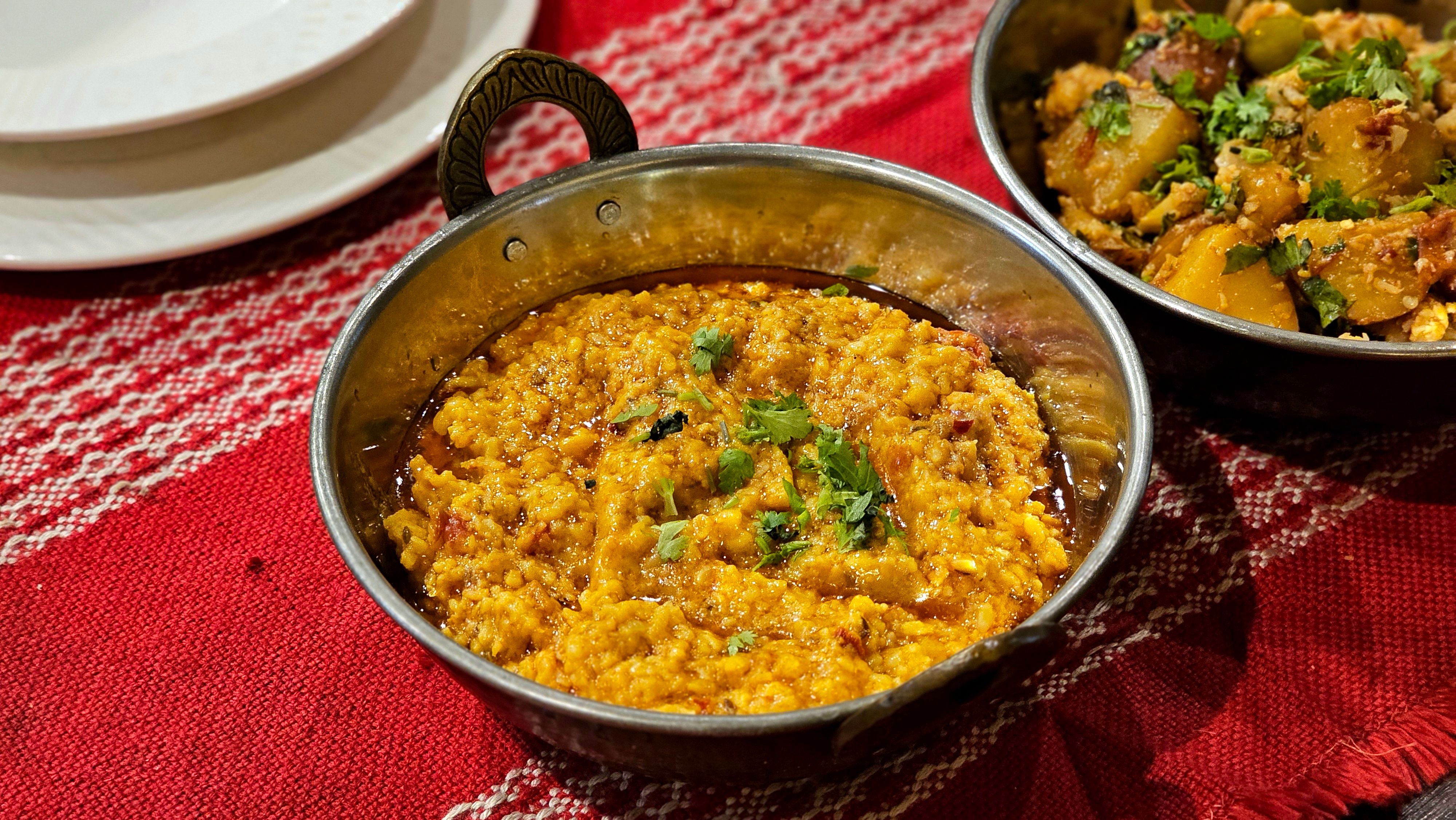
Photo: Muhammad Khawar Nazir / Pexels
Bangladeshi
Bhuna Khichuri
The diets react (see scores below)
Common Ingredients
- rice
- lentils
- onion
- ginger
- garlic
- turmeric
- cumin
- bay leaf
- cardamom
- ghee
Specific recipes may vary.
Incompatible with 6 of 11 diets
Diet Ratings
Bhuna Khichuri is fundamentally built on two high-carbohydrate staples: rice and lentils. Rice is a pure starch with virtually no fiber, delivering roughly 45g of net carbs per 100g cooked. Lentils, while containing some fiber and protein, still contribute significant net carbs (approximately 12-16g per 100g cooked). A standard serving of this dish would easily deliver 60-100g of net carbs, which is 2-5 times the entire daily keto allowance. The ghee and spices (turmeric, cumin, cardamom, bay leaf, ginger, garlic, onion) are keto-friendly, but they are incidental to a carbohydrate-dominant base that makes the dish entirely incompatible with ketosis. No portion size reduction would make this dish viable without fundamentally changing its composition.
Bhuna Khichuri is a traditional Bangladeshi rice and lentil dish that would otherwise be fully plant-based, but the listed ingredients include ghee — clarified butter derived from cow's milk. Ghee is an animal-derived dairy product and is unambiguously non-vegan. All other ingredients (rice, lentils, onion, ginger, garlic, turmeric, cumin, bay leaf, cardamom) are plant-based and would earn a high approval score on their own. The dish can easily be made vegan by substituting ghee with a plant-based oil such as mustard oil, coconut oil, or vegan butter, which is a common adaptation.
Bhuna Khichuri is built on two foundational paleo-excluded food groups: rice (a grain) and lentils (a legume). Both are explicitly off-limits under all mainstream paleo frameworks due to their anti-nutrient profiles (phytates, lectins) and the fact that they were not part of the Paleolithic diet. The remaining ingredients — onion, ginger, garlic, turmeric, cumin, bay leaf, cardamom, and ghee — are individually paleo-compatible or debated, but they cannot redeem a dish whose two primary ingredients are both hard avoids. This is not a borderline case; rice and lentils together represent a double disqualification with unanimous paleo consensus against them.
Bhuna Khichuri is a wholesome, plant-forward dish built around lentils and rice — two Mediterranean diet staples. Lentils are an excellent legume protein source strongly encouraged in Mediterranean eating. The aromatics (onion, ginger, garlic) and spices (turmeric, cumin, bay leaf, cardamom) are all compatible and beneficial. The main complicating factor is the use of ghee (clarified butter) as the primary fat rather than extra virgin olive oil, and the use of white rice rather than a whole grain. Ghee is an animal-derived saturated fat that sits outside Mediterranean diet orthodoxy, though it is used only in modest amounts in this dish. White rice is a refined grain, though traditional Mediterranean cuisines (Greek, Turkish, Lebanese) do incorporate it. Overall, this is a nutritious, legume-rich dish that aligns well with Mediterranean principles despite its South Asian origins, but ghee and white rice temper a full approval.
Some Mediterranean diet authorities, particularly those focused on traditional regional practices, would note that white rice is common in Greek pilafi and Lebanese mujaddara preparations, and that a small amount of animal fat like ghee is analogous to the modest butter use seen in some Italian and Turkish traditions — under this lens, Bhuna Khichuri with its dominant lentil base could earn a lower-end approval score.
Bhuna Khichuri is almost entirely plant-based and is fundamentally incompatible with the carnivore diet. The dish is built on rice (a grain) and lentils (a legume) — both of which are explicitly excluded from the carnivore diet. Every remaining ingredient is also plant-derived: onion, ginger, garlic, turmeric, cumin, bay leaf, and cardamom are all vegetables or plant spices. The only animal-derived ingredient is ghee, which is a small finishing fat and does not redeem the dish. There is unanimous consensus across all carnivore diet tiers — from the strictest Lion Diet to the more flexible animal-based approach — that grains and legumes are completely off the table. This dish has no viable carnivore adaptation without being entirely reconstructed.
Bhuna Khichuri contains two explicitly excluded ingredient categories: rice (a grain) and lentils (a legume). Both are clearly prohibited on the Whole30 program. Unlike green beans or sugar snap peas, lentils are not among the excepted legumes, and rice is not among any excepted grains. Ghee and the spices (turmeric, cumin, bay leaf, cardamom) are compliant, as are the aromatics (onion, ginger, garlic), but the two foundational ingredients of this dish — rice and lentils — make it definitively non-compliant. There is no compliant version of this dish possible while retaining its essential character.
Bhuna Khichuri contains multiple high-FODMAP ingredients that make it unsuitable during the elimination phase. Garlic and onion are among the highest-FODMAP foods tested by Monash University, both being concentrated sources of fructans — even small amounts can trigger symptoms. Lentils are high in GOS (galacto-oligosaccharides) and are high-FODMAP in standard serving sizes used in a main dish like khichuri; while canned and rinsed lentils have somewhat lower GOS levels, dried lentils cooked in the dish retain significant GOS. The combination of these three high-FODMAP ingredients in a single dish means there is essentially no realistic serving size that would be safe during elimination. Rice, ghee, turmeric, cumin, bay leaf, ginger, and cardamom are all low-FODMAP and safe, but they cannot offset the fructan and GOS load from onion, garlic, and lentils used in standard recipe quantities.
Bhuna Khichuri is a spiced rice-and-lentil dish with a solid nutritional foundation: lentils provide plant-based protein, fiber, potassium, and magnesium — all core DASH nutrients — and the spices (turmeric, cumin, ginger, garlic) are sodium-free and anti-inflammatory. Rice and lentils together form a nutrient-dense, low-sodium base well-aligned with DASH principles. However, the key concern is ghee, a clarified butter that is high in saturated fat. DASH guidelines explicitly limit saturated fat, and ghee is used in meaningful amounts in bhuna (fried/browned) preparations where onions, spices, and the grain-legume mixture are sautéed in fat. Additionally, white rice (the typical base) is a refined grain, which DASH de-emphasizes in favor of whole grains like brown rice. The dish is naturally low in sodium, which is a strong positive. With moderate ghee portions and a shift to brown rice, this dish could move closer to an 'approve' rating. As commonly prepared, it warrants caution due to saturated fat content from ghee.
NIH DASH guidelines restrict saturated fat broadly, placing ghee-cooked dishes in the caution category; however, some updated DASH-aligned clinicians note that traditional South Asian ghee use is typically modest in home cooking, and emerging research suggests that dairy-derived saturated fats may have a more neutral cardiovascular impact than previously thought — making this dish potentially acceptable in moderation for non-hypertensive individuals following a flexible DASH interpretation.
Bhuna Khichuri is a traditional Bangladeshi rice-and-lentil porridge cooked with ghee and aromatic spices. From a Zone Diet perspective, this dish presents several structural challenges. The primary carbohydrate base is white rice, which is a high-glycemic 'unfavorable' carb in Zone terminology — Dr. Sears specifically flags white rice as a food to avoid due to its rapid blood sugar impact. Lentils serve a dual role as both protein and carbohydrate source; while lentils are a relatively favorable legume (moderate glycemic index, decent protein), they count heavily toward the carb block allocation rather than cleanly filling the protein block the way animal protein would. The fat source is ghee (clarified butter), which is predominantly saturated fat — the Zone Diet, particularly in Sears' earlier writings, actively discourages saturated fat in favor of monounsaturated sources like olive oil and avocados. The dish also lacks a lean animal protein to anchor the meal's protein blocks, meaning it will be difficult to hit 25g of clean protein per serving without overshooting carbohydrates. The spices (turmeric, cumin, ginger, garlic) are genuinely beneficial from an anti-inflammatory standpoint, which is a positive. However, the overall macronutrient ratio of Bhuna Khichuri skews heavily toward carbohydrates, making it very difficult to eat a Zone-balanced portion without dramatically restructuring the recipe — replacing white rice with a smaller amount of brown rice or cauliflower rice, substituting ghee with olive oil, and adding a lean protein source.
Bhuna Khichuri is a spiced rice-and-lentil porridge that blends genuinely anti-inflammatory ingredients with a few elements that temper an outright 'approve' verdict. On the positive side, the lentils supply plant-based protein, soluble fiber, and polyphenols that help modulate inflammatory markers. The spice profile is excellent: turmeric (curcumin), ginger, garlic, cumin, cardamom, and bay leaf are all recognized anti-inflammatory agents in Dr. Weil's framework and supported by research showing reductions in CRP and IL-6. Onion adds quercetin. The dish is free of refined sugar, trans fats, processed additives, and excessive omega-6 seed oils. The two limiting factors are: (1) white rice — the most common form used — is a refined carbohydrate with a higher glycemic index that can mildly promote post-meal inflammatory signaling; and (2) ghee, a clarified butter, is high in saturated fat, which mainstream anti-inflammatory guidance recommends limiting. Ghee occupies a genuinely contested space: it is a 'limit' ingredient rather than an 'avoid,' and traditional usage in this dish tends to be modest (a finishing drizzle rather than a cooking base in large quantity). If made with brown or parboiled rice and minimal ghee, the dish would score closer to 7–8. As typically prepared with white rice and a meaningful amount of ghee, a score of 6 with a 'caution' verdict is appropriate — it is a nourishing, largely plant-based meal with a strong anti-inflammatory spice foundation, but not optimized for an anti-inflammatory eating pattern.
Ghee specifically is debated: Ayurvedic medicine and some functional nutrition practitioners (e.g., those following traditional South Asian dietary frameworks) argue ghee's short- and medium-chain fatty acids, fat-soluble vitamins (A, D, K2), and butyrate content are net anti-inflammatory, with butyrate in particular supporting gut-lining integrity. Mainstream anti-inflammatory guidelines (Dr. Weil, AHA-aligned frameworks) place ghee in the 'limit' category alongside other saturated fats, recommending extra virgin olive oil instead.
Bhuna Khichuri is a rice-and-lentil dish that offers a meaningful protein and fiber combination from the lentils, along with anti-inflammatory spices (turmeric, ginger, garlic) that are generally well-tolerated on GLP-1 medications. However, the dish has two notable drawbacks for GLP-1 patients. First, ghee is a saturated fat that can worsen nausea, bloating, and reflux — common GLP-1 side effects — especially if used in traditional amounts (2–4 tablespoons). Second, the rice base makes this a carbohydrate-dominant dish: the rice-to-lentil ratio in a typical Bhuna Khichuri leans heavily toward rice, meaning protein density per calorie is moderate at best, not high. A standard serving may deliver 10–15g protein — below the 15–30g per meal target — while contributing significant refined carbohydrate calories. The 'bhuna' preparation style (dry-roasting with fat) also typically uses more ghee than a plain khichuri. The dish is easy to digest and portion-friendly in small servings, and the spice profile (cumin, cardamom, bay leaf, turmeric) is mild enough not to worsen GI symptoms. With ghee reduced and lentil proportion increased, it could score higher. As prepared traditionally, it earns a cautious approval in small portions.
Some GLP-1-focused dietitians view any lentil-and-rice combination favorably as a complete plant protein with useful fiber, accepting the moderate fat from ghee if kept to a teaspoon or less. Others flag the white rice base and saturated fat content as meaningful concerns given the reduced caloric budget of GLP-1 patients, recommending substitution with brown rice and oil spray to improve nutrient density per calorie.
*See how scores were generated at our methodology page.
Nutritional profile
Six traits that cut across every diet.
Fiber & Plants
How much whole-plant food and fiber it delivers.
Healthy Fats
The quality of its fats (unsaturated, omega-3).
Whole / Unprocessed
How close it is to its natural, unprocessed form.
Gut Gentle
How easy it is on digestion (low FODMAP, few irritants).
Low Glycemic
How little it spikes your blood sugar.
Protein Density
How much protein it packs per calorie.
Controversy Index
Higher controversy = more disagreement between diets.
Diet-Specific Tips
 Mediterranean — 6/10
View tips
- Lentils as primary protein — a Mediterranean diet cornerstone legume
- Ghee used instead of extra virgin olive oil — adds saturated fat outside core principles
- White rice rather than whole grain — refined carbohydrate, though traditional in some Mediterranean cuisines
- Rich array of plant-based aromatics and spices with anti-inflammatory properties
- No processed ingredients, added sugars, or red meat
- Dish is nutrient-dense and plant-forward overall
 DASH — 5/10
View tips
- Lentils are a DASH-recommended legume high in fiber, potassium, and plant protein
- Ghee contributes saturated fat, which DASH guidelines explicitly limit
- White rice is a refined grain; brown rice would better align with DASH whole-grain emphasis
- Dish is naturally very low in sodium, a major DASH positive
- Aromatic spices add flavor without sodium, supporting DASH sodium reduction goals
- Portion size of ghee used in bhuna-style cooking is critical to overall saturated fat load
 Zone — 4/10
View tips
- White rice is a high-glycemic 'unfavorable' carbohydrate explicitly discouraged by Dr. Sears
- Lentils provide some protein but count primarily as carbohydrate blocks, skewing the macro ratio
- Ghee is high in saturated fat, contrary to Zone's preference for monounsaturated fats
- No lean animal protein source present to cleanly fill protein blocks
- Overall macronutrient profile is heavily carbohydrate-dominant, making Zone ratio adherence difficult
- Anti-inflammatory spices (turmeric, ginger, garlic) are a genuine Zone-positive element
- Could be partially rehabilitated by substituting white rice with a lower-GI alternative and adding lean protein
 Anti-Inflammatory — 6/10
View tips
- Lentils provide plant protein, soluble fiber, and polyphenols with well-documented anti-inflammatory effects
- Strong anti-inflammatory spice base: turmeric (curcumin), ginger, garlic, cumin, cardamom, bay leaf
- White rice is a refined carbohydrate with moderate glycemic index — mildly pro-inflammatory compared to whole grains
- Ghee is a saturated fat, categorized as 'limit' in anti-inflammatory frameworks, though its butyrate content is debated as potentially beneficial
- No processed ingredients, trans fats, added sugars, or high omega-6 seed oils
- Dish is predominantly plant-based — lentils as primary protein align well with anti-inflammatory principles
- Substituting brown or parboiled rice and reducing ghee quantity would meaningfully improve the anti-inflammatory profile
 GLP-1 Friendly — 5/10
View tips
- Lentils provide plant-based protein and fiber — positive for both GLP-1 priorities
- White rice is the dominant ingredient — high glycemic load, low nutrient density per calorie
- Protein per serving likely 10–15g — below the 15–30g per meal target
- Ghee is a saturated fat that may worsen nausea, bloating, and reflux on GLP-1 medications
- Bhuna preparation style typically requires more ghee than plain khichuri
- Spice profile (turmeric, cumin, cardamom, ginger) is mild and GI-friendly
- Easy to digest — consistent with GLP-1 slowed gastric emptying tolerance
- Small-portion friendly — works reasonably well as a modest side or small meal
- Modifiable: reducing ghee and increasing lentil-to-rice ratio would improve the rating significantly