Photo: Divya Jain / Pexels
The diets react (see scores below)
Common Ingredients
- chhena
- sugar
- milk
- cardamom
- mawa
- saffron
- rosewater
Specific recipes may vary.
Incompatible with 9 of 11 diets
Diet Ratings
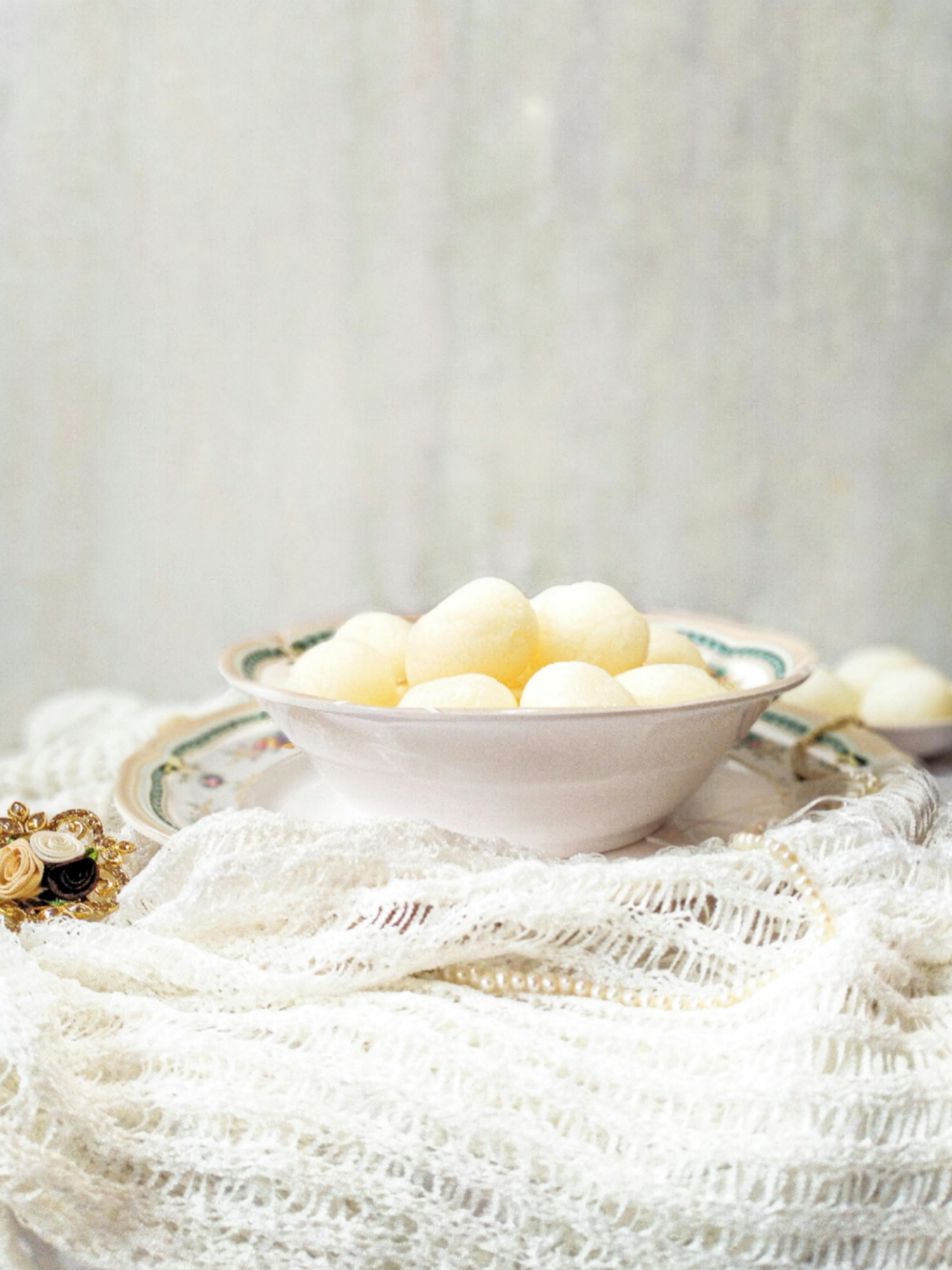
Chomchom is a traditional Bangladeshi sweet made primarily from chhena (fresh cheese curds) cooked in sugar syrup, with mawa (reduced milk solids) and additional sweeteners. Sugar is the second ingredient and forms the dominant component by caloric contribution after the cheese. A single piece of chomchom typically contains 20-35g of net carbs almost entirely from added sugar, which alone can exceed or entirely consume a full day's keto carb allowance. Despite chhena being a low-carb cheese base, the heavy sugar syrup used in preparation makes this completely incompatible with ketosis. There is no version of this dish that fits keto without fundamentally altering its nature.
Chomchom is a traditional Bangladeshi sweet made entirely from animal-derived dairy products. Chhena is fresh paneer/cottage cheese made by curdling milk — a direct dairy product. Milk itself is explicitly excluded under vegan rules. Mawa (khoya) is reduced/evaporated milk solids, also fully dairy-derived. These three ingredients form the entire structural and flavor base of the dish, making it impossible to classify as vegan-compatible. The remaining ingredients — sugar, cardamom, saffron, and rosewater — are all plant-based, but they cannot offset the multiple animal-derived dairy components that define this dish.
Chomchom is a traditional Bangladeshi dairy-based sweet that is fundamentally incompatible with the paleo diet. The dish is built on chhena (fresh cheese curd made from cow's milk) and mawa (reduced/condensed milk solids) — both are dairy products explicitly excluded from paleo. Sugar is refined and heavily processed, making it a clear violation. Milk itself is a dairy product excluded under paleo rules. While cardamom, saffron, and rosewater are paleo-compatible aromatics, the core structure of this dish — dairy + refined sugar — places it firmly in the 'avoid' category with no meaningful modification possible while retaining its identity as Chomchom.
Chomchom is a traditional Bangladeshi sweet made primarily from chhena (fresh cheese curds) cooked in a heavy sugar syrup, then enriched with mawa (reduced milk solids), saffron, and rosewater. While the dairy base (chhena, milk) is acceptable in moderation on a Mediterranean diet, the dish is fundamentally a high-sugar confection — sugar is the dominant ingredient and cooking medium. The substantial added sugar content and concentrated mawa make this a dessert/sweet snack that directly contradicts the Mediterranean principle of minimizing added sugars and highly processed sweets. The aromatic spices (cardamom, saffron, rosewater) are benign or even beneficial, but they cannot offset the core issue. This is not an occasional fruit-based dessert but a sugar-saturated sweet, placing it firmly in the 'avoid' category.
Some Mediterranean diet interpretations allow small portions of traditional dairy-based desserts on special occasions, noting that chhena is a whole-food cheese and the aromatic spices have antioxidant properties. A very small serving could be treated similarly to a modest portion of traditional Greek galaktoboureko or rice pudding — acceptable as a rare indulgence rather than a regular snack.
Chomchom is a Bengali sweet made primarily from chhena (fresh cheese curd) and sugar, with additional plant-derived ingredients including cardamom, saffron, and rosewater. While chhena is an animal-derived dairy product, the dish is dominated by sugar as a core structural ingredient, along with multiple plant-based additives. Sugar is explicitly excluded on the carnivore diet, and cardamom, saffron, and rosewater are all plant-derived spices/flavorings that violate carnivore rules. Even setting aside the dairy debate, the sugar content alone makes this entirely incompatible with carnivore eating.
Chomchom contains multiple excluded ingredients that make it clearly non-compliant with Whole30. Chhena is a fresh cheese/dairy product (excluded), sugar is explicitly excluded as an added sugar, milk is dairy (excluded), and mawa (khoya) is a reduced milk solid also classified as dairy (excluded). The dish is fundamentally built on dairy and sugar, both of which are core exclusions of the Whole30 program. No compliant version of this dish is realistically achievable while maintaining its identity.
Chomchom is a traditional Bengali sweet made primarily from chhena (fresh cheese curds made by curdling milk) and mawa (khoya — reduced/condensed milk solids), both of which are high in lactose. Chhena is essentially fresh paneer or ricotta-like cheese with significant residual lactose, unlike aged hard cheeses where lactose is largely removed during processing. Mawa (evaporated milk solids) retains concentrated lactose from the milk reduction process. The sugar content is high but fructose-to-glucose ratio is balanced, so sucrose itself is not a FODMAP concern. Cardamom, saffron, and rosewater are used in small amounts and are low-FODMAP. However, the two primary structural ingredients — chhena and mawa — together contribute a substantial lactose load that would almost certainly exceed the low-FODMAP threshold (approximately 1g lactose per serving) in any realistic serving of this dessert. A single piece of chomchom would contain multiple tablespoons of lactose-rich dairy solids, making it high-FODMAP during the elimination phase.
Monash University has not specifically tested chomchom or chhena as a distinct ingredient; the lactose assessment is extrapolated from fresh cheese/paneer data and milk-solid principles. Some FODMAP practitioners note that the acid-curdling process used to make chhena may reduce lactose somewhat (as whey carrying lactose is drained off), similar to paneer — Monash rates paneer as low-FODMAP at 2 tablespoons. However, the addition of concentrated mawa (which retains lactose) in significant quantities tips the overall dish firmly into high-FODMAP territory in standard serving sizes.
Chomchom is a Bengali sweet made primarily from chhena (fresh cheese curds from whole milk), sugar, mawa (khoya/reduced whole milk), milk, and aromatic flavorings. From a DASH perspective, the dish presents mixed signals. The chhena and mawa are full-fat dairy products, which DASH specifies should be avoided in favor of low-fat or fat-free dairy, contributing saturated fat that DASH aims to limit. More significantly, the dish is high in added sugar — sugar is the primary sweetener and a core structural component — which DASH explicitly restricts. On the positive side, sodium content is naturally very low (no salt added), and the dairy provides some calcium and protein. The aromatic ingredients (cardamom, saffron, rosewater) are nutritionally benign. The primary concerns are the substantial added sugar load and full-fat dairy content, placing this firmly in the 'caution' category — acceptable as an occasional small portion but not a DASH-aligned staple. It is not as categorically problematic as fried, processed, or sodium-heavy foods, which prevents an 'avoid' rating.
NIH DASH guidelines explicitly limit sweets and full-fat dairy, which would push this toward 'avoid' due to its high sugar and whole-milk dairy content. However, some updated clinical interpretations note that emerging research (including meta-analyses in JACC and Lancet) questions whether full-fat dairy meaningfully worsens cardiovascular outcomes, and that a small occasional sweet treat within an otherwise DASH-compliant diet may be acceptable — supporting a 'caution' rather than 'avoid' verdict.
Chomchom is a traditional Bangladeshi sweet made primarily from chhena (fresh cheese curds) and a large quantity of sugar, with mawa (reduced milk solids) adding additional carbohydrates and fat. While chhena does provide some protein and the fat profile is not problematic per se, the defining characteristic of this dish is its extremely high sugar content — sugar is the primary carbohydrate source, making it a high-glycemic, nutritionally unbalanced food. A typical chomchom contains roughly 20-30g of sugar per piece with minimal fiber, creating a very poor Zone macro ratio. The carbohydrate block would be almost entirely pure sugar, which Dr. Sears explicitly identifies as the worst kind of carbohydrate for Zone compliance due to its insulin-spiking properties. There is essentially no way to incorporate this food into a Zone-balanced meal without catastrophically disrupting the 40/30/30 ratio, as the fat and protein from the chhena are far outweighed by the sugar load. Unlike many caution-category foods that can be carefully portioned, even a small piece of chomchom delivers a concentrated sugar hit with little redeeming low-glycemic carbohydrate, fiber, or lean protein to offset it.
Chomchom is a traditional Bangladeshi sweet made from chhena (fresh cheese), mawa (reduced milk solids), sugar, and milk, flavored with cardamom, saffron, and rosewater. From an anti-inflammatory perspective, this dish presents a mixed profile. On the positive side, it contains beneficial spices: cardamom has demonstrated antioxidant and mild anti-inflammatory properties, saffron contains crocin and other carotenoids with documented anti-inflammatory effects, and rosewater contributes minor antioxidant compounds. These aromatic ingredients are used as culinary spices here, not therapeutic doses, but they do add some value. However, the dish is primarily a sugar-heavy sweet — sugar is a significant pro-inflammatory ingredient and is the dominant structural component alongside full-fat dairy (chhena and mawa). Full-fat dairy products are categorized as 'limit' in anti-inflammatory frameworks due to saturated fat content. The combination of added sugar as the primary sweetener and full-fat dairy as the primary protein/fat source means this dish leans inflammatory overall. It is not in 'avoid' territory because it lacks trans fats, seed oils, artificial additives, or processed ingredients — the components are all whole and traditional. As an occasional treat in a broader anti-inflammatory diet, Chomchom is acceptable, but it should not be consumed regularly due to its high sugar and saturated fat load.
Chomchom is a traditional Bangladeshi sweet made primarily from chhena (fresh cheese curds) and sugar, with mawa (reduced milk solids) adding additional fat and sugar. While chhena does provide some protein, the dish is fundamentally a high-sugar confection — sugar is the second ingredient and the dominant driver of its macronutrient profile. A typical chomchom serving contains 20-30g of sugar with very little fiber, minimal protein relative to calories, and moderate saturated fat from the dairy components. This makes it a near-empty calorie food for GLP-1 patients: it spikes blood sugar rapidly, provides no fiber to slow digestion or support gut health, and its caloric density is high relative to its nutritional value. The rich, dense texture from mawa also makes it harder to digest given GLP-1-slowed gastric emptying, and the sugar load can worsen nausea in some patients. Cardamom, saffron, and rosewater are negligible from a nutritional standpoint. For patients eating significantly reduced calorie volumes, this snack offers almost no protein, fiber, or micronutrient return per calorie consumed.
*See how scores were generated at our methodology page.
Nutritional profile
Six traits that cut across every diet.
Fiber & Plants
How much whole-plant food and fiber it delivers.
Healthy Fats
The quality of its fats (unsaturated, omega-3).
Whole / Unprocessed
How close it is to its natural, unprocessed form.
Gut Gentle
How easy it is on digestion (low FODMAP, few irritants).
Low Glycemic
How little it spikes your blood sugar.
Protein Density
How much protein it packs per calorie.
Controversy Index
Higher controversy = more disagreement between diets.
Diet-Specific Tips
 DASH — 4/10
View tips
- High added sugar content — DASH explicitly limits sweets and sugary foods
- Full-fat dairy (chhena, mawa, milk) — DASH specifies low-fat or fat-free dairy
- Very low sodium — no added salt, which strongly aligns with DASH sodium targets
- Provides calcium and some protein from dairy components
- Small portion size of traditional serving may mitigate some concerns
- No processed ingredients, artificial additives, or tropical oils
 Anti-Inflammatory — 4/10
View tips
- High added sugar content — primary pro-inflammatory concern
- Full-fat dairy (chhena, mawa, milk) — saturated fat classified as 'limit'
- Cardamom and saffron provide meaningful antioxidant/anti-inflammatory compounds
- Rosewater adds minor polyphenol benefit
- No trans fats, seed oils, or artificial additives — all whole, traditional ingredients
- Appropriate as an occasional treat but not for regular consumption