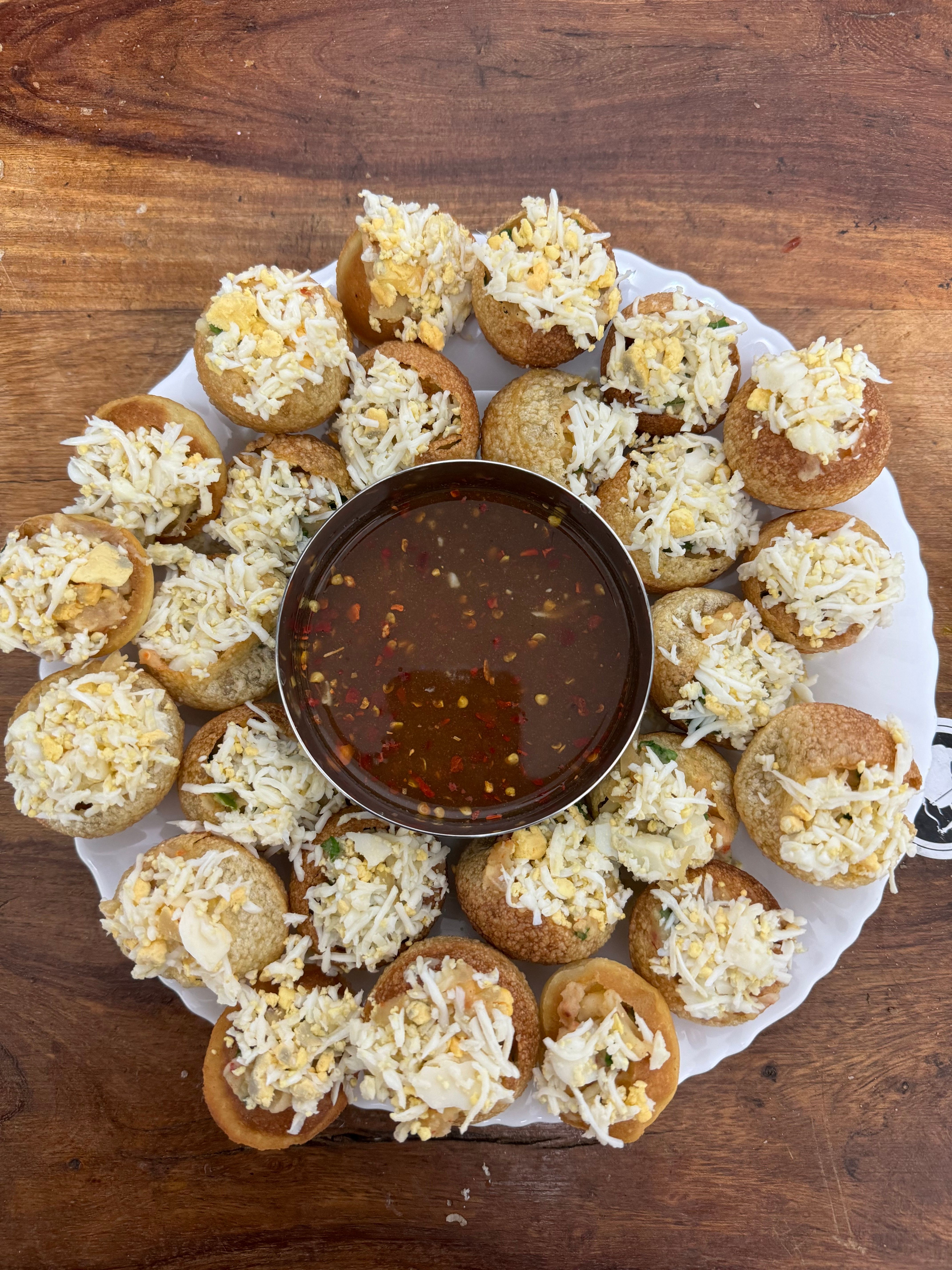
Photo: Fahim shizan / Pexels
The diets react (see scores below)
Common Ingredients
- semolina shells
- potatoes
- chickpeas
- tamarind
- green chiles
- cumin
- onion
- cilantro
- chaat masala
Specific recipes may vary.
Incompatible with 5 of 11 diets
Diet Ratings
Fuchka is fundamentally incompatible with a ketogenic diet. The dish is built on semolina shells (a refined grain product extremely high in carbohydrates), potatoes (a starchy vegetable with very high net carbs), and chickpeas (a legume also high in net carbs). Together, these three primary components alone deliver a carb load that would far exceed the entire daily keto limit of 20-50g net carbs in a single small serving. Tamarind also contains natural sugars adding to the carb burden. There is no meaningful fat content, and the protein source (chickpeas/beans) comes packaged with heavy carbs. This dish has no pathway to keto compatibility even with portion reduction, as the core structural ingredients are the problem.
Fuchka (the Bangladeshi version of pani puri/golgappa) as described here is entirely plant-based. The semolina shells are made from flour and water, the filling is potato and chickpeas, and the tamarind water is flavored with green chiles, cumin, onion, cilantro, and chaat masala — all whole plant ingredients. No animal products or animal-derived ingredients are present in this formulation. The dish is predominantly whole foods with minimal processing, earning a high approval score.
Fuchka is fundamentally incompatible with the paleo diet. The dish contains multiple hard-excluded ingredients: semolina shells (a wheat/grain-based product) and chickpeas (a legume) are both core violations with no debate in mainstream paleo. Chaat masala typically contains added salt and may include dried mango powder and other additives. The remaining ingredients — potatoes, tamarind, green chiles, cumin, onion, and cilantro — are either paleo-approved or at most mildly debated, but they cannot redeem a dish built on grain-based shells and legumes. This dish cannot be meaningfully modified and remain 'Fuchka.'
Fuchka features several Mediterranean diet-friendly ingredients: chickpeas and potatoes as plant-based fillings, tamarind, green chiles, cumin, onion, and cilantro are all whole, minimally processed components aligned with the diet's emphasis on plant-forward eating. However, the semolina shells are a refined grain product (fried or baked crispy puffs), which introduces a refined carbohydrate element that the Mediterranean diet generally discourages in favor of whole grains. The dish contains no red meat, no added sugars, and no heavily processed ingredients beyond the shells. Chickpeas are a Mediterranean diet staple, and the flavor profile using herbs and spices is compatible. The primary concern is the refined semolina shells, which lower the score from a full approval.
Some Mediterranean diet interpreters may view the semolina shells more leniently, noting that semolina (durum wheat) is a traditional Mediterranean grain used in pasta and couscous, and that small portions of refined grain as a vehicle for legume-heavy fillings is acceptable in a balanced diet. Others would strictly penalize any fried refined grain component as contrary to whole-grain principles.
Fuchka is entirely plant-based and represents everything excluded on the carnivore diet. The dish consists of semolina shells (grain), potatoes (starchy vegetable), chickpeas (legume), tamarind (fruit), green chiles (vegetable), cumin (spice/seed), onion (vegetable), cilantro (herb), and chaat masala (spice blend). There is not a single animal-derived ingredient in this dish. Every component is explicitly forbidden on the carnivore diet, making this a maximum-avoidance food.
Fuchka contains multiple Whole30-excluded ingredients. The semolina shells are made from wheat (a grain), making them a clear violation. Additionally, chickpeas are legumes, which are explicitly excluded from the Whole30 program. The combination of a grain-based shell and a legume filling makes this dish doubly non-compliant. The remaining ingredients (potatoes, tamarind, green chiles, cumin, onion, cilantro) would generally be Whole30-compatible, but the core structural components of this dish are excluded.
Fuchka contains multiple high-FODMAP ingredients that make it unsuitable during the elimination phase. Semolina (durum wheat) is high in fructans. Chickpeas are high in GOS and fructans at typical snack servings. Onion is one of the highest-FODMAP foods known, rich in fructans. These three ingredients alone are sufficient to classify the dish as high-FODMAP. Tamarind in larger amounts can also be problematic. The remaining ingredients — potatoes, green chiles, cumin, cilantro, and chaat masala (in small amounts) — are generally low-FODMAP, but they cannot offset the cumulative FODMAP load from the primary components. A standard serving of fuchka (4–6 shells) would deliver significant fructans from the semolina shells and onion, plus substantial GOS from chickpeas, making this a clearly high-FODMAP dish.
Fuchka is a popular Bangladeshi street snack consisting of crispy semolina/flour shells filled with spiced potatoes and chickpeas, served with tamarind water. Several ingredients align well with DASH principles: chickpeas are an excellent DASH-approved legume rich in fiber, potassium, and magnesium; tamarind provides potassium; cumin, cilantro, and green chiles are low-sodium flavor enhancers consistent with DASH's emphasis on herbs and spices over salt. Potatoes are a good source of potassium. However, chaat masala is a significant sodium concern — it typically contains black salt (kala namak) and amchur, contributing a notable sodium load per serving. The semolina shells (puri) are deep-fried, adding saturated or trans fat depending on the frying oil used in street preparation, and the refined semolina shell lacks the fiber of whole grains. As a street snack, sodium from chaat masala and preparation salting can accumulate quickly. Homemade versions with controlled sodium and baked or air-fried shells would score higher. The dish is not categorically DASH-incompatible due to its legume and vegetable base, but standard street-food preparation pushes it into caution territory.
NIH DASH guidelines would flag the deep-fried refined shells and high-sodium chaat masala as problematic for regular consumption. However, some DASH-oriented clinicians note that the chickpea and vegetable filling provides meaningful potassium and fiber, and that occasional moderate portions of this snack — especially in home-prepared, lower-sodium versions — can fit within a DASH pattern without significant cardiovascular risk.
Fuchka (the Bangladeshi version of pani puri/puchka) presents a mixed Zone profile. The semolina shells are high-glycemic refined grain carbohydrates, which Zone classifies as unfavorable. Potatoes are explicitly flagged by Dr. Sears as unfavorable high-glycemic carbs to avoid. These two ingredients together create a significant glycemic load concern. On the positive side, chickpeas provide a reasonable protein-and-fiber-rich carb source (Zone-favorable legume), and tamarind, green chiles, cumin, and cilantro are polyphenol-rich, anti-inflammatory spices that Sears' later work would praise. However, the dish is essentially a carbohydrate-dominant snack with minimal lean protein and no meaningful fat content — making it very difficult to balance to 40/30/30 without substantial modification. The protein content from chickpeas alone is too low relative to the carb load from shells and potatoes. As a standalone snack, it skews heavily carb-forward and high-glycemic, missing the Zone's protein and fat requirements. It could be used in a caution context with very small portions and complementary protein/fat additions, but as consumed traditionally, it does not fit the Zone framework well.
Some Zone practitioners applying a flexible approach might note that chickpeas are a favorable Zone carb/protein source, and the spices (tamarind polyphenols, cumin, chiles) align with Sears' anti-inflammatory nutritional approach outlined in 'The OmegaRx Zone' and 'The Zone.' In this view, with strict portion control and pairing with a lean protein side, fuchka could be worked into a Zone meal plan at a higher score. However, the potato and semolina shell base remains a genuine concern under classic Zone carb hierarchy.
Fuchka is a popular Bangladeshi street snack with a genuinely mixed anti-inflammatory profile. On the positive side, it contains several strongly anti-inflammatory ingredients: chickpeas provide plant-based protein, fiber, and polyphenols; tamarind offers antioxidants and anti-inflammatory phenolic compounds; green chiles contribute capsaicin, a well-documented anti-inflammatory compound; cumin has been associated with reduced inflammatory markers; and cilantro provides flavonoids and antioxidants. Chaat masala is a spice blend that typically includes cumin, black salt, amchur, and coriander — all of which are acceptable to beneficial. The chickpea-and-potato filling sits well within an anti-inflammatory framework. The main concern is the semolina (sooji) shells, which are made from refined wheat — a refined carbohydrate with minimal fiber and a higher glycemic index, which can contribute to mild pro-inflammatory insulin responses when consumed in quantity. Potatoes are a moderate-GI starch that are nutritionally acceptable in context. Tamarind-based chaats are often consumed with minimal added oils or fats, which is a plus. Overall, the anti-inflammatory herbs and legumes partially offset the refined carbohydrate base, placing fuchka in a moderate/caution tier rather than a clear avoid — especially when consumed in typical snack-sized portions.
Some anti-inflammatory practitioners, including those following autoimmune or low-glycemic protocols, would rate fuchka lower due to the refined semolina shells raising blood sugar and potentially promoting glycation-related inflammation. However, whole-diet advocates like Dr. Weil emphasize that context and overall dietary pattern matter more than any single refined ingredient — and the strong spice, legume, and tamarind profile here meaningfully offsets the refined carb concern.
Fuchka is a popular Bangladeshi street snack consisting of small hollow semolina/flour shells (puri) filled with a spiced mixture of mashed potato, chickpeas, tamarind water, green chiles, cumin, and cilantro. From a GLP-1 perspective, the chickpea and potato filling provides modest fiber and some plant-based protein, and the tamarind-based liquid component supports hydration. However, the semolina shells are deep-fried — a significant drawback, as fried foods are a primary trigger for nausea, bloating, and reflux on GLP-1 medications. Protein content is low (chickpeas and potato together in a small snack portion likely yield only 3–6g protein), falling well short of the 15–30g per meal target. The refined semolina shells offer little nutritional density per calorie. The green chiles and chaat masala introduce moderate spice and acidity, which some GLP-1 patients tolerate fine but others find worsens reflux or nausea, especially given slowed gastric emptying. Portion size is small and the snack is not volume-heavy, which works in its favor. The tamarind water filling is actually a hydration positive. Overall, the fried shells and low protein density are the main limiting factors — this is an occasional treat rather than a GLP-1-supportive food.
Some GLP-1-focused dietitians may note that fuchka is consumed in very small portions (3–6 pieces), limiting absolute fat intake from the fried shells, and that the chickpea-potato filling does provide meaningful fiber and plant protein relative to its calorie load — making it more acceptable as an occasional snack than a categorical avoid. Others will hold firm that any deep-fried vessel is inadvisable given how reliably fried foods trigger GI side effects in GLP-1 patients, regardless of portion.
*See how scores were generated at our methodology page.
Nutritional profile
Six traits that cut across every diet.
Fiber & Plants
How much whole-plant food and fiber it delivers.
Healthy Fats
The quality of its fats (unsaturated, omega-3).
Whole / Unprocessed
How close it is to its natural, unprocessed form.
Gut Gentle
How easy it is on digestion (low FODMAP, few irritants).
Low Glycemic
How little it spikes your blood sugar.
Protein Density
How much protein it packs per calorie.
Controversy Index
Higher controversy = more disagreement between diets.
Diet-Specific Tips
 Vegan — 9/10
View tips
- Semolina shells are flour-and-water based — no eggs or dairy
- Chickpeas and potatoes provide plant-based protein and starch
- Tamarind water is fully plant-based
- All spices and aromatics (cumin, chaat masala, cilantro, green chiles, onion) are vegan
- No animal-derived ingredients detected in any component
- Predominantly whole-food ingredients warrant a high score within the approve range
 Mediterranean — 5/10
View tips
- Chickpeas and potatoes are strong plant-based Mediterranean staples
- Semolina shells are a refined grain, not a whole grain — a moderate concern
- No red meat, added sugars, or heavily processed ingredients
- Herbs and spices (cumin, cilantro, green chiles) align well with Mediterranean flavor principles
- Tamarind adds acidity naturally, avoiding artificial additives
- Dish is a snack portion, limiting overall refined grain intake
 DASH — 5/10
View tips
- Chickpeas are a DASH-approved legume high in fiber, potassium, and magnesium
- Chaat masala contains black salt and is a significant source of added sodium
- Semolina shells are deep-fried, adding fat and using refined grain rather than whole grain
- Potatoes and tamarind contribute beneficial potassium
- No added sugars or saturated animal fats in the standard recipe
- Street-food preparation likely adds extra salt beyond listed ingredients
- Homemade low-sodium version with baked shells would score 7-8
 Zone — 4/10
View tips
- Semolina shells are refined, high-glycemic carbs — unfavorable in Zone
- Potatoes are explicitly listed as unfavorable/avoid carbs by Dr. Sears
- Chickpeas are Zone-favorable legumes providing some protein and low-GI carbs
- Dish is carb-dominant with minimal protein and essentially no fat — poor 40/30/30 balance
- Spices (tamarind, cumin, chiles, cilantro) provide polyphenols aligning with anti-inflammatory Zone goals
- As a traditional snack, portioning is inherently small, which partially mitigates glycemic impact
- Would need significant modification (remove potato, reduce shells, add protein/fat) to fit Zone properly
 Anti-Inflammatory — 6/10
View tips
- Chickpeas: high-fiber legume with anti-inflammatory polyphenols — a strong positive
- Tamarind: rich in antioxidants and phenolic acids with documented anti-inflammatory activity
- Green chiles: capsaicin is a well-established anti-inflammatory compound
- Cumin and chaat masala: spice blend with anti-inflammatory constituents (cumin, coriander, amchur)
- Cilantro: provides flavonoids and antioxidant phytochemicals
- Semolina shells: refined carbohydrate — raises glycemic load and can promote mild inflammation
- Potatoes: moderate-GI starch, nutritionally neutral in small amounts
- Low added fat profile typical of this snack is a modest positive
- Portion-dependent: small snack portions are more acceptable than large servings
 GLP-1 Friendly — 4/10
View tips
- Semolina shells are deep-fried — primary concern for GLP-1 GI side effects (nausea, bloating, reflux)
- Low protein per serving (est. 3–6g); does not support 15–30g per meal protein target
- Chickpeas and potato provide modest fiber — a partial positive
- Tamarind liquid component supports hydration
- Green chiles and chaat masala may worsen reflux or nausea in sensitive GLP-1 patients
- Small portion size limits absolute fat and calorie load — partial mitigating factor
- Refined semolina offers low nutrient density per calorie
- Not a standalone GLP-1-supportive snack; would need high-protein pairing to be acceptable