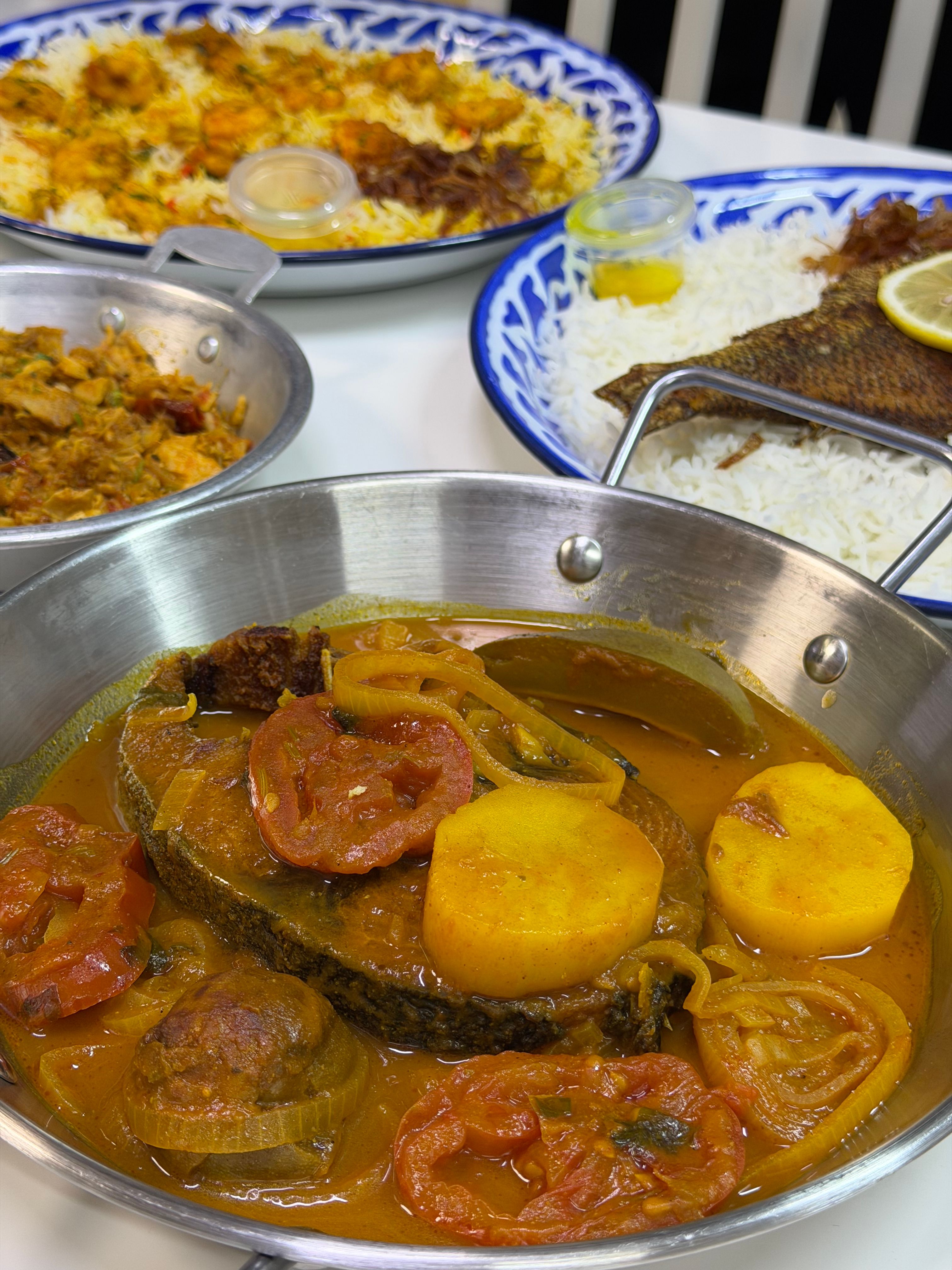
Photo: Anthony Rahayel / Pexels
Bangladeshi
Panta Ilish
The diets react (see scores below)
Common Ingredients
- fermented rice
- hilsa fish
- mustard oil
- green chiles
- onion
- salt
- lime
Specific recipes may vary.
Incompatible with 6 of 11 diets
Diet Ratings
Panta Ilish is fundamentally built around fermented rice (panta bhat), which is soaked/fermented cooked rice — a high-glycemic grain with approximately 25-45g net carbs per standard serving. This single ingredient alone likely exceeds the entire daily carb budget for ketosis. While the hilsa fish component is excellent for keto (rich in omega-3 fatty acids and protein), mustard oil is a healthy fat, and green chiles, onion, and lime add minimal carbs, they cannot offset the dominant rice base. Fermentation slightly reduces the glycemic index but does not meaningfully lower net carbs to keto-compatible levels. This dish is structurally incompatible with ketogenic eating due to its rice foundation.
Panta Ilish contains hilsa fish as a primary ingredient, which is a direct animal product. Fish is unambiguously excluded from a vegan diet under all mainstream vegan definitions. The remaining ingredients — fermented rice, mustard oil, green chiles, onion, salt, and lime — are fully plant-based, but the presence of hilsa fish makes this dish entirely incompatible with veganism.
Panta Ilish contains two major paleo violations that independently disqualify it. First, fermented rice is the foundational component of the dish — rice is a grain and is excluded under strict paleo guidelines regardless of fermentation status (fermentation does not transform a grain into a paleo-approved food). Second, mustard oil is derived from mustard seeds and is generally classified alongside seed oils in the paleo framework, making it another disqualifying ingredient. Salt is also explicitly excluded. The hilsa fish, green chiles, onion, and lime are all paleo-approved, but the grain base and seed oil make this dish incompatible with paleo principles. There is no meaningful paleo adaptation possible without removing the dish's defining ingredient (fermented rice), at which point it is no longer Panta Ilish.
Panta Ilish is a nutritionally interesting dish with several Mediterranean-compatible elements. Hilsa fish is an oily, omega-3-rich fish similar to sardines or mackerel — strongly aligned with Mediterranean principles. Green chiles, onion, and lime are all plant-based, minimally processed ingredients that fit well. However, two factors introduce complexity: fermented rice is a refined/processed grain (though fermentation adds probiotic value, modern Mediterranean guidelines favor whole grains), and mustard oil is not a traditional Mediterranean fat — extra virgin olive oil is the canonical fat source. The fermented rice base is the primary concern, as it is neither a whole grain nor a staple of the Mediterranean pattern, though it is not inherently harmful. The fish component strongly elevates the score above a simple 'caution' floor.
Some Mediterranean diet interpreters focused on traditional coastal eating patterns may be more permissive about non-olive plant oils like mustard oil, noting it has a favorable fatty acid profile with high monounsaturated and omega-3 content. Additionally, fermented foods are increasingly recognized in Mediterranean-adjacent dietary research for their gut health benefits, which could soften concerns about the rice base.
Panta Ilish is fundamentally incompatible with the carnivore diet. While hilsa fish is an excellent animal protein source, the dish is built around fermented rice (panta bhat), which is a grain-based plant food and the primary component of the dish. Additional plant-based ingredients include mustard oil (plant-derived oil), green chiles, onion, and lime — all of which are explicitly excluded from the carnivore diet. The fish itself would be carnivore-approved, but it represents only a minor component of a dish dominated by plant foods and plant derivatives. No meaningful adaptation could make this dish carnivore-compliant without fundamentally changing its identity.
Panta Ilish is a traditional Bangladeshi dish centered on fermented (soaked/water-steeped) rice, which is a grain and explicitly excluded on Whole30. While the hilsa fish, mustard oil, green chiles, onion, salt, and lime are all fully compliant ingredients, the fermented rice is the disqualifying element. Grains — including rice in any form, fermented or otherwise — are categorically excluded for the full 30 days. The dish cannot be made compliant without fundamentally replacing its defining base ingredient, making this an avoid.
Panta Ilish contains two significant FODMAP concerns that make it inappropriate for the elimination phase. First, onion is a major source of fructans and is high-FODMAP at virtually any culinary serving size — it is one of the most problematic ingredients on the low-FODMAP diet and should be strictly avoided during elimination. Second, fermented rice (panta bhat — rice soaked/fermented in water overnight) introduces uncertainty: plain cooked rice is low-FODMAP, but the fermentation process and residual soaking water may alter the carbohydrate profile and introduce organic acids. Monash has not specifically tested fermented/soaked rice, creating ambiguity. The remaining ingredients are generally low-FODMAP: hilsa fish (plain fish is low-FODMAP), mustard oil (fats/oils are FODMAP-free), green chiles at small amounts (low-FODMAP per Monash at ≤11g), salt (FODMAP-free), and lime juice (low-FODMAP). However, the presence of onion alone is sufficient to classify this dish as 'avoid' during the elimination phase, regardless of other ingredients.
Some clinical FODMAP practitioners might argue that if the onion is used only as a garnish in very small amounts (e.g., a few slices), the FODMAP load could be reduced, but Monash University data shows onion is high-FODMAP even at 28g (roughly 1/4 of a small onion), making any standard culinary portion problematic. The fermentation status of panta bhat also lacks Monash testing data — some practitioners theorize fermentation may reduce FODMAPs similarly to sourdough, but this has not been validated for rice preparations.
Panta Ilish combines fermented rice with hilsa fish, mustard oil, green chiles, onion, salt, and lime. Several components align well with DASH principles: hilsa is a fatty fish rich in omega-3s and is explicitly encouraged under DASH lean protein guidelines; onion, green chiles, and lime are low-sodium, nutrient-dense vegetables/fruits consistent with DASH; mustard oil is an unsaturated vegetable oil generally acceptable in DASH. However, the dish raises meaningful concerns. Fermented rice (panta bhat) undergoes lactic acid fermentation and soaking, which can increase the sodium content depending on preparation, and its glycemic profile differs from the whole grains DASH emphasizes. The salt added to fermented rice dishes is a significant variable — traditional preparations can be moderately high in sodium. Mustard oil, while unsaturated, is not among the preferred DASH oils (olive, canola) and is banned for edible use by the FDA due to erucic acid content, though it is widely used in South Asian cooking. Taken together, the dish is nutritionally mixed: excellent protein source (hilsa), good vegetables, but fermentation-related sodium load and non-standard oil place it in the caution range. Sodium control during preparation would improve the score considerably.
NIH DASH guidelines would flag the sodium in fermented rice and added salt as primary concerns, especially for the low-sodium DASH target of <1,500mg/day. However, updated clinical interpretations note that hilsa fish's high omega-3 content and the dish's vegetable components are strongly cardioprotective, and some DASH-aligned nutritionists would approve this dish if prepared with minimal added salt and salt-reduced fermentation.
Panta Ilish combines fermented rice (panta bhat) with hilsa fish, mustard oil, green chiles, onion, lime, and salt. The protein component — hilsa (ilish) fish — is an excellent Zone choice: it is a fatty fish rich in omega-3s, lean enough to fit a protein block, and explicitly favored by Sears' anti-inflammatory framework. The vegetables (onion, green chiles) and lime are low-glycemic Zone-friendly carb contributors. However, the fermented rice base is the central problem: rice is a high-glycemic, unfavorable carbohydrate in Zone terminology, and fermented rice (panta bhat) is consumed in substantial quantities as the dish's starch foundation, making it very difficult to keep the carb block count low and the glycemic load manageable. Mustard oil is primarily erucic acid (a long-chain monounsaturated fat) with moderate omega-6 content — it is not explicitly addressed by Sears and sits in a gray zone compared to preferred olive oil or avocado oil, though it is not a seed oil in the worst sense. The ratio challenge is real: the rice base would dominate the carb blocks and spike blood sugar, disrupting the 40/30/30 balance unless the rice portion is drastically reduced — at which point the dish loses its cultural character. With careful portioning (small rice portion, generous hilsa, minimal oil), it can technically be structured into a Zone meal, but as traditionally served it skews heavily carbohydrate-dominant with high glycemic impact.
Some Zone practitioners note that fermented foods have a lower effective glycemic index than their non-fermented counterparts due to organic acid production during fermentation, which slows gastric emptying. Panta bhat (fermented rice) may have a modestly lower GI than plain white rice, making it slightly more workable in Zone portions. Additionally, Sears' later writings in 'The Zone Diet' and 'The Anti-Inflammation Zone' emphasize omega-3 richness as a primary criterion, and hilsa is one of the most omega-3-dense freshwater fish available — this protein quality partially offsets the carbohydrate concern if portions are managed.
Panta Ilish is a traditional Bangladeshi dish combining fermented rice (panta bhat) with hilsa fish, mustard oil, green chiles, onion, and lime. The profile is mixed from an anti-inflammatory standpoint. Hilsa (Tenualosa ilisha) is an exceptionally omega-3-rich fatty fish — one of the richest sources in South Asian cuisine — providing EPA and DHA that strongly reduce inflammatory markers. Green chiles contribute capsaicin (anti-inflammatory), onion provides quercetin, and lime adds vitamin C and flavonoids. Fermented rice offers modest probiotic benefit (fermentation creates lactic acid bacteria), and fermented foods are generally supported in anti-inflammatory nutrition for gut health. However, mustard oil is the primary concern: it is high in erucic acid and has a debated omega-6 to omega-3 ratio, and while it contains some ALA (omega-3), most anti-inflammatory frameworks flag it as cautionary — it is not in the 'emphasized' category like extra virgin olive oil. The fermented rice is also a refined carbohydrate base with a higher glycemic load than whole grains, though fermentation partially mitigates glycemic impact. On balance, the exceptional omega-3 content of hilsa elevates this dish significantly, but the mustard oil and refined fermented rice base prevent a full approval.
Some anti-inflammatory practitioners, particularly those drawing on traditional South Asian dietary wisdom, consider mustard oil acceptable or even beneficial due to its ALA content, high smoke point, and traditional use in low-inflammatory populations — Dr. Weil's framework is largely silent on mustard oil specifically. Conversely, stricter anti-inflammatory protocols following the IF Rating system would penalize mustard oil more heavily for its erucic acid content and would rate refined fermented rice similarly to white rice, potentially pushing this dish toward a lower score.
Panta Ilish is a traditional Bangladeshi breakfast of fermented/soaked rice served with hilsa fish, mustard oil, green chiles, onion, and lime. It has meaningful strengths for GLP-1 patients — hilsa is a rich source of omega-3 fatty acids and provides moderate protein, lime and onion add micronutrients, and the dish is relatively easy to eat in small portions. However, several factors raise concern. Fermented rice (panta bhat) is a refined-grain base with low protein density, low fiber, and high glycemic load relative to its calorie contribution — exactly the kind of empty-calorie vehicle GLP-1 patients can least afford. Mustard oil is used in non-trivial amounts and adds significant fat per serving, and while it is largely unsaturated (erucic acid plus ALA), the total fat load per meal can worsen GLP-1-related nausea, bloating, and delayed gastric emptying. Green chiles are a meaningful GI irritant risk — spicy foods commonly worsen reflux and nausea in GLP-1 patients. Hilsa itself is a fatty fish (higher fat than salmon per 100g in some preparations), which means the combined fat load from fish plus mustard oil in a single breakfast is above the low-fat-per-serving threshold recommended for GLP-1 patients. The dish is not fried, which is a positive, and the fermentation process may mildly support gut health. On balance: the protein and omega-3 value of hilsa are real, but the refined rice base, combined fat load, and spice level make this a caution-tier breakfast for most GLP-1 patients, particularly in the early weeks of medication use when GI side effects are most pronounced.
Some GLP-1-focused dietitians working with South Asian patients would allow Panta Ilish in moderation, emphasizing that hilsa's omega-3 content and the fermented rice's lower glycemic index versus plain white rice (due to fermentation) make it more tolerable than it appears; others would flag the fat-plus-spice combination as a predictable nausea trigger and recommend substituting the fermented rice with a higher-protein, higher-fiber base and reducing the mustard oil quantity significantly. Individual tolerance to spice and fat varies considerably among GLP-1 patients, particularly across injection cycles.
*See how scores were generated at our methodology page.
Nutritional profile
Six traits that cut across every diet.
Fiber & Plants
How much whole-plant food and fiber it delivers.
Healthy Fats
The quality of its fats (unsaturated, omega-3).
Whole / Unprocessed
How close it is to its natural, unprocessed form.
Gut Gentle
How easy it is on digestion (low FODMAP, few irritants).
Low Glycemic
How little it spikes your blood sugar.
Protein Density
How much protein it packs per calorie.
Controversy Index
Higher controversy = more disagreement between diets.
Diet-Specific Tips
 Mediterranean — 6/10
View tips
- Hilsa fish is omega-3-rich and aligns with the Mediterranean emphasis on fatty fish consumed 2-3 times weekly
- Fermented rice is a refined grain, not a whole grain — deviates from Mediterranean grain preferences
- Mustard oil is not the canonical Mediterranean fat (extra virgin olive oil is preferred), though it has a reasonable fatty acid profile
- Vegetables and aromatics (onion, green chile, lime) are Mediterranean-compatible plant foods
- No added sugars, no processed meats, no highly refined ingredients beyond the rice base
- Fermentation of rice adds probiotic complexity not typically evaluated in standard Mediterranean scoring
 DASH — 5/10
View tips
- Hilsa fish is an omega-3-rich fatty fish, a DASH-approved lean protein
- Fermented rice (panta bhat) may carry elevated sodium from fermentation and salting
- Added salt is a significant DASH concern, especially for hypertensive individuals targeting <1,500mg/day
- Mustard oil is unsaturated but not among DASH-preferred oils; erucic acid content is a separate concern
- Green chiles, onion, and lime are DASH-compatible low-sodium vegetables
- No added sugar, saturated fat is low, and the dish is minimally processed aside from fermentation
- Sodium content highly variable by preparation — low-salt versions would score 7+
 Zone — 4/10
View tips
- Fermented rice (panta bhat) is a high-glycemic, Zone-unfavorable carbohydrate that dominates the dish's macro profile
- Hilsa fish is an excellent omega-3-rich protein source strongly aligned with Zone and anti-inflammatory principles
- Mustard oil is a monounsaturated-dominant fat but not a preferred Zone fat source; it is not a harmful seed oil but lacks Sears' explicit endorsement
- Green chiles, onion, and lime are low-glycemic Zone-favorable carb contributors
- As traditionally served, the dish is heavily carbohydrate-dominant and difficult to balance to 40/30/30 without drastically reducing the rice portion
- Fermentation may modestly reduce the glycemic index of the rice compared to plain cooked white rice
 Anti-Inflammatory — 6/10
View tips
- Hilsa fish is exceptionally high in omega-3 fatty acids (EPA/DHA), a top anti-inflammatory protein source
- Mustard oil is debated — contains ALA but also erucic acid; not recommended as a primary cooking oil in most anti-inflammatory frameworks
- Fermented rice provides modest probiotic/prebiotic benefit compared to plain white rice, but is still a refined carbohydrate
- Green chiles contribute capsaicin with anti-inflammatory and antioxidant properties
- Onion provides quercetin, a potent anti-inflammatory flavonoid
- Lime adds vitamin C and flavonoids supporting antioxidant activity
- No trans fats, added sugars, or highly processed ingredients present
 GLP-1 Friendly — 4/10
View tips
- Hilsa fish provides omega-3 fats and moderate protein — a genuine nutritional positive
- Fermented rice is a refined-grain, low-protein, low-fiber calorie base — poor nutrient density per calorie for GLP-1 patients
- Combined fat load from hilsa (naturally fatty fish) plus mustard oil elevates per-serving fat above GLP-1-friendly thresholds
- Green chiles are a meaningful GI irritant risk — likely to worsen nausea and reflux common on GLP-1 medications
- Dish is not fried and is soft/easy to eat in small portions — positive for digestibility and small-portion friendliness
- Fermentation may mildly support gut microbiome but does not meaningfully offset the refined-grain base
- As a breakfast, the fat-and-spice combination on a potentially empty or near-empty stomach increases GI side effect risk