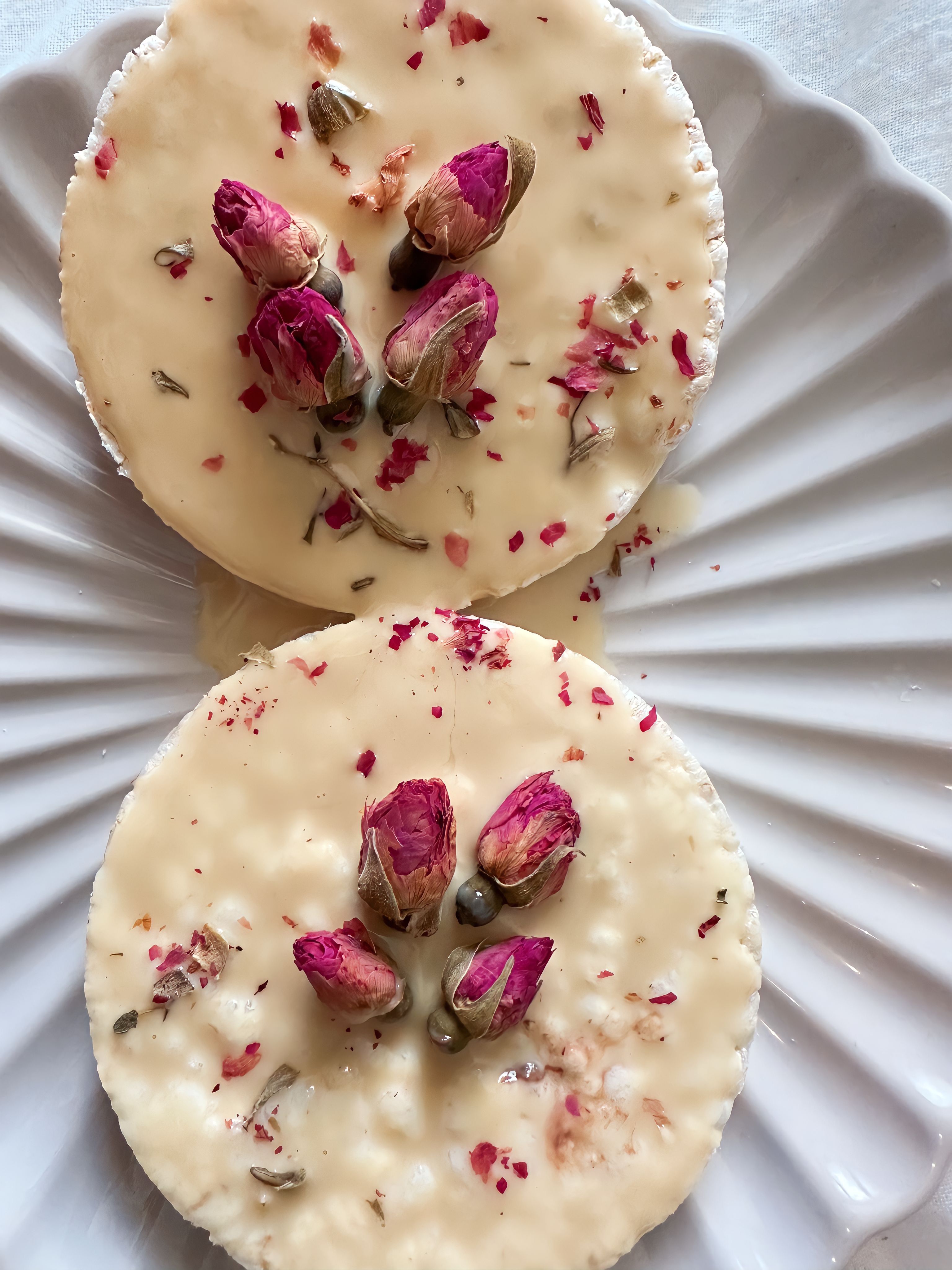
Photo: Aesthetics Life / Pexels
Bangladeshi
Roshmalai
The diets react (see scores below)
Common Ingredients
- chhena
- milk
- sugar
- cardamom
- saffron
- pistachios
- almonds
Specific recipes may vary.
Incompatible with 9 of 11 diets
Diet Ratings
Roshmalai is a traditional Bengali sweet dessert made by soaking chhena (fresh cheese) dumplings in sugar-sweetened milk syrup, making it fundamentally incompatible with ketogenic diets. The dish is heavily sugar-laden: the syrup base is primarily sugar, and the sweetened condensed milk used to soak the chhena adds further carbohydrates. A single serving can easily contain 30-50g of net carbs from sugar alone, far exceeding the daily keto limit in one snack. While chhena itself (fresh paneer-like cheese) and the nuts are keto-friendly, the dominant ingredient in terms of macros is sugar, which is a strict zero-tolerance item on keto. The cardamom and saffron are negligible in carb contribution, but they cannot offset the massive sugar load.
Roshmalai (also spelled Rasgulla or Ras Malai) is a traditional Bengali/Bangladeshi dessert made from chhena (fresh cheese curds) and milk — both of which are dairy products derived from animals. Chhena is produced by curdling cow's or buffalo's milk, and the syrup/cream base is made from full-fat milk. These are clear animal-derived ingredients that are fundamentally incompatible with a vegan diet. While the dish also contains plant-based ingredients (sugar, cardamom, saffron, pistachios, almonds), the core components — chhena and milk — are irreplaceable animal products in the traditional recipe. Vegan versions can be made using cashew-based cream cheese and plant milks, but the traditional dish as described is firmly non-vegan.
Roshmalai is a traditional Bengali dairy dessert built on a foundation of non-paleo ingredients. Chhena (fresh cheese curds) and milk are dairy products explicitly excluded from the paleo diet. Refined sugar, the primary sweetener, is also a clear avoid under paleo rules. While cardamom, saffron, pistachios, and almonds are paleo-approved, they are minor components that cannot redeem a dish whose core structure depends on dairy and refined sugar. This dish is incompatible with paleo principles at a foundational level.
Roshmalai is a South Asian sweet dessert made primarily from chhena (fresh cheese curds) soaked in sweetened, thickened milk syrup with significant added sugar. While it contains some Mediterranean-friendly elements — nuts (pistachios, almonds), aromatic spices (cardamom, saffron), and dairy — the dish is fundamentally a high-sugar confection. The large quantity of added sugar directly contradicts Mediterranean diet principles, which call for minimal added sugars. Dairy in moderate amounts is acceptable, but as a sugar-heavy dessert snack, Roshmalai is not aligned with the diet's emphasis on minimally processed, low-sugar foods. The nuts and spices are positive elements but insufficient to offset the dominant sugar content.
Roshmalai is a Bengali sweet dessert made from chhena (fresh cheese curds) soaked in sweetened, flavored milk. While chhena and milk are animal-derived, the dish contains multiple strictly forbidden carnivore ingredients: sugar (processed carbohydrate), cardamom and saffron (plant-based spices), pistachios and almonds (nuts — plant foods). The overwhelming presence of plant-derived and processed sweet ingredients makes this entirely incompatible with a carnivore diet. Even the dairy components are debated on carnivore, and here they serve merely as a vehicle for a high-sugar, plant-laden dessert.
Roshmalai contains multiple excluded ingredients. Chhena is a fresh dairy cheese (excluded — dairy), milk is excluded (dairy), and sugar is excluded (added sugar). These are core, non-negotiable exclusions on the Whole30 program with no exceptions. The dish cannot be made compliant without fundamentally changing its nature.
Roshmalai is fundamentally incompatible with the low-FODMAP elimination phase due to multiple high-FODMAP ingredients. The dish consists of chhena (fresh cheese curds made from curdled milk) soaked in sweetened reduced milk (rabri). Chhena itself is a fresh, soft cheese with residual lactose — similar to ricotta or paneer — and carries moderate-to-high lactose content. More critically, the dish is served swimming in reduced whole milk, which is very high in lactose and represents the dominant component by volume. A standard serving of Roshmalai (2-3 pieces with syrup) would deliver a substantial lactose load far exceeding the Monash threshold of ~1g lactose per serving. Sugar (sucrose) is fine at normal doses, cardamom is low-FODMAP, and saffron is used in negligible amounts. Pistachios are high-FODMAP (GOS/fructans) above 15 pistachios, and a typical garnish serving may approach or exceed this. Almonds are low-FODMAP at ≤10 whole almonds. Overall, the lactose-heavy milk base and chhena make this dish a clear 'avoid' during elimination.
Roshmalai (rasmalai) is a Bengali sweet dish made from chhena (fresh cheese curds) soaked in sweetened, saffron-and-cardamom-flavored milk, garnished with pistachios and almonds. While it contains some DASH-friendly elements — dairy provides calcium, nuts offer magnesium and healthy fats, and spices are sodium-free — the dish is high in added sugar and made with full-fat dairy (whole milk and chhena), both of which DASH guidelines restrict. The sugar content is significant, as traditional rasmalai is heavily sweetened, conflicting with DASH's limit on sweets. Full-fat chhena and whole milk add saturated fat, which DASH limits. However, the dish is low in sodium, contains no tropical oils, no processed ingredients, and the nuts contribute fiber and beneficial micronutrients. It is not a core DASH food but can be consumed occasionally in small portions.
NIH DASH guidelines explicitly limit full-fat dairy and added sweets, which would push this toward 'avoid' for strict adherents. However, updated clinical interpretations note that emerging research questions the harm of full-fat dairy in cardiovascular outcomes, and the absence of sodium, processed ingredients, or trans fats means some DASH-oriented dietitians may permit roshmalai as an occasional small-portion treat rather than categorically excluding it.
Roshmalai (also spelled Ras Malai) is a Bengali dessert consisting of soft chhena (fresh cheese) dumplings soaked in sweetened, flavored milk. While chhena provides some protein and the pistachios/almonds offer monounsaturated fats, the dish is fundamentally a sugar-delivery vehicle. The soaking syrup and sweetened milk create an extremely high sugar load with a very high glycemic impact. The macro profile is grossly imbalanced for Zone purposes: the carbohydrate fraction is dominated by simple sugars (sucrose), not low-glycemic complex carbs; the fat component includes saturated fat from full-fat dairy; and the protein-to-carb ratio is far too low to approach the 40/30/30 Zone target. As a snack, there is no realistic way to portion-control this dish into Zone blocks without consuming such a tiny amount that it ceases to function as a snack. Sugar is explicitly flagged as an 'unfavorable' and high-glycemic carbohydrate in Sears' Zone framework, and sweetened condensed milk preparations are among the least Zone-compatible foods. The nuts provide a positive element, but they are a minor component overwhelmed by the sugar load.
Roshmalai is a South Asian milk-based dessert made from soft chhena (fresh cheese curds) soaked in sweetened, cardamom- and saffron-infused milk, garnished with pistachios and almonds. The inflammatory profile is decidedly mixed. On the positive side: cardamom and saffron both carry meaningful anti-inflammatory polyphenol activity; pistachios and almonds provide healthy monounsaturated fats, vitamin E, and modest anti-inflammatory phytonutrients; and full-fat dairy from chhena and milk contains some anti-inflammatory CLA and fat-soluble vitamins. Saffron in particular has demonstrated suppression of NF-κB and reduction of IL-6 in research. On the negative side: significant added sugar is a primary driver of pro-inflammatory signaling (raises CRP, promotes AGE formation), and full-fat dairy — particularly the fresh cheese chhena and whole milk — is categorized as a 'limit' item under anti-inflammatory guidelines due to saturated fat content. As a dessert/snack eaten regularly, the sugar load becomes the dominant concern. Enjoyed occasionally, the anti-inflammatory spices and nuts partially offset the sugar and saturated fat, keeping this in 'caution' rather than 'avoid' territory. The quantity and frequency of consumption are the key determinants here.
Some anti-inflammatory practitioners, particularly those following stricter protocols like AIP or low-sugar approaches, would rate this lower (toward avoid) due to significant added sugar and full-fat dairy, both of which are linked to increased inflammatory markers. Conversely, traditional food researchers and Dr. Weil's more moderate framework would note that the bioactive spices (saffron, cardamom) and nuts in small-portion, occasional consumption make this no worse than other moderate dairy-and-sugar desserts.
Roshmalai is a Bengali dessert consisting of soft chhena (fresh cheese) dumplings soaked in sweetened, reduced milk (rabri) flavored with cardamom and saffron, garnished with pistachios and almonds. Despite chhena providing modest protein, the dish is overwhelmingly high in sugar and saturated fat, with very low fiber content. The sugar-laden milk syrup represents exactly the kind of empty, rapidly absorbed carbohydrate calories that are counterproductive on a GLP-1 regimen. The high fat content from full-fat chhena and reduced whole milk is likely to worsen GLP-1 side effects including nausea, bloating, and reflux due to slowed gastric emptying. Nutrient density per calorie is poor — the majority of calories come from sugar and saturated fat with minimal compensating nutritional benefit. The nuts (pistachios, almonds) add negligible fiber and some healthy fats but do not meaningfully offset the overall profile. As a snack, it provides none of the qualities prioritized for GLP-1 patients: it is not protein-dense per calorie, not high-fiber, not low-fat, and not easy to digest in the context of delayed gastric emptying.
*See how scores were generated at our methodology page.
Nutritional profile
Six traits that cut across every diet.
Fiber & Plants
How much whole-plant food and fiber it delivers.
Healthy Fats
The quality of its fats (unsaturated, omega-3).
Whole / Unprocessed
How close it is to its natural, unprocessed form.
Gut Gentle
How easy it is on digestion (low FODMAP, few irritants).
Low Glycemic
How little it spikes your blood sugar.
Protein Density
How much protein it packs per calorie.
Controversy Index
Higher controversy = more disagreement between diets.
Diet-Specific Tips
 DASH — 4/10
View tips
- High added sugar content — conflicts with DASH limits on sweets
- Full-fat dairy (chhena, whole milk) — DASH emphasizes low-fat or fat-free dairy
- Saturated fat from full-fat dairy requires moderation
- Very low sodium — favorable for DASH
- Pistachios and almonds provide magnesium, potassium, and healthy fats — DASH-friendly
- No processed ingredients, artificial additives, or tropical oils
- Portion size critical — small servings reduce sugar and saturated fat load
 Anti-Inflammatory — 4/10
View tips
- High added sugar load — primary pro-inflammatory concern, raises CRP and promotes glycation
- Full-fat dairy (chhena, whole milk) — categorized as 'limit' due to saturated fat content
- Saffron — notable anti-inflammatory; inhibits NF-κB and reduces IL-6 in research
- Cardamom — anti-inflammatory polyphenols and antioxidant activity
- Pistachios and almonds — heart-healthy monounsaturated fats, vitamin E, modest anti-inflammatory benefit
- Occasional/small-portion consumption mitigates concerns; regular intake amplifies sugar and saturated fat risk