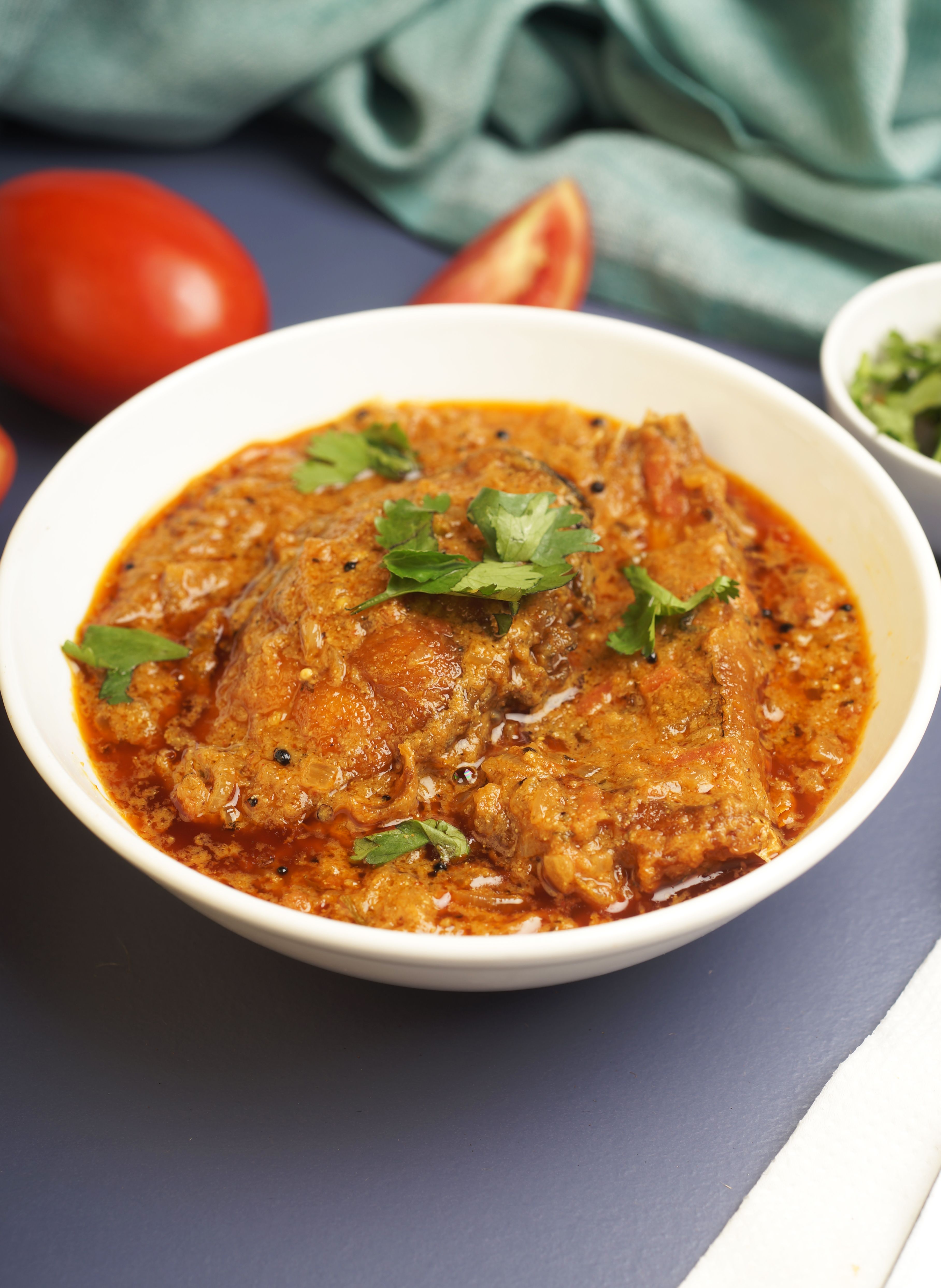
Photo: Deep Dasgupta / Pexels
Bangladeshi
Shorshe Bata Maach
The diets react (see scores below)
Common Ingredients
- fish
- mustard seeds
- green chiles
- mustard oil
- turmeric
- onion
- cilantro
- salt
Specific recipes may vary.
Incompatible with 3 of 11 diets
Diet Ratings
Shorshe Bata Maach is a Bengali mustard fish curry that aligns well with ketogenic principles. Fish provides high-quality lean protein, mustard oil and ground mustard seeds contribute healthy fats, and the spices (turmeric, green chiles, cilantro) are negligible in carbs. Onion is the primary carb concern: a standard serving would contain a modest amount of onion, keeping net carbs low (estimated 3-6g per serving). Mustard seeds ground into a paste add minimal net carbs but meaningful fat and flavor. The dish is whole-food, unprocessed, and contains no grains, added sugars, or starchy vegetables, making it naturally keto-compatible for most practitioners.
Strict keto protocols may flag mustard seeds in large paste quantities and onion as cumulative carb sources, particularly for those targeting the lower end (20g/day) of net carb limits or those with individual sensitivity to alliums affecting ketosis.
Shorshe Bata Maach is a traditional Bangladeshi mustard fish curry. The primary protein is fish, which is an animal product and categorically excluded from a vegan diet. All remaining ingredients (mustard seeds, green chiles, mustard oil, turmeric, onion, cilantro, salt) are plant-based, but the dish cannot be considered vegan due to the fish component. There is no ambiguity here — fish is an animal product, and no vegan organization or school of thought permits its consumption under a vegan framework.
Shorshe Bata Maach is a traditional Bengali mustard fish dish with a paleo-incompatible ingredient profile. Fish, mustard seeds, green chiles, turmeric, onion, and cilantro are all paleo-approved. However, two ingredients create significant problems: mustard oil is a seed oil (pressed from mustard seeds), which falls into the excluded seed oil category alongside canola, sunflower, and soybean oils — paleo guidelines favor animal fats, olive oil, coconut oil, and avocado oil instead. Added salt is also explicitly excluded from strict paleo. These two non-negotiable violations pull the dish into 'avoid' territory despite its otherwise clean, whole-food ingredient list.
Some modern paleo practitioners, particularly those following a more ancestral or traditional foods approach, make exceptions for cold-pressed, unrefined mustard oil given its high erucic acid and omega-3 content, arguing it is less processed than many commercial seed oils. Similarly, many real-world paleo practitioners treat small amounts of salt as a practical concession rather than a strict violation, meaning a modified version of this dish could be considered borderline caution by more flexible paleo standards.
Shorshe Bata Maach is a fish-based dish with whole, minimally processed ingredients — fish, mustard seeds, green chiles, turmeric, onion, and cilantro — that align very well with Mediterranean diet principles. Fish is strongly encouraged (2-3 times weekly), and the supporting ingredients are all whole plant foods. The primary deviation from Mediterranean standards is the use of mustard oil rather than extra virgin olive oil; mustard oil is a traditional fat in Bangladeshi cuisine and is a monounsaturated-rich plant oil, but it is not the canonical Mediterranean fat source. The dish contains no red meat, refined grains, added sugars, or processed ingredients, making it a strong overall fit.
Some Mediterranean diet purists would score this lower due to mustard oil replacing extra virgin olive oil as the cooking fat, as EVOO is specifically emphasized as the primary fat in Mediterranean guidelines. However, mustard oil is a plant-based fat with a favorable fatty acid profile, and many modern integrative nutrition perspectives accept it as a comparable substitute.
Shorshe Bata Maach is a traditional Bengali mustard fish dish that is fundamentally incompatible with the carnivore diet. While fish is an approved animal protein, the dish is dominated by plant-based ingredients: mustard seeds (ground into a paste), green chiles, turmeric, onion, cilantro, and mustard oil. Mustard oil is a plant-derived oil, which is strictly excluded. The mustard seed paste, spices, and aromatics are all plant foods that violate core carnivore principles. The only carnivore-compatible elements are the fish and salt. This dish cannot be modified into a carnivore meal without completely changing its identity — removing the mustard paste and plant ingredients would leave plain fish with salt, which is a different dish entirely.
Shorshe Bata Maach is a traditional Bengali mustard fish curry. Every ingredient listed is fully Whole30 compliant: fish is an approved protein, mustard seeds are a compliant spice, green chiles are vegetables, mustard oil is a natural fat, turmeric is a compliant spice, onion and cilantro are vegetables/herbs, and salt is explicitly allowed. There are no excluded ingredients — no grains, legumes, dairy, added sugars, or other banned components. This is a whole-food, minimally processed dish that aligns well with the spirit of the Whole30 program.
Shorshe Bata Maach is a Bengali/Bangladeshi mustard-paste fish curry with several FODMAP-relevant ingredients. Fish itself is entirely FODMAP-free and safe. Mustard seeds are low-FODMAP at typical culinary quantities. Mustard oil, turmeric, green chiles, cilantro, and salt are all FODMAP-free or negligible at standard serving sizes. The critical issue is onion, which is high in fructans and is a major FODMAP trigger — it is on the avoid list during the elimination phase at virtually any cooking quantity. The quantity of onion used in a typical serving of this dish is likely to push it into high-FODMAP territory. Green chiles in small amounts are generally considered low-FODMAP per Monash, though very large quantities have not been fully characterized. Mustard seeds ground into a paste (shorshe bata) are used in generous quantities but are not a significant FODMAP source. Overall, the dish would be approvable if onion were omitted or replaced with the green tops of scallions, but as traditionally prepared with onion, it warrants a caution or avoid rating. A score of 5 reflects that modification (removing onion) makes this dish very easily low-FODMAP, but as traditionally prepared it is problematic.
Monash University clearly lists onion as high-FODMAP at any meaningful quantity due to fructans, making this dish technically an 'avoid' during strict elimination. However, some clinical FODMAP practitioners allow dishes where onion is used in very small amounts and may be partially leached during cooking, though this is not supported by Monash's standard guidance for the elimination phase.
Shorshe Bata Maach (fish in mustard paste) is built around fish, which is a core DASH-approved lean protein. The base ingredients — mustard seeds, green chiles, turmeric, onion, and cilantro — are all DASH-friendly and add negligible sodium while contributing anti-inflammatory phytonutrients. However, two factors pull the rating to 'caution': (1) Mustard oil is high in erucic acid and, while monounsaturated-dominant, is not a preferred DASH oil (DASH recommends canola, olive, or other vegetable oils; mustard oil is not explicitly endorsed and is banned for edible use in some Western countries due to erucic acid concerns). (2) Salt is added and the quantity is home-cook dependent — traditional South Asian preparations can be moderately high in sodium. If prepared with sodium restraint (under 600mg per serving) and a modest amount of mustard oil, this dish aligns reasonably well with DASH principles. It lacks high saturated fat, added sugars, or heavy processing. The fish provides lean protein, omega-3s, and potassium, which are all DASH-positive.
NIH DASH guidelines do not specifically address mustard oil, but the AHA and standard DASH frameworks recommend against oils with significant erucic acid content. However, updated clinical interpretations from South Asian cardiologists note that traditional mustard oil use in modest quantities — primarily as a flavoring base — may be acceptable given its predominantly monounsaturated fat profile and that erucic acid concerns are most relevant at very high intake levels.
Shorshe Bata Maach (fish in mustard paste) has a strong Zone-friendly foundation: fish is an ideal lean protein source rich in omega-3s, turmeric is a potent anti-inflammatory polyphenol Sears explicitly endorses, and green chiles, onion, and cilantro are low-glycemic, favorable Zone carbohydrates. Mustard seeds are Zone-neutral and add beneficial phytonutrients. The primary concern is mustard oil — it is high in erucic acid and is an omega-6-heavy seed/plant oil that Sears discourages in favor of monounsaturated fats like olive oil. However, mustard oil also contains meaningful amounts of monounsaturated fatty acids (~60% oleic acid content), which partially redeems it. The dish is naturally low in carbohydrates, so pairing with Zone-approved low-GI vegetables or a small whole grain serving would be needed to balance the 40/30/30 ratio. As served, this is protein- and fat-forward, which is common in Zone meals — easily corrected by portioning carb blocks on the side. The absence of high-glycemic ingredients and the omega-3-rich fish protein make this a workable Zone component with modest adjustment.
Sears' later anti-inflammatory work (The Anti-Inflammation Zone, Toxic Fat) places strong emphasis on avoiding omega-6-rich oils that promote arachidonic acid production. Mustard oil's omega-6 content and erucic acid profile could be flagged as problematic under strict anti-inflammatory Zone guidelines. Some Zone practitioners would recommend substituting olive oil entirely. Conversely, mustard oil's ~60% monounsaturated content and traditional use in small quantities may make it acceptable in moderate portions, particularly given the strong omega-3 offset from the fish.
Shorshe Bata Maach (fish in mustard paste) is a strongly anti-inflammatory Bengali dish. Fish — especially when freshwater or oily varieties like hilsa (ilish) are used — provides omega-3 fatty acids (EPA/DHA) that are foundational to the anti-inflammatory diet. Ground mustard seeds deliver glucosinolates, selenium, and omega-3 alpha-linolenic acid (ALA), all with documented anti-inflammatory properties. Turmeric contributes curcumin, one of the most well-researched anti-inflammatory compounds. Green chiles provide capsaicin and vitamin C, both associated with reduced inflammatory markers. Onion and cilantro add quercetin and flavonoids. Mustard oil is the main area of nuance: it is high in ALA (omega-3) and oleic acid (omega-9), giving it a favorable fatty acid profile, but it contains erucic acid, which raises cardiovascular safety questions and has led to restrictions in the US and EU. In South Asian culinary tradition and anti-inflammatory frameworks informed by that context, mustard oil is considered beneficial in moderation. Overall, the dish is ingredient-rich in anti-inflammatory compounds with minimal added sugar, no trans fats, and no refined carbohydrates.
Mustard oil's erucic acid content (20–40%) is flagged by the FDA and EFSA as a potential cardiac concern at high intake levels, and it is technically banned for food use in the US. However, traditional South Asian anti-inflammatory practitioners and some researchers note its favorable ALA and oleic acid profile and argue that typical culinary quantities pose no meaningful risk; Dr. Weil's framework does not explicitly prohibit it.
Shorshe Bata Maach is a traditional Bengali mustard-marinated fish dish with a genuinely strong nutritional profile in several areas — fish is an excellent lean protein source supporting the 100-120g daily target, and mustard seeds contribute meaningful fiber, healthy unsaturated fats, and anti-inflammatory compounds. Turmeric adds anti-inflammatory benefit with negligible caloric cost. However, two ingredients introduce meaningful caution for GLP-1 patients. First, mustard oil is used in cooking volumes that can make per-serving fat content moderate-to-high depending on preparation; while it is predominantly monounsaturated and contains omega-3 alpha-linolenic acid, the total fat load per serving matters given GLP-1 slowed gastric emptying and the elevated nausea/reflux risk from high-fat meals. Second, green chiles are a known GLP-1 irritant — capsaicin can worsen nausea, reflux, and gastric discomfort in patients already experiencing slowed gastric motility. The dish is not fried and is not high in refined carbohydrates or sugar, which are positives. At a moderate portion size with minimal mustard oil and mild chile quantity, this dish can work well for GLP-1 patients, but the spice and fat variables make it portion-sensitive and tolerance-dependent rather than a straightforward approve.
Some GLP-1-focused dietitians would rate this higher, noting that fish is one of the most recommended protein sources and that mustard oil's unsaturated fat profile is meaningfully different from saturated fat in terms of GI side effect risk. Others would rate it lower, emphasizing that any chiles — even mild green chiles — are unpredictable for GLP-1 patients prone to reflux, and that traditional preparation volumes of mustard oil can push per-serving fat into ranges that reliably worsen nausea in the first several months on the medication.
*See how scores were generated at our methodology page.
Nutritional profile
Six traits that cut across every diet.
Fiber & Plants
How much whole-plant food and fiber it delivers.
Healthy Fats
The quality of its fats (unsaturated, omega-3).
Whole / Unprocessed
How close it is to its natural, unprocessed form.
Gut Gentle
How easy it is on digestion (low FODMAP, few irritants).
Low Glycemic
How little it spikes your blood sugar.
Protein Density
How much protein it packs per calorie.
Controversy Index
Higher controversy = more disagreement between diets.
Diet-Specific Tips
 Keto — 8/10
View tips
- Fish is zero-carb, high-quality protein — strongly keto-compatible
- Mustard oil is a keto-friendly high-fat cooking medium
- Ground mustard seeds add minimal net carbs and healthy fats
- Onion contributes modest carbs (~4-6g per serving) — manageable in portions
- No grains, sugar, or starchy vegetables present
- Turmeric, green chiles, and cilantro are negligible in net carbs
- Whole, unprocessed ingredients throughout
 Mediterranean — 8/10
View tips
- Fish as primary protein strongly aligns with Mediterranean recommendations
- Whole, unprocessed ingredients throughout
- Mustard seeds and mustard oil are not traditional Mediterranean ingredients but are plant-based
- No red meat, added sugars, refined grains, or processed foods
- Turmeric, chiles, and cilantro are anti-inflammatory whole spices/herbs
- Mustard oil is a plant fat but not EVOO, which is the canonical Mediterranean fat
 Whole30 — 9/10
View tips
- Fish is an explicitly approved Whole30 protein
- Mustard seeds and mustard oil are compliant — no added sugar or excluded ingredients
- Green chiles, onion, and cilantro are compliant vegetables/herbs
- Turmeric is a compliant spice
- Salt is explicitly allowed on Whole30
- No grains, legumes, dairy, or added sugar present
- Dish is a whole-food preparation, consistent with Whole30 spirit
 Low-FODMAP — 5/10
View tips
- Onion is a high-FODMAP ingredient (fructans) and a standard component of this dish — primary concern
- Fish is completely FODMAP-free
- Mustard seeds/paste used in generous quantity are low-FODMAP
- Mustard oil, turmeric, cilantro, and salt are all FODMAP-safe
- Green chiles are low-FODMAP at small serving sizes per Monash
- Dish becomes low-FODMAP if onion is replaced with scallion greens
 DASH — 6/10
View tips
- Fish is a DASH-approved lean protein rich in omega-3 fatty acids and potassium
- Mustard seeds are DASH-compatible and a good source of magnesium and fiber
- Mustard oil is not a DASH-recommended oil; erucic acid content raises concerns though it is predominantly monounsaturated
- Salt quantity is preparation-dependent; traditional versions may be moderately high in sodium
- No high saturated fat, added sugars, processed ingredients, or red meat
- Green chiles, turmeric, and onion are DASH-positive anti-inflammatory ingredients
- Low-sodium preparation with measured mustard oil would push this closer to 'approve'
 Zone — 6/10
View tips
- Fish is an ideal Zone protein — lean, rich in EPA/DHA omega-3s, anti-inflammatory
- Turmeric is a high-polyphenol spice explicitly endorsed by Dr. Sears for anti-inflammatory benefits
- Mustard oil is a caution — it contains omega-6 fatty acids and erucic acid, which Sears discourages, but also ~60% monounsaturated fats
- Low-glycemic carbohydrate ingredients (onion, green chiles, cilantro) are Zone-favorable
- Dish is naturally carb-light; needs a Zone carb block side (vegetables or small whole grain) to achieve 40/30/30 balance
- No high-glycemic ingredients, no refined carbohydrates, no trans fats, no processed components
- Mustard seeds add phytonutrients and are Zone-neutral
 Anti-Inflammatory — 8/10
View tips
- Fish is a primary omega-3 source (EPA/DHA), core to anti-inflammatory eating
- Mustard seeds provide ALA (omega-3), selenium, and glucosinolates with anti-inflammatory activity
- Turmeric (curcumin) is one of the most evidence-backed anti-inflammatory spices
- Green chiles contribute capsaicin and vitamin C, reducing inflammatory markers
- Mustard oil has a favorable ALA/oleic acid ratio but contains erucic acid — flagged by FDA/EFSA
- No refined carbohydrates, added sugars, trans fats, or processed ingredients
- Onion and cilantro add quercetin and polyphenols
 GLP-1 Friendly — 5/10
View tips
- Fish is a high-quality lean protein and omega-3 source — strongly aligned with GLP-1 dietary priorities
- Mustard seeds contribute fiber and healthy unsaturated fats, supporting digestion and satiety
- Green chiles may worsen nausea, reflux, and gastric discomfort — a known GLP-1 side effect trigger
- Mustard oil adds moderate fat; while unsaturated, higher fat per serving risks worsening GI side effects given slowed gastric emptying
- Not fried, not high-sugar, not carbonated — avoids major GLP-1 dietary red flags
- Turmeric is a beneficial anti-inflammatory addition with no GLP-1 concerns
- Portion-sensitive: smaller servings with restrained oil use significantly improve GLP-1 compatibility
- Nutrient density per calorie is good if oil is kept minimal