Vietnamese
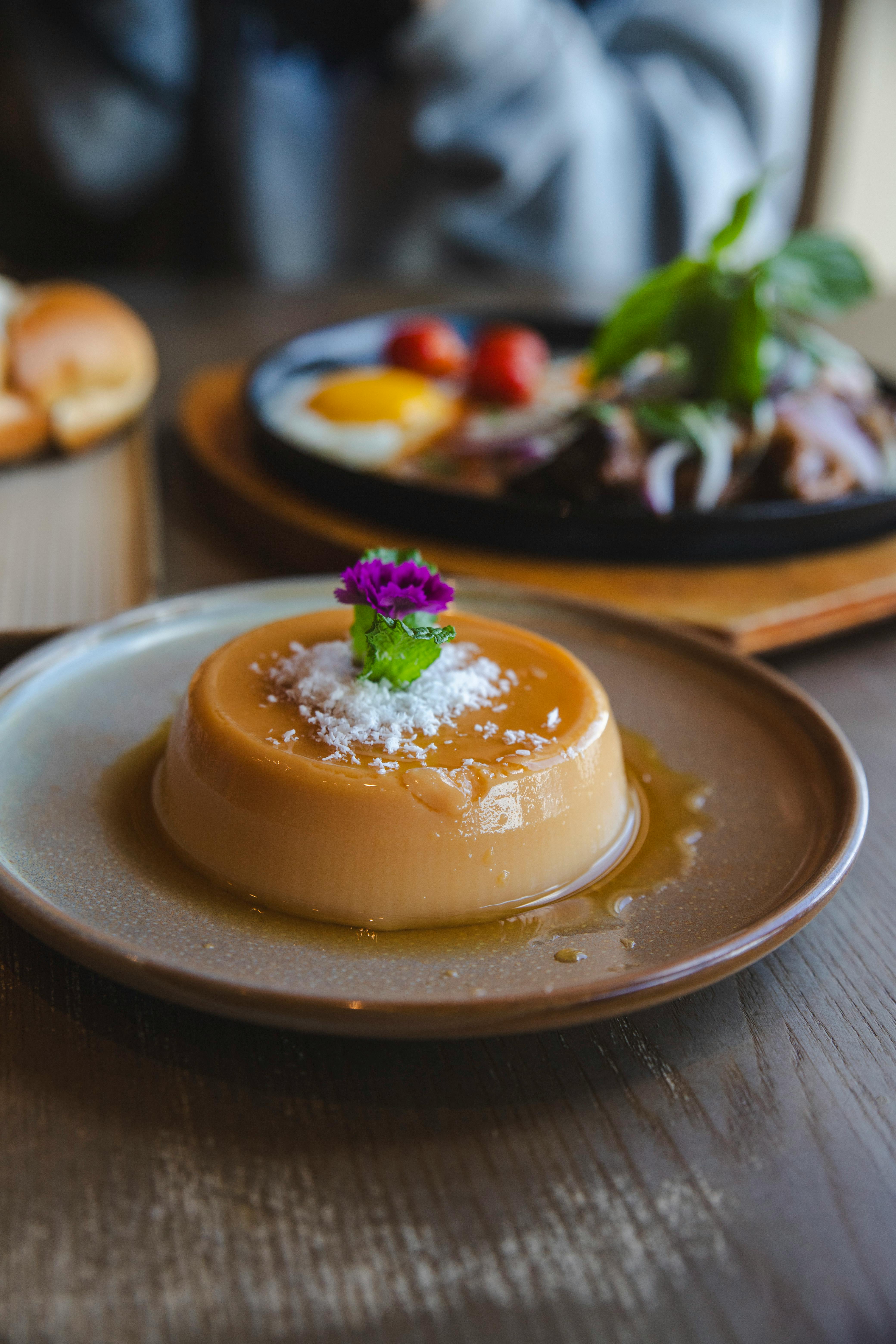
Banh Flan
The diets react (see scores below)
Common Ingredients
- eggs
- condensed milk
- sugar
- vanilla extract
- butter
- flour
- salt
- water
Specific recipes may vary.
Incompatible with 11 of 11 diets
Diet Ratings
Banh Flan is a Vietnamese caramel custard dessert that is fundamentally incompatible with a ketogenic diet. It contains multiple high-carb, high-sugar ingredients: condensed milk (extremely high in sugar, roughly 55g net carbs per 100ml), added sugar (used both in the caramel layer and the custard), and flour. Together these ingredients create a dessert that would deliver far more than an entire day's worth of keto carbs in a single serving. While eggs and butter are keto-friendly, they are overwhelmed by the carb-heavy components. This dish cannot be consumed in any reasonable portion without breaking ketosis.
Banh Flan (Vietnamese crème caramel) is fundamentally incompatible with a vegan diet. The dish's core structure depends on eggs as the primary protein and gelling agent, and condensed milk as a key dairy component. Both are unambiguously animal-derived products excluded under all vegan frameworks. Butter adds a third animal-derived ingredient. There is no version of this dish that could retain its traditional identity without these ingredients, and the primary protein is explicitly listed as egg. This is a clear avoid with maximum confidence.
Banh Flan is a Vietnamese caramel custard that contains multiple non-paleo ingredients. Condensed milk is a heavily processed dairy product with added refined sugar — violating both the dairy and refined sugar exclusions. Sugar (refined) is explicitly excluded from the paleo diet. Flour (wheat) is a grain and one of the clearest paleo violations. Butter is a dairy product, and while ghee is sometimes accepted, butter retains casein and lactose. Salt is also on the avoid list. With at least five clearly non-paleo ingredients (condensed milk, refined sugar, wheat flour, butter, and salt), this dish is firmly outside paleo guidelines. The only paleo-compliant ingredients are eggs, vanilla extract, and water.
Banh Flan is a Vietnamese crème caramel dessert that conflicts with core Mediterranean diet principles on multiple fronts. It is heavily reliant on condensed milk and added sugar as primary ingredients, both of which are processed, high-sugar components explicitly discouraged in the Mediterranean diet. Butter replaces olive oil as the fat source, and refined flour adds another non-whole-grain element. While eggs are an acceptable moderate ingredient in the Mediterranean framework, the overall composition of this dish is essentially a sugar-and-saturated-fat-forward dessert with minimal nutritional redeeming value from a Mediterranean perspective. This is not an occasional-treat item that fits naturally into the pattern — it is a confection built around ingredients the Mediterranean diet minimizes.
Banh Flan is a Vietnamese custard dessert that contains multiple ingredients that are strictly excluded from the carnivore diet. While eggs and butter are animal-derived and would otherwise be acceptable, the dish contains condensed milk (heavily processed dairy with added sugar), sugar (a pure carbohydrate with no place in carnivore), vanilla extract (plant-derived flavoring), flour (a grain — one of the most excluded food categories in carnivore), and water. The combination of sugar, flour, and vanilla extract makes this dish fundamentally incompatible with carnivore principles at any tier. This is not a close call — it is a dessert built around plant-based and processed ingredients.
Banh Flan contains multiple excluded ingredients that make it firmly non-compliant with Whole30. Condensed milk is a dairy product with added sugar — violating both the dairy and added sugar rules simultaneously. Sugar itself is explicitly excluded as an added sweetener. Flour is a grain product (typically wheat flour), which is excluded. Butter is excluded dairy (only ghee/clarified butter is permitted). With four separate Whole30-prohibited ingredients, this dish is clearly off-limits. Even setting aside the ingredient violations, Banh Flan is a dessert/sweet treat, and Whole30 discourages recreating indulgent comfort foods even with compliant ingredients — though that consideration is moot here given the hard exclusions present.
Banh Flan (Vietnamese crème caramel) contains two significant FODMAP concerns. First, condensed milk is very high in lactose — it is a concentrated dairy product and a standard serving would deliver a substantial lactose load, making it high-FODMAP. Second, the ingredient list includes flour, which in a Vietnamese flan context is almost certainly wheat flour, introducing fructans. Eggs, sugar, vanilla extract, butter, salt, and water are all low-FODMAP. However, the combination of condensed milk (high lactose) and likely wheat flour (fructans) makes this dish high-FODMAP at any standard serving size during the elimination phase.
Monash University rates lactose-free condensed milk substitutes and gluten-free flour as low-FODMAP, so a modified version of this dish could theoretically be safe. Some FODMAP practitioners note that the quantity of flour in a flan/custard may be very small or absent in some recipes, and if lactose-free condensed milk is used, the dish could shift to a 'caution' category — but the traditional recipe as listed should be avoided during elimination.
Banh Flan is a Vietnamese crème caramel made primarily with eggs, condensed milk, and sugar. The condensed milk is heavily sweetened and full-fat, contributing significant added sugar, saturated fat, and calories. The caramel topping adds additional refined sugar. While eggs and small amounts of butter and vanilla are not inherently prohibited on DASH, the overall dish is a high-sugar, high-saturated-fat dessert/snack that conflicts with DASH's core limits on added sugars, sweets, and saturated fat. It offers minimal potassium, magnesium, or fiber, providing none of the nutrient density DASH emphasizes. This is essentially a dessert/sweet snack category that DASH explicitly limits to ≤5 servings per week of small portions, and a serving of Banh Flan would likely consume much of that weekly allowance in one sitting.
NIH DASH guidelines broadly restrict sweets and high-sugar foods; however, some updated clinical interpretations note that eggs provide protein and choline and are no longer subject to a strict cholesterol cap per the 2020-2025 Dietary Guidelines — a small, occasional portion could theoretically fit within DASH's allowance for limited sweets, particularly for non-diabetic individuals without severe hypertension.
Banh Flan is a Vietnamese crème caramel dessert whose macronutrient profile is fundamentally incompatible with Zone Diet principles. The ingredient list — condensed milk, sugar, butter, and flour — creates a dish overwhelmingly dominated by high-glycemic, high-sugar carbohydrates with significant saturated fat. Condensed milk is extremely high in sugar (roughly 55% sugar by weight), added sugar and flour compound the glycemic load, and butter contributes saturated fat rather than the preferred monounsaturated fat. While eggs provide a lean protein base that Zone approves of, they are far too diluted by the other ingredients to bring the macros anywhere near 40/30/30. The resulting dish is approximately 60-70% calories from carbohydrates (primarily from simple sugars), 15-20% from fat (saturated), and only 10-15% from protein. There is no practical portion size that rehabilitates this into a Zone-compatible snack — even a small serving delivers a glycemic spike with negligible protein and inadequate monounsaturated fat. This is precisely the type of processed, sugar-heavy food Dr. Sears categorizes as maximally pro-inflammatory and Zone-incompatible.
Banh Flan (Vietnamese crème caramel) is a dessert built almost entirely around pro-inflammatory or nutritionally neutral ingredients. Condensed milk is high in added sugar and full-fat dairy, both flagged as items to limit or avoid on anti-inflammatory protocols. The caramel component requires additional refined sugar, which directly promotes inflammatory markers like CRP and IL-6 when consumed regularly. Butter contributes saturated fat, another item to limit. Refined white flour offers little nutritional value and behaves similarly to refined carbohydrates in terms of glycemic impact. Eggs provide some nutrition (choline, selenium) but are a minor mitigating factor here given the dominant pro-inflammatory load. Vanilla extract and salt are benign at culinary quantities. The overall macronutrient and ingredient profile — high added sugar, full-fat dairy, refined carbohydrates, and saturated fat — places this dish firmly in the 'avoid' category for anyone following an anti-inflammatory dietary pattern. This is an occasional treat at best, not a food compatible with regular anti-inflammatory eating.
Banh Flan is a Vietnamese crème caramel dessert whose nutritional profile is poorly suited for GLP-1 patients. The dominant ingredients are condensed milk and sugar, making it a high-sugar, calorie-dense food with minimal protein and essentially zero fiber. Condensed milk is also high in saturated fat. The small amount of egg present does not contribute meaningful protein relative to the sugar load. With slowed gastric emptying on GLP-1 medications, high-sugar foods can cause nausea and blood sugar spikes. The refined sugar content and low nutrient density per calorie make this an 'empty calorie' food — exactly what GLP-1 patients should minimize given their reduced appetite and critical need for nutrient-dense eating. Butter adds saturated fat, and flour adds refined carbohydrates with no fiber benefit. This dessert offers almost nothing in the way of the top three priorities: protein, fiber, or low fat.
*See how scores were generated at our methodology page.
Nutritional profile
Six traits that cut across every diet.
Fiber & Plants
How much whole-plant food and fiber it delivers.
Healthy Fats
The quality of its fats (unsaturated, omega-3).
Whole / Unprocessed
How close it is to its natural, unprocessed form.
Gut Gentle
How easy it is on digestion (low FODMAP, few irritants).
Low Glycemic
How little it spikes your blood sugar.
Protein Density
How much protein it packs per calorie.
Controversy Index
Higher controversy = more disagreement between diets.