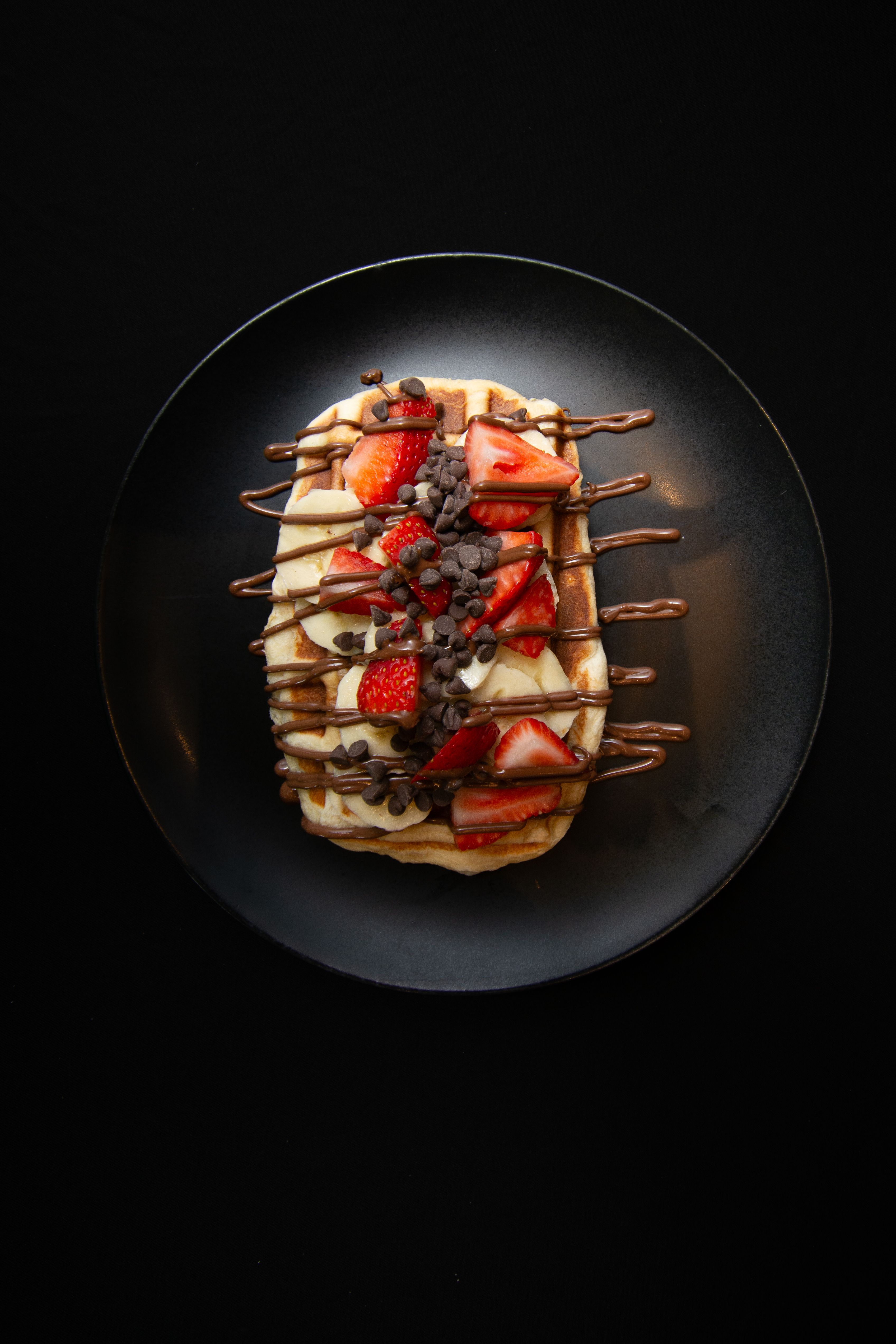
Photo: Jonatan Gomez / Pexels
Canadian
Beavertail
The diets react (see scores below)
Common Ingredients
- flour
- water
- yeast
- salt
- butter
- cinnamon
- sugar
- chocolate
Specific recipes may vary.
Incompatible with 11 of 11 diets
Diet Ratings
A BeaverTail is a deep-fried dough pastry made primarily from wheat flour, topped with sugar, cinnamon, and chocolate. It is essentially fried bread with sweet toppings — a combination that is catastrophically incompatible with ketogenic eating. The flour base alone delivers massive amounts of net carbs (a single BeaverTail can contain 60–90g of net carbs), and added sugar and chocolate toppings compound the carbohydrate load further. There is no meaningful fat-to-carb ratio that salvages this dish for keto purposes. It directly violates the core rules against grains, added sugars, and high-carb foods.
The listed ingredients include butter, which is an animal-derived dairy product and therefore incompatible with a vegan diet. BeaverTails are a Canadian fried dough pastry traditionally made with butter in the dough. While a vegan version could theoretically be made by substituting plant-based margarine or oil for the butter, the dish as described — with butter as a listed ingredient — is not vegan. The remaining ingredients (flour, water, yeast, salt, cinnamon, sugar, and chocolate) are plant-based, though chocolate should be checked for milk solids in practice.
Beavertail is a deep-fried pastry made primarily from wheat flour, which is a grain and a clear paleo exclusion. It also contains refined sugar, added salt, and butter (dairy) — all of which are explicitly avoided on the paleo diet. There is nothing paleo-compatible about this dish; it is essentially a deep-fried wheat dough topped with sugar, cinnamon, and chocolate. This is as far from Paleolithic eating as a food can get.
A BeaverTail is a deep-fried, flat pastry made from refined white flour and topped with added sugars, cinnamon, and chocolate. This dish is a classic example of a heavily processed, refined-grain street food with significant added sugars and saturated fat. It contradicts nearly every core Mediterranean diet principle: it uses refined grains rather than whole grains, contains substantial added sugar, relies on butter rather than olive oil, and is deep-fried rather than prepared using Mediterranean cooking methods. It offers little nutritional value in terms of fiber, micronutrients, or healthy fats, and is the type of indulgent treat that Mediterranean dietary guidelines explicitly minimize.
Beavertail is a Canadian fried dough pastry — despite the animal-inspired name, it contains zero animal-derived ingredients in its core form. Flour, water, yeast, cinnamon, sugar, and chocolate are all entirely plant-derived or processed carbohydrates. The small amount of butter is the only animal product present, but it is a minor component in an overwhelmingly plant-based, grain-heavy, sugar-laden snack. This dish is the antithesis of carnivore eating: it is built on wheat flour (a grain), loaded with sugar, and topped with plant-based spices and chocolate. It offers no animal protein, negligible animal fat, and a massive carbohydrate load that would spike insulin and contradict every principle of the carnivore diet.
A BeaverTail is a fried dough pastry — fundamentally a grain-based baked/fried good made with wheat flour, which is explicitly excluded on Whole30. Beyond the flour itself, it contains added sugar, butter (non-ghee dairy), and is topped with chocolate and cinnamon-sugar. Even setting aside the toppings, the base is a grain-based dough product that falls squarely into the excluded 'recreating baked goods/junk food' category. Multiple excluded ingredients are present: wheat flour (grain), sugar (added sugar), and butter (dairy). This dish has no compliant version.
A Beavertail is a fried dough pastry made primarily from wheat flour, which is high in fructans — one of the most problematic FODMAP categories. The main ingredient, wheat flour, makes this dish unsuitable during the elimination phase of the low-FODMAP diet regardless of portion size. A standard serving of a Beavertail involves a substantial amount of wheat dough, far exceeding any safe fructan threshold. The remaining ingredients (water, yeast, salt, butter, cinnamon, sugar, chocolate) are generally low-FODMAP at typical quantities, but they do not offset the core issue: the wheat flour base. Cinnamon in large amounts can be an issue but is typically used in small quantities as a topping. Dark chocolate in small amounts is low-FODMAP, but the fundamental problem is the wheat dough, which cannot be consumed in meaningful quantities on a strict low-FODMAP elimination diet.
A BeaverTail is a deep-fried dough pastry topped with cinnamon, sugar, and chocolate — essentially a flat fried doughnut. It is high in refined carbohydrates (white flour), added sugars, saturated fat (from butter and deep-frying), and offers negligible fiber, potassium, magnesium, or calcium. DASH guidelines explicitly limit refined grains, added sugars, sweets, and high-fat foods. This dish aligns with virtually none of the DASH dietary priorities and checks multiple boxes in the 'limit' category: added sugar, saturated fat, refined grains, and likely high caloric density from frying.
A BeaverTail is a deep-fried whole-wheat dough pastry topped with cinnamon, sugar, chocolate, and butter — essentially a fairground fried dough confection. From a Zone Diet perspective, this food is nearly impossible to incorporate into a balanced Zone meal. The macronutrient profile is dominated by high-glycemic refined flour carbohydrates and sugar, with saturated fat from butter and frying oil, and virtually no lean protein whatsoever. The 40/30/30 ratio cannot be meaningfully approached with this food as a base — it would require an enormous amount of lean protein and very little fat added alongside it to compensate, making it impractical as a Zone component. The sugar and refined flour combination spikes insulin sharply, directly opposing the Zone's core goal of hormonal control through stable blood sugar. There are no redeeming Zone-friendly elements: no lean protein, no low-glycemic carbohydrates, no monounsaturated fat dominance, and no fiber to slow glycemic response. This falls into the rare category of foods that are genuinely difficult to incorporate into any Zone-balanced meal or snack.
A BeaverTail is a deep-fried dough pastry — essentially fried refined white flour dough topped with butter, sugar, cinnamon, and chocolate. From an anti-inflammatory standpoint, this dish is highly problematic on multiple fronts. The base is refined white flour, a rapidly digested refined carbohydrate that spikes blood glucose and promotes pro-inflammatory cytokine release. It is deep-fried, meaning it is cooked in high-heat oils that generate oxidized lipids and advanced glycation end products (AGEs), both of which drive inflammatory pathways. Added sugar contributes to glycation and feeds pro-inflammatory cascades. Butter adds saturated fat, which at these quantities pushes it firmly into the 'limit' category. The chocolate topping, unless specified as >70% dark chocolate, is almost certainly milk chocolate or chocolate sauce — high in sugar with minimal polyphenol benefit. Cinnamon is the one genuinely anti-inflammatory ingredient present, but its quantity is negligible relative to the overall inflammatory load of the dish. This is a classic indulgent festival food with virtually no redeeming anti-inflammatory properties at meaningful quantities.
A BeaverTail is a deep-fried, flat pastry made from refined wheat dough, topped with butter, cinnamon, sugar, and/or chocolate. It is essentially a fried dough confection with no meaningful protein, no fiber, high refined carbohydrates, added sugars, and fat from both frying oil and butter toppings. This is precisely the category of food — fried, high-sugar, refined-grain, nutritionally empty — that is most counterproductive for GLP-1 patients. The deep-frying alone worsens nausea, bloating, and reflux due to slowed gastric emptying. The sugar load causes blood sugar spikes with no fiber or protein to moderate absorption. Caloric density is high with near-zero nutritional return, which directly undermines the reduced-appetite window GLP-1 medications create. There is no serving size that makes this appropriate for regular consumption on a GLP-1 regimen.
*See how scores were generated at our methodology page.
Nutritional profile
Six traits that cut across every diet.
Fiber & Plants
How much whole-plant food and fiber it delivers.
Healthy Fats
The quality of its fats (unsaturated, omega-3).
Whole / Unprocessed
How close it is to its natural, unprocessed form.
Gut Gentle
How easy it is on digestion (low FODMAP, few irritants).
Low Glycemic
How little it spikes your blood sugar.
Protein Density
How much protein it packs per calorie.
Controversy Index
Higher controversy = more disagreement between diets.