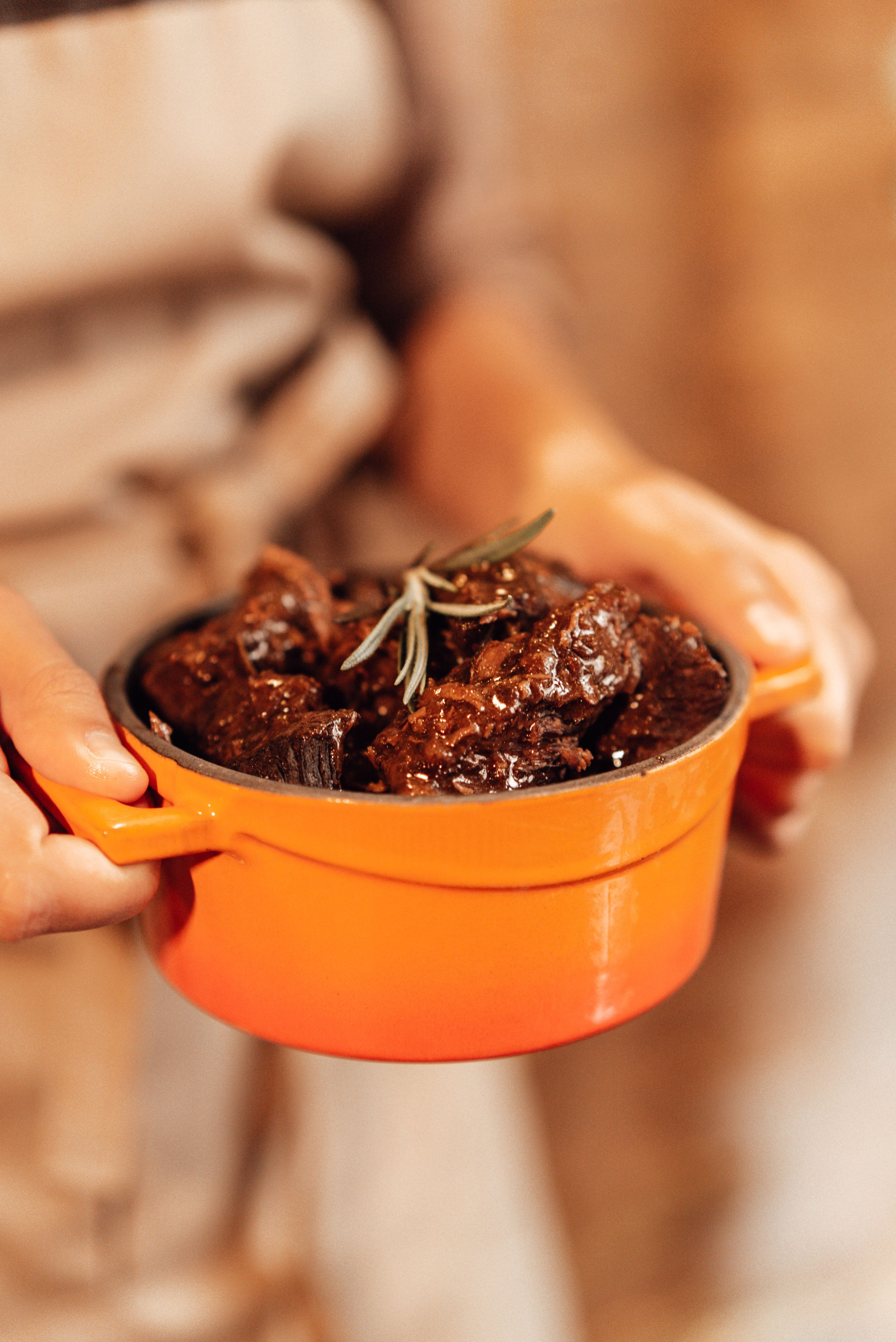
Photo: furkanfdemir / Pexels
Belgian
Carbonnade Flamande
The diets react (see scores below)
Common Ingredients
- beef
- onion
- belgian beer
- brown sugar
- mustard
- bread
- bay leaf
- thyme
Specific recipes may vary.
Incompatible with 7 of 11 diets
Diet Ratings
Carbonnade Flamande is fundamentally incompatible with ketogenic principles. The dish contains multiple high-carb offenders: Belgian beer contributes significant carbohydrates (a standard beer has 10-15g net carbs and this is used in large quantities as a braising liquid), brown sugar is added directly as a sweetener, and bread is used as a thickening agent (a classic technique where a mustard-spread slice is floated on top to dissolve into the stew). Together these three ingredients alone could push a single serving well over the 20-50g daily net carb limit. The beef and aromatics (onion, bay leaf, thyme) are keto-friendly, but the dish's defining character comes precisely from the sweet beer-and-bread braise that makes it entirely unsuitable for ketosis.
Carbonnade Flamande is a classic Belgian beef stew. Beef is an animal product and is entirely incompatible with a vegan diet. There is no ambiguity here — this dish is centered on a mammalian meat as its primary protein and cannot be considered vegan in any interpretation of the diet.
Carbonnade Flamande contains multiple non-paleo ingredients that disqualify it clearly. Belgian beer is a grain-based alcohol (brewed from malted barley and/or wheat), making it doubly problematic — both as a grain derivative and as alcohol. Bread (typically wheat-based) is used as a thickener in the traditional recipe, introducing another grain. Brown sugar is refined sugar, explicitly excluded from paleo. Mustard in its common prepared form often contains added salt, vinegar, and preservatives. While the base protein (beef) and aromatics (onion, bay leaf, thyme) are paleo-approved, the structural and flavoring components of this dish are fundamentally incompatible with paleo principles. This is not a dish that can be lightly modified — the beer, bread, and brown sugar are core to its identity and flavor profile.
Carbonnade Flamande is a Belgian beef and beer stew that fundamentally conflicts with Mediterranean diet principles. Beef is a red meat that should be limited to only a few times per month, making it the antithesis of a daily or weekly staple. The dish also incorporates brown sugar as an added sweetener, and the bread used as a thickening agent is likely refined. Belgian beer adds processed carbohydrates. The dish is built around no olive oil, no fish, no legumes, and no emphasis on plant-forward ingredients — the vegetables are minimal (only onion). This is a rich, Northern European meat-centric dish with no meaningful alignment to Mediterranean dietary patterns.
Carbonnade Flamande is fundamentally incompatible with the carnivore diet. While beef is the primary protein and a cornerstone carnivore food, the dish contains numerous plant-derived and processed ingredients that disqualify it entirely. Onion is a plant vegetable; Belgian beer is grain-derived (barley, hops); brown sugar is a refined plant-based sweetener; mustard is a plant-derived condiment; bread (used as a thickener) is a grain product; bay leaf and thyme are plant-based herbs. The only carnivore-compatible ingredient is the beef itself. This dish is essentially a heavily plant-laden stew with sugar and grains — virtually every supporting ingredient violates carnivore principles.
Carbonnade Flamande contains multiple Whole30-excluded ingredients. Belgian beer is alcohol (explicitly excluded), brown sugar is added sugar (excluded), and bread is a grain product (excluded). This dish is fundamentally incompatible with Whole30 — its defining characteristics (beer braising liquid, sugar, bread as a thickener) are all prohibited. There is no compliant version of this classic Belgian stew without completely reinventing it.
Carbonnade Flamande contains multiple high-FODMAP ingredients that make it unsuitable during the elimination phase. Onions are one of the highest-fructan foods tested by Monash University and are a primary aromatic in this dish — there is no safe serving size. Belgian beer (typically ale) contains fructans from wheat/barley malt and is rated high-FODMAP; Monash advises avoiding regular beer during elimination. Bread used as a thickening agent is wheat-based, adding further fructans. Brown sugar in small amounts is technically low-FODMAP, as is mustard, thyme, and bay leaf. The beef itself is fully safe. However, the combination of onions, wheat beer, and wheat bread creates a dish with stacked high-FODMAP sources that cannot be remediated without fundamentally altering the recipe. This is not a borderline case — three core structural ingredients are high-FODMAP at any realistic serving.
Carbonnade Flamande is a Belgian beef and beer stew that presents a mixed DASH diet profile. The dish features red meat (beef), which DASH limits due to saturated fat content, and Belgian beer adds alcohol and some sugar. Brown sugar and mustard add modest amounts of added sugar and sodium respectively. The bread used as a thickener contributes refined carbohydrates unless whole grain is specified. On the positive side, onions provide potassium and beneficial phytonutrients, and the slow-braised preparation doesn't add significant fats beyond those in the beef itself. The dish is not as sodium-laden as processed foods, but the red meat centerpiece is the primary DASH concern. It could fit into a DASH diet occasionally if lean beef cuts are used, portions are controlled (3oz or less), and sodium is managed in preparation.
NIH DASH guidelines explicitly limit red meat due to saturated fat and recommend lean poultry or fish as preferred proteins. However, updated clinical interpretations note that lean cuts of beef (e.g., round or sirloin) used in modest portions can fit within DASH's broader dietary pattern, and the beer-braising method does not add saturated fat — some DASH-oriented dietitians would allow this dish occasionally within the red meat allotment of 2 or fewer servings per week.
Carbonnade Flamande presents several Zone Diet challenges but is not categorically excluded. The beef base can be lean (chuck trimmed of fat) providing adequate protein blocks, and onions are a favorable low-glycemic vegetable. However, the dish carries multiple 'unfavorable' Zone elements: brown sugar adds high-glycemic carbohydrates with no nutritional benefit, Belgian beer contributes significant carbohydrates (primarily from maltose and simple sugars, high glycemic), and the bread used as a thickener adds refined starch carbs. Together these push the carbohydrate load toward high-glycemic sources rather than the preferred low-glycemic vegetables. The fat profile of beef also skews toward saturated fat rather than Zone-preferred monounsaturated fats. In a restaurant portion, the macro ratio would likely be carb-heavy with the wrong carb types, and caloric fat from beef would be mostly saturated. A home cook could reduce sugar and beer quantity, substitute a small amount of lower-glycemic carb thickener, and pair with a large vegetable side, but as traditionally prepared this dish does not align well with Zone principles.
Some Zone practitioners applying Sears' later anti-inflammatory framework (Zone Perfect Meals in Minutes, The Anti-Inflammation Zone) would note that beef in moderate portions with natural herbs and onions is not problematic, and that small amounts of beer and sugar used in braising — distributed across multiple servings — may contribute fewer net carbs per serving than feared. In this view, a single serving with a large salad could be managed within a Zone meal by counting the beer/sugar carbs as the carb block and skipping additional starches entirely.
Carbonnade Flamande is a Belgian beef and beer stew with a mixed anti-inflammatory profile. On the negative side, beef is a red meat high in saturated fat and arachidonic acid, both of which are flagged as pro-inflammatory in anti-inflammatory frameworks — this is the dish's primary liability. Brown sugar adds modest refined sugar, and the bread (used to thicken the stew) contributes refined carbohydrates. Belgian beer, while not red wine, does contain some polyphenols from hops and malt, but alcohol other than red wine is generally limited on anti-inflammatory protocols. On the positive side, the dish features meaningful anti-inflammatory contributors: onions are rich in quercetin and other flavonoids; thyme and bay leaf provide polyphenols and antimicrobial compounds; mustard contains anti-inflammatory glucosinolates. The slow-braising method is relatively benign compared to high-heat grilling or frying, which can generate pro-inflammatory advanced glycation end products (AGEs). The dish as a whole is a moderate-to-poor fit: it's not a heavily processed, additive-laden food, but its red meat base and saturated fat content place it in 'caution' territory rather than 'avoid,' as it contains genuine plant-based anti-inflammatory elements and is a whole-food preparation.
Some anti-inflammatory practitioners, including those following stricter autoimmune or AIP-adjacent protocols, would rate this lower (closer to 'avoid') due to the combination of red meat, added sugar, and alcohol — all simultaneously present. However, more moderate anti-inflammatory frameworks like Dr. Weil's acknowledge that occasional red meat in a vegetable-and-herb-rich context is acceptable rather than categorically harmful, supporting a 'caution' rather than 'avoid' verdict.
Carbonnade Flamande is a Belgian beef and beer braise that presents a mixed nutritional profile for GLP-1 patients. On the positive side, beef provides meaningful protein (roughly 25-30g per serving depending on cut and portion), and the slow-braised preparation makes the meat tender and easy to digest — a genuine advantage given slowed gastric emptying. The onions contribute some fiber and micronutrients. However, several factors drag the rating down: the beer base adds alcohol (a GLP-1 concern due to empty calories — though much of it cooks off, residual alcohol and fermentation byproducts remain), brown sugar adds unnecessary refined sugar with no nutritional value, and the bread used to thicken the sauce is a refined carbohydrate contributing minimal fiber. The fat content depends heavily on the beef cut — traditional recipes use chuck or brisket, which are moderate-to-high in saturated fat. The dish is also portion-sensitive: a small serving delivers decent protein but the calorie density is moderate, and the richness may trigger nausea or bloating in GLP-1 patients sensitive to heavier stews. It is not fried or extremely spicy, which helps, but it is not a lean, high-protein, high-fiber dish optimized for GLP-1 needs.
Some GLP-1-focused dietitians would rate this more favorably, noting that slow-braised beef is one of the more digestible red meat preparations and that the alcohol largely cooks off during extended braising. Others would rate it lower, emphasizing that fatty beef cuts and beer-based sauces with added sugar represent exactly the combination of saturated fat and empty calories that patients with reduced appetite cannot afford in their limited caloric budget.
*See how scores were generated at our methodology page.
Nutritional profile
Six traits that cut across every diet.
Fiber & Plants
How much whole-plant food and fiber it delivers.
Healthy Fats
The quality of its fats (unsaturated, omega-3).
Whole / Unprocessed
How close it is to its natural, unprocessed form.
Gut Gentle
How easy it is on digestion (low FODMAP, few irritants).
Low Glycemic
How little it spikes your blood sugar.
Protein Density
How much protein it packs per calorie.
Controversy Index
Higher controversy = more disagreement between diets.
Diet-Specific Tips
 DASH — 4/10
View tips
- Red meat (beef) is a DASH-limited food due to saturated fat content
- Belgian beer adds alcohol and calories, not emphasized in DASH
- Brown sugar contributes added sugar, which DASH limits
- Mustard and bread may contribute sodium depending on preparation
- Onions provide potassium and beneficial phytonutrients supporting DASH goals
- Lean beef cuts and portion control (≤3oz) could make this more DASH-compatible
- No high-sodium processed ingredients explicitly listed, but sodium management in preparation is critical
- Refined bread as thickener is less ideal than whole grain alternatives
 Zone — 4/10
View tips
- Brown sugar is a high-glycemic, nutritionally empty carbohydrate — explicitly unfavorable in Zone
- Belgian beer adds high-glycemic maltose/simple sugar carbohydrates
- Bread used as thickener contributes refined starch carbs, another unfavorable Zone carb source
- Beef protein is acceptable but tends toward higher saturated fat vs. Zone-preferred lean proteins
- Onions and herbs (thyme, bay leaf) are favorable Zone ingredients
- As traditionally served, macro ratio skews carb-heavy with wrong carb types
- Portioning across servings can dilute beer and sugar carb load, making it marginally workable
 Anti-Inflammatory — 4/10
View tips
- Red meat (beef) is a primary ingredient — high in saturated fat and arachidonic acid, flagged as pro-inflammatory
- Onions provide quercetin and flavonoids with meaningful anti-inflammatory activity
- Thyme and bay leaf contribute polyphenols and antioxidants
- Beer provides some polyphenols but alcohol (non-red-wine) is limited on anti-inflammatory diets
- Brown sugar and bread add refined carbohydrates and added sugars
- Slow-braising method avoids high-heat AGE formation
- Whole-food preparation with no processed additives or trans fats
 GLP-1 Friendly — 4/10
View tips
- Moderate protein per serving from beef, but cut is typically fatty (chuck/brisket) with significant saturated fat
- Beer base introduces alcohol and empty calories — partially but not fully eliminated by cooking
- Brown sugar is a nutritionally empty additive, worsening glycemic profile
- Bread thickener is refined carbohydrate with negligible fiber contribution
- Slow-braised preparation improves digestibility, a meaningful advantage for GLP-1 patients
- Richness and fat content may worsen nausea, bloating, or reflux in GLP-1 users
- Not fried, not spicy — preparation method is one of its few GLP-1-friendly attributes
- Portion-sensitive: small servings limit damage but also limit protein yield per meal