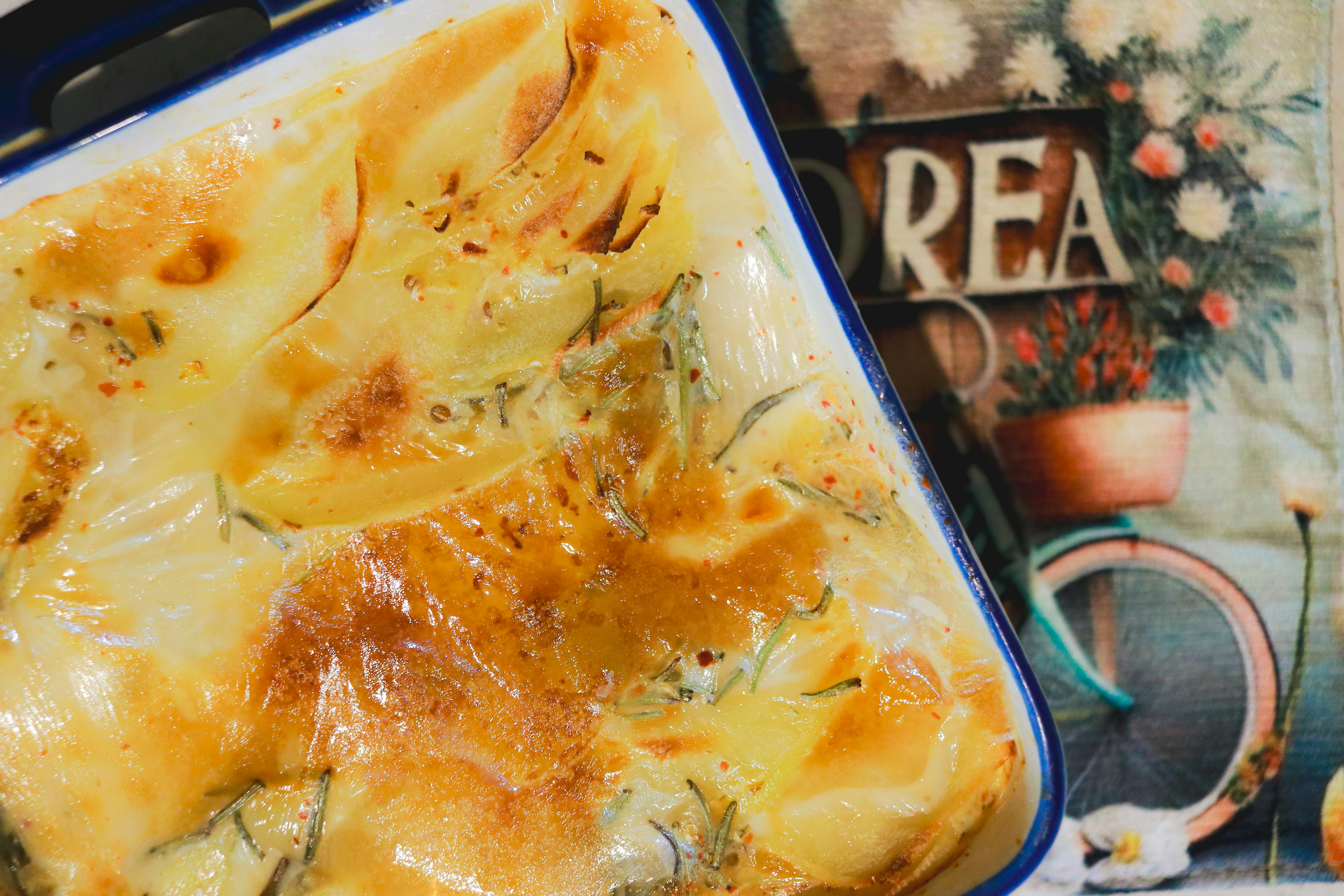
Photo: Golboo Maghooli / Pexels
Belgian
Chicons au Gratin
The diets react (see scores below)
Common Ingredients
- endives
- ham
- butter
- flour
- milk
- gruyere cheese
- nutmeg
- salt
Specific recipes may vary.
Incompatible with 6 of 11 diets
Diet Ratings
Chicons au Gratin is a classic Belgian dish where endives are wrapped in ham and baked in a béchamel sauce topped with Gruyère. The main keto problem is the béchamel sauce, which is made with flour and milk — flour is a grain-based thickener that adds significant net carbs, and whole milk adds additional carbs (~12g per cup). Endives themselves are relatively low in net carbs (~3-4g per medium head), and ham and Gruyère are keto-friendly. However, the traditional recipe's béchamel is disqualifying in standard portions. With a keto-adapted substitution (e.g., cream cheese or heavy cream thickener instead of flour), this dish could become keto-compliant. As traditionally prepared, it sits in 'caution' territory — small portions may be manageable, but the flour-based sauce makes it problematic for strict adherence.
Some lazy keto or flexible keto practitioners may argue that a single serving with a small amount of flour spread across multiple portions keeps net carbs within daily limits, and would allow it occasionally. Strict keto adherents reject any flour or grain-derived thickener entirely, regardless of portion size.
Chicons au Gratin contains multiple animal-derived ingredients that are strictly excluded from a vegan diet. Ham is pork (meat), butter and milk are dairy products, and Gruyère is a dairy cheese. The béchamel sauce alone (butter, flour, milk) is entirely non-vegan, and the ham adds a further animal protein. The only plant-based ingredients are the endives, flour, nutmeg, and salt. This dish is fundamentally incompatible with vegan principles.
Chicons au Gratin is fundamentally incompatible with the paleo diet. The béchamel sauce alone contains three non-paleo ingredients: flour (a grain), milk (dairy), and butter (dairy). Gruyère cheese is dairy. Salt is excluded. The ham, while protein-based, is typically a processed, cured meat with added salt and preservatives. Nutmeg is fine, and endives are fully paleo-approved, but the structural foundation of this dish — its sauce and topping — is built entirely on excluded ingredients. There is no meaningful way to call this dish paleo-compatible in its traditional form.
Chicons au Gratin is a classic Belgian dish that wraps endives (a Mediterranean-friendly vegetable) in ham and covers them with a béchamel sauce made from butter, flour, and milk, topped with Gruyère cheese. While the endive itself is excellent and aligned with Mediterranean principles, the dish is dominated by elements that conflict with the diet: processed ham (a cured red/processed meat), butter as the primary fat (instead of olive oil), refined white flour, and a heavy cheese topping. The béchamel sauce is high in saturated fat from both butter and dairy, and ham counts as processed meat which should be minimized. This is fundamentally a rich, northern European comfort dish built around fats and proteins that are peripheral or discouraged in Mediterranean eating.
Some Mediterranean diet interpreters note that dairy and moderate amounts of cured meats appear in certain regional Mediterranean traditions (e.g., Italian prosciutto, French Norman cuisine). A more permissive reading could classify this as an occasional indulgence given the endive base, but mainstream Mediterranean diet guidelines would still flag the processed meat and butter-heavy sauce as problematic.
Chicons au Gratin is fundamentally incompatible with the carnivore diet. The dish is built around endives (chicory), a plant vegetable, which is an immediate disqualifier. The béchamel sauce contains flour (a grain product) and is flavored with nutmeg (a plant spice) — both strictly forbidden. While ham, butter, milk, and gruyère are animal-derived, they are secondary to the dominant plant-based components. The dish cannot be adapted without gutting its entire identity. Even setting aside the dairy debate within carnivore circles, the endives and flour alone make this a hard avoid.
Chicons au Gratin contains multiple Whole30-excluded ingredients. Butter (regular, not ghee) is dairy and explicitly excluded. Flour (wheat-based) is a grain and excluded. Milk is dairy and excluded. Gruyère cheese is dairy and excluded. The béchamel sauce at the heart of this dish is built entirely from excluded ingredients (butter, flour, milk), and the cheese topping compounds the violations. There is no compliant version of this classic Belgian dish without fundamentally changing its nature.
Chicons au Gratin has two significant high-FODMAP components that make it problematic during the elimination phase. First, endives (Belgian chicory/witloof) are high in fructans, particularly at the serving sizes typical in this dish (often a full endive or more per serving). Second, the béchamel sauce is made with regular milk, which is high in lactose, and flour (wheat), which is high in fructans. Gruyère cheese is aged and generally low-lactose, and ham is low-FODMAP. Butter is low-FODMAP. However, the combination of endives, wheat flour, and lactose-containing milk creates multiple FODMAP hits, making this dish high-FODMAP at any standard serving size during the elimination phase.
Monash University data on endives/witloof is somewhat limited, and some practitioners note that cooking may partially reduce fructan content. A modified version using lactose-free milk, gluten-free flour (e.g., rice flour), and controlled endive portions could theoretically lower the FODMAP load, but the traditional recipe as described remains unsuitable for elimination phase without significant modifications.
Chicons au Gratin is a Belgian classic featuring endives (chicory) wrapped in ham, baked in a béchamel sauce with Gruyère cheese. The endives themselves are an excellent DASH food — low in sodium, rich in fiber and micronutrients. However, the dish has several DASH-incompatible elements: the béchamel sauce is made with butter and whole milk (saturated fat concern), Gruyère is a full-fat, relatively high-sodium cheese, and ham is a processed/cured meat that is typically high in sodium. The combination of ham and cheese makes this dish moderately high in both saturated fat and sodium. It is not a core DASH food, but it is not as problematic as, say, bacon or heavily processed fast food. The vegetable base (endives) and protein content provide some nutritional merit. Modifications such as using low-sodium ham, part-skim cheese, and low-fat milk in the béchamel would meaningfully improve its DASH compatibility.
NIH DASH guidelines explicitly caution against processed meats and full-fat dairy due to sodium and saturated fat content. However, some updated DASH-aligned clinicians note that when consumed in moderate portions, dishes like this — anchored by a DASH-friendly vegetable — can fit within a broader dietary pattern, especially if low-sodium ham and reduced-fat dairy alternatives are used.
Chicons au Gratin is a classic Belgian dish that has some Zone-friendly elements but also several problematic ones. On the positive side, endives (chicons) are an excellent low-glycemic vegetable — a Zone-favorable carb source. Ham provides lean protein that fits well within Zone parameters. However, the béchamel sauce (butter, flour, milk) introduces refined flour as a high-glycemic carb, and the overall fat profile skews toward saturated fat from butter and Gruyère cheese rather than the preferred monounsaturated fats. The dish is protein-moderate and carbohydrate-light from the endives, but the béchamel disrupts the macro balance by adding low-quality carbs and saturated fat simultaneously. With careful portioning — smaller amounts of béchamel, emphasis on the endive and ham — this can be incorporated into a Zone meal, but it requires significant adjustment. The 40/30/30 ratio is achievable only with deliberate portioning, making this a 'caution' rather than 'avoid.' The dish is not processed or sugar-laden, which keeps it out of avoid territory.
Some Zone practitioners following Sears' earlier work (Enter the Zone) would rate this lower due to strict limits on saturated fat from cheese and butter. However, Sears' later anti-inflammatory writings acknowledge that full-fat dairy in moderation is less harmful than previously thought, and the endives' polyphenol content (supporting gut health and reducing inflammation) aligns with his broader wellness framework, potentially justifying a slightly more favorable view if béchamel portions are reduced.
Chicons au Gratin presents a mixed anti-inflammatory profile. On the positive side, endives (Belgian chicory) are genuinely beneficial — they contain inulin (prebiotic fiber), kaempferol, and other polyphenols with anti-inflammatory properties, and bitter greens are well-regarded in anti-inflammatory frameworks. Nutmeg is a mild anti-inflammatory spice. However, the dish is dominated by a classic béchamel sauce made with butter, whole milk, and Gruyère cheese — all full-fat dairy products that are in the 'limit' category due to saturated fat content. Butter specifically is a food to limit under anti-inflammatory guidelines. The ham adds processed meat concerns (nitrates, sodium, saturated fat), though it is used in moderate quantity. The refined white flour used in the béchamel is a refined carbohydrate, adding further mild pro-inflammatory concern. The dish is not egregious — it lacks trans fats, added sugars, or seed oils — but the combination of butter, full-fat cheese, whole milk, and processed ham means the overall dish leans moderately pro-inflammatory, offsetting the clear benefits of the endive base.
Some anti-inflammatory practitioners, particularly those following a traditional European dietary pattern approach (similar to Dr. Weil's moderate dairy stance), would argue that full-fat fermented dairy like aged Gruyère provides beneficial nutrients including vitamin K2, CLA, and fat-soluble vitamins, and that the endive base makes this a nutritionally reasonable dish in moderation. However, most mainstream anti-inflammatory guidelines (including the IF Rating system) consistently flag high saturated fat from butter and full-fat cheese as pro-inflammatory, and processed ham introduces nitrate concerns.
Chicons au Gratin is a classic Belgian dish of endives wrapped in ham and baked in a béchamel sauce topped with Gruyère cheese. It has genuine nutritional merit for GLP-1 patients but also notable drawbacks. On the positive side, endives are a low-calorie, high-fiber, easily digestible vegetable with high water content — well suited to GLP-1 digestive sensitivities. Ham provides a moderate lean protein contribution. However, the béchamel sauce (butter, flour, whole milk) adds significant saturated fat and refined carbohydrates with low nutrient density per calorie, and the Gruyère topping further increases saturated fat load. The dish is not fried, is relatively mild in spice, and is served in modest portions traditionally, which helps. The primary concern is the fat content of the sauce and cheese, which can worsen GLP-1 side effects including nausea, bloating, and reflux due to slowed gastric emptying. Protein content per serving is moderate but not high — ham and cheese together may reach 15–20g per serving depending on portion, which is acceptable but not optimal. A GLP-1-friendly modification would use a lighter béchamel (low-fat milk, less butter, less flour) and reduce the cheese topping, which would push this dish closer to an approve rating.
Some GLP-1-focused dietitians view dishes like this as acceptable in small portions because the ham and cheese together provide meaningful protein and the endives contribute fiber and hydration — arguing that the fat content is manageable if the portion is controlled. Others would flag the butter-and-whole-milk béchamel as a consistent trigger for GI side effects in GLP-1 patients, particularly in the early weeks of treatment when nausea and reflux are most pronounced, and would recommend avoiding cream- or butter-based sauces as a category.
*See how scores were generated at our methodology page.
Nutritional profile
Six traits that cut across every diet.
Fiber & Plants
How much whole-plant food and fiber it delivers.
Healthy Fats
The quality of its fats (unsaturated, omega-3).
Whole / Unprocessed
How close it is to its natural, unprocessed form.
Gut Gentle
How easy it is on digestion (low FODMAP, few irritants).
Low Glycemic
How little it spikes your blood sugar.
Protein Density
How much protein it packs per calorie.
Controversy Index
Higher controversy = more disagreement between diets.
Diet-Specific Tips
 Keto — 4/10
View tips
- Flour in béchamel is a grain-based carb source incompatible with strict keto
- Whole milk adds additional net carbs to the sauce
- Endives are low-carb and keto-friendly in moderate amounts
- Ham and Gruyère are high-protein, high-fat keto staples
- Dish is salvageable with cream or cream cheese substituted for the flour-milk roux
- Traditional preparation likely yields 15-25g+ net carbs per serving depending on sauce quantity
 DASH — 4/10
View tips
- Endives are a DASH-approved vegetable — low sodium, high in fiber
- Ham is a processed/cured meat with high sodium content, discouraged by DASH
- Gruyère is a full-fat, relatively high-sodium cheese — DASH recommends low-fat dairy
- Béchamel sauce adds saturated fat via butter and potentially whole milk
- Overall sodium load from ham and cheese combined is a significant concern
- Dish could be improved with low-sodium ham, part-skim cheese, and low-fat milk
 Zone — 5/10
View tips
- Endives are a Zone-favorable low-glycemic vegetable with polyphenol benefits
- Ham provides lean protein aligned with Zone protein guidelines
- Béchamel sauce contains refined flour — a high-glycemic 'unfavorable' Zone carbohydrate
- Butter and Gruyère cheese contribute saturated fat rather than preferred monounsaturated fats
- Macro ratio skews toward fat and low-quality carbs, making 40/30/30 difficult without portioning adjustments
- No processed ingredients or added sugars, keeping it out of 'avoid' territory
- Dish can be Zone-adapted by reducing béchamel quantity and pairing with additional vegetables
 Anti-Inflammatory — 4/10
View tips
- Endives: anti-inflammatory — rich in inulin, kaempferol, and polyphenols
- Butter: pro-inflammatory — high saturated fat, in the 'limit' category
- Gruyère cheese: pro-inflammatory — full-fat dairy, high saturated fat
- Whole milk béchamel: pro-inflammatory — full-fat dairy base
- Ham: mixed — processed meat with nitrates and sodium
- Refined flour: mildly pro-inflammatory — refined carbohydrate in béchamel
- Nutmeg: mildly anti-inflammatory spice
 GLP-1 Friendly — 4/10
View tips
- Béchamel sauce is high in saturated fat and refined starch, worsening nausea and reflux risk on GLP-1s
- Gruyère adds additional saturated fat load
- Ham provides moderate lean protein but dish is not protein-dense overall
- Endives are GLP-1-friendly: high fiber, high water content, easy to digest, low calorie
- Dish is not fried and is mildly seasoned — avoids several common GLP-1 triggers
- Portion sensitivity: a small serving is more manageable; a full traditional portion increases fat and calorie load significantly
- Modification potential is high — lighter béchamel and reduced cheese would improve the profile substantially