The diets react (see scores below)
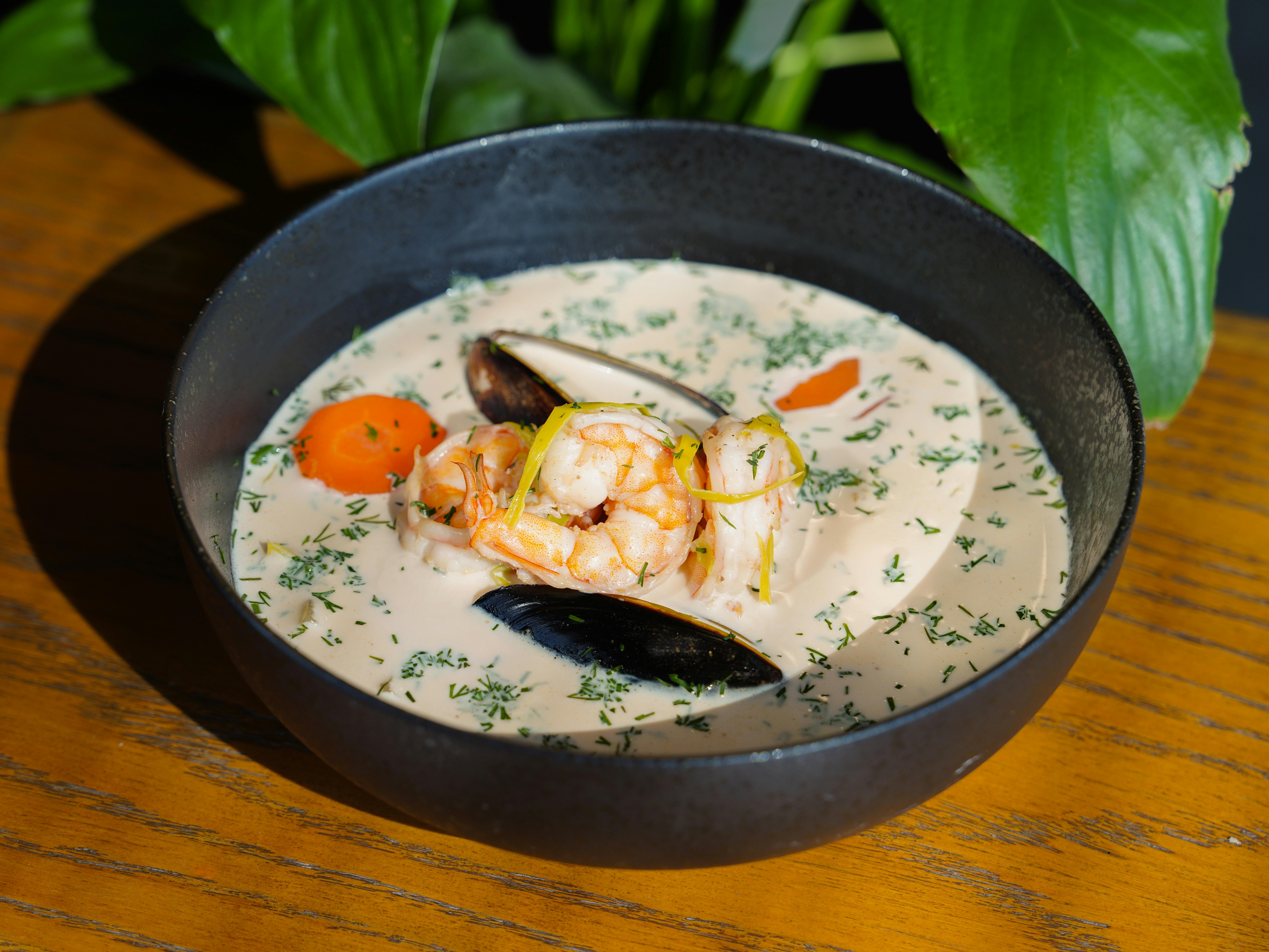
Common Ingredients
- chicken
- leek
- carrot
- celery
- potatoes
- cream
- egg yolks
- broth
Specific recipes may vary.
Incompatible with 6 of 11 diets
Diet Ratings
Waterzooi contains potatoes as a primary ingredient, which are a high-starch vegetable with very high net carbs — a single medium potato can contain 30g+ of net carbs, immediately blowing a daily keto budget. Leeks and carrots also add moderate carbs. While the chicken, cream, egg yolks, and broth are all keto-friendly components, the potatoes make the dish as traditionally prepared fundamentally incompatible with ketosis. This is not a portion-control situation; potatoes are simply off the table on keto.
Waterzooi contains multiple animal-derived ingredients that are strictly excluded from a vegan diet. Chicken is animal flesh, cream is a dairy product, and egg yolks are an animal product. There is no ambiguity here — this dish fails vegan standards on at least three separate counts.
Waterzooi contains two significant non-paleo ingredients that disqualify it: cream (dairy) and potatoes (debated, but the cream is a hard violation for most paleo frameworks). Cream is an unprocessed dairy product containing both casein and lactose, making it a clear avoid under all major paleo authorities. Potatoes are themselves debated — excluded by Cordain's original framework but accepted by some modern paleo practitioners. The remaining ingredients (chicken, leek, carrot, celery, egg yolks, broth) are all paleo-approved. However, the cream alone is sufficient to push this dish into avoid territory. If cream were substituted with coconut cream and potatoes omitted or swapped for a paleo-approved tuber, the dish could be made paleo-compliant.
Some modern paleo practitioners following Mark Sisson's Primal Blueprint allow moderate amounts of high-fat dairy like heavy cream, arguing that the fat fraction is largely free of the problematic proteins and sugars found in milk. Under this framework, the dish might edge into caution territory, especially if white potatoes are also accepted as a 'safe starch.'
Waterzooi is a Belgian stew that contains several Mediterranean-friendly elements (chicken as moderate protein, abundant vegetables like leek, carrot, celery, and potatoes, and a broth base) but is anchored by a cream-and-egg-yolk enriched sauce that is not characteristic of Mediterranean cooking. Chicken fits within the 'moderate' category (poultry a few times per week), and the vegetable content is genuinely positive. However, cream is a dairy fat rather than olive oil, and the egg yolk enrichment adds saturated fat in a way that diverges from Mediterranean principles. The dish is not processed or high in added sugar, so it avoids the 'avoid' category, but it falls short of a true Mediterranean profile due to its Northern European cream-based preparation.
Some Mediterranean diet authorities note that moderate dairy, including cream in small amounts, can fit within a flexible interpretation of the diet (as seen in certain Southern French traditions). In this reading, the strong vegetable content and lean poultry protein could push the dish toward the higher end of 'caution,' especially if the cream quantity is modest and olive oil is used elsewhere in the meal.
Waterzooi is a traditional Belgian stew that is fundamentally incompatible with the carnivore diet. While it contains carnivore-approved ingredients (chicken, cream, egg yolks, broth), the dish is heavily loaded with multiple plant foods: leek, carrot, celery, and potatoes. These vegetables are strictly excluded on any tier of the carnivore diet. The potatoes alone are a high-carbohydrate plant food that would disqualify the dish outright. There is no version of carnivore — not even the more permissive 'animal-based' approach — that permits this level of plant food inclusion. The dish as traditionally prepared cannot be adapted to carnivore without fundamentally changing its identity.
Waterzooi contains cream, which is a dairy product explicitly excluded on the Whole30 program. Dairy (including cream, milk, cheese, yogurt, and sour cream) is one of the core eliminated food groups for the full 30 days. All other ingredients — chicken, leek, carrot, celery, potatoes, egg yolks, and broth — are fully compliant. The dish could theoretically be adapted by omitting the cream and using coconut cream or additional egg yolks to achieve richness, but as traditionally prepared, it is non-compliant.
Waterzooi contains several ingredients that require careful consideration. Chicken, carrot, potatoes, egg yolks, and broth (if homemade without onion/garlic) are low-FODMAP. However, leek is low-FODMAP only at the green tops (54g) and becomes high-FODMAP if the white/light green parts are used — traditional recipes often use the whole leek. Celery is low-FODMAP at small amounts (10cm stalk, ~40g) but becomes high-FODMAP at larger servings due to polyols (mannitol). Cream is low-FODMAP at up to 2 tablespoons (42g) per serving due to low lactose; larger amounts or generous cream-heavy preparations push into moderate FODMAP territory. Additionally, commercial or restaurant broths frequently contain onion and garlic (high fructans), which would make the entire dish high-FODMAP. The dish can theoretically be made low-FODMAP with careful modifications, but as traditionally prepared it poses significant risks from multiple moderate-to-high FODMAP ingredients.
Monash University rates leek greens, small celery portions, and small cream amounts as individually low-FODMAP, so a carefully portioned home-cooked version could pass elimination phase. However, most clinical FODMAP practitioners would flag this dish as high-risk during elimination due to the cumulative FODMAP load (stacking effect) from multiple moderate-FODMAP ingredients, and because restaurant or traditional preparations cannot guarantee FODMAP-safe broth or leek-part usage.
Waterzooi is a traditional Belgian stew with a mixed DASH profile. The base is strongly DASH-compatible: chicken (lean protein), leek, carrot, celery (vegetables rich in potassium, magnesium, and fiber), and potatoes (potassium-rich complex carbohydrate). However, the classic preparation includes heavy cream and egg yolks, which introduce saturated fat and dietary cholesterol — both of which DASH guidelines advise limiting. Broth can also be high in sodium depending on preparation. The dish is not categorically off-limits, but the cream-based enrichment moves it away from DASH ideals. A modified version using low-fat milk or evaporated skim milk instead of cream, low-sodium broth, and omitting or reducing egg yolks would score significantly higher (7-8) and align well with DASH principles.
NIH DASH guidelines specifically limit saturated fat and recommend low-fat dairy, which would flag the cream and egg yolks in traditional Waterzooi. However, updated clinical interpretations note that the 2020-2025 Dietary Guidelines removed the explicit dietary cholesterol cap, and some DASH-oriented clinicians argue that a modest amount of cream in an otherwise vegetable- and lean-protein-rich dish does not meaningfully undermine cardiovascular outcomes — particularly for non-hypertensive individuals following DASH for general wellness.
Waterzooi is a Belgian chicken soup with several Zone-friendly components alongside some problematic ones. The chicken provides lean protein that fits well within Zone guidelines. The vegetables (leek, carrot, celery) are favorable low-glycemic carbohydrate sources rich in polyphenols. However, two ingredients create Zone challenges: potatoes are explicitly classified as 'unfavorable' high-glycemic carbs in Dr. Sears' framework and should ideally be minimized or omitted, and the cream-plus-egg-yolk enrichment introduces saturated fat that competes with the preferred monounsaturated fat profile. The broth base is neutral and supportive. As traditionally prepared, the dish's carbohydrate load skews high-glycemic due to potatoes, and the fat profile is saturated-dominant rather than monounsaturated. With modifications — reducing or eliminating potatoes, substituting cream with a lighter dairy or increasing the vegetable base, and keeping portions controlled — Waterzooi can be made more Zone-compatible. The chicken and vegetable foundation is genuinely solid Zone material; the cream and potatoes are what pull it into caution territory.
Some Zone practitioners would argue this dish is more workable than it appears, since the cream and egg yolk quantities per serving may be modest in a broth-based soup, keeping saturated fat within acceptable limits. Dr. Sears' later anti-inflammatory writings also softened somewhat on saturated fat from whole food sources like cream when consumed in small amounts. The overall meal could still approximate reasonable macro ratios if potatoes are kept to a minimum block equivalent and the vegetable content is generous.
Waterzooi is a classic Belgian stew with a mixed anti-inflammatory profile. On the positive side, it contains several anti-inflammatory vegetables: leeks (quercetin, prebiotic fiber), carrots (beta-carotene, carotenoids), and celery (apigenin, luteolin, phthalides with anti-inflammatory properties). Chicken as a lean protein is classified as moderate/acceptable in anti-inflammatory frameworks. The broth base is neutral to beneficial. However, cream and egg yolks are the primary concerns. Cream is a full-fat dairy product high in saturated fat, which anti-inflammatory guidelines recommend limiting. Egg yolks contain arachidonic acid (a precursor to pro-inflammatory eicosanoids), though they also provide beneficial choline and selenium — a genuinely mixed picture. Potatoes are a neutral starch. The dish is not processed or high in added sugars, trans fats, or refined carbohydrates, which keeps it from being an avoid. The overall balance is a modestly anti-inflammatory vegetable base undermined by a cream-and-egg-yolk enrichment that adds saturated fat. Prepared with reduced cream or a lighter hand, it could shift more favorably. As traditionally prepared, it sits squarely in the caution zone.
Dr. Weil's framework allows moderate amounts of full-fat dairy and eggs as occasional foods, and some anti-inflammatory practitioners would consider a broth-heavy, vegetable-rich chicken soup fundamentally sound regardless of the cream enrichment. Conversely, stricter anti-inflammatory protocols (e.g., AIP-adjacent approaches) would flag both the cream (saturated fat load) and egg yolks (arachidonic acid) as meaningful concerns, potentially pushing this dish toward avoid.
Waterzooi is a Belgian chicken and vegetable soup with a genuinely mixed GLP-1 profile. On the positive side, chicken provides solid lean protein, and the leek, carrot, celery, and broth base offer fiber, micronutrients, and high water content — all well-suited to GLP-1 patients. The soup format is easy to digest and small-portion friendly. However, the traditional enrichment with cream and egg yolks adds meaningful saturated fat and calories that reduce its nutrient density per calorie and may worsen GLP-1 side effects such as nausea, bloating, and reflux. Potatoes contribute starchy carbohydrates with limited fiber relative to their caloric load. The dish is not inherently disqualifying, but the cream-egg yolk enrichment is the key liability. A modified version using reduced cream or a cream substitute (e.g., Greek yogurt stirred in off-heat) and extra chicken would push this solidly into approve territory. As traditionally prepared, it sits in caution.
Some GLP-1-focused dietitians would rate a small, broth-forward serving of Waterzooi more favorably, arguing that the fat content from cream and egg yolks in a single portion is modest enough not to trigger significant GI distress, and that the overall profile — lean protein, vegetables, hydrating broth — outweighs the enrichment. Others maintain that any cream-based thickening is a consistent trigger for nausea and delayed gastric emptying symptoms in GLP-1 patients and recommend avoiding it categorically.
*See how scores were generated at our methodology page.
Nutritional profile
Six traits that cut across every diet.
Fiber & Plants
How much whole-plant food and fiber it delivers.
Healthy Fats
The quality of its fats (unsaturated, omega-3).
Whole / Unprocessed
How close it is to its natural, unprocessed form.
Gut Gentle
How easy it is on digestion (low FODMAP, few irritants).
Low Glycemic
How little it spikes your blood sugar.
Protein Density
How much protein it packs per calorie.
Controversy Index
Higher controversy = more disagreement between diets.
Diet-Specific Tips
 Mediterranean — 5/10
View tips
- Chicken is an acceptable moderate protein (poultry category)
- High vegetable content (leek, carrot, celery, potatoes) is a positive factor
- Cream-based sauce diverges from olive oil as the primary fat source
- Egg yolk enrichment adds saturated fat not typical of Mediterranean cooking
- No highly processed ingredients or added sugars
- Broth base is Mediterranean-compatible
- Overall dish reflects Northern European rather than Mediterranean culinary tradition
 DASH — 5/10
View tips
- Lean chicken protein is DASH-approved
- Leek, carrot, celery, and potatoes provide potassium, magnesium, and fiber consistent with DASH
- Heavy cream adds saturated fat, conflicting with DASH fat guidelines
- Egg yolks add dietary cholesterol and saturated fat
- Broth may be high in sodium — low-sodium broth strongly preferred
- Dish is modifiable: substituting cream with low-fat milk and using low-sodium broth would improve DASH compatibility significantly
 Zone — 5/10
View tips
- Lean chicken protein is a favorable Zone protein source
- Leek, carrot, and celery are low-glycemic favorable Zone carbohydrates
- Potatoes are explicitly 'unfavorable' high-glycemic carbs in Zone methodology
- Cream and egg yolks shift fat profile toward saturated rather than preferred monounsaturated fats
- Broth base supports low-calorie-density Zone meal construction
- Dish can be modified toward Zone compliance by reducing potatoes and cream
- Traditional preparation makes 40/30/30 ratio difficult to hit without portioning adjustments
 Anti-Inflammatory — 5/10
View tips
- Lean chicken protein is acceptable in anti-inflammatory diets
- Anti-inflammatory vegetables: leeks (quercetin), carrots (beta-carotene), celery (apigenin, luteolin)
- Cream adds saturated fat — a category anti-inflammatory guidelines recommend limiting
- Egg yolks contain arachidonic acid, a pro-inflammatory eicosanoid precursor — mixed research profile
- No processed ingredients, trans fats, refined sugars, or artificial additives
- Broth base is neutral to beneficial
- Potatoes are a neutral starch with moderate glycemic impact
- Overall: healthy vegetable and lean protein foundation offset by cream-egg enrichment
 GLP-1 Friendly — 5/10
View tips
- Lean chicken protein supports GLP-1 protein priority
- Cream and egg yolk enrichment adds saturated fat — primary GLP-1 concern
- High water content and broth base support hydration
- Vegetables (leek, carrot, celery) contribute fiber and micronutrients
- Soup format is easy to digest and small-portion friendly
- Potatoes add starchy carbs with limited fiber payoff
- Dish is highly modifiable — reducing cream significantly improves rating