Photo: Zak Chapman / Pexels
Indian
Begun Bhaja
The diets react (see scores below)
Common Ingredients
- eggplant
- turmeric
- chile powder
- salt
- rice flour
- mustard oil
Specific recipes may vary.
Incompatible with 4 of 11 diets
Diet Ratings
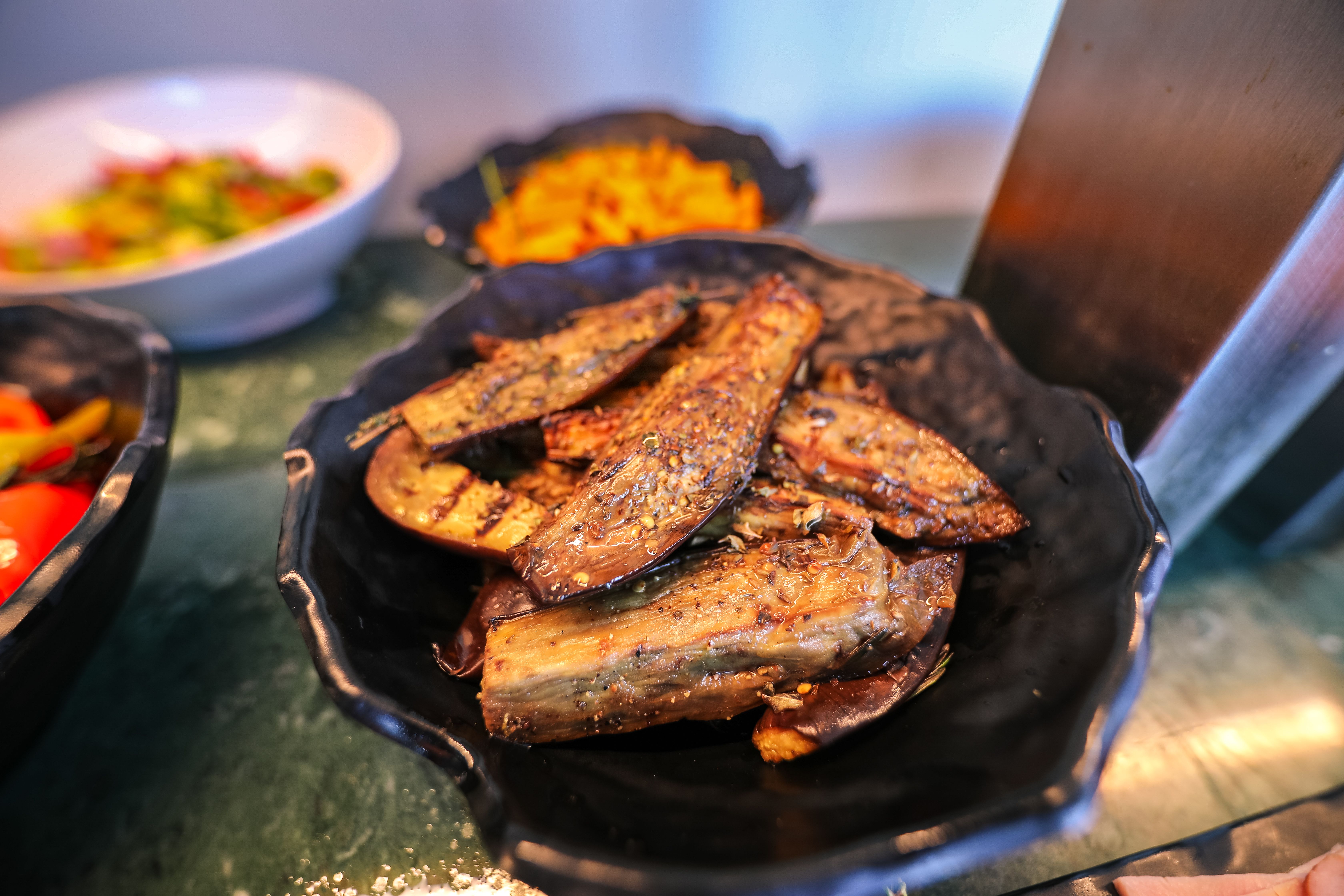
Begun Bhaja is pan-fried or deep-fried eggplant slices coated in rice flour, spiced with turmeric, chile powder, and salt, cooked in mustard oil. The primary concern is the rice flour coating, which is a grain-based starch adding meaningful net carbs — even a light dusting per serving can add 5-10g net carbs. Eggplant itself is relatively low-carb (~3g net carbs per 100g), and mustard oil is a keto-friendly fat. The spices are negligible in carb content. Without the rice flour, this dish would comfortably approve. With it, portion control is essential — one or two small pieces may fit within a daily carb budget, but the coating makes it a borderline food requiring caution.
Strict keto practitioners would classify this as avoid due to the rice flour, which is a grain-derived starch with no place in a zero-tolerance approach to grains. Lazy keto followers might approve small servings given that a thin coating adds limited total carbs per piece.
Begun Bhaja is a traditional Bengali fried eggplant dish consisting entirely of plant-based ingredients. Eggplant slices are coated with turmeric, chile powder, salt, and rice flour, then pan-fried in mustard oil. Every component is 100% plant-derived with no animal products or animal-derived ingredients present. Mustard oil is a pure plant oil pressed from mustard seeds, commonly used in Bengali and broader South Asian cooking. The dish is a whole-food preparation with minimal processing, making it exemplary for both vegan and whole-food plant-based diets. The score is 9 rather than 10 only because frying in oil is a minor nutritional consideration compared to raw or steamed preparations, though this is not a vegan concern.
Begun Bhaja contains three clear paleo violations: rice flour (a grain), salt (excluded as an added ingredient in strict paleo), and mustard oil (a seed oil, excluded in favor of animal fats, olive oil, coconut oil, or avocado oil). The base ingredients — eggplant, turmeric, and chile powder — are fully paleo-compliant, but the grain-based coating and seed oil used for frying are disqualifying. This dish cannot be approved or even placed in the caution zone given the presence of a grain and a seed oil, both of which are clear avoids with high consensus in the paleo community.
Begun Bhaja is a Bengali fried eggplant dish. Eggplant is an excellent Mediterranean vegetable, and the spices (turmeric, chile, salt) are perfectly compatible. However, two factors introduce friction with Mediterranean diet principles: mustard oil replaces extra virgin olive oil as the cooking fat, and rice flour (a refined grain) is used as a coating. Mustard oil is not part of the traditional Mediterranean pantry — olive oil is the canonical fat. The frying method also means the dish absorbs significant oil. Still, the dish is plant-forward, minimally processed, and free of added sugars, red meat, or highly refined ingredients, making it acceptable in moderation rather than a staple.
Some modern Mediterranean diet interpretations focus on the overall dietary pattern rather than specific oils, and note that mustard oil is high in monounsaturated fats and omega-3 fatty acids (ALA), giving it a favorable lipid profile comparable to olive oil. A flexible, plant-forward reading of the diet could accommodate this dish more readily, especially given the core ingredient is a Mediterranean-staple vegetable.
Begun Bhaja is entirely plant-based and contains no animal products whatsoever. The primary ingredient is eggplant, a vegetable, which is strictly excluded on the carnivore diet. All other ingredients — turmeric, chile powder, rice flour, and mustard oil — are plant-derived and also forbidden. Salt is the only carnivore-compatible component. This dish is fundamentally incompatible with carnivore principles at every level.
Begun Bhaja (Indian fried eggplant) contains rice flour, which is a grain and explicitly excluded on Whole30. While eggplant, turmeric, chile powder, salt, and mustard oil are all compliant, the rice flour used as a coating makes this dish non-compliant. Without the rice flour coating, the dish would be fully approved.
Begun Bhaja is a Bengali pan-fried eggplant dish. Most ingredients are clearly low-FODMAP: turmeric, chile powder, salt, rice flour, and mustard oil are all safe. The critical variable is eggplant (aubergine). Monash University has tested eggplant and rates it as low-FODMAP at a serving of 75g (about 2/3 cup), but it becomes moderate-to-high FODMAP at larger servings due to fructans. In a side dish context like Begun Bhaja, a single serving typically involves 2-3 large slices of eggplant, which can easily exceed the 75g threshold depending on slice thickness and the size of the eggplant used. Rice flour coating is gluten-free and low-FODMAP, adding no concern. Mustard oil is a pure fat and FODMAP-free. The dose-dependent nature of eggplant means this dish is not straightforwardly safe — a carefully portioned small serving would be low-FODMAP, but a normal serving in practice may push into moderate FODMAP territory.
Monash University lists eggplant as low-FODMAP at 75g per serve, which may cover a modest 1-2 slice portion. However, many clinical FODMAP practitioners advise caution with eggplant-centric dishes during strict elimination phase because typical real-world servings frequently exceed this threshold, and individual tolerance to fructans in eggplant can vary significantly.
Begun Bhaja is a Bengali fried eggplant dish with a generally favorable ingredient profile for DASH — eggplant is a non-starchy vegetable rich in fiber and potassium, and the spices (turmeric, chile powder) are DASH-neutral. However, two factors warrant caution: (1) Mustard oil is used for frying, which increases total fat and calorie load significantly compared to a sautéed or roasted preparation; while mustard oil is lower in saturated fat than tropical oils and has a favorable omega-3/omega-6 profile, frying oil absorption is a concern for total fat intake under DASH. (2) Salt is added, and depending on quantity, sodium could be a concern. Rice flour coating is relatively benign. The dish is not inherently problematic but is a fried preparation of an otherwise DASH-approved vegetable, making it acceptable in moderation rather than a core DASH food.
NIH DASH guidelines do not specifically address mustard oil, which has a lower saturated fat profile (~7%) and significant monounsaturated and omega-3 content compared to many cooking oils; some DASH-aligned clinicians consider small amounts of mustard oil in vegetable preparations acceptable, particularly when eggplant is the primary ingredient. Conversely, traditional DASH guidance emphasizes limiting total fat and fried preparations, suggesting a baked or air-fried version of this dish would score significantly higher (7-8).
Begun Bhaja is a Bengali fried eggplant dish with several Zone-relevant considerations. Eggplant is a favorable Zone carbohydrate — low-glycemic, high in fiber, rich in polyphenols (particularly nasunin), and fits well as a vegetable carb block. The spices (turmeric, chile powder) are anti-inflammatory and Zone-positive. However, two ingredients create friction: rice flour and mustard oil. Rice flour adds a moderate-glycemic starch coating that raises the carbohydrate glycemic load compared to plain eggplant — this is an 'unfavorable' carb addition in Zone terminology. Mustard oil is high in erucic acid and omega-6 fatty acids, making it less ideal than monounsaturated options like olive oil or avocado oil from a Zone/anti-inflammatory standpoint. The dish also lacks protein entirely, so it cannot function as a standalone Zone meal — it would need lean protein pairing. As a side component, it contributes carbs and fat blocks but with suboptimal fat quality and a slightly elevated glycemic contribution from the rice flour coating. Portion control on the oil and flour coating keeps this usable.
Some Zone practitioners would rate mustard oil more charitably: it contains significant amounts of alpha-linolenic acid (ALA, an omega-3 precursor) and erucic acid, and traditional Indian cooking with mustard oil at moderate quantities may be acceptable in Sears' later anti-inflammatory framework. Additionally, the rice flour coating is thin and used in small quantities, arguably not meaningfully raising glycemic load beyond what eggplant alone provides. In that reading, this dish edges closer to a 6-7 as a favorable vegetable side.
Begun Bhaja is a Bengali fried eggplant dish with a genuinely mixed anti-inflammatory profile. On the positive side, eggplant (brinjal) is a rich source of nasunin (a potent anthocyanin antioxidant in the skin), chlorogenic acid, and fiber — all associated with reduced inflammatory markers. Turmeric and chile powder are well-established anti-inflammatory spices, and rice flour is a relatively benign coating (gluten-free, low-glycemic load in small amounts). The main complication is mustard oil. Cold-pressed mustard oil has a notably favorable fatty acid profile — high in monounsaturated fats (erucic acid, oleic acid) and ALA (omega-3), with a good omega-6:omega-3 ratio — and contains allyl isothiocyanates with demonstrated anti-inflammatory activity. This would push the dish toward 'approve.' However, mustard oil is banned for edible use by the FDA due to erucic acid concerns, and when used at high frying temperatures (as in Begun Bhaja), it may degrade and produce oxidized compounds. The frying method itself adds caloric density and reduces some heat-sensitive nutrients. Eggplant also belongs to the nightshade family, which is accepted in mainstream anti-inflammatory diets (Dr. Weil includes nightshades) but flagged in AIP protocols. Balancing the strong anti-inflammatory ingredients against the frying method and the contested oil, a 'caution' rating at 5 is appropriate — a nutritious dish overall, but with preparation caveats.
Mainstream anti-inflammatory frameworks (Dr. Weil's pyramid) would likely view this dish favorably given eggplant's antioxidant content, beneficial spices, and mustard oil's positive omega-3/omega-6 ratio and isothiocyanate content — some practitioners would rate it an 'approve.' Conversely, Autoimmune Protocol (AIP) adherents would flag both the nightshade eggplant and the chile powder as potential triggers for inflammation in sensitive individuals, and concerns about high-heat frying with any oil introduce oxidation risk that more conservative anti-inflammatory practitioners would note.
Begun Bhaja is a traditional Bengali preparation where eggplant slices are coated in rice flour and pan-fried in mustard oil. While eggplant itself is a low-calorie, moderate-fiber vegetable that would otherwise be acceptable, the preparation method is the critical problem for GLP-1 patients. Pan-frying in mustard oil significantly increases the fat content per serving — eggplant is notably porous and absorbs oil aggressively during frying, meaning each slice can carry a substantial fat load. High-fat meals directly worsen GLP-1 side effects including nausea, bloating, and reflux. The dish also provides no meaningful protein, making it a poor use of limited appetite and caloric capacity. Chile powder may additionally irritate GI mucosa in patients already experiencing nausea or reflux. Rice flour coating adds refined carbohydrates with minimal nutritional payoff. The combination of high fat absorption, zero protein, minimal fiber relative to fat load, and potential GI irritants makes this a poor choice for GLP-1 patients in its traditional fried form.
*See how scores were generated at our methodology page.
Nutritional profile
Six traits that cut across every diet.
Fiber & Plants
How much whole-plant food and fiber it delivers.
Healthy Fats
The quality of its fats (unsaturated, omega-3).
Whole / Unprocessed
How close it is to its natural, unprocessed form.
Gut Gentle
How easy it is on digestion (low FODMAP, few irritants).
Low Glycemic
How little it spikes your blood sugar.
Protein Density
How much protein it packs per calorie.
Controversy Index
Higher controversy = more disagreement between diets.
Diet-Specific Tips
 Keto — 4/10
View tips
- Rice flour coating adds grain-based net carbs — primary disqualifying ingredient
- Eggplant is relatively low net-carb (~3g/100g) and keto-friendly on its own
- Mustard oil is a high-fat cooking medium compatible with keto
- Spices (turmeric, chile powder, salt) are negligible in carb content
- Portion size is critical — one or two pieces may be manageable within daily carb limits
- Omitting rice flour would make this dish keto-approved
 Vegan — 9/10
View tips
- Eggplant is a whole plant food — fully vegan
- Mustard oil is 100% plant-derived
- Rice flour is plant-based and used only as a light coating
- All spices (turmeric, chile powder, salt) are plant-derived or mineral
- No animal products, dairy, eggs, or animal-derived additives present
- Minimal processing — close to whole-food preparation
- Traditional dish with no non-vegan variants in standard recipes
 Mediterranean — 5/10
View tips
- Eggplant is a core Mediterranean vegetable — strongly positive
- Mustard oil is not the canonical Mediterranean fat; extra virgin olive oil is preferred
- Rice flour is a refined grain coating, not a whole grain
- No added sugars, no red meat, no highly processed ingredients
- Frying method increases overall fat absorption
- Spices (turmeric, chile) are compatible and add nutritional value
 Low-FODMAP — 5/10
View tips
- Eggplant is low-FODMAP at ≤75g but becomes high-FODMAP at larger servings due to fructans
- Typical Begun Bhaja serving (2-3 large slices) may easily exceed the 75g low-FODMAP threshold
- Rice flour is gluten-free and low-FODMAP — safe coating
- Mustard oil is a pure fat — FODMAP-free
- Turmeric, chile powder, and salt are all low-FODMAP spices
- No garlic or onion in this recipe — a significant advantage over many Indian dishes
- Portion control is the determining factor for FODMAP safety
 DASH — 5/10
View tips
- Eggplant is a DASH-approved non-starchy vegetable rich in fiber and potassium
- Frying method increases total fat and calorie density compared to DASH-preferred cooking methods
- Mustard oil has low saturated fat but contributes to overall fat load when used for frying
- Added salt requires portion mindfulness to stay within DASH sodium limits
- Rice flour coating is low in sodium and fiber-neutral
- Spices (turmeric, chile powder) are DASH-compatible and anti-inflammatory
- Baked or air-fried preparation would improve DASH compatibility significantly
 Zone — 5/10
View tips
- Eggplant is a favorable Zone carbohydrate — low-glycemic, high-fiber, polyphenol-rich
- Rice flour adds moderate-glycemic starch, making this an 'unfavorable' carb coating by Zone standards
- Mustard oil is high in omega-6 and erucic acid — not the preferred Zone fat source (olive oil or avocado preferred)
- Turmeric is strongly anti-inflammatory and Zone-positive
- No protein present — cannot function as a Zone meal without lean protein pairing
- Works as a carb/fat side component but requires portion control on oil and flour
- Frying method increases caloric density and fat content, requiring careful block accounting
 Anti-Inflammatory — 5/10
View tips
- Eggplant is rich in nasunin (anthocyanin) and chlorogenic acid — potent antioxidants with anti-inflammatory properties
- Turmeric (curcumin) and chile powder (capsaicin) are well-established anti-inflammatory spices
- Mustard oil has a favorable omega-3/omega-6 ratio and anti-inflammatory isothiocyanates when cold-pressed
- High-heat frying can oxidize mustard oil and reduce heat-sensitive nutrients in eggplant
- Eggplant is a nightshade — accepted in mainstream anti-inflammatory diets but excluded in AIP protocols
- Rice flour coating is gluten-free and low-inflammatory, though adds minor refined carbohydrate load
- Frying method increases caloric density and introduces potential pro-inflammatory oxidized lipids