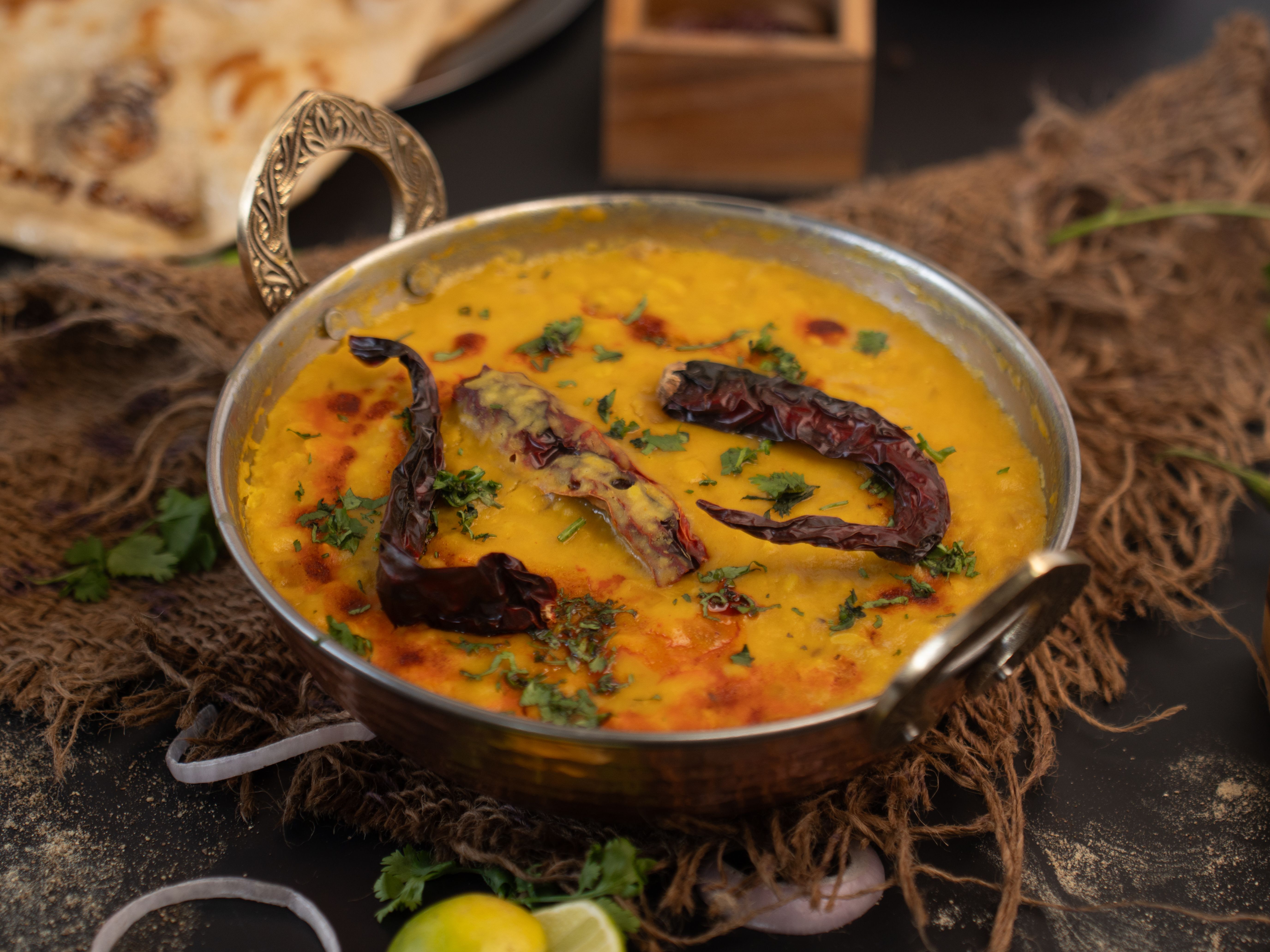
Photo: Anil Sharma / Pexels
The diets react (see scores below)
Common Ingredients
- bengal gram
- coconut
- cumin
- bay leaf
- ginger
- turmeric
- sugar
- ghee
Specific recipes may vary.
Incompatible with 6 of 11 diets
Diet Ratings
Cholar Dal is built on Bengal gram (chana dal), a lentil that is fundamentally incompatible with ketogenic diets. A standard serving (approximately 1 cup cooked) contains roughly 30-40g of net carbs, easily consuming or exceeding the entire daily keto carb budget in a single side dish. The added sugar further disqualifies the dish. While ghee and coconut are keto-friendly ingredients, and spices like cumin, ginger, and turmeric are fine in small amounts, the foundational legume base makes this dish a clear avoid. There is no practical portion size that would allow Cholar Dal to fit within ketogenic macros while still constituting a meaningful serving.
Cholar Dal contains ghee, which is clarified butter — a dairy product derived from cow's milk and therefore not vegan. All other ingredients (bengal gram/chana dal, coconut, cumin, bay leaf, ginger, turmeric, sugar) are fully plant-based. The dish fails the vegan standard solely due to ghee, which is a core ingredient in the traditional preparation. A vegan version is easily achievable by substituting ghee with coconut oil or another plant-based fat, which would make it an approvable whole-food dish.
Cholar Dal is built on Bengal gram (chana dal), a split chickpea and therefore a legume — one of the most clearly excluded food groups in paleo. Legumes contain lectins, phytates, and antinutrients that paleo authorities universally flag as problematic. The dish is fundamentally a legume-based preparation, making it incompatible with paleo regardless of the other ingredients. Sugar (refined) is also a paleo exclusion. Ghee is debated but largely accepted in modern paleo practice. The remaining ingredients — coconut, cumin, bay leaf, ginger, turmeric — are all paleo-approved. However, the core ingredient (Bengal gram) and refined sugar are clear disqualifiers, and no amount of compliant supporting ingredients can rescue a dish whose primary component is a legume.
Cholar Dal is primarily a legume dish (Bengal gram/chana dal), which aligns well with Mediterranean diet principles emphasizing plant-based proteins. The spices (cumin, turmeric, ginger, bay leaf) are beneficial and anti-inflammatory. However, ghee — a saturated animal fat — replaces extra virgin olive oil as the cooking fat, which runs counter to the Mediterranean diet's core fat principle. Coconut adds additional saturated fat, though in moderate quantity. A small amount of sugar is present, which the Mediterranean diet discourages. The dish is otherwise whole and minimally processed. The net result is a nutritious legume dish compromised by non-Mediterranean fats and a touch of added sugar, placing it firmly in the 'caution' zone rather than a clear approve or avoid.
Some modern Mediterranean diet interpreters focus primarily on the whole-food, plant-based legume base and spice profile, arguing that ghee and coconut in small culinary quantities are acceptable in a broadly plant-forward diet. Traditional Mediterranean cuisine, however, universally centers olive oil as the primary fat, and clinical guidelines (e.g., PREDIMED study protocols) would flag saturated fat substitution as a meaningful departure from core principles.
Cholar Dal is entirely plant-based and incompatible with the carnivore diet. The primary protein source is Bengal gram (a legume), which is strictly excluded from carnivore. Every single ingredient — lentils, coconut, cumin, bay leaf, ginger, turmeric, and sugar — is plant-derived. Even the ghee, the one animal-derived ingredient present, is a minor cooking fat that cannot redeem a dish that is fundamentally built on prohibited plant foods. Legumes are among the most clearly excluded foods in carnivore due to their carbohydrate content, antinutrients (lectins, phytates), and plant origin.
Cholar Dal contains two excluded ingredients: (1) Bengal gram (chana dal), which is a legume — specifically split chickpeas — and is not one of the explicitly excepted legumes (green beans, sugar snap peas, snow peas). Legumes are fully excluded on Whole30. (2) Sugar is explicitly listed as an excluded ingredient under 'added sugar.' Either of these alone would disqualify the dish, and together they make it clearly non-compliant. The remaining ingredients (coconut, cumin, bay leaf, ginger, turmeric, ghee) are all Whole30-compatible.
Cholar Dal is made primarily from Bengal gram (chana dal / split chickpeas), which is high in GOS (galacto-oligosaccharides) — a key FODMAP category. Legumes like chickpeas and split chickpeas are consistently rated high-FODMAP by Monash University at any standard serving size used as a main dal component. While canned and rinsed chickpeas can be tolerated in very small portions (about 1/4 cup canned), the quantity used as the primary protein/base of a dal dish far exceeds this threshold. Coconut flesh in moderate amounts can be low-FODMAP (dried shredded coconut is low-FODMAP up to 1/2 cup), and the aromatics — ginger, turmeric, cumin, bay leaf — are all low-FODMAP. Ghee is low-FODMAP (lactose-free fat). Sugar in small amounts is low-FODMAP. However, the foundational ingredient (Bengal gram) makes this dish unavoidably high-FODMAP during the elimination phase, regardless of preparation method.
Cholar Dal (Bengal gram/chana dal) is built on a strong DASH-friendly foundation — split chickpeas are an excellent source of plant protein, fiber, potassium, and magnesium, all nutrients DASH emphasizes. The spices (cumin, turmeric, ginger, bay leaf) add flavor without sodium and offer anti-inflammatory benefits. However, two ingredients pull this dish away from a full DASH approval: (1) Coconut — traditional Cholar Dal uses fresh or desiccated coconut, which contains saturated fat from a tropical oil source that DASH explicitly limits; the amount used matters, but it is a consistent feature of the dish. (2) Ghee — clarified butter is high in saturated fat and cholesterol, and DASH recommends limiting saturated fat intake and favoring vegetable oils over animal fats. The sugar addition is typically small and not a major concern in moderation. Sodium is naturally low in this dish, which is a positive. Overall, Bengal gram's exceptional nutritional profile partially offsets the saturated fat concerns from ghee and coconut, landing this dish in the caution/moderation category rather than outright avoidance.
NIH DASH guidelines explicitly limit saturated fat and tropical oils like coconut, making ghee and coconut problematic ingredients. However, updated clinical interpretations note that the saturated fat in coconut and ghee in the quantities used in a single serving of dal may be modest, and some DASH-aligned dietitians permit small amounts of ghee and coconut as part of a culturally appropriate eating pattern — especially when the dish is otherwise rich in fiber and plant protein.
Cholar Dal (Bengal gram/chana dal cooked with coconut, ghee, and spices) presents a mixed Zone profile. Bengal gram (chana dal) is actually one of the more favorable legumes in Zone terms — it has a relatively low glycemic index compared to other lentils, provides decent protein, and is high in fiber, which reduces net carb impact. However, this dish has several complicating factors: (1) Coconut adds saturated fat rather than preferred monounsaturated fat, conflicting with Zone's fat guidelines. (2) Ghee is pure saturated fat, which traditional Zone (Enter the Zone era) discouraged, though Sears' later work softened this stance. (3) Added sugar, even if small, nudges the glycemic load upward unnecessarily. (4) As a carbohydrate-dominant side dish, it lacks the lean protein needed to achieve 40/30/30 balance on its own — it would need to be paired with a lean protein source. The spices (cumin, turmeric, ginger, bay leaf) are Zone-positive for their anti-inflammatory polyphenol content. Overall, this is a 'caution' food — workable in a Zone meal if portioned carefully as a carb block alongside lean protein, but the saturated fat from coconut and ghee plus added sugar make it imperfect.
Later Sears writings (notably 'The Mediterranean Zone') place greater emphasis on polyphenol-rich foods and acknowledge that traditional ghee and coconut in modest amounts may be acceptable given their anti-inflammatory food context. Some Zone practitioners would rate chana dal more favorably since its glycemic index (~8-28) is among the lowest of legumes, and the high fiber content makes net carbs quite manageable — potentially pushing this toward a score of 6-7 if sugar is minimized and portion is controlled.
Cholar Dal is a Bengali dish made from Bengal gram (chana dal/split chickpeas) cooked with coconut, aromatic spices, and finished with ghee. The profile is mixed from an anti-inflammatory standpoint. On the positive side, Bengal gram is a legume with significant fiber, plant protein, and resistant starch — all associated with reduced inflammatory markers and favorable gut microbiome effects. Turmeric provides curcumin, one of the most studied anti-inflammatory compounds. Ginger contains gingerols with known anti-inflammatory activity. Cumin and bay leaf add modest antioxidant polyphenols. However, ghee is a saturated fat that most anti-inflammatory frameworks recommend limiting (Dr. Weil's pyramid places butter/ghee in the 'use sparingly' category). Coconut, while containing some medium-chain triglycerides, is high in saturated fat and its net inflammatory effect is debated. The addition of sugar, even in small amounts typical of this dish, nudges the profile toward pro-inflammatory. The dish is not heavily processed and relies on whole-food ingredients, but the combination of ghee and coconut saturated fats alongside added sugar prevents a full approval. Prepared with moderate ghee and minimal sugar, this dish leans toward acceptable — a 'caution' at the higher end.
Some anti-inflammatory practitioners, particularly those following Ayurvedic-informed approaches, consider ghee a medicinal fat with anti-inflammatory properties (butyrate content, fat-soluble vitamin delivery) and would rate this dish more favorably. Conversely, stricter anti-inflammatory protocols like those emphasizing olive oil as the sole cooking fat would flag both ghee and coconut as foods to limit, potentially pushing this into a lower caution score.
Cholar Dal (Bengali-style chana dal) is a nutritionally mixed dish for GLP-1 patients. Bengal gram (chana dal) is a strong foundation — it provides solid plant-based protein (~8-9g per half cup cooked) and is high in fiber (~7-8g per serving), supporting two of the top GLP-1 dietary priorities. However, the traditional preparation introduces two meaningful concerns: coconut (typically fresh or desiccated) adds saturated fat, and ghee — while used in small amounts for tempering — is a concentrated saturated fat that can worsen nausea, bloating, and reflux in GLP-1 patients. The addition of sugar, while small, adds empty calories and is unnecessary for GLP-1 patients prioritizing nutrient density. On the positive side, ginger is genuinely beneficial — it has anti-nausea properties relevant to GLP-1 side effect management. Cumin, bay leaf, and turmeric are digestive-supportive spices with no meaningful drawbacks. The dish is not fried, not spicy, and is relatively easy to digest as a cooked lentil preparation, which helps. Overall, this is a caution rather than an avoid — the lentil base is genuinely good, but the ghee and coconut content, and the sugar addition, prevent a full approve. A modified version with coconut reduced or omitted, ghee replaced with a small amount of olive oil, and sugar removed would score higher (7-8).
Some GLP-1-focused dietitians would approve a small portion of traditional Cholar Dal, arguing that the ghee quantity in tempering is negligible per serving and that coconut provides medium-chain fatty acids that are more readily metabolized than long-chain saturated fats. Others maintain stricter limits on all saturated fat sources given GLP-1 patients' heightened sensitivity to fat-induced GI symptoms, particularly in the early weeks of treatment.
*See how scores were generated at our methodology page.
Nutritional profile
Six traits that cut across every diet.
Fiber & Plants
How much whole-plant food and fiber it delivers.
Healthy Fats
The quality of its fats (unsaturated, omega-3).
Whole / Unprocessed
How close it is to its natural, unprocessed form.
Gut Gentle
How easy it is on digestion (low FODMAP, few irritants).
Low Glycemic
How little it spikes your blood sugar.
Protein Density
How much protein it packs per calorie.
Controversy Index
Higher controversy = more disagreement between diets.
Diet-Specific Tips
 Mediterranean — 5/10
View tips
- Bengal gram (chana dal) is an excellent plant-based protein and fiber source — strongly Mediterranean-aligned
- Ghee is a saturated animal fat replacing extra virgin olive oil, the cornerstone Mediterranean fat
- Coconut adds additional saturated fat, not traditional in Mediterranean cuisine
- Added sugar, even if small, is discouraged by Mediterranean diet guidelines
- Spices (turmeric, cumin, ginger) are anti-inflammatory and diet-compatible
- Dish is whole and minimally processed, with no refined grains or highly processed ingredients
 DASH — 5/10
View tips
- Bengal gram (chana dal) is DASH-approved: high fiber, potassium, magnesium, plant protein
- Ghee is a saturated animal fat — DASH recommends limiting saturated fat
- Coconut is a tropical oil high in saturated fat, which DASH explicitly restricts
- No added sodium in preparation — a significant DASH positive
- Spices provide flavor without salt, aligned with DASH sodium-reduction strategy
- Small amount of sugar is unlikely to be a significant concern per serving
- Overall saturated fat load depends on portion size of ghee and coconut used
 Zone — 5/10
View tips
- Bengal gram (chana dal) has low GI and high fiber, making net carbs manageable — a Zone-favorable legume
- Coconut and ghee contribute saturated fat, not Zone-preferred monounsaturated fat
- Added sugar is a Zone-negative ingredient, increasing glycemic load unnecessarily
- Dish is carbohydrate-dominant and protein-light — must be paired with lean protein to approach 40/30/30
- Anti-inflammatory spices (turmeric, ginger, cumin) align with Zone's polyphenol focus
- As a side dish, portion control is critical to keep carb blocks in check
 Anti-Inflammatory — 6/10
View tips
- Bengal gram (chana dal) is a fiber-rich legume with anti-inflammatory and prebiotic benefits
- Turmeric provides curcumin, a well-researched anti-inflammatory compound
- Ginger contributes gingerols with demonstrated anti-inflammatory activity
- Ghee is high in saturated fat, limited in most anti-inflammatory frameworks
- Coconut is high in saturated fat with debated inflammatory profile
- Added sugar, even in small amounts, is a mild pro-inflammatory factor
- Overall dish is whole-food based with no processed ingredients or trans fats
 GLP-1 Friendly — 5/10
View tips
- Bengal gram (chana dal) provides meaningful plant protein and high fiber — strong positives for GLP-1 dietary goals
- Ghee is a concentrated saturated fat that may worsen nausea, bloating, and reflux — a known GLP-1 concern
- Coconut adds additional saturated fat load; amount used significantly affects the overall rating
- Sugar addition contributes empty calories, counterproductive for nutrient-density goals on reduced appetite
- Ginger is a beneficial ingredient with evidence for reducing nausea, directly relevant to GLP-1 side effects
- Dish is soft, cooked, and not spicy — supports easy digestibility which is appropriate for slowed gastric emptying
- Portion size matters: a small serving (half cup) keeps fat and sugar impact manageable