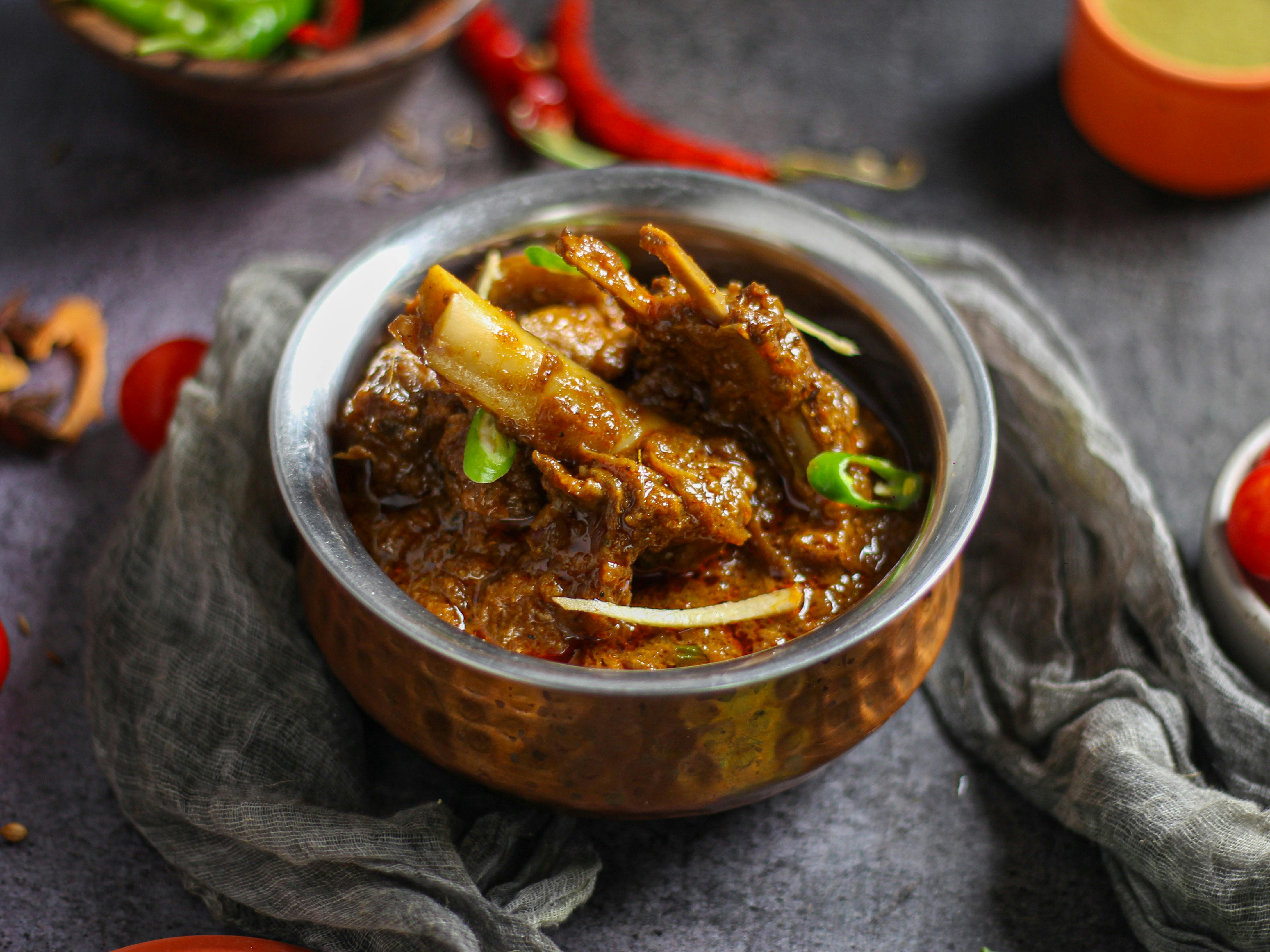
Photo: Prabal Pratap Singh / Pexels
Indian
Kosha Mangsho
The diets react (see scores below)
Common Ingredients
- mutton
- onion
- yogurt
- ginger
- garlic
- garam masala
- turmeric
- mustard oil
Specific recipes may vary.
Incompatible with 8 of 11 diets
Diet Ratings
Kosha Mangsho is a slow-cooked Bengali goat/mutton curry that is fundamentally protein- and fat-rich, which aligns well with keto principles. The primary concern is the onion quantity — this dish is traditionally made with a large amount of onions (often 500g+ per kg of meat) that are caramelized down extensively, concentrating their natural sugars and carbs significantly. A standard serving could push 8-12g net carbs from onions alone. Yogurt adds a small additional carb load (~3-4g per serving). The mustard oil, goat meat, ginger, garlic, and spices are all keto-friendly. With strict portion control or by reducing onion quantity, this dish can fit into a keto framework, but as traditionally prepared it sits in a moderate-carb gray zone that warrants caution.
Some lazy keto and flexible keto practitioners would approve this dish outright, arguing that the onions caramelize and reduce substantially, the net carbs per realistic serving are manageable within a 50g daily limit, and the high fat and protein profile makes it an excellent keto meal. Strict keto adherents, however, flag the concentrated onion carbs and yogurt as problematic and would recommend modifying the recipe.
Kosha Mangsho is a Bengali slow-cooked meat dish that fundamentally relies on mutton (goat meat) as its primary ingredient, along with yogurt — both of which are animal products strictly excluded from a vegan diet. Mutton is animal flesh, and yogurt is a dairy product derived from animal milk. These are not incidental or trace ingredients; they are core structural components of the dish without which it cannot be considered Kosha Mangsho. The remaining ingredients (onion, ginger, garlic, garam masala, turmeric, mustard oil) are plant-based, but they do not alter the fundamental non-vegan nature of this dish.
Kosha Mangsho is a slow-cooked Bengali goat curry that is largely paleo-friendly in its protein and spice components, but contains two significant non-paleo ingredients: yogurt (dairy) and mustard oil (a seed oil). Yogurt is a fermented dairy product excluded under standard paleo rules. Mustard oil, pressed from mustard seeds, is classified as a seed oil and falls outside approved paleo fats. These two ingredients push the dish into 'avoid' territory despite the otherwise paleo-compliant goat meat, onion, ginger, garlic, turmeric, and garam masala. A paleo-adapted version could substitute coconut milk for yogurt and coconut oil or ghee for mustard oil.
Some lenient paleo practitioners accept full-fat, fermented dairy like yogurt on the grounds that fermentation reduces lactose and improves digestibility; figures like Chris Kresser have suggested fermented dairy may be tolerable for many. Similarly, cold-pressed mustard oil is sometimes distinguished from refined seed oils, though this remains a minority view with no strong paleo authority endorsement.
Kosha Mangsho is a slow-cooked Bengali goat/mutton dish. The primary protein is red meat (goat/mutton), which is explicitly limited in the Mediterranean diet to only a few times per month. While some supporting ingredients are Mediterranean-friendly — onion, garlic, yogurt, and turmeric are all acceptable — the dish is fundamentally built around a large serving of red meat as the centerpiece. Additionally, mustard oil is not a traditional Mediterranean fat; extra virgin olive oil is the canonical primary fat source. The spice profile (garam masala, turmeric) is non-Mediterranean, though spices themselves are not prohibited. The core issue remains the red meat base, which disqualifies this as a regular meal under Mediterranean principles.
Kosha Mangsho, while centered on goat/mutton (a ruminant meat that would otherwise be carnivore-approved), is fundamentally incompatible with the carnivore diet due to its extensive plant-based ingredients. Onion, ginger, garlic, garam masala (a blend of plant spices), and turmeric are all plant-derived and strictly excluded. Mustard oil is a plant oil, also excluded. Yogurt adds dairy, which is debated but secondary to the more critical plant violations. The dish is essentially a heavily spiced, plant-laden curry — the antithesis of carnivore principles. Even the most liberal carnivore practitioners who permit some dairy and spices would not endorse this level of plant ingredient integration. The protein source (goat) is excellent, but the preparation method disqualifies this dish entirely.
Kosha Mangsho contains yogurt, which is a dairy product explicitly excluded on Whole30. All other ingredients — mutton (goat), onion, ginger, garlic, garam masala, turmeric, and mustard oil — are fully Whole30-compliant. However, yogurt is a core marinade and sauce component in this dish, and dairy (including yogurt) is on the excluded list. The dish cannot be considered compliant as traditionally prepared. A modified version using compliant coconut milk or coconut yogurt (if no non-compliant additives) as a substitute could potentially be made Whole30-friendly.
Kosha Mangsho is a slow-cooked Bengali spiced goat dish that contains multiple high-FODMAP ingredients that are central to the recipe and cannot be reduced to safe serving sizes without fundamentally altering the dish. Onion is a primary ingredient and one of the highest-FODMAP foods (rich in fructans) — it is cooked down extensively in this dish, concentrating its FODMAP load. Garlic is another primary flavoring agent and is also very high in fructans even in small amounts. Yogurt, used as a marinade and sauce base, contains lactose and is high-FODMAP at typical quantities used in this recipe (usually 100–200g or more). Garam masala in small amounts is generally considered low-FODMAP, and mutton/goat meat itself is a plain protein and low-FODMAP. Ginger and turmeric are low-FODMAP at culinary doses. Mustard oil is a fat and FODMAP-free. However, the combination of large quantities of onion, garlic, and yogurt makes this dish firmly high-FODMAP during the elimination phase. There is no practical way to order or prepare a standard serving of Kosha Mangsho that would be FODMAP-safe, as onion and garlic are structural to the dish's flavor profile.
Kosha Mangsho is a slow-cooked Bengali mutton (goat) dish that presents multiple concerns for DASH diet adherence. Red meat (mutton/goat) is explicitly limited on the DASH eating plan due to its saturated fat content, and DASH guidelines recommend limiting red meat to small portions only occasionally or replacing it with leaner proteins like poultry or fish. Mustard oil, while lower in saturated fat than tropical oils, is high in total fat and not a recommended DASH cooking fat (DASH favors small amounts of vegetable oils like olive or canola). The dish is typically slow-braised with significant oil and fatty cuts of meat, making fat content high. Garam masala and spice blends can contribute sodium. While yogurt, onion, ginger, garlic, and turmeric are DASH-friendly ingredients, the overall dish is dominated by red meat cooked in substantial oil — squarely conflicting with DASH core principles of limiting red meat and saturated/total fat intake.
Kosha Mangsho is a slow-cooked Bengali braised goat dish where the protein source (mutton/goat) is moderately Zone-compatible but carries some concerns. Goat is actually one of the leaner red meats, with less saturated fat than lamb or beef, making it more favorable than typical red meat in Zone terms. However, it still carries more saturated fat than the Zone's preferred proteins (skinless chicken, fish, egg whites). The yogurt acts as a marinade and adds a small favorable protein/carb block. Onions, ginger, and garlic are low-glycemic vegetables with polyphenol benefits that Sears would approve of. The spice blend (garam masala, turmeric) is anti-inflammatory and aligns well with Sears' polyphenol emphasis — turmeric in particular. The critical problem is mustard oil, which is high in erucic acid and omega-6 fatty acids, diverging from the Zone's preferred monounsaturated fat sources like olive oil or avocado. Additionally, the dish is protein-and-fat dominant with minimal carbohydrate, making it difficult to achieve 40/30/30 ratios without pairing with substantial low-glycemic vegetables. The slow-caramelized cooking style also concentrates the dish, increasing caloric density. With careful portioning — a modest serving of the meat paired with a large side of colorful low-GI vegetables — this can fit into a Zone framework, but it requires significant meal engineering to balance.
Some Zone practitioners and later Sears writings take a more relaxed view of lean red meats like goat, noting its relatively low saturated fat profile compared to beef or lamb. Goat is sometimes called the 'other white meat' nutritionally. If mustard oil were substituted with olive oil, the dish would score notably higher. Traditional preparation using mustard oil is the sticking point for stricter Zone adherents.
Kosha Mangsho is a slow-cooked Bengali goat curry with a mixed anti-inflammatory profile. On the positive side, it contains several potent anti-inflammatory spices — turmeric (curcumin), ginger, garlic, and garam masala (typically containing cinnamon, cloves, cardamom, black pepper) — all of which are well-supported as inflammation-reducers. Onion provides quercetin, and yogurt offers probiotics that can support gut health and modulate inflammation. However, the primary protein — mutton/goat — is red meat, which is placed in the 'limit' category in anti-inflammatory frameworks. Red meat, especially in slow-cooked, concentrated preparations like kosha (which uses very little water and relies on fat rendering), contributes saturated fat and arachidonic acid, both associated with pro-inflammatory pathways. Mustard oil adds another layer of complexity: it is high in erucic acid and has a high omega-6 to omega-3 ratio, though it also contains some omega-3 ALA and is used in relatively modest quantities as a cooking medium in this dish. The overall dish is not in the 'avoid' category because the spice profile is genuinely anti-inflammatory and goat meat is leaner than beef or lamb, but the red meat base and mustard oil prevent an 'approve' rating. Suitable occasionally but not as a regular staple.
Some anti-inflammatory practitioners note that goat meat is one of the leanest red meats globally — lower in saturated fat than beef, lamb, or pork — and argue it deserves a more lenient assessment than standard red meat categorizations suggest. On mustard oil: while most Western anti-inflammatory guidelines flag it for erucic acid content (it is banned for edible use in the US and EU), traditional Indian and Ayurvedic medicine as well as some researchers credit cold-pressed mustard oil with anti-inflammatory and cardioprotective properties due to its ALA content and glucosinolate compounds; the evidence remains contested.
Kosha Mangsho is a slow-cooked Bengali goat/mutton curry that, while rich in protein, presents several significant concerns for GLP-1 patients. Mutton (goat or lamb) is a fatty red meat with substantial saturated fat content, and the traditional preparation involves slow-cooking in mustard oil — adding additional fat load. The 'kosha' technique involves repeated frying of the meat and onions in oil until deeply caramelized, resulting in a high total fat per serving. High-fat meals directly worsen GLP-1 side effects including nausea, bloating, and reflux due to further slowed gastric emptying compounding the medication's effect. Garam masala and the intensity of spices may also trigger GI discomfort. Yogurt is a positive ingredient (protein, probiotics), and onion/garlic add minor fiber and micronutrients, but these benefits are outweighed by the fat-heavy cooking method and fatty protein source. The dish is not fiber-rich and is not easy to digest. Small portions could reduce some risk, but the traditional serving is rich and heavy.
Some GLP-1-focused dietitians note that goat meat is actually leaner than lamb or beef, and that the protein density of a small portion of this dish may be clinically useful for patients struggling to meet protein targets. The debate centers on whether the fat content in a controlled small portion is acceptable given the meaningful protein contribution, versus the risk of reliably triggering nausea and reflux in GLP-1 patients who are already fat-sensitive.
*See how scores were generated at our methodology page.
Nutritional profile
Six traits that cut across every diet.
Fiber & Plants
How much whole-plant food and fiber it delivers.
Healthy Fats
The quality of its fats (unsaturated, omega-3).
Whole / Unprocessed
How close it is to its natural, unprocessed form.
Gut Gentle
How easy it is on digestion (low FODMAP, few irritants).
Low Glycemic
How little it spikes your blood sugar.
Protein Density
How much protein it packs per calorie.
Controversy Index
Higher controversy = more disagreement between diets.
Diet-Specific Tips
 Keto — 5/10
View tips
- High onion content — traditionally very large quantities, concentrated through long cooking, raising net carbs significantly
- Goat/mutton is an excellent keto protein with good fat content
- Mustard oil is a healthy fat, fully keto-compatible
- Yogurt adds moderate carbs (~3-4g net per serving); full-fat yogurt preferred
- Spices (garam masala, turmeric, ginger, garlic) are negligible in carb contribution
- Portion size is critical — a small serving may fit keto, a large traditional serving may not
- No grains, no added sugar, no starchy vegetables in the ingredient list
 Zone — 5/10
View tips
- Goat meat is leaner than most red meats but still higher in saturated fat than Zone-preferred proteins like chicken or fish
- Mustard oil is high in omega-6 and erucic acid — not a Zone-favorable fat; olive oil or avocado oil would be preferred
- Yogurt adds a small favorable protein/carb contribution
- Turmeric and garam masala provide anti-inflammatory polyphenols aligned with Sears' later nutritional philosophy
- Onions, garlic, and ginger are low-glycemic and polyphenol-rich — Zone favorable
- Dish is carbohydrate-light, requiring deliberate pairing with low-GI vegetables to achieve 40/30/30 balance
- Portion control of the meat portion is essential — approximately 3 oz cooked to stay within protein block targets
 Anti-Inflammatory — 4/10
View tips
- Red meat (goat/mutton) — limited in anti-inflammatory diets due to saturated fat and arachidonic acid
- Turmeric (curcumin) — well-established anti-inflammatory spice
- Ginger and garlic — strong anti-inflammatory and antioxidant properties
- Garam masala spices (cloves, cinnamon, cardamom, black pepper) — collectively anti-inflammatory
- Mustard oil — contested: high omega-6 and erucic acid, but some ALA and traditional anti-inflammatory use
- Yogurt — probiotic benefit, supports gut-immune axis
- Slow-cooked, concentrated preparation increases fat and calorie density
- Goat is leaner than most red meats, partially mitigating red meat concerns