Photo: Khan Nirob / Pexels
Indian
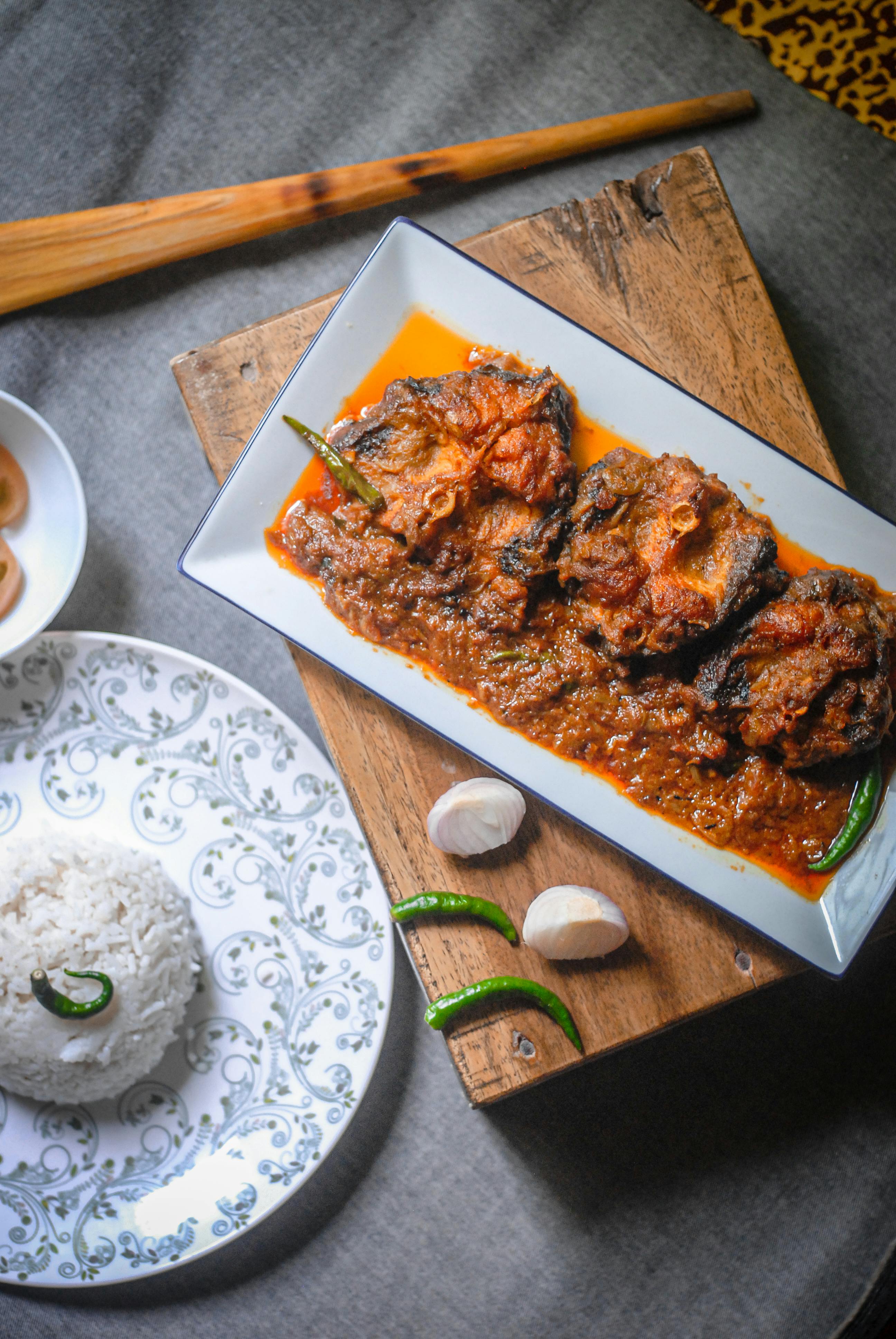
Machher Jhol
The diets react (see scores below)
Common Ingredients
- fish
- potatoes
- turmeric
- cumin
- ginger
- green chiles
- mustard oil
- tomatoes
Specific recipes may vary.
Incompatible with 2 of 11 diets
Diet Ratings
Machher Jhol is a Bengali fish curry that presents a mixed keto profile. Fish itself is excellent for keto — high protein, healthy fats, zero carbs. Mustard oil, turmeric, cumin, ginger, green chiles, and tomatoes are all keto-friendly in typical cooking quantities. The critical problem is potatoes, a starchy vegetable with roughly 15-20g net carbs per medium potato. A standard serving of Machher Jhol typically includes 1-2 potatoes, which alone can push or exceed the daily net carb limit. Without potatoes, this dish would be a strong approve. With them in traditional proportions, it becomes problematic. The dish can be made keto-compliant by omitting or minimizing potatoes, which is why it lands in caution rather than avoid.
Some lazy keto practitioners argue that a small piece of potato (quarter or half) in a broth-heavy dish dilutes the carb impact enough to fit within a 50g daily limit, especially if the rest of the day's meals are very low carb. Strict keto adherents, however, would classify potatoes as a hard avoid regardless of portion and would insist on substituting with radish or cauliflower.
Machher Jhol is a traditional Bengali fish curry. Fish is an animal product and is unequivocally excluded from a vegan diet. There is no ambiguity here — all vegan organizations and the broader vegan community unanimously classify fish as a non-vegan animal product. The remaining ingredients (potatoes, turmeric, cumin, ginger, green chiles, mustard oil, tomatoes) are all plant-based, but the presence of fish as the primary protein and a core defining ingredient of this dish makes it entirely incompatible with a vegan diet.
Machher Jhol is a Bengali fish curry with several paleo-friendly elements — fish is a cornerstone paleo protein, and turmeric, cumin, ginger, green chiles, and tomatoes are all approved spices and vegetables. However, two ingredients create friction. First, mustard oil: while it is a minimally processed, traditionally used oil, it is technically a seed oil (pressed from mustard seeds), which falls outside the preferred paleo fat sources. Second, potatoes: white potatoes are a debated ingredient in the paleo community. The Paleo Diet (Cordain) discourages them due to glycoalkaloid content, though many modern paleo practitioners accept them. These two contested ingredients prevent a full approval, placing the dish solidly in the caution zone. Without the potatoes and with a swap to coconut oil or ghee, this dish would score much higher.
Mark Sisson (Primal Blueprint) and Whole30 now include white potatoes as acceptable, and some paleo practitioners argue that cold-pressed mustard oil — a staple in traditional cooking — is less problematic than industrially refined seed oils. Under these more flexible frameworks, Machher Jhol could be considered largely paleo-compatible.
Machher Jhol is a Bengali fish curry with strong alignment to Mediterranean principles in its core components: fish is an excellent protein source encouraged 2-3 times weekly, and the vegetables (tomatoes, potatoes), anti-inflammatory spices (turmeric, ginger, cumin), and whole-food ingredients are all compatible. The main point of divergence is mustard oil, which is not part of the Mediterranean tradition — extra virgin olive oil is the canonical fat. Mustard oil is pungent, high in erucic acid, and while it is a traditional, minimally processed plant oil, it is not recognized within Mediterranean diet frameworks. The dish is otherwise minimally processed and nutrient-dense, warranting a cautious approval rather than full endorsement.
Some broader interpretations of the Mediterranean diet allow for regional plant-based cooking oils beyond olive oil, particularly when they are cold-pressed and unrefined like traditional mustard oil. From this perspective, Machher Jhol could be viewed more favorably, as the overall dietary pattern — fish, vegetables, spices, no refined ingredients — closely mirrors Mediterranean principles regardless of the specific oil used.
Machher Jhol is a traditional Bengali fish curry that is fundamentally incompatible with the carnivore diet. While fish itself is a carnivore-approved food, this dish contains numerous plant-based ingredients that are strictly excluded: potatoes (starchy vegetable), tomatoes (fruit/vegetable), turmeric, cumin, and ginger (plant spices), green chiles (plant), and mustard oil (plant-derived oil). The majority of this dish by ingredient count and flavor profile is plant-derived. Even the most lenient carnivore practitioners who allow occasional spices would draw the line at this many plant foods combined with a plant oil base. There is no version of this dish that could be considered carnivore-compatible without fundamentally changing its identity.
Machher Jhol is a traditional Bengali fish curry made with entirely Whole30-compliant ingredients. Fish is explicitly allowed as a primary protein. Potatoes are a compliant vegetable. Turmeric, cumin, and ginger are permitted spices. Green chiles are compliant. Tomatoes are allowed vegetables. Mustard oil is a natural fat derived from pressing mustard seeds and is fully compliant. There are no excluded ingredients — no grains, legumes, dairy, added sugars, or alcohol. This dish represents exactly the kind of whole, minimally processed, nutrient-dense meal the Whole30 program encourages.
Machher Jhol is a Bengali fish curry with mostly low-FODMAP ingredients. Fish is FODMAP-free, mustard oil is FODMAP-free, turmeric and cumin are low-FODMAP at culinary amounts, and ginger is low-FODMAP at up to 1 teaspoon per serve. Potatoes are low-FODMAP at a standard serving (1 medium/150g). Tomatoes are low-FODMAP at up to 65g (about half a common tomato) but become high-FODMAP in larger quantities due to excess fructose. Green chiles are generally low-FODMAP at small amounts. The main concerns are: (1) tomatoes — traditional Machher Jhol often uses a generous amount of tomato, which can push into high-FODMAP territory; (2) the dish sometimes includes onion or garlic in home/restaurant preparations, though neither appears in this ingredient list. As listed, without onion or garlic, this dish is plausibly low-FODMAP with careful portioning of tomatoes. The caution rating reflects the tomato serving-size sensitivity and the real-world risk that restaurant or home preparations may include unlisted alliums.
Monash University rates tomatoes as low-FODMAP at 65g but high-FODMAP at larger serves due to excess fructose accumulation — most curry preparations use more than this threshold. Additionally, many clinical FODMAP practitioners note that Indian restaurant dishes frequently include garlic and onion even when not explicitly listed, and would advise patients to avoid this dish during strict elimination unless prepared at home with confirmed ingredients.
Machher Jhol is a Bengali fish curry that aligns well with several DASH principles: fish is a lean protein explicitly encouraged by DASH, and the dish is rich in DASH-friendly ingredients like tomatoes, potatoes, ginger, turmeric, and cumin — all contributing potassium, antioxidants, and anti-inflammatory compounds with minimal sodium. The main concern is mustard oil, which is high in erucic acid and not a standard DASH-recommended oil (DASH emphasizes vegetable oils like canola or olive oil). Mustard oil is also banned for edible use by the FDA in the US, though widely used in South Asian cooking. Its fatty acid profile (high MUFA/PUFA, low saturated fat) is not inherently problematic from a cardiovascular standpoint, but it falls outside explicit DASH oil recommendations. Sodium content depends heavily on preparation — if salt is kept moderate, this dish is quite DASH-compatible. Overall, a nutritionally strong dish held back primarily by the non-standard oil choice.
NIH DASH guidelines specify canola, corn, olive, safflower, or sunflower oils and do not include mustard oil. However, updated clinical interpretations note that mustard oil's fatty acid profile (approximately 60% MUFA, 21% PUFA, low saturated fat) is cardiovascular-friendly, and some DASH-oriented dietitians practicing in South Asian communities accept it as a reasonable substitute, particularly given the strong evidence base for fish-forward, vegetable-rich dishes like this one.
Machher Jhol is a Bengali fish curry with a mixed Zone profile. The fish (typically carp, rohu, or hilsa) is an excellent lean protein source rich in omega-3s, strongly aligned with Zone principles. The spices (turmeric, cumin, ginger, green chiles) are polyphenol-rich and anti-inflammatory, which Sears explicitly champions in his later writings. However, two ingredients create Zone concerns: (1) Potatoes are a high-glycemic carbohydrate that Sears categorizes as 'unfavorable' — they spike insulin and are difficult to block-balance without significantly reducing portion size. (2) Mustard oil is high in erucic acid and omega-6 fatty acids relative to Zone's preferred monounsaturated fats like olive oil; while it does contain some ALA (omega-3), it is not Sears' recommended fat source. The dish can be adapted into a reasonable Zone meal by minimizing potato content and controlling mustard oil quantity, but as traditionally prepared with generous potatoes and mustard oil, it requires meaningful modification to fit Zone macro ratios. Tomatoes serve as a favorable low-glycemic carb. The overall protein-to-carb balance depends heavily on fish-to-potato ratio in the serving.
Some Zone practitioners and later Sears writings place greater emphasis on anti-inflammatory spice profiles and omega-3-rich fish as the dominant factors. In this view, the polyphenol load from turmeric, ginger, and chiles combined with omega-3-rich fish could justify a more lenient reading — especially if potatoes are present in small amounts. Mustard oil also contains erucic acid, and its Zone classification is debated; some practitioners treat it similarly to other plant oils. A Zone-adapted version with minimal potato and controlled oil could score as high as 6-7.
Machher Jhol is a Bengali fish curry with a strong anti-inflammatory profile overall. Fish is the primary protein and a core anti-inflammatory food, especially if it's a fatty variety like rohu, hilsa, or catla common in Bengali cooking — these provide omega-3 fatty acids that reduce inflammatory markers like CRP and IL-6. Turmeric (curcumin), ginger, and green chiles are among the most studied anti-inflammatory spices. Cumin adds additional antioxidant support. Tomatoes provide lycopene and vitamin C. Potatoes are a neutral starch — minimally inflammatory in whole form. The main complexity is mustard oil: it is high in erucic acid and ALA (an omega-3), and is a traditional staple in Bengali cuisine. Cold-pressed mustard oil has a favorable omega-3 to omega-6 ratio and contains allyl isothiocyanates with anti-inflammatory properties, making it arguably better than many refined seed oils. However, it is banned for edible use in the US and EU due to erucic acid concerns, and is not recommended by mainstream Western dietary guidelines. Within anti-inflammatory frameworks that prioritize extra virgin olive oil, mustard oil is a secondary oil at best. Taken as a whole, the dish is rich in anti-inflammatory ingredients and represents a traditionally health-aligned preparation.
Most anti-inflammatory authorities (Dr. Weil, Mediterranean frameworks) recommend extra virgin olive oil as the preferred cooking fat and do not explicitly endorse mustard oil, placing this dish slightly outside the ideal fat framework. However, some integrative nutrition and Ayurvedic perspectives consider cold-pressed mustard oil anti-inflammatory due to its ALA content and bioactive compounds, and it compares favorably to high-omega-6 refined seed oils that are more explicitly discouraged.
Machher Jhol is a light Bengali fish curry — a broth-based dish with fish as the primary protein, making it reasonably well-suited for GLP-1 patients overall. Fish provides lean, high-quality protein that supports muscle preservation and is easy to digest. The broth base means high water content, supporting hydration. Turmeric, cumin, and ginger are anti-inflammatory and generally GI-friendly. However, two ingredients push this into caution territory: mustard oil and green chiles. Mustard oil is high in fat (though predominantly unsaturated/MUFA and omega-3 ALA), and if used in traditional quantities it adds meaningful fat per serving that can worsen nausea and bloating in GLP-1 patients. Green chiles introduce spice heat that may aggravate reflux or nausea, which are already common GLP-1 side effects. Potatoes contribute starchy carbohydrates with modest fiber but are low in protein density and may displace more nutrient-dense ingredients in a small-appetite meal. The dish is not fried and is broth-forward, which works in its favor. With portion control, minimal mustard oil, and mild chile levels, this dish can be a reasonable GLP-1 meal — but the standard preparation carries enough caveats to land in caution.
Some GLP-1-focused dietitians may rate this more favorably, noting that mustard oil is predominantly unsaturated fat and omega-3 ALA, and that the broth-based format naturally limits total fat per serving compared to heavier curries. Others will flag that individual spice sensitivity on GLP-1 medications varies widely, and patients who tolerate green chiles well may find this dish a nutritionally sound, high-protein, anti-inflammatory option without modification.
*See how scores were generated at our methodology page.
Nutritional profile
Six traits that cut across every diet.
Fiber & Plants
How much whole-plant food and fiber it delivers.
Healthy Fats
The quality of its fats (unsaturated, omega-3).
Whole / Unprocessed
How close it is to its natural, unprocessed form.
Gut Gentle
How easy it is on digestion (low FODMAP, few irritants).
Low Glycemic
How little it spikes your blood sugar.
Protein Density
How much protein it packs per calorie.
Controversy Index
Higher controversy = more disagreement between diets.
Diet-Specific Tips
 Keto — 4/10
View tips
- Potatoes are the primary keto concern — high net carbs (~15-20g per medium potato)
- Fish is an ideal keto protein — lean, zero-carb, nutrient-dense
- Mustard oil is a healthy fat source, keto-compatible
- Tomatoes contribute minimal net carbs in typical curry quantities (~2-3g)
- Spices (turmeric, cumin, ginger, green chiles) are negligible in carbs
- Dish can be made keto-friendly by removing or drastically reducing potatoes
- Standard restaurant or home serving likely exceeds keto carb threshold due to potatoes
 Paleo — 5/10
View tips
- Fish is a core paleo-approved protein
- Turmeric, cumin, ginger, green chiles, and tomatoes are all paleo-approved
- Mustard oil is a seed oil, excluded under strict paleo fat guidelines
- White potatoes are debated — excluded by Cordain, accepted by Sisson and Whole30
- No grains, legumes, dairy, or refined sugar present
- Traditional, minimally processed preparation aligns with paleo philosophy overall
 Mediterranean — 6/10
View tips
- Fish is a core Mediterranean protein, encouraged multiple times per week
- Mustard oil replaces extra virgin olive oil, which is the canonical Mediterranean fat
- Tomatoes, potatoes, and aromatic spices are whole, plant-based ingredients
- No processed foods, refined grains, or added sugars
- Anti-inflammatory spice profile (turmeric, ginger) aligns well with Mediterranean health principles
- Dish is minimally processed and whole-food based
 Whole30 — 7/10
View tips
- Fish is explicitly allowed on Whole30
- Potatoes are a compliant vegetable
- All spices (turmeric, cumin, ginger, green chiles) are fully compliant
- Mustard oil is a compliant natural fat
- Tomatoes are a compliant vegetable
- No excluded ingredients present
- Dish is a whole-food, minimally processed preparation aligned with Whole30 spirit
 Low-FODMAP — 6/10
View tips
- Fish is completely FODMAP-free — a safe protein base
- Mustard oil, turmeric, and cumin are low-FODMAP at culinary quantities
- Potatoes are low-FODMAP at standard serving (up to ~150g)
- Tomatoes are dose-dependent — low-FODMAP at ≤65g, high-FODMAP at larger amounts common in curries
- Ginger is low-FODMAP at up to 1 tsp per serve
- No onion or garlic listed — major fructan sources absent, but real-world preparations often include them
- Green chiles are generally low-FODMAP in small culinary amounts
- Safe only if portion-controlled and prepared without hidden alliums
 DASH — 6/10
View tips
- Fish is a DASH-approved lean protein source
- Tomatoes, potatoes, ginger, and spices contribute potassium and antioxidants with no sodium
- Mustard oil is not a DASH-recommended cooking oil and is FDA-banned for edible use in the US
- Mustard oil has a favorable MUFA/PUFA profile and low saturated fat — not inherently harmful cardiovascularly
- No added sodium from processed ingredients; sodium level depends on salt added during cooking
- Naturally low in saturated fat and free of added sugars
- Turmeric and cumin provide anti-inflammatory benefits consistent with DASH diet spirit
 Zone — 5/10
View tips
- Fish is an excellent Zone lean protein source, especially omega-3-rich varieties like rohu or hilsa
- Potatoes are 'unfavorable' high-glycemic carbohydrates in Zone methodology — a significant concern
- Mustard oil is not a preferred Zone fat; olive oil or avocado oil would be more Zone-appropriate
- Turmeric, ginger, cumin, and green chiles are polyphenol-rich and strongly anti-inflammatory — aligned with Sears' later work
- Tomatoes contribute favorable low-glycemic carbohydrate blocks
- As traditionally prepared, carbohydrate load from potatoes likely exceeds Zone's 40% carb target relative to protein
- Dish can be Zone-adapted by reducing potato quantity and substituting or reducing mustard oil
 Anti-Inflammatory — 8/10
View tips
- Fish is a primary omega-3 source, especially relevant if fatty species like hilsa or rohu
- Turmeric (curcumin) is one of the most evidence-backed anti-inflammatory spices
- Ginger and green chiles contribute additional anti-inflammatory polyphenols
- Cumin provides antioxidant support
- Tomatoes supply lycopene and vitamin C
- Mustard oil is the key uncertainty — cold-pressed form has favorable fatty acid profile but is not a mainstream anti-inflammatory recommendation
- Potatoes are a neutral whole-food starch with minimal inflammatory impact
- No processed ingredients, refined sugars, or trans fats present
 GLP-1 Friendly — 6/10
View tips
- Fish is a lean, high-quality protein source — supports muscle preservation and satiety
- Broth-based preparation supports hydration, a key GLP-1 dietary priority
- Mustard oil adds fat that may worsen GLP-1 GI side effects (nausea, bloating) if used in traditional quantities
- Green chiles may aggravate reflux and nausea, common GLP-1 side effects
- Potatoes are starchy, low-protein, and may displace more nutrient-dense foods in a reduced-appetite meal
- Ginger and turmeric are GI-friendly and anti-inflammatory — a mild positive
- Not fried — easy-to-digest preparation format favors GLP-1 tolerance
- Portion-sensitive: a small serving with reduced oil and mild spice levels improves suitability significantly