Photo: Deepak Maurya / Pexels
The diets react (see scores below)
Common Ingredients
- milk
- yogurt culture
- sugar
- cardamom
- jaggery
Specific recipes may vary.
Incompatible with 9 of 11 diets
Diet Ratings
Mishti Doi is a traditional Bengali sweetened yogurt dessert that is fundamentally incompatible with a ketogenic diet. It contains two major sources of sugar: refined sugar and jaggery, both of which are pure high-glycemic carbohydrates that will immediately spike blood glucose and knock the body out of ketosis. A standard serving (100-150g) can easily contain 20-35g of net carbs from sugar and jaggery alone, which meets or exceeds the entire daily carb allowance on keto. The milk base also adds lactose carbs. Cardamom is negligible. There is no meaningful way to consume a standard portion of this dish on keto — it is structurally built around concentrated sugar sources.
Mishti Doi is a traditional Bengali sweetened fermented dairy dessert. Its core ingredients are milk and yogurt culture, both unambiguously animal-derived dairy products. Milk is a direct animal product excluded by all vegan standards without exception. There is no meaningful debate within the vegan community about dairy milk — it is clearly non-vegan. The remaining ingredients (sugar, cardamom, jaggery) are plant-based, but the foundational dairy components make the dish entirely incompatible with a vegan diet. A vegan version could theoretically be made using plant-based milk (coconut, oat, soy) and dairy-free yogurt culture, but the traditional dish as described is not vegan.
Mishti Doi is a traditional Bengali sweetened yogurt dessert that is fundamentally incompatible with the paleo diet. The dish is built on milk and yogurt culture — both are dairy products explicitly excluded from strict paleo. Beyond dairy, it contains sugar (refined, a clear paleo violation) and jaggery (unrefined cane sugar, still a concentrated refined sweetener excluded from paleo). Cardamom is the only paleo-compliant ingredient. With three to four core ingredients violating paleo principles, this dish cannot be recommended in any paleo context.
Mishti Doi is a traditional Bengali sweetened yogurt dessert made by fermenting milk with added sugar and/or jaggery. While yogurt and dairy are acceptable in moderation in the Mediterranean diet, the defining characteristic of Mishti Doi is its significant added sugar content — both refined sugar and jaggery are used as sweeteners. Added sugars are explicitly minimized in Mediterranean dietary guidelines. Although the base ingredient (yogurt/dairy) would normally fall into the 'caution' category, the substantial added sugar load pushes this dish into 'avoid' territory. Cardamom is a neutral spice, and jaggery is marginally less processed than refined sugar, but neither changes the fundamental issue of high added sugar content in what is essentially a dessert.
Some Mediterranean diet practitioners argue that small portions of naturally sweetened dairy-based desserts can fit within the diet's philosophy of balance and enjoyment, particularly when jaggery — a less-refined sweetener with trace minerals — is used instead of white sugar. Traditional Mediterranean cultures also include honey-sweetened dairy preparations on occasion.
Mishti Doi is a sweetened fermented dairy dessert that is fundamentally incompatible with the carnivore diet. While milk and yogurt culture are animal-derived, the dish is loaded with sugar and jaggery (both plant-derived sweeteners) and flavored with cardamom (a plant-based spice). The sweeteners alone disqualify this dish entirely — sugar and jaggery are pure carbohydrate plant products with no place in any tier of carnivore eating. Cardamom is a plant spice, also excluded. Even setting aside the dairy debate within the carnivore community, the non-animal ingredients make this a clear avoid.
Mishti Doi contains multiple excluded ingredients. Milk is a dairy product, which is explicitly excluded on Whole30 (only ghee and clarified butter are permitted dairy exceptions). Yogurt is also dairy and explicitly excluded. Additionally, the dish contains sugar (added sugar, explicitly excluded) and jaggery (an unrefined cane sugar, also an added sugar and excluded). Cardamom is the only compliant ingredient. With dairy and added sugar as core components of this dish, it is firmly off-limits on Whole30.
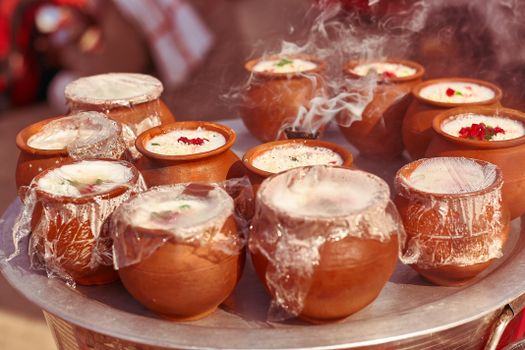
Mishti Doi is a traditional Bengali sweetened yogurt that is fundamentally high-FODMAP due to its primary ingredient: full-fat dairy milk and yogurt. Yogurt contains lactose, and while some plain yogurts can be low-FODMAP at small portions (up to 2/3 cup per Monash for lactose-reduced or low-fat varieties), Mishti Doi is made with full milk and often reduced (concentrated) milk, significantly increasing the lactose load per serving. A standard serving of Mishti Doi (~150-200g, typically served in earthenware pots) would far exceed the safe lactose threshold. Additionally, jaggery, while low-FODMAP in small amounts, is used generously in this dish alongside sugar. Cardamom is low-FODMAP and not a concern. The primary FODMAP concern is lactose from the concentrated milk and yogurt base, making this dish clearly high-FODMAP at any standard serving size during the elimination phase.
Mishti Doi is a traditional Bengali sweetened yogurt made by fermenting full-fat milk with sugar and/or jaggery. From a DASH perspective, it has mixed qualities: yogurt/dairy provides calcium and protein aligned with DASH's low-fat dairy emphasis, and the sodium content is negligible. However, the dish uses full-fat milk rather than low-fat or fat-free dairy, which DASH specifically discourages due to saturated fat content. More significantly, it contains substantial added sugar (and jaggery), which DASH limits to ≤5 servings of sweets per week. The high added sugar content is the primary concern — a typical serving of Mishti Doi can contain 15–25g of added sugar, pushing it well outside DASH's guidance on sweets. The dish is essentially a dessert-style preparation despite being categorized as a snack. Occasional consumption in small portions is acceptable, but it is not a DASH-emphasized food due to full-fat dairy and high added sugar.
NIH DASH guidelines explicitly restrict full-fat dairy and added sugars, making this a marginal choice. However, some updated clinical interpretations note that jaggery has a lower glycemic index than refined sugar and contains trace minerals (iron, potassium), and emerging research on full-fat fermented dairy suggests it may not negatively impact cardiovascular outcomes — some DASH-aligned dietitians would allow small portions of Mishti Doi as an occasional treat more readily than non-fermented full-fat dairy.
Mishti Doi is a sweetened fermented yogurt dessert that is essentially a high-sugar dairy product with minimal Zone-friendly redeeming qualities. The dish is loaded with two concentrated sugar sources — refined sugar and jaggery — making it extremely high-glycemic with virtually no fiber to moderate the glycemic response. While yogurt does provide some protein and the fermentation is beneficial, the carbohydrate load is dominated by rapidly absorbed sugars. A typical serving would deliver a massive carb-block overload with almost no corresponding protein or fat balance, making it nearly impossible to incorporate into a Zone-compliant meal without severely distorting the 40/30/30 ratio. The lack of any meaningful protein source (listed as 'none') compounds the problem. Cardamom adds negligible nutritional benefit. Jaggery, though marginally less processed than white sugar, is still ~65-85% sucrose and glucose and offers no glycemic advantage in a Zone context. This is essentially a dessert confection, and Dr. Sears explicitly categorizes concentrated sugar sources as unfavorable carbohydrates to avoid.
Mishti Doi is a traditional Bengali sweetened yogurt made by fermenting milk with a yogurt culture and sweetened with sugar and/or jaggery, flavored with cardamom. The dish has a mixed anti-inflammatory profile. On the positive side, fermented yogurt contains probiotics (Lactobacillus cultures) that can support gut microbiome health and modulate inflammatory responses. Cardamom is a mildly anti-inflammatory spice with antioxidant properties. Jaggery, while still a sugar, is an unrefined sweetener that retains trace minerals and has a marginally better glycemic and antioxidant profile compared to refined white sugar. However, the dish is fundamentally a high-sugar dairy product — a combination that places it firmly in the 'caution' zone. Added sugars (both jaggery and white sugar) are a core driver of inflammation, capable of raising IL-6 and CRP when consumed regularly or in excess. Dairy (whole milk) also receives a 'moderate' classification in anti-inflammatory frameworks due to saturated fat and, for some individuals, casein-driven inflammatory responses. As an occasional treat in small portions, the probiotic and spice benefits partially offset the sugar concerns, but regular consumption as a snack would not align well with anti-inflammatory principles.
Some fermented food advocates (e.g., researchers citing the Stanford gut microbiome studies by Sonnenburg and Gardner) would argue that the probiotic content of fermented yogurt is meaningfully anti-inflammatory and may deserve more credit, particularly if jaggery is the primary sweetener. Conversely, strict anti-inflammatory practitioners may rate this closer to 'avoid' given the combination of full-fat dairy and significant added sugar, regardless of jaggery's slight edge over refined sugar.
Mishti Doi is a Bengali sweetened yogurt dessert made by fermenting milk with added sugar and/or jaggery, then setting it. Despite containing dairy (which provides modest protein and probiotics from yogurt culture), the defining characteristic of this dish is its high sugar content — traditional recipes use substantial quantities of sugar and/or jaggery, making it calorie-dense with poor nutrient density per calorie. A standard serving (100–150g) typically contains 15–25g of sugar with only 3–5g of protein, essentially placing it in the high-sugar, low-protein-density category. The added sugars spike blood glucose, work against the glycemic stabilization benefits of GLP-1 medications, and contribute empty calories at a time when every bite must count nutritionally. While whole-milk dairy can worsen nausea in some GLP-1 patients due to fat content, the primary disqualifying factor here is the sugar load from both refined sugar and jaggery. Jaggery, despite being less processed, has a similar glycemic impact and does not meaningfully redeem the dish nutritionally for GLP-1 patients. This is not a portion-sensitive caution — even a small serving delivers a poor protein-to-sugar ratio.
Some GLP-1-focused dietitians note that mishti doi, being a fermented dairy product, does provide probiotics and modest calcium, and a very small portion (50g or less) may be acceptable occasionally for patients who tolerate dairy well and are not struggling with blood sugar control. However, most obesity medicine RDs would flag the sugar-first ingredient profile as incompatible with GLP-1 dietary goals regardless of portion size.
*See how scores were generated at our methodology page.
Nutritional profile
Six traits that cut across every diet.
Fiber & Plants
How much whole-plant food and fiber it delivers.
Healthy Fats
The quality of its fats (unsaturated, omega-3).
Whole / Unprocessed
How close it is to its natural, unprocessed form.
Gut Gentle
How easy it is on digestion (low FODMAP, few irritants).
Low Glycemic
How little it spikes your blood sugar.
Protein Density
How much protein it packs per calorie.
Controversy Index
Higher controversy = more disagreement between diets.
Diet-Specific Tips
 DASH — 4/10
View tips
- Full-fat milk conflicts with DASH emphasis on fat-free or low-fat dairy
- High added sugar content (sugar + jaggery) conflicts with DASH's limit on sweets
- Negligible sodium — a positive attribute
- Fermented dairy provides calcium and probiotics, aligning with DASH dairy goals
- Jaggery contains trace potassium and iron compared to refined sugar, but is still an added sugar
- Portion control is critical — small servings reduce sugar and saturated fat impact
 Anti-Inflammatory — 4/10
View tips
- High added sugar content (both white sugar and jaggery) drives inflammatory markers at regular consumption levels
- Fermented yogurt cultures provide probiotics that can support gut health and reduce systemic inflammation
- Jaggery is a marginally better sweetener than refined sugar due to trace minerals and lower processing, but remains a concentrated sugar source
- Cardamom provides mild antioxidant and anti-inflammatory properties
- Whole milk dairy is classified as 'moderate' in anti-inflammatory frameworks — acceptable in moderation but not emphasized
- Acceptable as an occasional indulgence; problematic as a regular snack