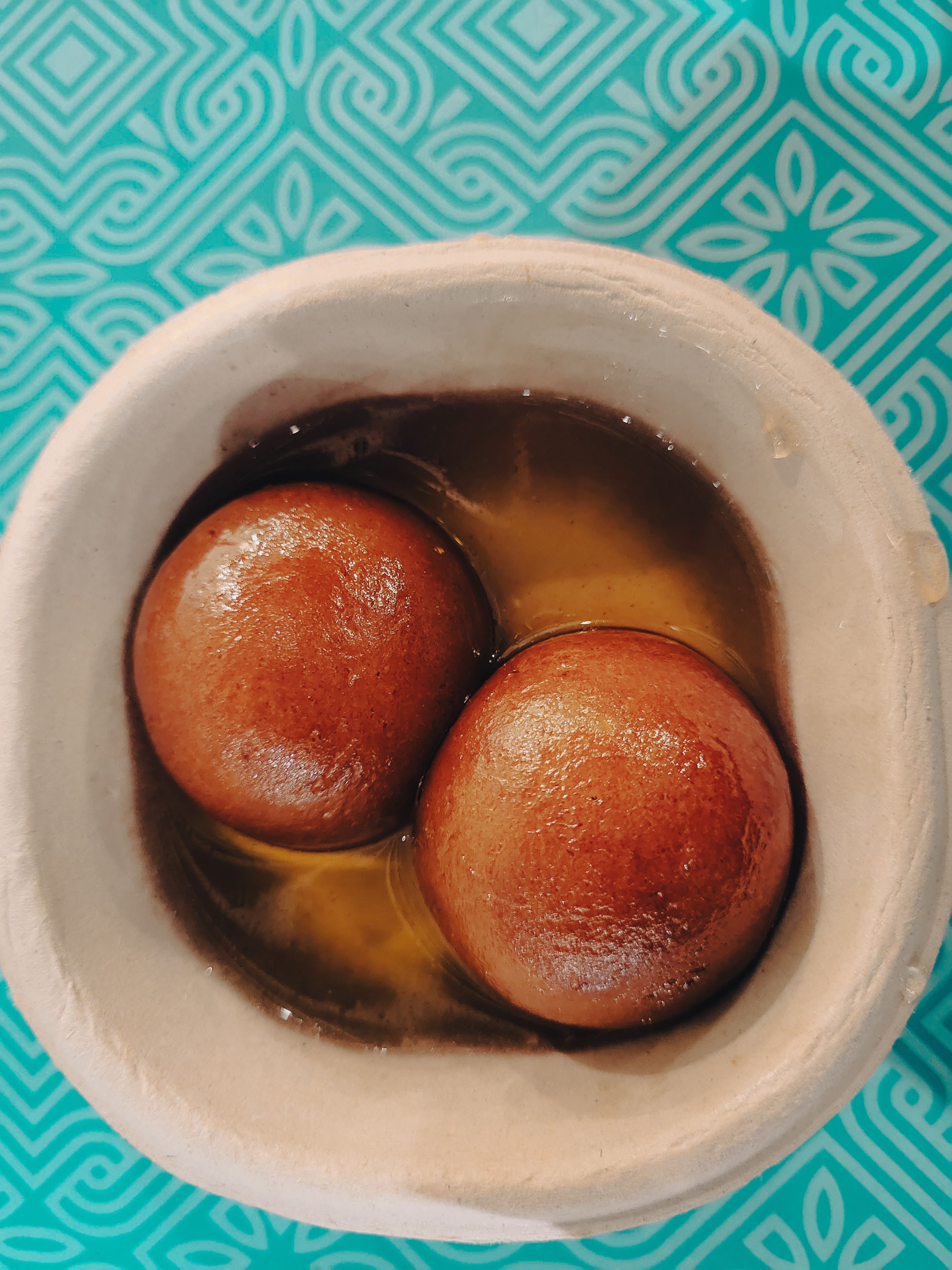
Photo: Monojit Dutta / Pexels
The diets react (see scores below)
Common Ingredients
- chhena
- milk powder
- flour
- ghee
- sugar
- cardamom
- rose water
Specific recipes may vary.
Incompatible with 10 of 11 diets
Diet Ratings
Pantua is an Indian sweet (similar to gulab jamun) made by deep-frying balls of chhena, milk powder, and flour, then soaking them in sugar syrup. This dish is fundamentally incompatible with ketogenic eating. Sugar is the primary soaking medium and a key ingredient, contributing massive amounts of simple carbohydrates. Flour adds additional starch and net carbs. Milk powder contains lactose (milk sugars). Even a single piece of Pantua would likely exceed an entire day's keto carb allowance. While chhena (fresh cheese) and ghee are individually keto-friendly, the combination with sugar, flour, and milk powder makes this dish entirely unsuitable for ketosis.
Pantua is a Bengali sweet that is fundamentally built on animal-derived dairy ingredients. Chhena (fresh cheese made by curdling milk) is a direct animal product, milk powder is derived from cow's milk, and ghee is clarified butter — all firmly non-vegan. Every primary component of this dish violates vegan principles, making it incompatible with a vegan diet. There are no plant-based substitutions implied in the listed ingredients.
Pantua is a deep-fried Indian sweet that is fundamentally incompatible with paleo principles. It contains multiple non-paleo ingredients: chhena (fresh cheese curd, a dairy product), milk powder (processed dairy), flour (a grain product, almost certainly wheat or all-purpose flour), and refined sugar — all of which are explicitly excluded from the paleo diet. While ghee is debated and cardamom and rose water are generally acceptable, the core structure of this dish is built entirely on disallowed foods. There is no meaningful paleo substitution possible that would preserve the identity of this dish.
Pantua is a Bengali sweet made by deep-frying chhena (fresh cheese) dumplings in ghee and soaking them in sugar syrup. This dish contradicts core Mediterranean diet principles on multiple fronts: it is high in added sugar (sugar syrup is a primary component), uses ghee (saturated animal fat) rather than olive oil as the cooking fat, contains refined flour, and is a deep-fried dessert with minimal nutritional value beyond calories. While chhena is a dairy product that could theoretically fit in moderation, the overall preparation is essentially a sugar-syrup-soaked fried sweet — exactly the type of confection the Mediterranean diet advises minimizing or avoiding entirely.
Pantua is an Indian sweet (similar to gulab jamun) that is fundamentally incompatible with the carnivore diet. While it contains chhena (fresh cheese) and milk powder — both animal-derived dairy — the dish is primarily defined by flour (a grain/plant product), sugar (processed plant-derived sweetener), cardamom (plant spice), and rose water (plant-derived flavoring). The dominant ingredients are plant-based or heavily processed, with the entire dish being a sugar-drenched fried sweet. Even the animal-derived components (ghee, chhena, milk powder) are subservient to a carbohydrate and sugar-heavy framework. No meaningful protein source is present. This is a confectionery item with no place on any tier of the carnivore diet.
Pantua contains multiple excluded ingredients that make it clearly non-compliant with Whole30. First, chhena is a fresh dairy cheese made from curdled milk — dairy is excluded on Whole30 (only ghee/clarified butter is the dairy exception). Second, milk powder is also a dairy product and excluded. Third, flour (wheat flour) is a grain and excluded. Fourth, sugar is an added sugar and excluded. The ghee, cardamom, and rose water are all compliant, but the combination of dairy (chhena, milk powder), grains (flour), and added sugar makes this dish impossible to make compliant. Additionally, Pantua is essentially an Indian fried sweet dumpling — even if compliant substitutes were attempted, it would fall under the 'no recreating baked goods/junk food/sweets' rule.
Pantua is a Bengali sweet (similar to gulab jamun) made by deep-frying chhena-based dough balls and soaking them in sugar syrup. Several ingredients are high-FODMAP concerns: (1) Chhena is fresh Indian cottage cheese made from cow's milk — it retains significant lactose and is high-FODMAP at typical serving sizes. (2) Milk powder is high in lactose and is a high-FODMAP ingredient even in small amounts. (3) Flour (wheat) contains fructans and is high-FODMAP. (4) Sugar syrup in large quantities can contribute to excess fructose load. The combination of lactose (chhena + milk powder) and fructans (wheat flour) makes this dish high-FODMAP at any standard serving. While cardamom and rose water are low-FODMAP, and ghee is fat-based (low-FODMAP), the core structural ingredients are highly problematic during the elimination phase.
Some clinical FODMAP practitioners note that chhena, when made from full-fat milk with whey fully drained, may have lower residual lactose than expected — however, Monash University does not validate chhena specifically, and combined with milk powder and wheat flour, the cumulative FODMAP load is still clearly high. There is no realistic serving size of Pantua that would qualify as low-FODMAP during the strict elimination phase.
Pantua is a deep-fried Indian sweet (similar to gulab jamun) made from chhena (fresh cheese), milk powder, and flour, fried in ghee and soaked in sugar syrup. This dish is fundamentally incompatible with DASH principles on multiple fronts: it is extremely high in added sugar (sugar syrup soak), high in saturated fat (ghee for frying, full-fat chhena), and provides essentially no dietary fiber, potassium, magnesium, or other DASH-emphasized nutrients. Ghee is a clarified butter and a source of significant saturated fat, which DASH explicitly limits. The sugar content places it firmly in the 'sweets' category that DASH recommends limiting to 5 or fewer servings per week, and even then, in small portions — a typical serving of Pantua would exceed that threshold alone. While chhena does provide some calcium and protein, the overall nutritional profile is dominated by saturated fat and added sugar, making this an avoid under DASH guidelines.
Pantua is a Bengali deep-fried sweet — essentially a cousin of gulab jamun — made from chhena (fresh cheese) and milk powder, shaped into balls, fried in ghee, and soaked in sugar syrup. From a Zone Diet perspective, this dish is deeply problematic. The dominant macronutrient by calories is sugar (from both the sugar syrup soak and the dough itself), making it extremely high-glycemic with no fiber to moderate the glycemic load. The flour adds further high-GI carbohydrates. Ghee (clarified butter) is a saturated fat, which Zone deprioritizes in favor of monounsaturated fats. While chhena does provide some protein, it is a minor contributor relative to the sugar and fat load, and the macro ratio is nowhere near the 40/30/30 Zone target — it skews heavily toward simple carbohydrates and saturated fat with minimal protein. There is no realistic portion size that brings this into Zone balance as a snack, as even a single piece delivers a spike-inducing sugar hit with little offsetting protein or favorable fat. Cardamom and rose water are benign aromatics but contribute nothing nutritionally significant. This is a dessert confection, not a Zone-compatible snack.
Pantua is a Bengali sweet similar to gulab jamun — deep-fried dumplings made from chhena (fresh cheese), milk powder, and flour, soaked in sugar syrup. The ingredient profile is heavily pro-inflammatory in aggregate. Ghee (saturated fat) is used for deep-frying, which also introduces oxidized fats from the high-heat cooking process. The dish is soaked in sugar syrup, making added sugar the dominant caloric component — a key driver of inflammatory markers like CRP and IL-6. Refined flour (maida) adds refined carbohydrates with negligible fiber. Milk powder contributes additional saturated fat and lactose. On the positive side, cardamom has mild anti-inflammatory properties, and rose water is neutral-to-slightly-positive, but these are trace components and cannot meaningfully offset the inflammatory load of sugar, refined carbs, saturated fat, and fried preparation. This dish is a high-sugar, high-saturated fat, refined-carbohydrate dessert with no omega-3s, minimal fiber, and no significant antioxidant or polyphenol content. It scores near the avoid threshold but remains at 'caution' as an occasional indulgence in very small portions — consistent with the anti-inflammatory framework's allowance for moderate treats rather than strict elimination.
Pantua is a Bengali deep-fried sweet — essentially dumplings made from chhena (fresh cheese), milk powder, and flour, fried in ghee and then soaked in sugar syrup. This combination is problematic across nearly every GLP-1 dietary criterion. It is high in sugar (sugar syrup soak is the defining feature), high in saturated fat (fried in ghee), and contains refined flour — all of which are explicitly in the avoid category. The deep-frying process makes it heavy and difficult to digest at a time when GLP-1 medications are already slowing gastric emptying, significantly increasing the risk of nausea, bloating, and reflux. Caloric density is very high with near-zero fiber. While chhena does provide some protein, the overall protein density per calorie is poor given the sugar and fat load. There is no meaningful fiber content. This is essentially an empty-calorie, high-fat, high-sugar fried confection.
*See how scores were generated at our methodology page.
Nutritional profile
Six traits that cut across every diet.
Fiber & Plants
How much whole-plant food and fiber it delivers.
Healthy Fats
The quality of its fats (unsaturated, omega-3).
Whole / Unprocessed
How close it is to its natural, unprocessed form.
Gut Gentle
How easy it is on digestion (low FODMAP, few irritants).
Low Glycemic
How little it spikes your blood sugar.
Protein Density
How much protein it packs per calorie.
Controversy Index
Higher controversy = more disagreement between diets.
Diet-Specific Tips
 Anti-Inflammatory — 5/10
View tips
- High added sugar content from sugar syrup soaking — major pro-inflammatory driver
- Deep-fried in ghee — saturated fat and oxidized fat from high-heat frying
- Refined flour (maida) — high glycemic, low fiber, pro-inflammatory
- Milk powder adds saturated fat and refined dairy
- Cardamom provides minimal anti-inflammatory benefit but insufficient to offset overall profile
- No omega-3 fatty acids, antioxidants, fiber, or polyphenols of significance
- Occasional consumption in very small amounts may be tolerated within anti-inflammatory principles