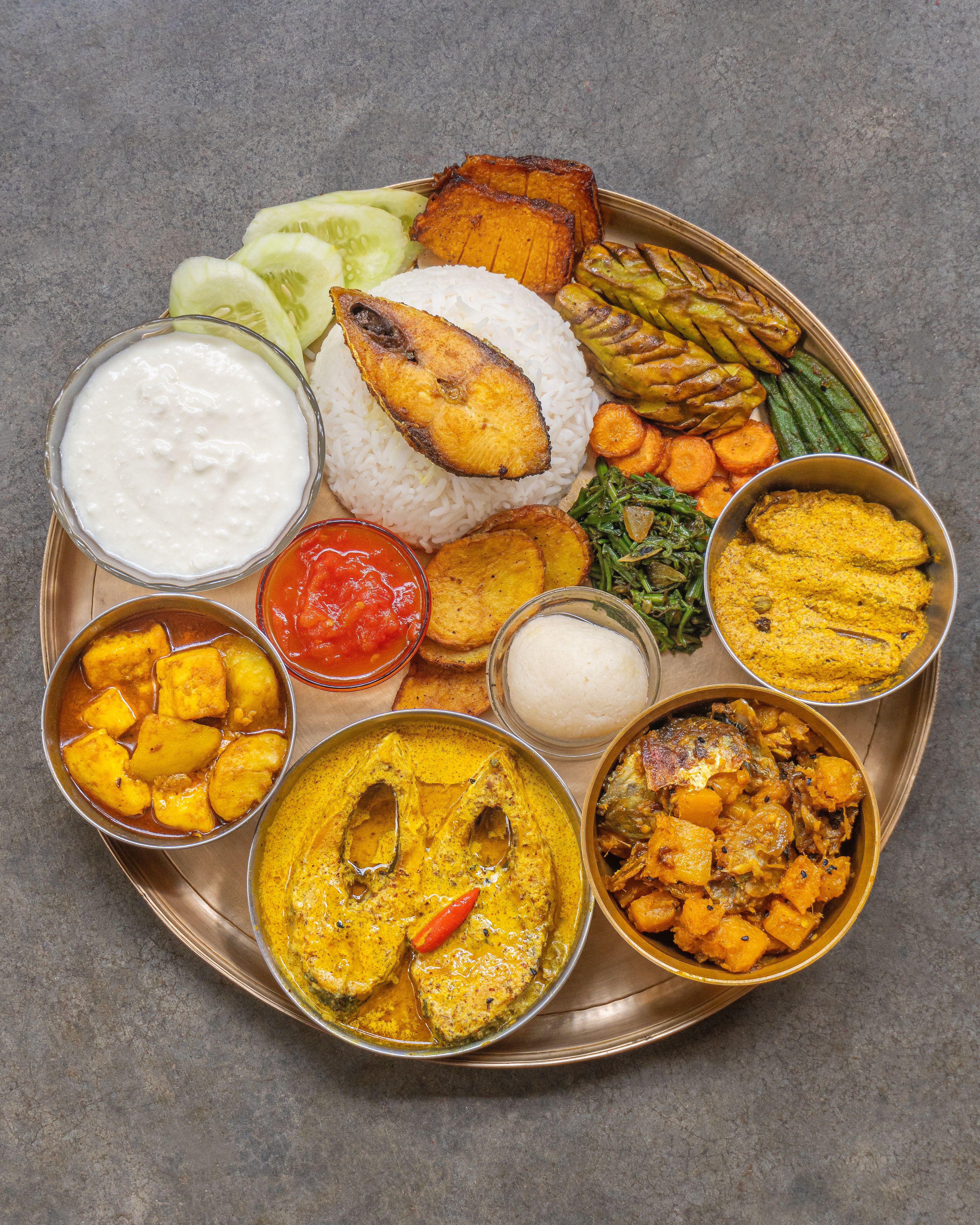
Photo: Subhrajyoti Paul / Pexels
Indian
Shorshe Ilish
The diets react (see scores below)
Common Ingredients
- hilsa fish
- mustard seeds
- green chiles
- turmeric
- mustard oil
- salt
- nigella seeds
Specific recipes may vary.
Incompatible with 3 of 11 diets
Diet Ratings
Shorshe Ilish is an excellent keto dish. Hilsa fish is naturally high in healthy omega-3 fatty acids, making it a premium keto protein source. Mustard oil is a healthy fat fully compatible with keto. The remaining ingredients — mustard seeds, green chiles, turmeric, nigella seeds, and salt — contribute negligible net carbs. The entire dish is grain-free, sugar-free, and unprocessed. Net carbs per serving are well under 5g, comfortably within keto limits. The high fat content from both the oily hilsa fish and mustard oil aligns perfectly with the 70-80% fat macro target.
Shorshe Ilish is a classic Bengali/Indian dish centered on hilsa fish (Tenualosa ilisha) cooked in a mustard-based sauce. Hilsa is an animal product — a fish — making this dish fundamentally incompatible with a vegan diet. All remaining ingredients (mustard seeds, green chiles, turmeric, mustard oil, nigella seeds, salt) are plant-based, but the primary protein and defining ingredient is unambiguously a fish. There is no meaningful debate within the vegan community about whether consuming fish is vegan-compatible.
Shorshe Ilish features hilsa fish as its primary protein, which is fully paleo-approved — a fatty, nutrient-dense wild fish. Mustard seeds, green chiles, turmeric, and nigella seeds are all natural spices available to hunter-gatherers and are paleo-compliant. However, two ingredients disqualify this dish: mustard oil is a seed oil (pressed from mustard seeds), which falls squarely in the excluded seed oils category alongside canola, sunflower, and soybean oil. Additionally, salt is explicitly excluded under paleo rules as an 'added salt' item. These two non-compliant ingredients — especially mustard oil as the primary cooking fat — push this otherwise fish-forward dish into avoid territory.
Some paleo practitioners, including those following a more ancestral or primal framework (e.g., Mark Sisson's Primal Blueprint), take a more permissive view on salt, arguing that mineral-rich unrefined salts (like Himalayan pink salt or sea salt) are acceptable in moderation. Similarly, a minority in the paleo community debate mustard oil's status, noting it has been used by traditional populations for millennia and has a favorable fatty acid profile, though it remains excluded by most mainstream paleo authorities due to its seed oil classification.
Shorshe Ilish is a Bengali mustard-based fish curry featuring hilsa, an oily fish exceptionally rich in omega-3 fatty acids — a near-perfect match for the Mediterranean diet's emphasis on fatty fish consumed 2-3 times weekly. The ingredient profile is clean and whole-food-based: mustard seeds, green chiles, turmeric, nigella seeds, and salt — all minimally processed, anti-inflammatory spices and aromatics. The only meaningful point of divergence from strict Mediterranean principles is the use of mustard oil rather than extra virgin olive oil. Mustard oil is high in monounsaturated and polyunsaturated fats (including ALA omega-3s) and low in saturated fat, making its lipid profile broadly compatible with Mediterranean values, even though it is not the canonical Mediterranean fat. Overall, this dish is a nutritionally excellent, whole-food, fish-forward preparation that aligns well with Mediterranean diet principles.
Strict Mediterranean diet frameworks, particularly those derived from the Seven Countries Study and modern clinical guidelines (e.g., Willett/Harvard), identify extra virgin olive oil as the defining fat of the pattern; substituting mustard oil, however healthy, departs from this canonical definition. Some purists would rate this as 'caution' on that basis alone, viewing non-olive plant oils as outside the traditional Mediterranean framework.
Shorshe Ilish is a traditional Bengali fish dish where the primary protein — hilsa fish — is carnivore-approved, but the preparation is heavily plant-based. Mustard seeds, green chiles, turmeric, mustard oil, and nigella seeds are all plant-derived ingredients that are excluded from the carnivore diet. Mustard oil in particular is a seed oil, which is explicitly avoided. The dish cannot be separated from its plant-based sauce and spice base, making the overall dish incompatible with carnivore eating despite containing fish.
Shorshe Ilish is a traditional Bengali/Indian mustard-based fish curry. Every ingredient in this dish is fully Whole30 compliant: hilsa (ilish) fish is a whole, unprocessed seafood; mustard seeds are a natural spice; green chiles, turmeric, and nigella seeds are all compliant herbs and spices; mustard oil is a natural fat explicitly compatible with Whole30; and salt is explicitly allowed. There are no excluded ingredients — no grains, legumes, dairy, added sugars, or any other prohibited substances. This is a clean, whole-food dish with a straightforward ingredient list.
Shorshe Ilish is a Bengali mustard-based fish curry with a generally low-FODMAP ingredient profile. Hilsa fish is a plain protein and is FODMAP-free. Mustard oil is a fat and contains no FODMAPs. Turmeric, nigella seeds (kalonji), and salt are low-FODMAP spices safe in typical culinary quantities. Green chiles are low-FODMAP in moderate portions (Monash rates them as low-FODMAP at up to 11g per serving). The main point of nuance is mustard seeds: whole or ground mustard seeds are generally considered low-FODMAP at typical culinary doses, though Monash's specific data on mustard seeds/paste is limited. The dish contains no onion, garlic, wheat, legumes, lactose, or other classic high-FODMAP ingredients, making it a relatively safe choice during the elimination phase.
Monash University has not extensively published data specifically on mustard seeds as a standalone ingredient; some FODMAP practitioners advise caution with large quantities of ground mustard paste, as concentrated seed pastes may differ from whole seeds. Additionally, the quantity of green chiles used should be monitored, as larger amounts (above ~11g) can push into moderate-FODMAP territory.
Shorshe Ilish is a Bengali mustard-based fish curry featuring hilsa (ilish), a fatty fish rich in omega-3 fatty acids, which aligns well with DASH principles of lean/oily fish consumption. The dish's core ingredients — mustard seeds, green chiles, turmeric, and nigella seeds — are DASH-friendly spices with no sodium concern. However, several factors complicate a straightforward approval: (1) Mustard oil is high in erucic acid and has a complex fat profile; while it contains monounsaturated fats, it is not among the vegetable oils explicitly recommended by NIH DASH guidelines (which favor olive, canola, and similar oils). (2) Hilsa is a notably oily fish — higher in total fat than typical DASH-recommended lean fish like cod or tilapia — though its omega-3 content is beneficial. (3) Salt is added with no specified quantity; home preparation can vary widely, and traditional recipes may use moderate-to-high amounts. The dish has strong DASH-compatible elements (fish protein, anti-inflammatory spices, no added sugars, no processed ingredients) but the mustard oil and salt usage warrant moderation and mindful preparation.
NIH DASH guidelines recommend specific approved vegetable oils (canola, olive) and do not list mustard oil; conservative DASH practitioners would flag mustard oil's erucic acid content and non-standard fat profile. However, updated clinical interpretations, particularly in South Asian cardiovascular nutrition contexts, note that mustard oil's high monounsaturated and omega-3 (ALA) content may be cardioprotective, and some DASH-aligned dietitians working with South Asian populations accept it in moderation as a culturally appropriate fat source.
Shorshe Ilish (hilsa fish in mustard sauce) has several Zone-favorable elements but also notable concerns. Hilsa is an oily fish rich in omega-3 fatty acids, which aligns well with Sears' anti-inflammatory emphasis — it serves as a solid protein block source (~7g protein per block). However, hilsa is also relatively high in fat compared to leaner fish like cod or tilapia, meaning the fat contribution from the fish itself must be accounted for in block calculations. The primary fat source is mustard oil, which is where the main Zone concern lies: mustard oil has a mixed fatty acid profile — it contains erucic acid and is higher in omega-6 relative to ideal Zone fats like olive oil or avocado. While mustard oil is not a processed seed oil, it is not Sears' preferred monounsaturated fat source. The dish also lacks carbohydrate components, meaning it cannot function as a standalone Zone meal — it would need to be paired with low-glycemic vegetables (not white rice, which is the traditional accompaniment). The mustard seeds and green chiles add polyphenols and anti-inflammatory compounds, which Sears would view favorably. Overall, the fish protein and omega-3 content are Zone-positive, but the mustard oil and fat-heavy fish profile require careful portioning, and the traditional rice pairing is unfavorable.
Some Zone practitioners and Sears' later anti-inflammatory writings place greater emphasis on omega-3 richness over fat source purity — hilsa's exceptionally high omega-3 content could be seen as making this dish more favorable than the mustard oil concern suggests. Additionally, mustard oil, while not ideal, is not a heavily processed omega-6-dominant seed oil, and some Zone-aligned nutritionists consider it acceptable in moderate quantities. A strict reading of early Zone protocols (Enter the Zone) would penalize the fat-heavy fish and non-monounsaturated oil more harshly, while Sears' later Omega Rx Zone framework might score the omega-3 benefits more generously.
Shorshe Ilish is a Bengali classic featuring hilsa (ilish) fish, one of the richest freshwater/estuarine fish sources of omega-3 fatty acids (EPA and DHA), comparable in profile to sardines and mackerel. Mustard seeds and mustard paste are rich in alpha-linolenic acid (ALA, a plant-based omega-3), glucosinolates, and selenium — all with documented anti-inflammatory properties. Turmeric contributes curcumin, among the most researched anti-inflammatory compounds in food. Green chiles provide capsaicin and vitamin C, both antioxidant and anti-inflammatory. Nigella seeds (kalonji) contain thymoquinone, which has shown anti-inflammatory activity in research. The main point of debate is mustard oil: it is the traditional and authentic cooking fat for this dish, and it contains a favorable omega-3 to omega-6 ratio and erucic acid. While mustard oil is standard in South Asian cooking and has a reasonable fatty acid profile, erucic acid has raised cardiovascular concerns in animal studies (though human evidence is inconclusive), and mustard oil is banned for edible use in the US and EU. Dr. Weil's framework does not specifically endorse mustard oil, favoring extra virgin olive oil instead. Within the Indian anti-inflammatory context, however, mustard oil is often considered a traditional, minimally processed oil preferable to refined seed oils. Overall, the dish's exceptional omega-3 load from hilsa and the potent anti-inflammatory spice blend make it a strong approve, with the mustard oil question introducing moderate uncertainty.
Mainstream Western anti-inflammatory authorities (including Dr. Weil's pyramid) favor extra virgin olive oil and do not specifically endorse mustard oil, partly due to its high erucic acid content (~40%), which regulatory bodies in the US and EU have flagged as a concern at high intake levels. However, traditional South Asian anti-inflammatory frameworks and some researchers argue that unrefined mustard oil's high ALA content and low omega-6 ratio make it superior to many refined seed oils, and population-level evidence from regions where mustard oil is the primary cooking fat does not show elevated cardiovascular or inflammatory harm.
Shorshe Ilish is a traditional Bengali mustard-based fish curry featuring hilsa (ilish), one of the fattiest freshwater fish consumed in South Asia. Hilsa is genuinely rich in omega-3 fatty acids, which are beneficial on GLP-1 therapy, and provides solid protein per serving (approximately 20-25g per 100g of fish). However, hilsa is significantly higher in total fat than lean fish like cod or tilapia — roughly 12-19g fat per 100g — which places it closer to salmon or mackerel in fat content. The mustard oil base adds additional fat, and while mustard oil is an unsaturated fat source, the combined fat load per serving is meaningfully higher than ideal for GLP-1 patients who are sensitive to high-fat meals due to slowed gastric emptying. Green chiles may irritate some patients experiencing nausea or reflux. On the positive side: the dish is not fried, mustard and nigella seeds offer some anti-inflammatory benefit, turmeric is well-tolerated, and the preparation is relatively simple and digestible compared to heavily processed or deep-fried alternatives. Fiber content is negligible. The dish earns its place as a caution — acceptable for GLP-1 patients who tolerate fatty fish well and are not in a high-side-effect period, but portion control is important and it should be paired with a high-fiber side (lentils, vegetables) to round out the meal.
Some GLP-1-focused dietitians would rate oily fish like hilsa more favorably, arguing that the omega-3 content and whole-food preparation outweigh the fat concerns, particularly for patients who tolerate fish-based meals without nausea. Others maintain that any high-fat protein source — even from healthful unsaturated fats — risks worsening GI side effects in GLP-1 patients with already slowed gastric emptying, especially in the first months of dose escalation, and would recommend leaner fish as the default.
*See how scores were generated at our methodology page.
Nutritional profile
Six traits that cut across every diet.
Fiber & Plants
How much whole-plant food and fiber it delivers.
Healthy Fats
The quality of its fats (unsaturated, omega-3).
Whole / Unprocessed
How close it is to its natural, unprocessed form.
Gut Gentle
How easy it is on digestion (low FODMAP, few irritants).
Low Glycemic
How little it spikes your blood sugar.
Protein Density
How much protein it packs per calorie.
Controversy Index
Higher controversy = more disagreement between diets.
Diet-Specific Tips
 Keto — 9/10
View tips
- Hilsa is a naturally oily, fatty fish rich in omega-3s — ideal keto protein and fat source
- Mustard oil adds healthy monounsaturated and polyunsaturated fats
- All spices (mustard seeds, turmeric, nigella seeds) contribute near-zero net carbs
- No grains, no added sugar, no starchy vegetables
- Whole, unprocessed ingredients throughout
- Estimated net carbs per serving: under 3-5g
 Mediterranean — 8/10
View tips
- Hilsa is an exceptionally omega-3-rich oily fish, strongly aligned with Mediterranean fish recommendations
- All ingredients are whole, minimally processed foods with no added sugars or refined grains
- Mustard oil has a favorable unsaturated fat profile similar to Mediterranean-approved fats, but is not extra virgin olive oil
- Spices like turmeric, mustard seeds, and nigella seeds provide anti-inflammatory phytonutrients
- No red meat, processed ingredients, or refined carbohydrates
- Non-Mediterranean cuisine but nutritionally compatible with Mediterranean principles
 Whole30 — 9/10
View tips
- Hilsa fish is a whole, unprocessed seafood — fully compliant
- Mustard oil is a natural fat and Whole30-compatible
- Mustard seeds, nigella seeds, turmeric, and green chiles are all compliant spices/aromatics
- Salt is explicitly allowed on Whole30
- No excluded ingredients (no grains, dairy, legumes, or added sugar)
- Simple, whole-food preparation consistent with Whole30 spirit
 Low-FODMAP — 8/10
View tips
- Hilsa fish is a plain protein — completely FODMAP-free
- Mustard oil is a fat and contains no FODMAPs
- No onion, garlic, wheat, legumes, or lactose present
- Green chiles are low-FODMAP at standard culinary portions (up to ~11g per Monash)
- Mustard seeds have limited Monash testing data, but are generally considered safe at typical culinary quantities
- Turmeric and nigella seeds are low-FODMAP spices
- Overall dish is low-FODMAP at a standard single serving
 DASH — 5/10
View tips
- Hilsa is a rich source of omega-3 fatty acids, supporting cardiovascular health per DASH principles
- Mustard oil is not among NIH DASH-recommended oils; erucic acid content and non-standard lipid profile raise caution
- Mustard seeds, turmeric, green chiles, and nigella seeds are low-sodium, anti-inflammatory spices compatible with DASH
- Added salt quantity is unspecified; traditional preparation may approach or exceed DASH sodium limits per serving
- No added sugars, no processed ingredients, no saturated-fat-heavy components (e.g., coconut milk, cream)
- Hilsa's higher total fat content compared to lean fish (cod, tilapia) requires portion awareness under DASH
 Zone — 5/10
View tips
- Hilsa fish is rich in omega-3 fatty acids, supporting Zone's anti-inflammatory goals
- Hilsa is a fatty fish, so fat blocks from the protein source itself must be carefully counted
- Mustard oil is not a preferred Zone fat — olive oil or avocado oil would be more ideal
- No carbohydrate component in the dish — cannot function as a standalone Zone meal
- Traditional pairing with white rice is an unfavorable high-glycemic carb in Zone
- Mustard seeds, green chiles, and turmeric contribute polyphenols and anti-inflammatory compounds, which Sears values
- Dish would need to be served with low-glycemic vegetables (e.g., sautéed spinach, cauliflower) to form a Zone-balanced meal
 Anti-Inflammatory — 8/10
View tips
- Hilsa fish is exceptionally rich in omega-3 fatty acids (EPA and DHA), strongly anti-inflammatory
- Mustard seeds provide ALA (plant omega-3), glucosinolates, and selenium
- Turmeric contributes curcumin, a well-researched anti-inflammatory compound
- Green chiles add capsaicin and vitamin C with antioxidant properties
- Nigella seeds contain thymoquinone, shown to reduce inflammatory markers in research
- Mustard oil is debated: favorable omega-3/omega-6 ratio but high erucic acid content raises regulatory concerns in Western contexts
- Dish is minimally processed with no refined carbohydrates, added sugars, or artificial additives
 GLP-1 Friendly — 5/10
View tips
- High omega-3 fatty acid content from hilsa fish — beneficial but fat load is significant
- Total fat per serving is elevated relative to GLP-1 guidelines favoring lean proteins
- Mustard oil adds unsaturated fat — preferable to saturated fat but increases overall fat load
- Good protein density — approximately 20-25g per standard serving
- Green chiles may worsen nausea or reflux in sensitive GLP-1 patients
- Not fried — preparation method is relatively GLP-1 friendly
- Negligible fiber — should be paired with high-fiber side dishes
- Portion size is critical — a small serving is more appropriate than a full restaurant portion